This post contains affiliate links. We may earn a small commission when you buy through our links — at no extra cost to you.
Few purchases invite as much anticipation — and frustration — as an espresso machine. The promise of café-quality cappuccinos at home often collides with reality: machines that deliver great shots for a few months then develop grinder issues, lukewarm coffee, or failing steam wands. Across price tiers, reliability is the single biggest pain point.
This guide cuts through the noise: consistent shot temperature, durable steam systems, and realistic longevity are what matter. We map each machine to the right user — from the all-in-one convenience seeker to the aspiring barista who wants a repairable workhorse.
The core trade-off is between integrated convenience and long-term serviceability. Knowing which camp you belong to is the first step to a machine that won’t let you down.


Best for Bean-To-Cup Fans
Breville Barista Express
Key Features
- Pump Pressure: 15 bar
- Frothing Method: Manual steam wand
- Coffee Input: Whole bean
- Water Tank / Size: 67 oz / 1.9 L
- Price: Mid-Range
The Breville Barista Express delivers fresh-ground espresso with an integrated conical burr grinder and PID-controlled water temperature. The 15-bar pump and 30 grind settings let you fine-tune extraction for a range of roast levels, while the commercial-style steam wand produces thick microfoam for cappuccinos and lattes. The half-pound bean hopper is sufficient for daily use, and the 67 oz water tank handles multiple drinks without refilling. This all-in-one design offers strong value compared to purchasing a separate grinder and espresso machine.
The learning curve is real – mastering the manual steam wand and dialing in grind size takes a few tries. Once dialed, the machine consistently pulls balanced shots with good crema. The steam wand is powerful enough to heat and froth milk in about 30 seconds. The grinder may require occasional recalibration as beans change, but the all-in-one workflow eliminates the need for a separate grinder.
Best suited for home baristas willing to invest time in technique, this machine offers café-quality results without the price of separate components. However, reliability can vary: some units may experience grinder or pump issues within the first year, and cosmetic degradation such as paint chipping has been observed.
Pros
- Rich crema and microfoam capability produce café-quality drinks.
- Integrated grinder delivers consistent doses on demand, simplifying the morning routine.
- All-in-one design offers good value by eliminating the need for a separate grinder.
Cons
- Grinder or pump issues may appear within the first year in some units.
- Paint chipping and steam wand degradation have been noted over time.
For home baristas who want to control every variable from grind to steam, the Barista Express provides a complete setup that can rival café drinks – just be aware that long-term mechanical reliability is not guaranteed across all units.
Best for Capsule Lovers
Nespresso VertuoPlus De’Longhi
Key Features
- Frothing Method: Automatic frother
- Coffee Input: Capsules
- Water Tank / Size: 40 oz / 1.2 L
- Price: Mid-Range
The VertuoPlus produces espresso and coffee with a thick crema that many prefer to Starbucks, and the included Aeroccino3 frother handles lattes and cappuccinos with minimal effort. Setup and daily cleaning take seconds. Compared to the Vertuo Next, reports of early breakdowns are less common here. This machine suits Nespresso enthusiasts who value speed and simplicity over steaming hot coffee—the drink temperature can come out lukewarm, especially after adding milk. The ongoing cost of proprietary capsules is also a factor to weigh.
Pros
- Simple setup, operation, and cleaning for daily convenience.
- Coffee and espresso taste great with consistent crema.
- Aeroccino3 frother makes lattes and cappuccinos easily.
Cons
- Coffee may come out lukewarm, especially after adding milk.
- Proprietary capsules add ongoing expense and limit choice.
A reliable capsule machine with a capable frother for those who prioritize convenience and good crema over piping-hot coffee and pod flexibility.
Best for Aspiring Baristas
Gaggia Classic Pro
Key Features
- Pump Pressure: 9 bar
- Frothing Method: Manual steam wand
- Coffee Input: Ground
- Price: Mid-Range
The Gaggia Classic Pro delivers authentic espresso with its commercial 58mm portafilter and 9-bar pressure. Unlike the all-in-one top pick, this machine requires a separate quality burr grinder and a willingness to dial in every shot. Buyers who treat espresso as a craft will appreciate the steel housing and serviceable design, but those expecting push-button cappuccinos should look elsewhere.
Pros
- Shots with thick crema that rival café quality.
- Steel housing and Italian engineering allow straightforward repairs.
- Competitive pricing for commercial-grade components.
Cons
- Manual workflow can feel demanding for those accustomed to automated machines.
- Some units may experience boiler flaking or steam wand issues – check warranty coverage.
Best for aspiring baristas who enjoy the process and are willing to invest in a good grinder; less suited for convenience-focused buyers.
Best for Auto Frother Fans
Mr. Coffee Café Barista
Key Features
- Pump Pressure: 15 bar
- Frothing Method: Automatic frother
- Coffee Input: Ground
- Price: Mid-Range
One-touch milk frothing and a 15-bar pump deliver espresso and cappuccino that many owners find better than coffee shop drinks — no grinding or manual steaming required. While the top pick demands a separate grinder and technique, this machine automates the entire milk-based drink process for less than $200.
This is the right choice for value-conscious home baristas who want convenience over craft and are comfortable with the possibility that the pump or frother may stop working after a year or two. It is not designed for buyers expecting a five-year lifespan or the control needed for latte art.
Pros
- Produces great-tasting espresso and cappuccino, often rated better than local coffee shop drinks.
- Very easy to use and clean with one-touch automated frothing — perfect for beginners.
- Provides strong value for the feature set given the low price point.
Cons
- Pump or frother may stop working after 1–2 years of use.
- Milk frother can be inconsistent; in some cases it stops steaming entirely.
If you want one-touch cappuccinos without spending over $500, this machine delivers — just keep a warranty handy.
Best for Budget Espresso Fans
CASABREWS 3700 Essential
Key Features
- Pump Pressure: 20 bar
- Frothing Method: Manual steam wand
- Coffee Input: Ground
- Water Tank / Size: 43.9 oz / 1.3 L
- Price: Budget
The CASABREWS 3700 brings a 20-bar pump and stainless steel build to the budget tier, making it a practical introduction for anyone new to espresso. The compact size fits small kitchens, and the machine produces a decent shot with crema when dialed in. Quality control varies: some units may leak or have steam wand problems, and coffee temperature can be inconsistent. The steam wand may also struggle to create microfoam, producing larger bubbles instead. These limitations make it best for buyers who are willing to learn and can accept some variability.
Pros
- Rich crema and smooth espresso flavor when properly dialed in.
- Compact stainless steel design looks good on any counter.
- Strong value for the price with 20-bar pump and large water tank.
Cons
- Some units may develop leaks or steam wand issues.
- Coffee temperature can be inconsistent, sometimes not hot enough.
A budget-friendly entry point for aspiring home baristas who are open to learning and can handle some variability in performance.
Best for Tech Lovers
Breville Barista Touch
Key Features
- Frothing Method: Automatic frother
- Coffee Input: Whole bean
- Price: Luxury
Touchscreen controls and an automatic steam wand that self-cleans make this the most hands-off option among Breville’s integrated-grinder machines. It heats in three seconds and stores up to eight drink profiles. That convenience has a premium price, and durability can vary — some units have experienced grinder or water tank issues. This machine suits tech-savvy users who want automated milk frothing and customizable settings without learning manual technique, but the price and reliability concerns mean it’s best for those who accept a possible service call.
Pros
- Customizable eight-profile touchscreen for personalized espresso drinks.
- Automatic microfoam wand removes the milk-steaming learning curve.
- Self-cleaning wand and auto-purge simplify daily maintenance.
Cons
- Premium pricing — around 50% more than the top pick — with no guarantee of trouble-free ownership.
- Grinder or water tank issues have been noted in some units, possibly requiring service.
For buyers who prioritize convenience over manual control and are comfortable with a premium cost that may include a service call, the Barista Touch delivers a polished, automated experience.
Best for Busy Households
Nespresso Vertuo by Breville

Key Features
- Frothing Method: Automatic frother
- Coffee Input: Capsules
- Water Tank / Size: 40 oz / 1.2 L
- Price: Mid-Range
The Breville version of the Nespresso Vertuo offers the same one-touch convenience as the De’Longhi model, with a chrome finish that fits a modern kitchen. It brews decent coffee and espresso with good crema, and the included Aeroccino frother handles milk at the push of a button. However, coffee temperature can be lukewarm, especially when milk is added, and the proprietary pods represent an ongoing expense. For those who prioritize speed over heat, it works, but it doesn’t outperform the De’Longhi version at a slightly higher price.
Pros
- One-touch operation and automatic milk frother simplify morning routines.
- Wide variety of pod flavors with consistent crema output.
Cons
- Coffee can come out lukewarm, especially after adding cold milk, and pods add ongoing cost.
Best for busy households that want a quick, no-fuss espresso drink and don’t mind lukewarm coffee or the long-term cost of capsules.
Best for Budget Beginners
CASABREWS CM5418
Key Features
- Pump Pressure: 20 bar
- Frothing Method: Manual steam wand
- Coffee Input: Ground
- Water Tank / Size: 34 oz / 1 L
- Price: Budget
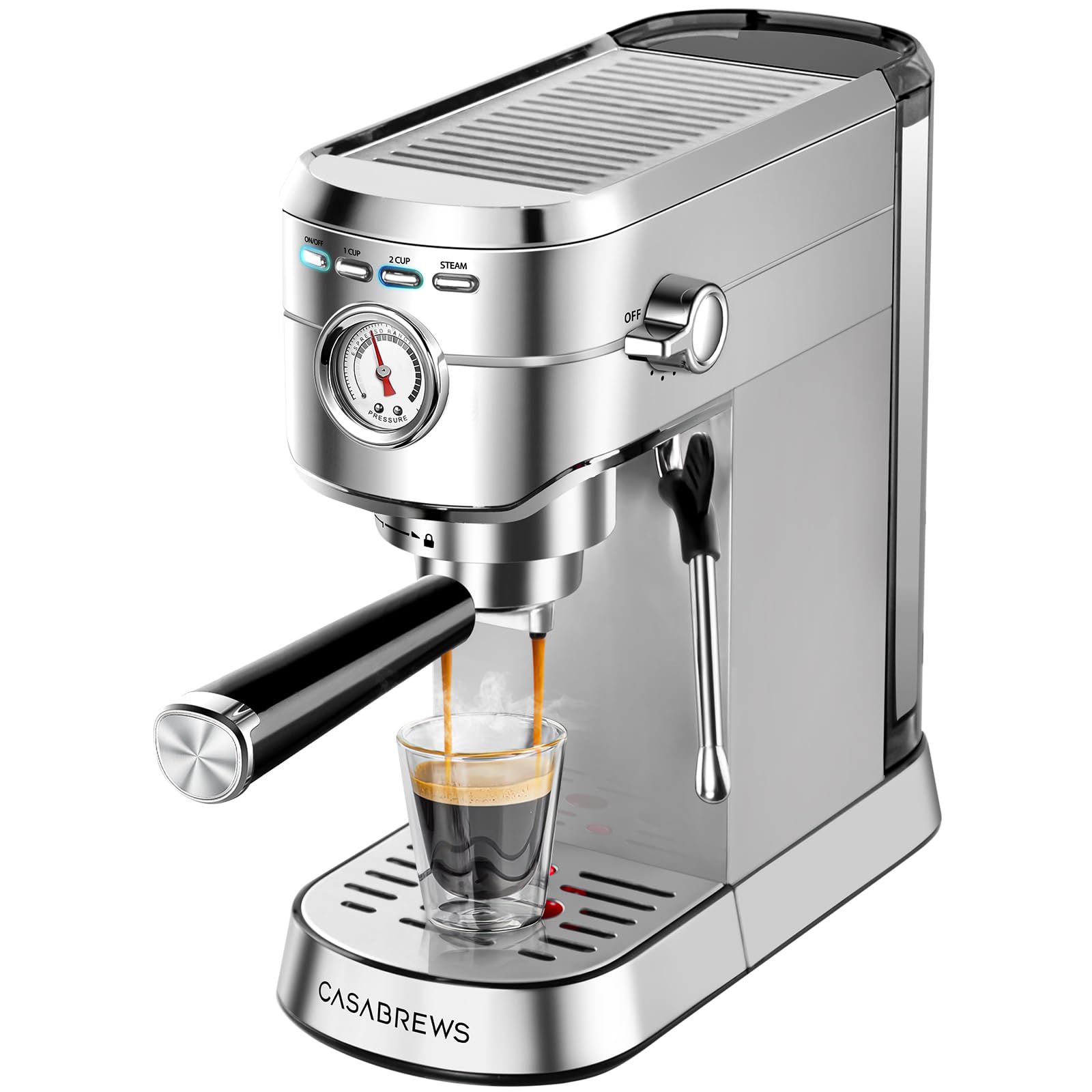
The CASABREWS CM5418 delivers decent espresso and cappuccino at an entry-level price, with a compact silver body and a pressure gauge to help dial in shots. However, unit-to-unit quality control variances can lead to leaks or heating issues, and the overheating-protection shutdown between brewing and steaming adds a learning curve. This is a solid option for budget-focused newcomers willing to accept those tradeoffs.
Pros
- Creates enjoyable espresso and cappuccino at a budget-friendly price.
- Compact stainless steel design fits easily in small kitchens.
Cons
- Leaking or heating issues can occur, affecting long-term use.
Best for budget-conscious beginners who are willing to accept potential unit variance and a learning curve in exchange for the low price.
Best for First-Time Buyers
De’Longhi Stilosa

Key Features
- Pump Pressure: 15 bar
- Frothing Method: Manual steam wand
- Coffee Input: Ground
- Water Tank / Size: 33.8 oz / 1 L
- Price: Budget
The De’Longhi Stilosa produces respectable espresso and cappuccino at a price that’s hard to beat, making it a low-cost entry point for experimenting. Its simple operation and cleaning suit beginners well. However, heating consistency can vary, and some units may have shorter lifespans – fine for occasional use but not a daily driver.
Pros
- Makes good espresso and cappuccino at a budget-friendly price.
- Simple to use and clean, ideal for first-time espresso makers.
Cons
- Coffee temperature can vary, sometimes cooler than expected – a tradeoff at this price point.
Worth considering only if you need the cheapest way to experiment with espresso drinks and can accept occasional temperature variation and potential reduced longevity.
Best for Small Kitchen Users
Neretva PE3670U

Key Features
- Pump Pressure: 20 bar
- Frothing Method: Manual steam wand
- Coffee Input: Ground
- Water Tank / Size: 44 oz / 1.3 L
- Price: Budget
The stainless steel build and compact size fit well in small kitchens, and the espresso quality with crema is satisfying for the price. That said, the brand is relatively new with limited long-term data, and occasional reports of the steam wand stopping after a few months mean durability is a gamble. Buyers wanting a proven budget pick should look at the CASABREWS 3700.
Pros
- Compact stainless steel design fits small spaces
- Rich espresso and cappuccino with good crema at a budget price
Cons
- Steam wand may stop working after a few months in some units
Best for budget buyers who prioritize compact size and espresso quality over proven long-term reliability, and who are willing to accept some risk.
Best for Occasional Users
IMUSA 4-Cup Espresso

Key Features
- Frothing Method: Manual steam wand
- Coffee Input: Ground
- Price: Budget
The IMUSA 4-Cup Espresso offers an entry point into espresso at a budget-friendly price. Setup is simple and cleaning is easy. But some units may stop heating within months, and the steam wand produces thin foam. Best for occasional use or first-time buyers on a tight budget.
Pros
- Accessible price for trying espresso and cappuccino at home.
- Simple to use and clean with a compact footprint.
Cons
- Some units may stop heating after a few months of use.
This machine is a fit if you want to experiment with espresso on a strict budget and can accept a limited lifespan.
Best for Workflow Seekers
Breville Barista Pro

Key Features
- Frothing Method: Manual steam wand
- Coffee Input: Whole bean
- Price: Premium
The Breville Barista Pro’s 3-second heat-up and LCD-guided workflow make it the quickest path from button to cup in this set. The integrated conical burr grinder and manual steam wand deliver espresso with good crema and microfoam. However, the higher price compared to the Barista Express doesn’t translate into noticeably better shot quality, and occasional temperature inconsistency can leave shots lukewarm. Reliability is also a concern—some units may develop grinder or pump issues within the first year, so the premium feels harder to justify unless speed is your top priority.
Pros
- ThermoJet heating reaches brewing temperature in seconds, cutting morning wait time.
- LCD screen with animations helps guide dial-in and shot timing for consistent results.
Cons
- Coffee temperature can run lukewarm despite rapid heat-up, which matters for milk drinks.
- Long-term durability is uncertain at this price—grinder or pump problems may surface after months of use.
Choose the Barista Pro only if shaving minutes off your espresso routine is worth paying extra for—otherwise the Barista Express offers comparable results and lower risk for less money.
Best for Budget Gauge Seekers
Gevi ECMG0
Key Features
- Pump Pressure: 20 bar
- Frothing Method: Manual steam wand
- Coffee Input: Ground
- Water Tank / Size: 1 L / 34 oz
- Price: Budget
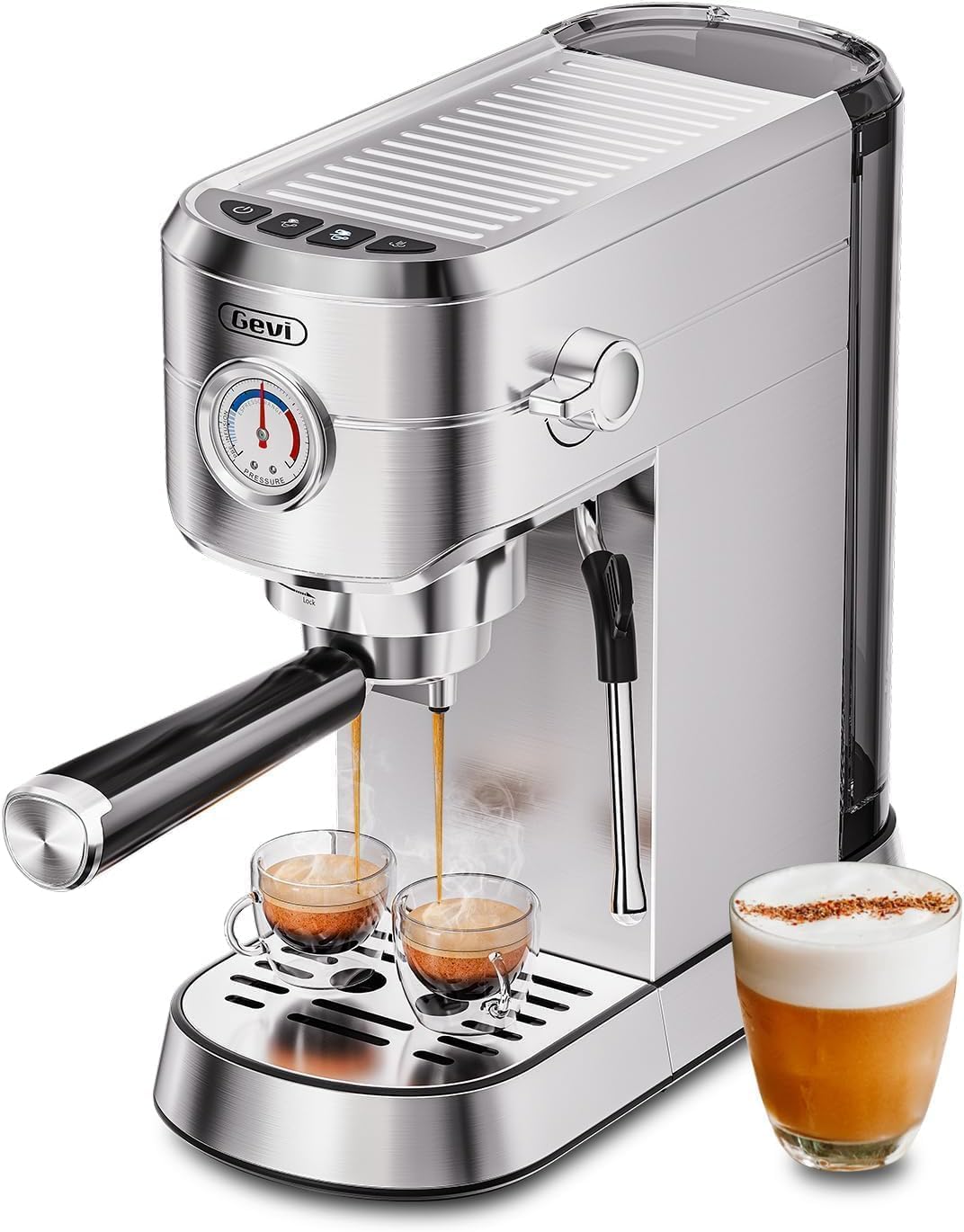
The Gevi ECMG0 delivers solid espresso and steam for its price, with a compact stainless build and pressure gauge to monitor extraction. However, cleaning can be messy, and some units may develop issues over time, making it a better fit for occasional use rather than daily reliance.
Pros
- Solid espresso and steam output for the price
- Compact stainless steel construction that holds up well
Cons
- Cleaning can be more time-consuming due to grounds and milk residue
Best for buyers who want a low-cost entry point with a pressure gauge and can accept a less polish cleaning process and possible longevity variance.
Best for Discount Seekers
Nespresso Vertuo Next

Key Features
- Frothing Method: Automatic frother
- Coffee Input: Capsules
- Price: Mid-Range
This Nespresso Vertuo Next delivers the same rich crema and easy setup as other Vertuo machines, and the included Aeroccino frother makes cappuccino simple. However, early mechanical problems have been noted — some units stop brewing within weeks. For someone who finds a deep discount and can accept possible downtime, the taste is there, but this is not a machine to rely on daily without a warranty.
Pros
- Produces consistently flavorful coffee and espresso with a thick crema.
- Quick setup and one-button operation make morning drinks effortless.
Cons
- Some units experience mechanical issues shortly after purchase — worth checking warranty coverage.
Only consider this model if you find a steep discount and plan to use it as a secondary machine with warranty protection.
Best for —
Gevi ECMI0 (2026)
Key Features
- Pump Pressure: 20 bar
- Frothing Method: Manual steam wand
- Coffee Input: Whole bean
- Water Tank / Size: 2.3 L / 78 oz
- Price: Mid-Range
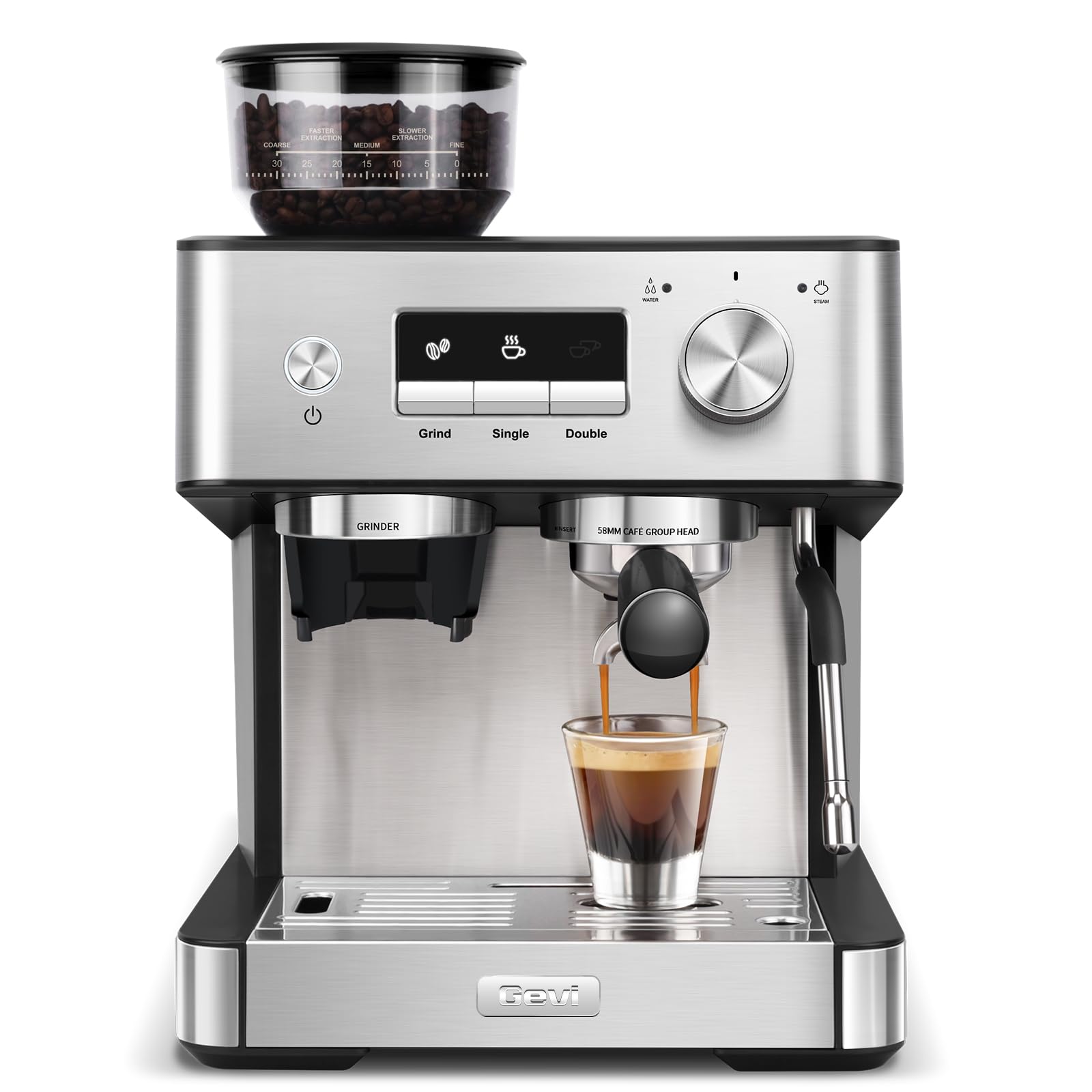
The Gevi ECMI0 (2026) brings a 30-setting conical burr grinder, 58mm portafilter, and 2.3L water tank to the mid-range segment — specs that should make dialing in and multiple drinks routine. However, the customer reviews attached to this listing describe a toaster, not this espresso machine. Without trustworthy performance data, shot quality, steam power, and long-term durability remain unknown. This machine fits only if you can verify its behavior through independent, product-specific reviews or a hands-on test.
Pros
- Built-in conical burr grinder with 30 settings streamlines the workflow.
- Large 2.3L water tank minimizes refills during back-to-back drinks.
Cons
- Customer reviews belong to an unrelated toaster, making actual performance and reliability unverifiable.
Consider only if you can confirm this machine’s performance through verified user reviews or a personal trial — the corrupted review data prevents a confident recommendation.
How to Choose
Reliability, not features, is the most important factor when choosing an espresso machine—many machines fail within the first year regardless of price.
Pump Pressure
A 15-bar pump is sufficient for most home setups. 20-bar machines may push water too fast, requiring finer grinds to avoid channeling. The 9-bar standard found on the Gaggia Classic Pro is the professional benchmark, but it demands precise tamping and grind size.
Higher pressure numbers are often marketing; the real key is consistent pressure throughout the shot. In practice, 15 bar from a quality pump yields excellent crema when paired with fresh beans.
Frothing Method
Manual steam wands give you full control over milk texture, allowing microfoam for latte art, but require practice and a cool-down period between brewing and steaming. Automatic frothers (like the Aeroccino or built-in reservoirs) heat and froth in one step with consistent results, but rarely produce the silky microfoam needed for latte art.
For daily lattes and cappuccinos without fuss, an automatic frother is fine. If you want to learn steam wand techniques for café-quality drinks, a manual wand is worth the learning curve.
Coffee Input
Capsule machines offer unmatched consistency and convenience, but lock you into proprietary pods that cost $0.70–$1.00 per drink and generate waste. Whole bean machines with integrated grinders deliver fresher coffee and lower per-cup costs, but the grinder is a common failure point.
Pre-ground coffee (used in semi-automatic machines) is a middle ground—less freshness than whole bean but cheaper than capsules. Many machines in this guide accept pre-ground via pressurized baskets, which also help beginners achieve better extraction.
Water Tank & Footprint
A water tank of 40 ounces or more allows 4–5 drinks between refills. Compact machines with smaller tanks (under 34 oz) require more frequent refilling but fit easily on tight counters. Larger tanks also reduce the risk of the machine overheating due to frequent empty cycles.
Before buying, measure your counter space. Many machines are deeper than they appear; a depth of 12–14 inches is common. Also consider tank access—top-fill tanks are easier to refill without moving the machine.
Built-in Grinder
Integrated grinders save counter space and allow one-touch grinding and brewing. However, they are a frequent failure point—many users report grinder jams or motor breakdowns within the first year. A separate burr grinder ($100–$200) is more reliable and can be upgraded independently.
If you choose a machine with a built-in grinder, expect to clean it regularly and be prepared for potential repairs. The convenience is real, but it comes with a trade-off in long-term serviceability.
FAQ
Why does my espresso machine stop working after a few months?
Many home espresso machines suffer from poor quality control in pumps, valves, and heating elements. Frequent causes include scale buildup from hard water, grinder jams from oily beans, and steam wand clogs from milk residue. Regular descaling and backflushing extend life, but some machines are simply built with components that fail early. Check warranty terms and buy from a retailer with a good return policy.
Is a steam wand better than an automatic milk frother for cappuccino?
A manual steam wand gives you control to create microfoam with tiny bubbles that fold into espresso smoothly, ideal for latte art. Automatic frothers (like the Aeroccino) heat and froth quickly but produce larger, airier foam that dissipates faster. For authentic cappuccino texture, a steam wand wins; for speed and consistency, an automatic frother is fine.
How hot should an espresso machine get the water?
Optimal brewing temperature is 195–205°F (90–96°C). Many capsule machines and budget models fall short, serving coffee around 170–180°F, which feels lukewarm especially after adding cold milk. Preheating your cup and running a blank shot can help, but if hot coffee is a priority, look for machines with PID temperature control or a dedicated thermoblock.
Can I use pre-ground coffee in a bean-to-cup espresso machine?
Most bean-to-cup machines (with built-in grinders) do not accept pre-ground coffee unless they have a separate bypass doser. If yours lacks that feature, you must use whole beans. Check the specs before buying if you want the flexibility to use both. Machines with pressurized baskets can work with pre-ground, but the grind freshness matters less than with unpressurized setups.