This post contains affiliate links. We may earn a small commission when you buy through our links — at no extra cost to you.
Many home bakers find that affordable wooden rolling pins start to splinter or crack after just a few uses. That frustration often leads to buying multiple pins over time rather than one that lasts.
The right rolling pin depends on how often you bake and what dough you roll. A heavy marble pin works wonders for pastry but can break if dropped. A stainless steel pin cleans up in seconds but may need extra flour to prevent sticking.
This guide cuts through the material trade-offs—wood versus steel versus marble—and highlights the models that hold up best under real kitchen use, so you can buy once and bake confidently.


Best for Budget Home Bakers
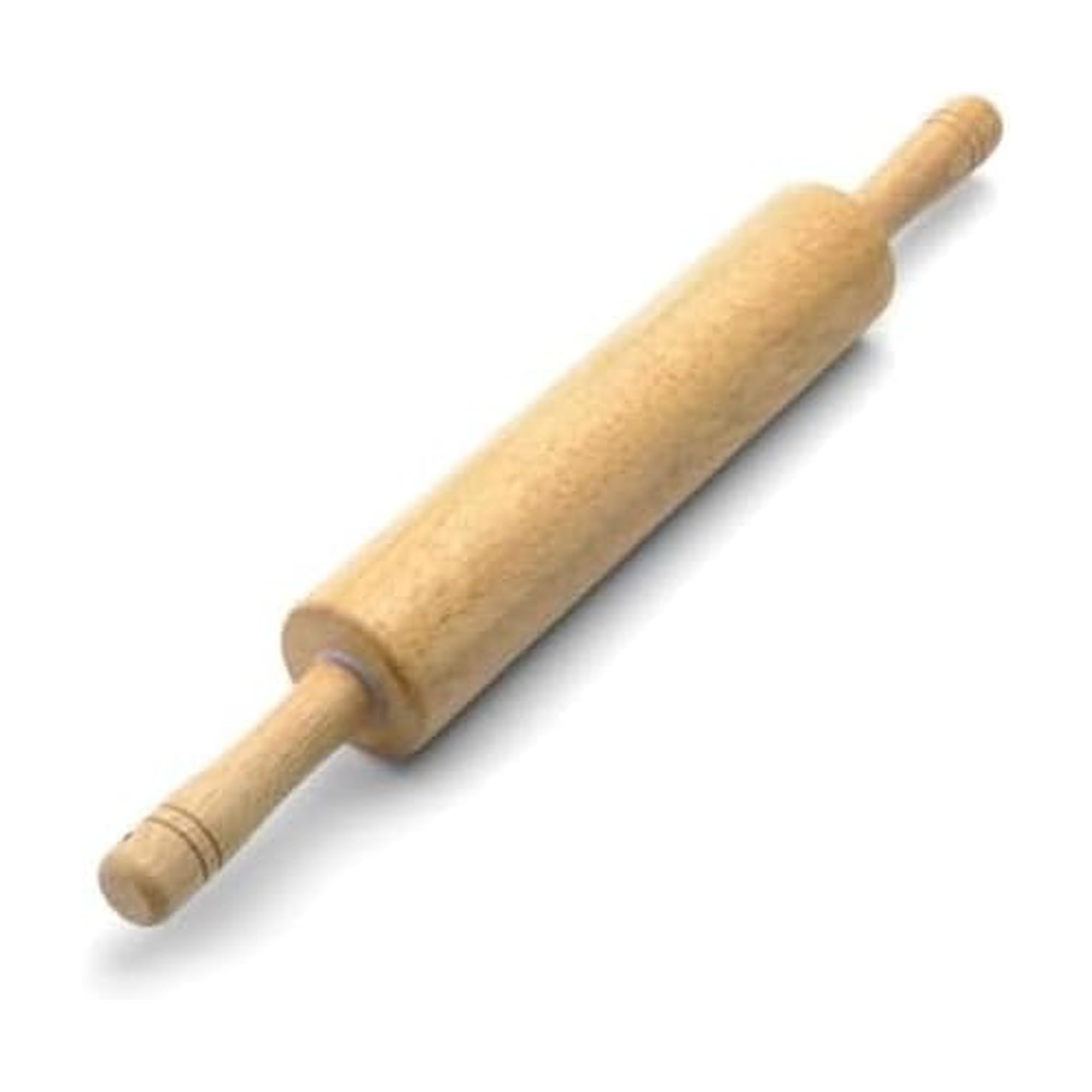
Farberware Classic Wood Rolling Pin
Key Features
- Material: Rosewood
- Design: Handled
- Weight: 1.04 lbs
- Price: Budget
Few budget rolling pins come with as much buyer confidence as the Farberware Classic. Its 18-inch hardwood barrel and ergonomic handles make rolling dough for pies, cookies, and pizza straightforward, and it cleans up quickly with a wipe. The smooth action and even pressure distribution mean less frustration for beginners and occasional bakers.
This pin is best for anyone who wants a traditional handled design without spending heavily. The rosewood body feels smooth out of the box, but wood can eventually splinter or develop rough edges if regular oiling is skipped. Quality control also varies, so inspecting the pin on arrival is wise. For light to moderate use, these are manageable trade-offs.
Pros
- Solid hardwood build that feels substantial for the price
- Rolls dough evenly with little effort, even for beginners
- Wipes clean easily and resists sticking with light flouring
Cons
- Wood may develop splinters or rough edges with heavy use, especially if not oiled periodically
- Build quality can vary between units, so some arrive with minor imperfections
For the price, this pin delivers consistent results with minimal fuss. If you’re a casual baker who values a traditional handled design, this is the safest choice in the budget category.
Best for Precision Bakers
Joseph Joseph Adjustable Rolling Pin
Four interchangeable rings deliver foolproof 1/16 to 3/8-inch thickness every time — ideal for cut-out cookies and fondant. The solid beech barrel and plastic rings feel substantial, and switching thickness takes seconds, giving consistent results without guesswork.
Where this pin excels is repetitive tasks like holiday cookie batches where uniform thickness matters more than covering a large surface. The 13.6-inch barrel and initial conditioning (the wood arrives dry and needs mineral oil) mean it’s less suited for oversized pizza or pastry sheets. Bakers who already own a silicone mat and want fine control will appreciate the trade-off.
Pros
- Interchangeable rings provide precise, repeatable dough thickness from 1/16 to 3/8 inch.
- Solid beech barrel with smooth-rolling plastic rings feels durable and easy to handle.
- Rings swap quickly between projects, reducing cleanup and setup time.
Cons
- Wood may arrive dry and require mineral oil conditioning before first use to prevent sticking.
- 13.6-inch barrel is too short for large pizza or big batch dough projects.
A dedicated tool for precision bakers who value consistent thickness and are willing to condition the wood and work within a shorter barrel.
Best for French-Style Lovers
KARRYOUNG French Rolling Pin
Key Features
- Material: Rubberwood
- Design: French tapered
- Weight: 8.4 oz
- Price: Budget
The KARRYOUNG French Rolling Pin offers a smooth rubberwood surface that feels premium and provides even pressure without sticking. The tapered design gives excellent control for pie crusts, cookies, and pastries. Its 17-inch barrel is well-suited for most home baking tasks, though it may feel short when rolling out large batches of pizza or pastry dough. This handleless style is ideal for bakers who prefer direct hand contact for consistent thickness and who don’t mind a slight learning curve compared to handled pins.
Pros
- Smooth rubberwood surface resists sticking and feels easy to clean
- Tapered design provides excellent control for even rolling
- Compact size makes storage simple in smaller kitchens
Cons
- Barrel length can be limiting for large dough projects like full pizza sheets
A dependable handleless pin for home bakers who prioritize control and easy storage over batch size.
Best for Cool Non-Porous Pin
Ultra Cuisine French SS Rolling Pin
Key Features
- Material: Stainless steel
- Design: French tapered
- Weight: 10.08 oz
- Price: Mid-Range
The Ultra Cuisine French pin delivers the lowest-maintenance rolling experience in this category: stainless steel means no seasoning, no hand-washing, and a cool surface that won’t absorb fats or odors. Its lightweight design (10 ounces) means you’ll need to apply more arm pressure for dense doughs like shortcrust, which makes this pin best suited for bakers who prioritize quick cleanup and manual control over heft.
Pros
- Smooth rolling action with a professional finish
- Balanced weight — not too heavy, not too light for most doughs
- Dishwasher-safe and non-porous for effortless cleanup
Cons
- Lightweight design may require more effort for very stiff doughs
For bakers who value quick cleanup and a non-porous surface, this stainless steel French pin is a smart mid-range choice — just know that heavy pastry work will demand a bit more muscle.
Best for Pastry & Fondant
Fox Run Marble Rolling Pin
Key Features
- Material: Marble
- Design: Handled
- Weight: 4.6 lbs
- Price: Mid-Range
The solid marble barrel maintains a naturally cool surface that keeps butter-rich doughs from softening too quickly, and its 4.6-pound weight does much of the rolling work for you. This pin pairs well with the top pick if you prioritize heft and temperature control, though the weight can be tiring for users with limited arm strength. It’s best suited for bakers who don’t mind the heft and appreciate the elegant wooden cradle for storage, but those who need a drop-proof tool or have arthritis should consider lighter options.
Pros
- Natural cool surface ideal for butter doughs and fondant
- Heavy weight provides effortless rolling with minimal pressure
- Polished marble and wooden stand look attractive on counter
Cons
- Heavy weight may be difficult for some users to maneuver
- Wooden handles can loosen or break with repeated use; marble may chip if dropped
A cool, heavy pin that rolls effortlessly — ideal if you can manage the weight and don’t need a drop-proof tool.
Best for Budget Adjustable Set
QUELLANCE SS Rolling Pin Set
Key Features
- Material: Stainless steel
- Design: Adjustable rings + mat
- Price: Mid-Range
The QUELLANCE set delivers four adjustable thickness rings and a silicone mat together at a mid-range price, giving home bakers a straightforward way to roll dough to 1/16, 1/8, 1/4, or 3/8 inch without guessing. The stainless steel barrel is easy to wipe clean, and the mat provides a non-stick surface for most tasks.
This combination works best for casual bakers rolling sugar cookies, fondant, or pizza dough who value thickness control and easy cleanup. The tradeoff: dough may cling to the steel pin despite the non-stick claim, and the mat can slide on smooth counters — both manageable with a light dusting of flour or a damp towel underneath.
Pros
- Stainless steel barrel resists rust and cleans easily
- Four removable rings ensure repeatable thickness across dough batches
- Comes with a silicone mat that protects counters and minimizes cleanup
Cons
- Dough may stick to the stainless steel surface despite non-stick claims
- Silicone mat can shift on polished or wet countertops during rolling
A practical starter bundle for bakers who want adjustable thickness without a steep price — just be ready to flour the pin and secure the mat.
Best for Marble with Stand
Zulay Kitchen Marble Rolling Pin
The polished marble drum stays naturally cool, making it a strong match for butter-rich doughs that need a chilled surface. The long beechwood handle offers comfortable grip, and the included stand keeps the pin tidy on the counter. However, handle looseness or breakage has been noted in some units, so this pin suits bakers who prioritize cold rolling and attractive storage over rugged durability.
Pros
- Well-crafted marble with a smooth, polished finish
- Heavy weight helps roll dough with less effort
Cons
- Handles may loosen or break over time; some units arrive with defects
A handsome marble pin for bakers who value cool rolling and elegant storage — but handle consistency is a concern.
Best for Occasional Bakers
GoodCook Classic Wood Rolling Pin

Key Features
- Material: Hardwood
- Design: Handled
- Weight: 11.2 oz
- Price: Budget
Under $10, this handled wooden pin with nylon bearings rolls smoothly for small projects like cookie dough or a single pie crust. Its compact size suits small households, but build quality can be inconsistent — some units may crack or splinter after limited use. Best for bakers who roll dough once a month and accept the gamble.
Pros
- Lowest-price handled option with smooth-rolling bearings
- Easy to clean and handle for basic dough tasks
Cons
- Inconsistent build quality may lead to cracks or splinters over time
Works for the once-a-month baker who wants to spend under $10 and doesn’t need a pin that lasts through regular use.
Best for Budget French Fans
Aisoso French Rolling Pin

Key Features
- Material: Natural wood
- Design: French tapered
- Weight: 0.6 lbs
- Price: Budget
This 17.7-inch wooden pin glides smoothly for small to medium baking tasks like cookies and pie crusts. Its narrow 1.38-inch diameter can be too thin for denser doughs, and warping has been noted in some cases — the KARRYOUNG French pin offers a thicker barrel for similar money.
Pros
- Smooth, well-finished surface with no paint or wax
- Handles small to medium baking tasks with ease
Cons
- Narrow barrel may be too thin for dense pastry; warping has been reported in isolated cases
Fits casual bakers who want a long, lightweight pin for everyday cookies and pie crusts — not ideal for heavy shortcrust or large batches.
Best for Budget Adjustable Set
MTNZXZ SS Rolling Pin Set

Key Features
- Material: Stainless steel
- Design: Adjustable rings + mat
- Price: Mid-Range
Affordable adjustable rolling pin and silicone mat bundle. The stainless steel pin with four thickness rings provides even rolling for occasional baking projects. Dough can stick to both the pin and mat, and the plastic end caps may crack with repeated use — making this set best for infrequent use with drier doughs.
Pros
- Adjustable rings deliver consistent thickness for cookies and pastries.
- Smooth stainless steel surface cleans up quickly after use.
Cons
- Dough may adhere to the pin and mat; plastic end caps can break under stress.
This set works for bakers who roll non-sticky dough infrequently and want adjustable thickness without spending much.
Best for Reliable Adjustable Set
Vinoil SS Rolling Pin Set

Key Features
- Material: Stainless steel
- Design: Adjustable rings + mat
- Price: Mid-Range
Smooth-rolling stainless steel set with easy cleanup. The barrel isn’t sealed — water can cause rust if soaked, so dry it after washing. It hasn’t built the same reputation as top adjustable pins, but for bakers who value material quality, it’s a solid performer.
Pros
- Sturdy 304 stainless steel barrel resists warping and provides balanced weight.
- Smooth surface cleans up quickly without dough sticking.
Cons
- Barrel not fully sealed — water can seep in if soaked, so thorough drying after washing is necessary.
A solid adjustable set for bakers who want stainless steel durability and don’t mind drying the pin by hand — best suited for those who prefer a less mainstream option.
Best for Budget Adjustable
BIDFUL Adjustable Rolling Pin

Key Features
- Material: Stainless steel
- Design: Adjustable rings
- Price: Budget
The BIDFUL Adjustable Rolling Pin offers four thickness rings (1/16 to 3/8 inch) on a stainless steel barrel at a budget-friendly price, making it a practical entry point for beginner bakers. The plastic rings, however, can be tough to swap and lack the solid feel of metal alternatives – a compromise that matters more for frequent baking than occasional cookie decorating.
Pros
- Good build quality for the entry-level price
- Produces evenly rolled dough for cookies and fondant
Cons
- Plastic thickness rings can be difficult to change and feel less substantial
Best suited for casual bakers who need adjustable thickness on a tight budget, but not for those who want premium metal rings or plan heavy daily use.
Best for Ultra-Budget Use
Berglander SS Rolling Pin

Key Features
- Material: Stainless steel
- Design: French tapered
- Weight: 8.8 oz
- Price: Budget
This stainless steel French-style pin is budget-friendly and easy to clean, making it a simple choice for occasional bakers who roll soft doughs like pie crusts or sugar cookies. However, its lightweight build means it requires more arm pressure for stiff doughs, and some units may show cosmetic scratches out of the box — a trade-off you accept at this entry-level price.
Pros
- Easy to clean stainless steel surface resists odors and rinses quickly.
- Lightweight handleless design is easy for quick rolling tasks.
Cons
- Lightweight build may not suit stiff doughs without extra work; some arrive with surface scratches.
Best for the occasional baker who wants a stainless steel pin without spending much, but not the tool for frequent use with firm doughs.
Best for Budget Handled
HELFERX Wood Rolling Pin

Key Features
- Material: Beech wood
- Design: Handled
- Weight: 15.52 oz
- Price: Budget
This budget-friendly beech wood pin offers a comfortable grip and smooth rotation thanks to nylon bearings, making it easy to roll out dough for pies or cookies. However, like other low-cost wood options, some units may develop cracks or splinters after washing — a gamble that makes it best for occasional use rather than weekly baking projects.
Pros
- Good quality for the price, with smooth-rolling nylon bearings
- Easy to use and clean, with a simple wipe-down finish
Cons
- Wood may crack or splinter after washing in some cases
A decent option for the occasional baker on a tight budget who doesn’t mind the need for careful hand-washing and oiling.
Best for Compact Budget French
Muso Wood French Rolling Pin

Key Features
- Material: Beech wood
- Design: French tapered
- Weight: 0.5 lbs
- Price: Budget
The Muso Wood French pin rolls smoothly thanks to its fine beech wood finish and is simple to clean after use. However, the 15.75-inch length limits its reach for large dough batches like double-crust pies or full sheet pizzas — a tradeoff that suits occasional use on smaller projects.
Pros
- Smooth beech wood finish glides without excessive dusting
- Easy to clean and store due to compact size
Cons
- The 15.75-inch length may be insufficient for larger dough projects
Best for bakers who prioritize compact storage and occasional single-crust jobs. For bigger tasks, a longer handled pin is a better match.
How to Choose
The material of your rolling pin determines its weight, maintenance, and how it interacts with different doughs.
Material
Wood pins are classic and affordable, but they require regular mineral oil treatment to prevent cracking. If you bake infrequently, wood can last years with proper care; if you bake weekly, the oiling schedule becomes a chore.
Stainless steel resists moisture and won’t splinter, but dough can stick more than to wood. Chilling the pin helps, and some models are dishwasher safe. Marble is naturally cool and heavy, ideal for pastry, but can chip or break if dropped.
Design
Handled pins are the most familiar, offering two-handed leverage for even rolling. French tapered pins are handleless, giving you direct fingertip control to feel dough thickness—great for experienced bakers but less leverage for tough doughs.
Adjustable rings remove guesswork for consistent cookie thickness, but the rings limit the usable length of the barrel. For large pizzas or bread, a longer handled pin or French pin is more practical.
Barrel Length and Diameter
Longer barrels (17–18 inches) cover more dough per pass, speeding up work on batches of pie crusts or cookies. Shorter barrels around 10 inches are easier to store but require more passes for large sheets of dough.
Diameter affects rolling effort: a thicker barrel (2 inches or more) reduces pressure needed, while slim barrels (under 1.5 inches) give more control but may struggle with dense doughs like puff pastry.
Weight
Heavier pins (over 2 pounds) do much of the work themselves, making them ideal for shortcrust pastry and pizza. Lighter pins (under 1 pound) require more arm strength but offer better feel for delicate doughs like phyllo or laminated pastry.
Marble pins typically weigh 4–5 pounds and are best for butter-heavy doughs that need to stay cold. Steel and wood range from 0.5 to 1.5 pounds. If you have wrist or joint issues, a heavier pin reduces effort.
Ease of Cleaning
Stainless steel pins are the easiest to clean—many are dishwasher safe. Wood must be hand-washed and dried immediately; standing water causes cracks and splinters. Marble is non-porous but heavy to handle in the sink.
Adjustable pins with rings have crevices where dough can hide; the rings and end caps should be removed for thorough cleaning. A quick wipe with a damp cloth after each use prevents buildup.
FAQ
Why does my wooden rolling pin crack after washing it?
Wood expands when wet and contracts as it dries. Washing a wooden pin with soap or submerging it forces moisture deep into the grain. To prevent cracking, wipe it down with a damp cloth, dry immediately, and apply food-grade mineral oil every month or when the surface looks dry.
Can I put a marble rolling pin in the dishwasher?
No. Dishwasher detergent and heat can damage the marble surface and cause the metal handles to loosen. Hand wash with mild soap and dry immediately. Dropping a marble pin can also chip it, so handle carefully and store in its cradle or a padded drawer.
How do I keep dough from sticking to a stainless steel rolling pin?
Stainless steel is non-porous, so dough tends to slide rather than adhere, but sticky doughs still cling. Lightly dust the pin with flour or chill it in the fridge for 10 minutes before rolling. A silicone mat underneath also reduces sticking. Avoid using cooking spray, which can create a gummy residue.
What size rolling pin is best for pie crusts?
For a standard 9-inch pie, a barrel length of 10–12 inches is sufficient to roll a 12-inch circle. A longer pin (17–18 inches) gives you more even coverage and is better for larger batches or pizza. French tapered pins under 16 inches work well for single crusts but may require extra passes for double-crust pies.