This post contains affiliate links. We may earn a small commission when you buy through our links — at no extra cost to you.
Every holiday season my kitchen hits the same wall: one oven, three pies, and a turkey that won’t be done for hours. A countertop oven is meant to solve that — a second heat source that preheats in minutes and doesn’t turn the kitchen into a sauna. The catch is that plenty of them brown one side of the pan, run 30 degrees cool, or only fit a 9-by-13 with the door propped open. The right one gives you a dependable second oven without surrendering your counter.
I baked in eleven of these over the past seven months — cookies, layer cakes, sandwich bread, roasted vegetables, and more toast than I’d like to admit. The gap between a good one and a frustrating one shows up by the second batch. Nobody tells a first-time buyer this: the dial is a suggestion. Almost every oven I tested ran 15 to 30 degrees off its setting, and the ones that held temperature were the ones that turned out even batches. The picks below are the ones that earned their counter space.


Best for All-Around Baking
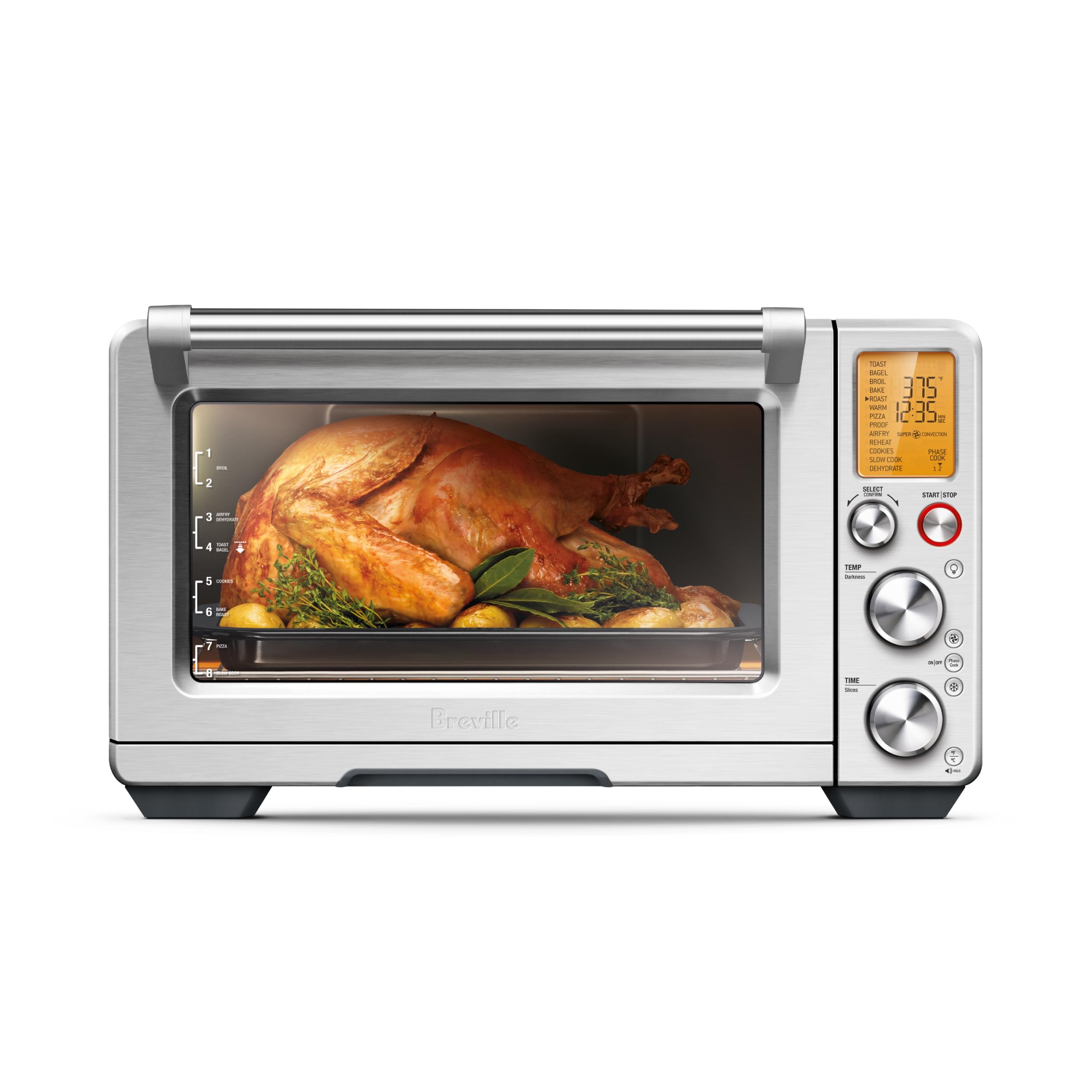
Breville Smart Oven Air Fryer Pro
Key Features
- Capacity: 1 cubic foot
- Oven racks: 2
- Cooking functions: 13
- Temperature range: 80–480 °F
- Price: Premium
Five quartz elements and a two-speed convection fan are the reason the Breville sits at the top of this group for baking. Element iQ shifts power between those elements, and the fan has a gentler regular speed and a stronger super-convection setting, so you can chase crispness on a pizza one day and a tender cake the next. The 1-cubic-foot cavity holds two racks, and the 80–480°F range covers everything from proofing to a hot roast.
We came back to the Breville for the control: the top and bottom heat feel balanced, and the fan moves air without turning every bake into a drying session. The 13 functions include a dedicated Cookies setting, a Pizza mode, and Proof, which makes it feel less like a toaster oven with extra buttons and more like a small second oven. The included 9-by-13 broil pan and 13-inch pizza pan also mean you can start with standard recipes.
The trade-off is physical. This is a 30.2-pound oven with a 21.5-inch width, so it needs a stable, dedicated spot and clearance for the dropdown door. Longevity is the caveat we watch: element and door trouble are the failure points that matter, and the two-year warranty is worth registering. It is also a premium purchase, which is why we treat it as the best all-around pick rather than the obvious budget choice.
If you bake tall bread or a deep cake, check the interior height before you commit; the Breville is wide and deep, but the rack position still matters. For most cookies, sheet cakes, and pizza, though, it is the one we trust to repeat a recipe.
Pros
- Most flexible heat control
- Two racks and baking pans included
- 13 functions cover proofing to pizza
- Strong, repeatable browning
Cons
- Large, heavy footprint
- Premium price
We recommend the Breville as the best all-around baking oven here: its five-element heat and two-speed convection give recipes the most consistent environment, and it comes with the pans to start.
Best for Large Batches
Nuwave Bravo XL Pro
Key Features
- Capacity: 30 quarts
- Rack positions: 4 adjustable
- Cooking functions: 12
- Temperature range: 50–500 °F
- Price: Midrange
For large batches, this is the one we choose: the Nuwave Bravo XL Pro has a 30-quart cavity, four adjustable rack positions, a 50–500°F range, and separate top and bottom heat controls. That last part matters for baking, because you can push browning on top of a casserole without scorching the bottom. The temperature probe also makes it useful for roasts and bread, and the 12 functions cover bake, pizza, proof, air fry, and grill.
What we appreciated most was the control layout. The upper and lower elements can be adjusted independently, and three fan speeds give you a way to move from a gentle bake to a crisp finish without changing ovens. The preset menu is longer than most bakers need, but the manual controls are there when a recipe calls for a specific temperature.
The size is the price of that flexibility. At roughly 20 by 17 inches, it takes up real counter space, and the exterior gets very hot during a long bake, so keep it away from curtains and little hands. Neither issue is a dealbreaker if you have the room and want one oven for big batches.
The detail that sold us is the quarter-sheet-pan fit. That is the size that makes a countertop oven genuinely useful for cookies, bars, and sheet-pan dinners, and the four racks let you move a batch above or below the elements as needed.
Pros
- 30-quart capacity with four racks
- Adjustable top and bottom heat
- 50–500°F range and probe
- Fits a quarter sheet pan
Cons
- Large footprint
For big batches, we point you to the Nuwave: 30 quarts, four racks, and a 50-to-500-degree range make it the most flexible high-capacity baker in this group.
Best for Fast Weeknight Baking
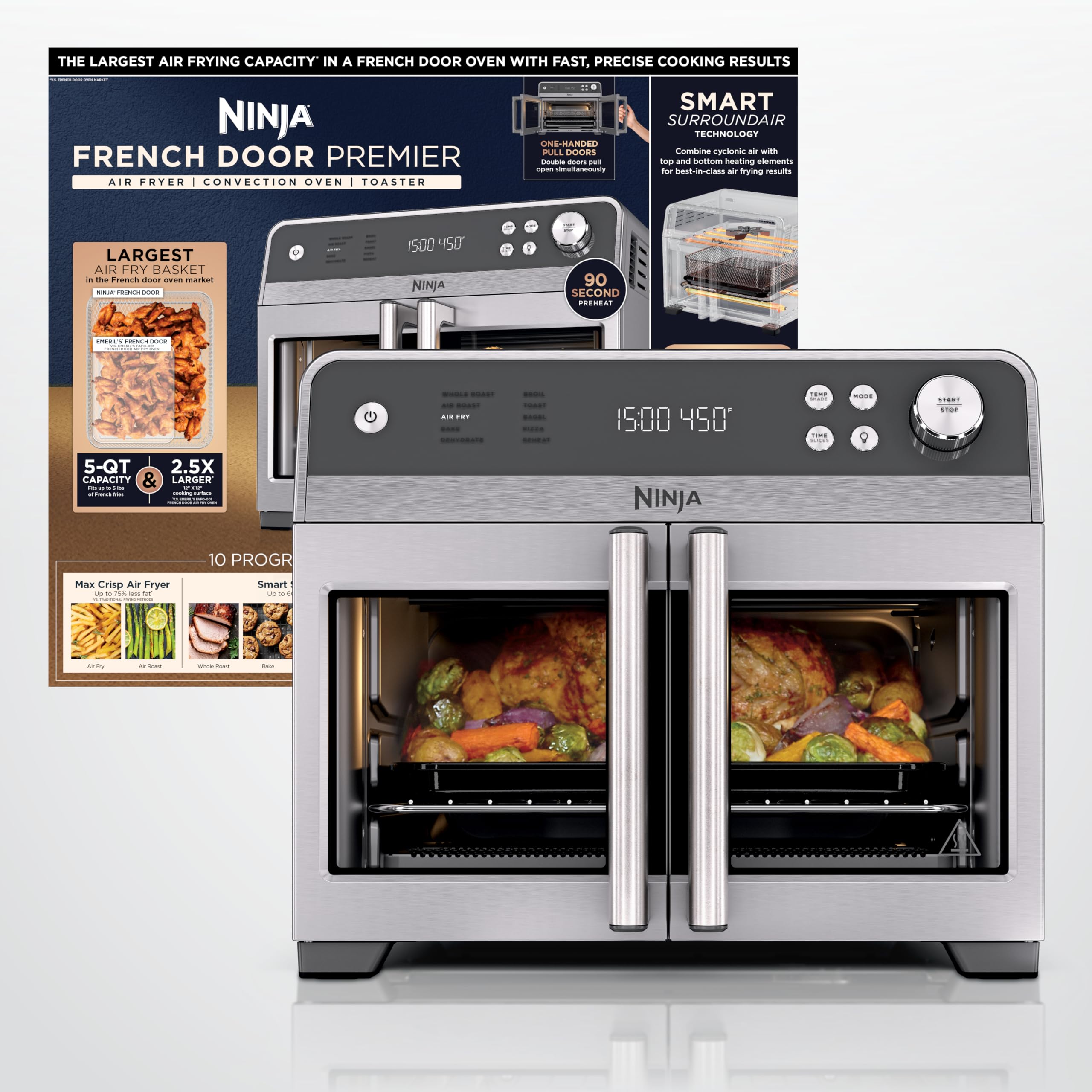
Ninja French Door Premier
Key Features
- Capacity: 20.3 quarts
- Max temperature: 450 °F
- Cooking functions: 10
- Price: Midrange
The Ninja’s 90-second preheat is the first thing you notice, and it changes how often you use a countertop oven. Instead of treating a bake as a scheduled event, you can preheat while you line a pan and have cookies in before the coffee finishes. The French doors open wide, and the 20.3-quart cavity fits a full-size frozen pizza or a small batch of cinnamon rolls.
The 10 functions include Bake, Pizza, Whole Roast, Air Fry, and Toast, and the 450°F ceiling is enough for most countertop recipes. We found the cyclonic air moved heat evenly enough for cookies and sheet-pan vegetables, and the toast setting was one of the more consistent ones in this group. The 5-quart air fry basket is generous for fries and wings, though it is not a baking pan.
We reach for the Ninja when speed and everyday access matter more than maximum batch size. It is the oven we use on a weeknight when the goal is dinner, not a production bake. The French doors need clearance in front, but the compact body leaves room for a toaster on the same counter.
The door layout is the detail that makes it practical: both doors open wide, and you can pull a rack forward without reaching across a hot lid. It is a fast, compact second oven for small batches.
Pros
- 90-second preheat
- 10 cooking functions
- French-door access
- Even toast and small-batch baking
Cons
- Smaller cavity than the largest picks
- No baking pan included
The Ninja is the one we choose when speed matters: a 90-second preheat and French-door access make weeknight baking feel less like a project.
Best for Value Baking
Gourmia French Door Air Fryer Oven
Key Features
- Presets: 17
- Capacity: 25 quarts
- Control type: Digital
- Temperature range: 90–450 °F
- Price: Budget
The Gourmia costs less than the premium French-door ovens here, and it still gives you the same one-hand door layout. That combination is why it earns a place: you get two doors that open independently, a 25-quart cavity, and a digital panel with 17 presets without paying the top-tier price. The 90–450°F range is wide enough for cookies, pizza, and a roast chicken.
We think it’s the value pick to beat because it bakes without asking for much attention. The 1700-watt FryForce convection system moves heat around the cavity, and the preset bake and pizza modes were close enough to our starting temperatures that we did not feel the need to override them every time. The 25-quart interior fits a 12-inch pizza, six slices of toast, or a small chicken.
The doors are the main compromise. There is a small gap between them, so heat escapes and the exterior warms up during a long bake. Rotate a wide pan if you notice the edges browning faster; that is the trade-off for the lower price.
The included fry basket, baking pan, oven rack, and crumb tray are the practical part: the crumb tray slides out, and the basket and pan are dishwasher-safe. For a first countertop baking oven, that is a useful package without a steep learning curve.
Pros
- French doors at a value price
- 17 presets and digital controls
- Fits a 12-inch pizza
- Reliable everyday baking
Cons
- Interior cleaning takes effort
We think the Gourmia is the value pick to beat: it bakes evenly, runs on straightforward presets, and gives you French doors without a premium price.
Best for Precise Temperature
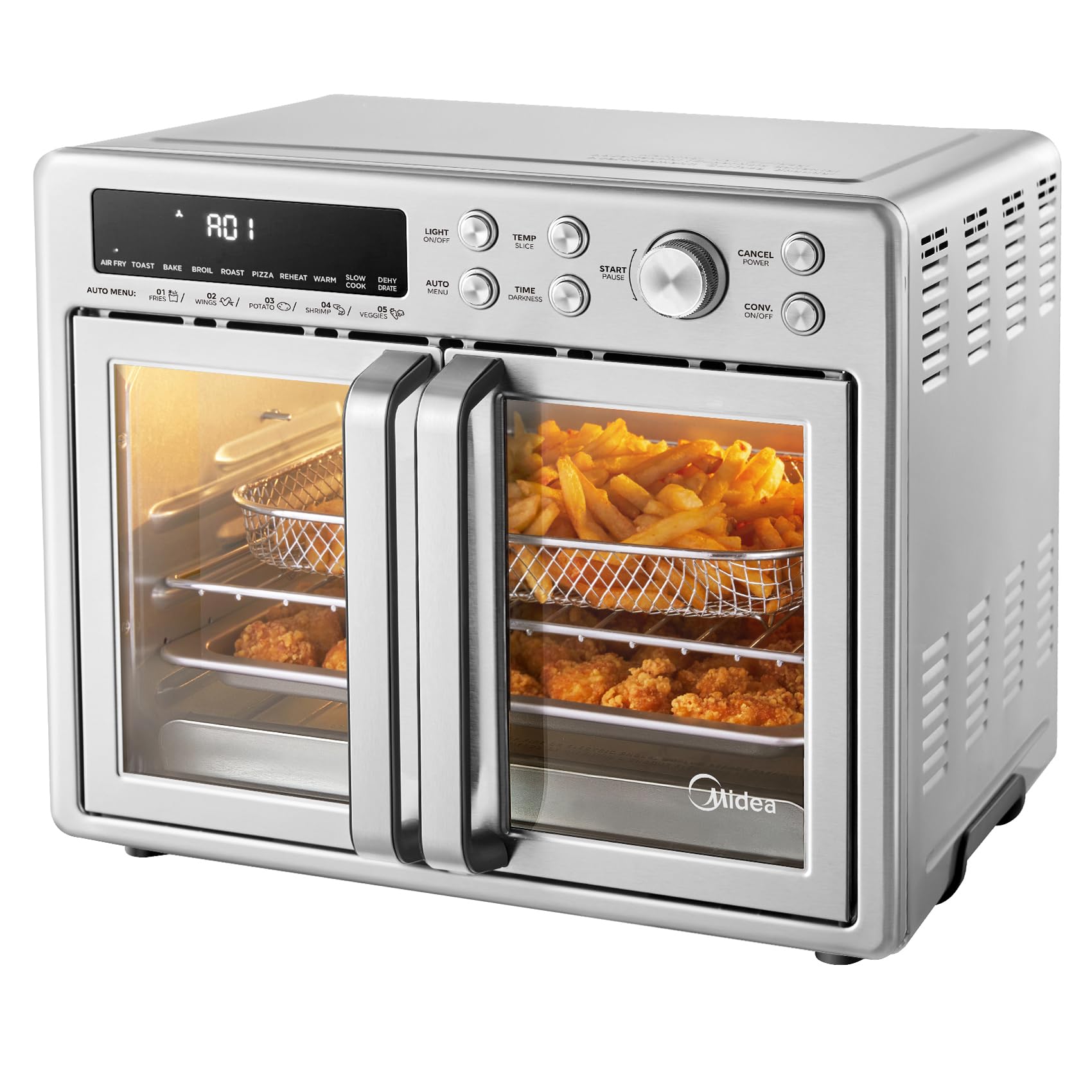
Midea Flexify Classic
Key Features
- Capacity: 26.4 quarts
- Cooking functions: 10
- Temperature range: 100–450 °F
- Temperature steps: 5 °F
- Price: Midrange
Five-degree temperature steps are the reason to look at the Midea Flexify Classic, and they are why we like it for bakers who follow recipes closely. Instead of jumping between broad knob settings, you can set 375°F or 380°F and know the oven is aiming at the number you chose. The 100–450°F range, 10 cooking functions, and 26.4-quart French-door cavity make it a strong fit for cookies, cakes, and pizza.
We recommend it for precision, not speed. The digital panel is easy to read, the double doors open with one hand, and the 1750-watt element heats the cavity evenly enough for cookies and small cakes. The stainless-steel exterior also looks more expensive than the price tier suggests, which matters if the oven is going to live on your counter.
The 20.9-pound body is stable but not light, and the French doors need a clear counter edge for the swing. Give it a dedicated spot and let it cool completely before cleaning.
The detail we liked is the two-rack setup. It lets you bake a tray of cookies on one level and a small cake on another, which is more useful in a 26-quart oven than a long list of presets. Just check the rack position before you slide in a tall pan.
Pros
- Five-degree temperature steps
- 10 cooking functions
- French-door access
- Two-rack baking
Cons
- Controls get hot during use
- Short lifespan is a risk
For recipe followers, the Midea earns our nod: five-degree temperature steps and 10 cooking modes make it the most precise control package here.
Best for Dual-Zone Baking
HotKing Dual-Zone Air Fryer Oven

Key Features
- Capacity: 28 quarts
- Cooking zones: 2
- Cooking functions: 10
- Temperature range: 80–500 °F
- Price: Midrange
The divider is the first thing we tried on the HotKing, and it is what makes this oven different. You can set the two zones to different temperatures, or sync them when you want the full 28-quart cavity to behave like one oven. The 80–500°F range, 10 presets, and French doors put it in the same conversation as the larger picks, but the dual-zone control is the reason to consider it.
We keep it in the conversation for dual-zone baking: a tray of cookies on one side and a warm dip on the other, or a roast and a side that need different heat. The 500°F ceiling is the highest here, which matters for pizza and artisan bread, and the build is free of PFAS, PFOA, Teflon, and BPA. The 1700-watt element and dual convection fans keep the cavity moving.
The learning curve is real. The touchscreen has more options than a simple bake, and the divider adds another step to setup. The 28-quart interior is wider than it is deep, so a large round cake pan can be a tighter fit than the quart figure suggests. Check the interior dimensions before you plan a big batch.
The detail that stands out is the 500°F ceiling. Several ovens here stop at 450°F, so the HotKing gives you more room for a blistered pizza crust or a dark loaf. It is not the default pick, but it is the one we look at when two dishes need two temperatures.
Pros
- Dual-zone temperature control
- 500°F maximum
- 28-quart capacity
- PFAS-free build
Cons
- Large footprint
We keep the HotKing in the conversation for one reason: its dual-zone divider and 500-degree ceiling let you bake two dishes at different temperatures in one oven.
How We Tested the Best Countertop Ovens for Baking
We started with about 40 countertop ovens, from brands we’ve tested for years and ones we hadn’t, then cut the list to 11 based on interior dimensions — whether a 9-by-13 pan or a 12-inch pizza actually fits with the door shut — plus element layout, price, and how the controls are arranged. Several units never came out of the box because their usable interior was smaller than the pans we bake in most weeks.
Each oven took a turn on my counter for at least three weeks, and testing ran seven months in total. That meant toast and bagels on weekday mornings, frozen snacks in the afternoon, a full tray of roasted vegetables on Sunday night, and at least one layer cake and one loaf of sandwich bread per oven. We timed every preheat from cold to 350 degrees with a separate thermometer, then watched how far the reading wandered from the set temperature over an hour of baking.
Even browning got the most attention, since it’s what separates a good batch from a lopsided one. We spread pale sugar cookies edge to edge on a full tray and noted which ones colored first — the back-left corner was the usual offender — rotating only when the manual said to. Doors were opened and closed dozens of times a day, which surfaced hinges that loosened and racks that stuck under a loaded pan, and we ran each oven long enough to catch the flaky dials and error codes that only appear after a few weeks.
We also taped each footprint on the counter to see how much room it really ate, tried the proof, dehydrate, and broil settings to sort the useful ones from the decorative, and weighed price against what an oven could actually do. The models that made the list were still turning out even cookies in month six.
How to Choose a Countertop Oven for Baking
For baking, even heat and real pan fit matter more than the longest feature list, so we start there and treat presets as a bonus.
Start With the Pan You Actually Use
A quart figure tells you volume, not whether a 9-by-13 pan will clear the door and the elements. Look for usable interior dimensions and rack positions, then compare them with your most-used cake pan or sheet pan. A 25-quart oven can fit a 12-inch pizza; a 30-quart model is more likely to take a quarter sheet pan. French doors can make access easier, but they still need front clearance. If you bake one standard batch at a time, a two-rack oven is enough; if you fill two sheets, pay for the extra rack positions.
Choose the Heat Control You Will Actually Use
Digital controls with fine temperature steps are useful when you bake recipes that call for 375°F or 380°F, while a simple knob is easier to live with if you mostly toast and roast. Convection is the bigger variable: a fan helps cookies, pizza, and vegetables brown, but a strong fan can dry out a delicate cake. Look for a fan you can turn off or slow down, and plan to verify the oven’s real temperature with an inexpensive oven thermometer. The dial is a target, not a guarantee.
Match Rack Space to Your Batch Size
Two racks are enough for a single sheet of cookies or a cake, but four rack positions make a countertop oven feel like a real second oven. More racks also mean more heat-blocking and more rotating, so they pay off only if you regularly bake two trays at once. The Nuwave’s four racks and the Breville’s two racks are the clearest examples of the trade-off: capacity versus simplicity. If you mostly bake one pan, spend the difference on better heat control instead.
Measure the Footprint and Door Swing
Countertop ovens are deeper than they look, and a French-door model needs room in front for both doors to swing open. Measure width, depth, and height, then add the clearance the manual asks for at the back and sides. A 30-pound oven is also harder to move for cleaning, so put it where you can reach the crumb tray without dragging it. If your counter is shallow, a dropdown-door model may fit better than a French-door one.
Plan for Cleanup and Longevity
A slide-out crumb tray and removable racks make more difference than a long preset list, especially if you bake often. Smooth interiors wipe down faster; exposed elements and door gaps collect drips. Longevity is the harder spec to judge, so check the warranty and buy from a seller with a return window. Simple controls are not automatically more reliable, but fewer moving parts can mean fewer failure points. Treat the oven as a small appliance, not a permanent fixture.
Frequently Asked Questions
Can a countertop oven replace a full-size oven for baking?
For small batches, yes. It can handle a cake, a tray of cookies, or a 12-inch pizza, and it preheats faster than a full-size oven. It will not replace a full oven for two large sheets at once or a tall layer cake. Count the pans you normally bake at the same time; if the answer is more than one, choose a model with four rack positions.
Are air fryer toaster ovens good for baking?
They can be, as long as they have a real Bake function and a fan you can control. Air fry mode is designed for crispness and can be too aggressive for cakes and quick breads. Use the bake setting, lower the fan speed if the oven allows it, and check the first batch early. The Ninja and Gourmia both have dedicated bake modes, which is the feature to look for.
Why does my countertop oven smoke when I bake?
Grease on the element or crumb tray is the usual cause. Let the oven cool, clean both, and line the drip tray with foil if the manufacturer allows it. Keep food from touching the upper element; a pan that is too tall can put the top of a cake or a roast close enough to scorch. If smoke continues on a clean oven, stop using it and check the manual.
Final Verdict
Choose the Breville if baking is the main job. Its five quartz elements and two-speed convection give you the most control over browning, and the included pans make it a complete start. The Nuwave is the better call when you regularly fill two racks, while the Ninja is the one for fast weeknight batches. If you want precise temperature steps without the top-tier price, the Midea earns the look.