This post contains affiliate links. We may earn a small commission when you buy through our links — at no extra cost to you.
Many carbon steel pans are marketed as naturally non-stick, but the reality is that achieving that surface requires careful seasoning. This gap between expectation and experience is where the best pans separate from the rest.
Weight, heat retention, and handle design also affect daily use. A pan that feels great on the stove might be too heavy to toss, or too thin to hold heat. The right choice depends on your cooking habits, not just the price tag.
This guide cuts through the confusion by focusing on what matters: which pans actually season well, hold their seasoning, and match your cooking style. No hype, just what works.



Best for Searing & Frying
de Buyer Mineral B 8"
Key Features
- Weight & Thickness: 2 lbs
- Oven Temp: 400°F
- Pre-Seasoned: No
- Induction: Yes
- Price: $$
The de Buyer Mineral B 8-inch brings French carbon steel into a size that works well for general stovetop frying, small-batch searing, and everyday pan work. Its carbon steel body heats faster than cast iron while still giving enough mass for browning meats, sautéing vegetables, and building a durable cooking surface over time.
Heat behavior is the main reason this pan fits the general-purpose carbon steel search better than specialty cookware. The cooking surface is compact at 5.5 inches, so it is better suited to one or two portions than family-size stir-fry, but it responds quickly to burner changes and supports high-contact searing on gas, electric, or induction cooktops.
Seasoning is part of the deal. The pan does not behave like a coated nonstick skillet out of the box, and the initial seasoning step matters if you want eggs, fish, or starchier foods to release cleanly. Buyers who expect a maintenance-free surface should stay with coated cookware; buyers willing to build the patina get a pan that can replace several everyday skillets.
This is the right fit for home cooks who want one cost-effective carbon steel pan for searing, frying, and general stovetop use without jumping to a heavier professional model. It requires initial seasoning effort and can feel heavier than its 8-inch size suggests, but those are manageable boundaries for cooks who value durability over convenience.
Pros
- Sturdy construction supports long-term use rather than short-cycle replacement.
- Fast, even heating makes searing and everyday frying easier to control.
- Strong searing performance suits meats, vegetables, and quick stovetop cooking.
- Seasoned surface releases food well after the patina develops.
Cons
- One-handed tossing may feel awkward for cooks expecting a light 8-inch pan.
The de Buyer Mineral B 8-inch is the carbon steel pan to get when you want a compact, durable stovetop skillet for searing and daily frying, not a maintenance-free nonstick replacement.
Best for High-Heat Searing
Matfer Bourgeat 11.6"
Key Features
- Weight & Thickness: 4.1 lbs
- Oven Temp: 800°F
- Handle: Welded steel
- Pre-Seasoned: No
- Induction: Yes
- Price: $$$
The Matfer Bourgeat 11.6-inch skillet stands out for its welded handle — no rivets means no crevices for food to hide, making cleanup straightforward. Combined with an 800°F oven tolerance and thick carbon steel that distributes heat evenly, this pan handles high-heat searing and oven finishing without hesitation. Compared to the lighter de Buyer Mineral B, the Matfer trades some handling ease for a more durable, rivet-less build and higher temperature range.
This pan suits experienced cooks who prioritize durability and heat performance over weight. At 4.1 pounds, it’s as hefty as a cast iron skillet — lifting and pouring can be cumbersome. The seasoning process also requires patience; initial sticking is possible until a stable patina develops. Best for those who appreciate a workhorse pan for steak searing, stir-frying, and oven use, and don’t mind the extra effort upfront.
Pros
- Professional-grade construction and durability handle daily high-heat use.
- Even heating and good heat retention across the cooking surface.
- Rivet-less welded handle simplifies cleaning and seasoning maintenance.
Cons
- At 4.1 lbs, the pan can be cumbersome to lift, pour, or flip one-handed.
- Seasoning can be finicky; food may stick initially before a stable patina develops.
For cooks who value a rivet-less, oven-safe workhorse that sears like cast iron but with better responsiveness, the Matfer Bourgeat is a clear choice — just be ready for the weight and seasoning learning curve.
Best for Large Stir-Fry
Babish 14" Wok
Key Features
- Weight & Thickness: 5 lbs
- Oven Temp: 500°F
- Handle: Wooden
- Pre-Seasoned: No
- Induction: Yes
- Price: $
The Babish 14-inch carbon steel wok delivers a sturdy, heavy-gauge build that resists warping across gas, electric, and induction cooktops. Its flat bottom provides good contact area for even heat distribution, and the generous size handles stir-fries, fried rice, and shallow deep-frying with room to spare. The price undercuts most competitors in this diameter, making it a practical entry point for home cooks who want to explore wok cooking without committing to a premium brand.
This wok suits budget-conscious home cooks who cook occasionally and are comfortable with carbon steel maintenance. The main tradeoffs: the wooden handle conducts heat over longer cooking sessions—keep a pot holder nearby—and the pan requires careful drying and a light oil coating after each wash to prevent rust. Those who want a set-and-forget, dishwasher-safe wok or need daily durability will want to look at higher-priced options.
Pros
- Sturdy heavy-gauge steel resists warping on all stovetops, including induction.
- Large 14-inch flat-bottom surface offers good cooking area for batch stir-fries.
- Capable of stir-frying, deep-frying, and general one-pan meals like fried rice.
Cons
- Rust can develop if the pan is not dried thoroughly after washing; some cases of coating peeling over time.
- Wooden handle becomes uncomfortably hot during prolonged cooking sessions.
A solid, affordable wok for occasional stir-fry cooks who don’t mind a bit of hand-washing and rust prevention — not the choice for daily heavy use.
Best for Lightweight Cooking
STRATA 10.5" Clad
Key Features
- Weight & Thickness: 2.4 lbs
- Oven Temp: 600°F
- Handle: Stainless steel
- Pre-Seasoned: No
- Induction: Yes
- Price: $$$
The STRATA 10.5" frying pan weighs just 2.4 lbs, making it significantly lighter than traditional carbon steel pans while delivering the even heat distribution you’d expect from a clad construction. Its 3-ply build with an aluminum core heats up quickly and eliminates hot spots, so sauces and sears cook uniformly across the surface.
This pan suits cooks who want the responsiveness of carbon steel without the wrist strain of heavier options. The tradeoff: some units have warped during initial seasoning, and the pan arrives unseasoned, requiring multiple seasoning sessions before it develops a reliable non-stick surface. If you’re willing to invest that setup time and can tolerate a small warping risk, the weight savings and heating performance are standout.
Pros
- Lightest carbon steel pan at 2.4 lbs with excellent heat distribution.
- Aluminum core eliminates hot spots and heats quickly.
- Slick interior becomes non-stick with proper seasoning.
Cons
- Some units may warp during initial seasoning, especially if overheated.
For cooks who prioritize lightweight handling and fast heating over traditional carbon steel heft, the STRATA delivers — but only if you’re willing to manage the occasionally finicky seasoning and warping risk.
Best for Budget Skillet
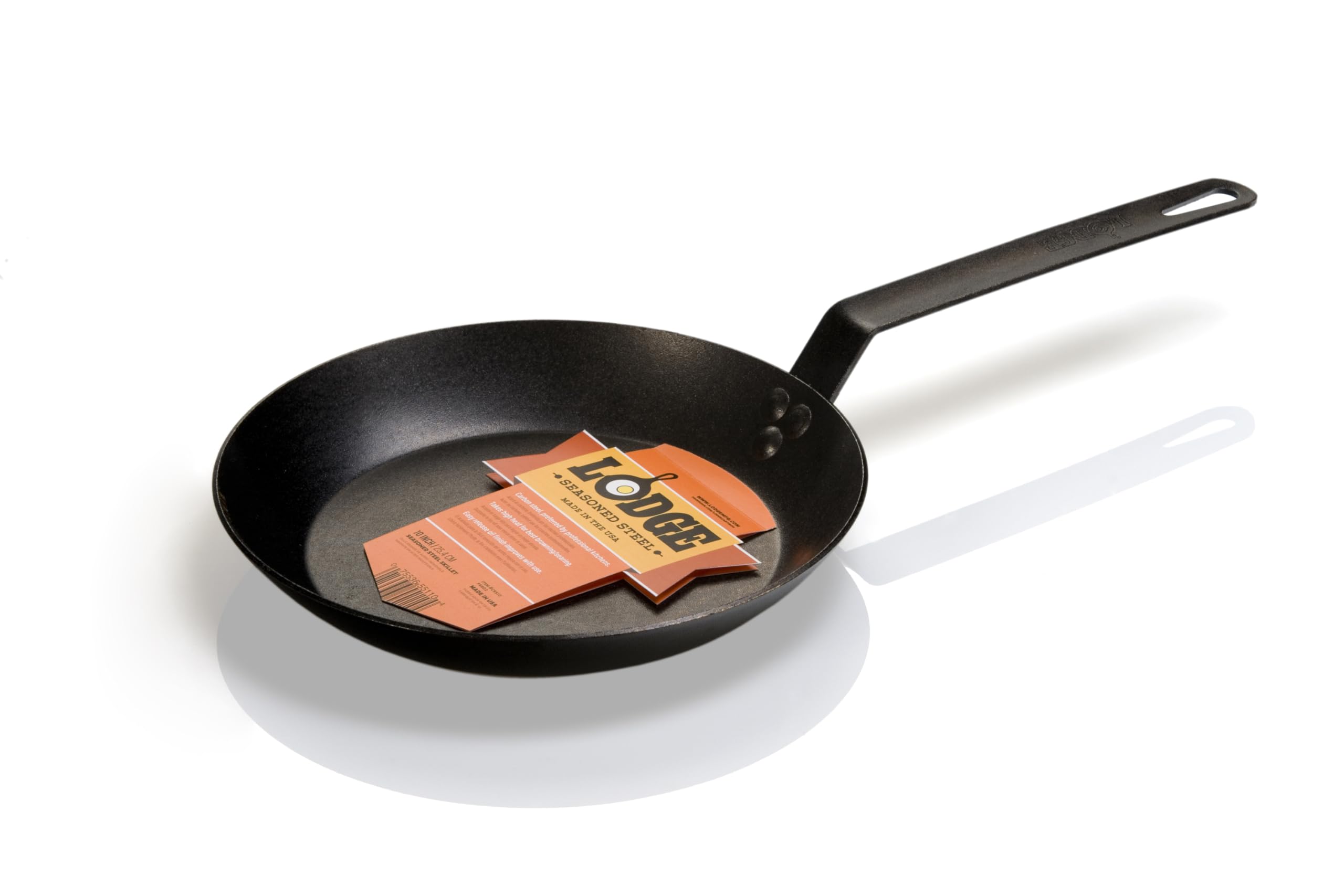
Lodge 10" Skillet
Key Features
- Weight & Thickness: 3.12 lbs
- Oven Temp: 500°F
- Handle: Cast iron
- Pre-Seasoned: Yes
- Induction: Yes
- Price: $
Lodge brings its cast iron expertise to carbon steel, delivering a skillet with similar heat retention and durability at a lower price than the top pick. While the de Buyer Mineral B offers a more refined out-of-box seasoning, the Lodge is lighter than cast iron and backed by a lifetime warranty. The pre-seasoning is thin — expect to add a few layers of oil before achieving reliable non-stick performance.
This skillet suits budget-conscious cooks who don’t mind initial seasoning work, campers needing a durable pan for open fires, and anyone who values American manufacturing with long-term support. Those expecting immediate non-stick cooking from a pre-seasoned pan should be prepared to season this one properly or consider a premium alternative.
Pros
- Lifetime warranty and USA construction give confidence in longevity for the price.
- Weighs 3.12 lbs — lighter than cast iron while retaining heat well for searing.
- Works across stovetop, campfire, and oven up to 500°F for varied cooking tasks.
Cons
- Factory seasoning is thin; food may stick until additional seasoning layers are built up.
- Non-stick performance varies until a proper seasoning layer develops — patience is required.
For buyers willing to invest a few minutes of seasoning work, the Lodge delivers reliable carbon steel performance at a lower entry cost than premium French models.
Best for Camping Skillet
Merten & Storck 12"
Key Features
- Weight & Thickness: 3.3 lbs
- Oven Temp: 600°F
- Pre-Seasoned: Yes
- Induction: Yes
- Price: $$
The Merten & Storck 12” is noticeably lighter than a comparable cast iron skillet, making it easier to handle on the trail or when moving from stove to table. It arrives pre-seasoned and can go straight onto a campfire or grill, which broadens its use beyond the kitchen. That said, heat distribution can be uneven, with hot spots near the center that may scorch delicate foods — less of a concern for camping meals or high-heat searing.
This skillet fits campers, outdoor cooks, and first-time carbon steel users who want a lighter alternative to cast iron without the premium price of French brands. The pre-seasoning is thin and may peel after a few uses, so plan to re-season it yourself. For those willing to manage that, it’s a capable workhorse at a gentle price point.
Pros
- Significantly lighter than cast iron, easier to carry and maneuver.
- Good value — recommended by The Strategist for its price-to-performance.
- Works on campfires, grills, and induction stovetops.
Cons
- Hot spots may develop in the center, leading to scorching in some cases.
- Pre-seasoning can peel or wear off within the first few uses, requiring re-seasoning.
A solid budget-friendly skillet for outdoor cooking or beginners, provided you’re willing to manage heat and re-season.
Best for Deep-Frying Meals
de Buyer Country 12.5"

Key Features
- Weight & Thickness: 4.9 lbs
- Oven Temp: 400°F
- Pre-Seasoned: No
- Induction: Yes
- Price: $$$
Deep sidewalls let this pan handle deep-frying, simmering, and stir-frying in a way that mimics a flat-bottom wok. The carbon steel heats evenly and feels solid—but at nearly 5 lbs, lifting or tossing food one-handed is a real chore. The initial seasoning effort is required to build non-stick performance, and the 12.5" size is a niche fit for most kitchens. This pan suits cooks who prioritize deep-sided batch cooking over everyday handling convenience.
Pros
- Deep sidewalls contain splatter for deep-frying and allow stir-fry motions.
- Even heat distribution from thick carbon steel construction.
Cons
- 4.9 lb weight makes one-handed lifting or food tossing impractical.
A good fit for home cooks who regularly deep-fry or make large one-pot meals and are comfortable with a seasoning routine, but the heavy weight and premium price limit its appeal as a daily driver.
Best for Stay-Cool Handle
de Buyer Pro 11"

Key Features
- Weight & Thickness: 3.42 lbs
- Oven Temp: 400°F
- Handle: Stainless steel
- Pre-Seasoned: No
- Induction: Yes
- Price: $$$
The stainless steel handle stays cool during stovetop use and is fully oven-safe for broiling, a meaningful upgrade for recipes that go from burner to oven. This Pro model shares the same carbon steel body and cooking performance as the more affordable standard Mineral B, so the premium price goes entirely into the handle. At 3.42 pounds, it requires a stable lift and may be cumbersome for one-handed pouring. For cooks who prioritize handle comfort and oven safety over cost, this is a targeted choice; for most others, the standard Mineral B delivers identical results for less.
Pros
- Stainless steel handle stays cool on the stovetop and is safe for oven broiling.
- Seasoning process is straightforward, quickly developing a non-stick surface.
Cons
- Heavy at 3.42 lbs; lifting and pouring may be difficult for some users.
This pan fits cooks who specifically need an oven-safe, stay-cool handle and are willing to pay extra for it — for everyone else, the standard Mineral B offers the same cooking performance at a lower price.
Best for One-Pan Meals
de Buyer Country 11"

Key Features
- Weight & Thickness: 4 lbs
- Oven Temp: 400°F
- Pre-Seasoned: No
- Induction: Yes
- Price: $$$
The de Buyer Country 11" combines skillet depth with dual handles, making it stable for lifting heavy stir-fries or one-pan meals. The carbon steel construction heats evenly and builds a good patina over time. However, this pan is a niche tool: at 4 pounds, pouring or flipping with one hand is difficult, and the high sides reduce the flat cooking area. It works best as a wok substitute for batch cooking, but the price and weight push it out of general-purpose territory.
Pros
- Deep sides and two handles allow safe lifting of large, heavy batches
- Even heat distribution and durable carbon steel build
Cons
- Heavy at 4 lbs; one-handed tasks like pouring or flipping are awkward
- Patina may develop unevenly, leaving a blotchy appearance
Buy this if you regularly cook large one-pan meals or stir-fries for a crowd and prefer two-handed stability over single-handle versatility.
Best for Starter Set
Leidawn 12.8" Wok Set

Key Features
- Weight & Thickness: 5 lbs
- Oven Temp: 400°F
- Pre-Seasoned: No
- Induction: Yes
- Price: $
This set delivers a wok, spatula, ladle, and more at a price that undercuts most competitor woks – a clear draw for anyone assembling their first stir-fry kit. The carbon steel heats quickly and responds well to temperature changes, making it forgiving for learning heat control. However, the factory seasoning can peel after a few months, and rust may appear if the pan isn’t dried immediately. On glass-top stoves, the flat bottom has been known to warp over time, so induction or gas users will have better luck. The included utensils are a bonus, but the wok’s lifespan is short enough that replacement costs may offset the initial savings.
Pros
- Complete 11-piece set at entry-level price
- Lightweight carbon steel responds quickly to heat changes
Cons
- Coating may peel and rust can appear after a few months of regular use
- On glass-top stoves, the flat bottom can warp with repeated heat exposure
Best for first-time wok buyers who want a full starter set and plan only occasional stir-frying — not a daily driver for serious cooking.
Best for Compact Camping
OXO 12" Outdoor
Key Features
- Weight & Thickness: 3.6 lbs
- Oven Temp: 660°F
- Handle: Detachable
- Pre-Seasoned: Yes
- Induction: Yes
- Price: $$
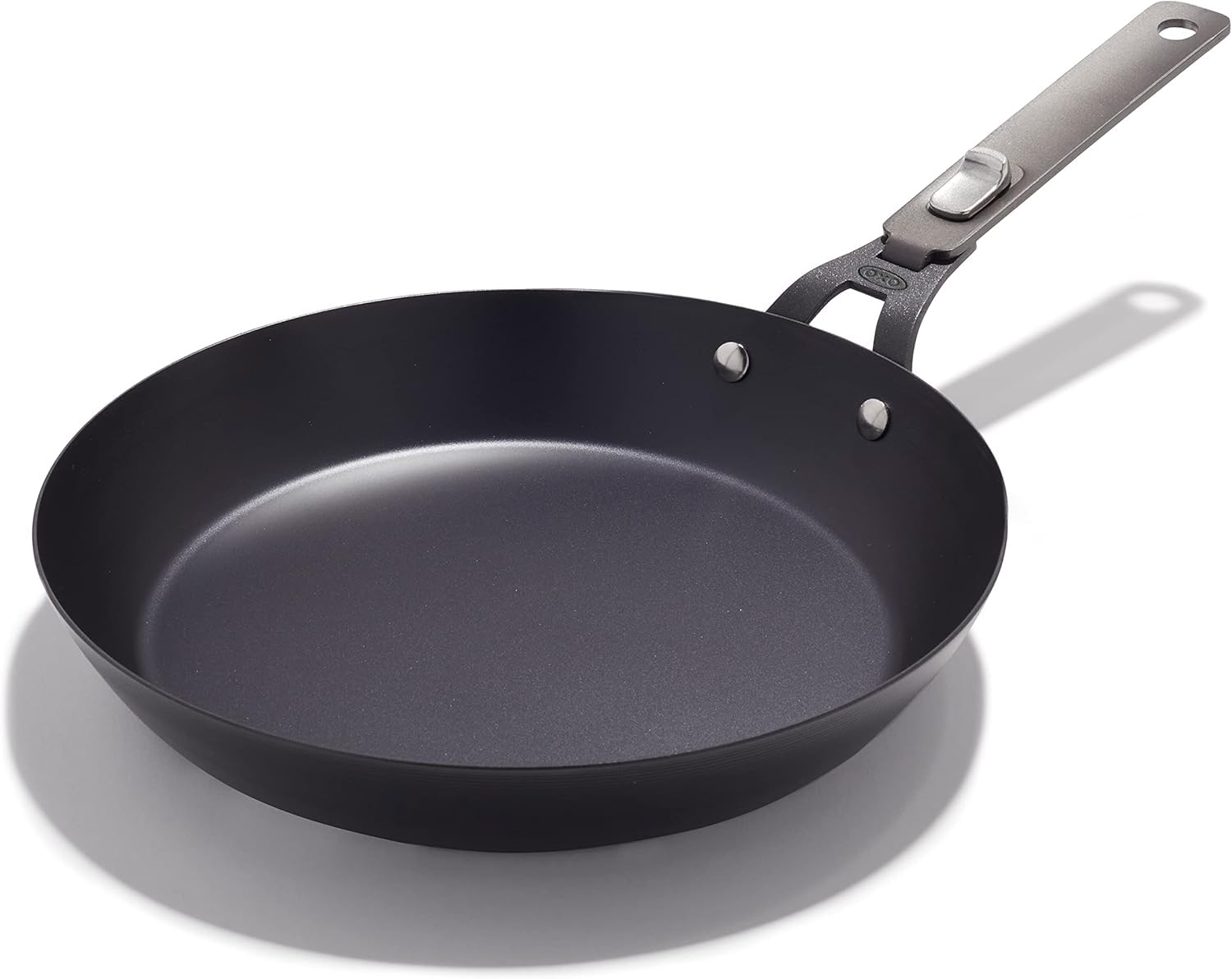
The OXO 12" carbon steel pan combines lightweight performance with the convenience of a removable handle for stackable storage. Its pre-seasoned surface develops non-stick qualities after a few uses, making it suitable for field cooking. However, the detachable mechanism can wobble under load; with heavy contents, the handle may come loose, creating a burn hazard. This pan works best for campers who primarily cook moderate portions and keep the handle attached permanently.
Pros
- Detachable handle allows compact, stackable storage for camping or RV kitchens.
- Lightweight carbon steel cooks like cast iron without the heft.
Cons
- Handle joint may wobble or detach when pan is loaded with heavy food, posing a burn risk.
- Handle edges can feel sharp during extended use.
Best suited for campers or RV users who prioritize storage space and plan to keep the handle attached for all cooking tasks.
How to Choose
Seasoning is the foundation of carbon steel performance; a well-seasoned pan transforms into a non-stick workhorse.
Weight and Thickness
Heavier pans (4+ lbs) resist warping and hold heat longer but require more effort to lift and toss. Thinner pans heat faster but can warp on electric or glass stoves.
Your choice affects daily comfort: a 2 lb pan suits quick stir-fries; a 5 lb pan handles deep-frying but may strain your wrist. Always check the weight spec before buying.
Oven Temp
Higher oven-safe temperatures (800°F+ from welded handles) allow you to start a steak on the stovetop and finish in the oven without transferring pans. Lower limits (400°F) restrict this technique, especially with epoxy-coated handles.
Handle
Welded or riveted handles affect cleaning ease and heat transfer. Rivet-less designs (e.g., welded) let you wipe the interior clean without snags. Epoxy-coated handles may discolor or melt at high oven heat.
Wooden handles stay cool but can char or crack; stainless steel handles conduct heat but can be gripped with a towel. Detachable handles offer storage convenience but introduce a potential weak point.
Pre-Seasoned
Pre-seasoned pans have a thin factory coating that reduces initial sticking but rarely delivers true non-stick performance. Many buyers still need to re-season immediately — consider it a head start, not a finished surface.
Unseasoned pans (like most French brands) require you to remove a protective wax or oil coating before seasoning. This adds a one-time step but gives you full control over the seasoning layer.
Induction
Carbon steel is ferromagnetic and works on induction cooktops, but flat-bottom pans ensure full contact. Some budget woks have slightly curved bottoms that may wobble or heat unevenly on induction coils.
If you use induction, choose a pan with a fully flat base and at least 3mm thickness to prevent warping and ensure consistent heat transfer.
FAQ
Why does my carbon steel pan rust after the first wash?
Carbon steel rusts instantly when exposed to moisture without a protective oil layer. After washing, dry the pan immediately on a hot burner and rub a thin coat of oil over the surface. If rust appears, scrub it off with steel wool and re-season — the pan isn’t ruined.
How long does it take to season a carbon steel pan?
Expect 3–5 seasoning sessions in the oven or stovetop to build a functional non-stick layer. After that, daily cooking with fats will deepen the seasoning over several weeks. The pan becomes noticeably slicker after about 10 uses.
Can I use metal utensils on a carbon steel wok?
Yes — metal utensils are fine and actually help smooth the seasoning over time. Avoid abrasive cleaning pads; use a stiff brush or chainmail scrubber instead. Metal won’t damage the steel itself, only strip weak seasoning patches.
Is a pre-seasoned carbon steel pan ready to use out of the box?
Not fully. Pre-seasoning is a thin starting layer that reduces initial sticking, but food will still stick. For best results, add 2–3 rounds of stovetop seasoning before cooking eggs or delicate foods. After that, the pan will improve with each use.