This post contains affiliate links. We may earn a small commission when you buy through our links — at no extra cost to you.
Many can openers rust within months, skip mid-cut, or snap a plastic handle after a few uses. You don’t have to settle for that cycle.
The most reliable openers are manual ones with solid metal gears and comfortable grips. But even among them, durability varies widely. This guide focuses on models that combine ergonomic ease with construction that holds up to regular use.
The real insight: spending a bit more on a well-built manual opener saves money and frustration over time. Choosing one that lasts means looking past flashy features and focusing on materials and gear design.




Best for Everyday Home Use
Zulay Heavy Duty
Key Features
- Type: Manual
- Ease of Use: Ergonomic soft handles
- Durability: Stainless steel, heavy-duty
- Safety: Sharp edges
- Bonus Features: Bottle opener
- Price: $
The Zulay Kitchen can opener combines a fully stainless steel cutting mechanism with soft, slip-resistant handles that make turning smooth even through thicker can lids. The build feels substantial in hand — no flex or loose components — and the gear action requires noticeably less wrist effort than cheaper alternatives. A built-in bottle opener adds minor convenience without adding bulk.
This opener suits everyday home use, especially for anyone who finds standard manual models uncomfortable due to hand pain or reduced grip strength. The tradeoff: there is no magnetic lid catcher, so after cutting you lift the lid off the can manually. It’s a minor extra step that doesn’t affect the cutting quality, but it’s worth knowing if that feature is a priority.
Pros
- Heavy-duty stainless steel construction holds up under daily use without warping or dulling
- Soft, contoured handles reduce hand strain during repeated opening sessions
- Delivers premium build and ergonomics at a budget-friendly price point
Cons
- No magnetic lid catcher — you must manually lift the lid after cutting
If you want a manual can opener that feels solid, cuts cleanly, and won’t fatigue your hands, the Zulay delivers everything most home cooks need — just be prepared to handle the lid yourself.
Best for Arthritis Relief
OXO Good Grips
Key Features
- Type: Manual
- Ease of Use: Cushioned soft handles
- Durability: Stainless blade, plastic crank
- Safety: Sharp edges
- Bonus Features: Bottle opener
- Price: $$
Soft, oversized handles absorb pressure and need little turning force, so even a light grip gets the job done. Compared to the top pick’s all-metal build, this model trades some long-term toughness for immediate comfort — the plastic crank can wear down after several months, especially if run through the dishwasher. That tradeoff is acceptable if your priority is reducing hand strain over decades of use.
Buy this if you have arthritis, weak grip, or chronic hand pain and want a manual opener that doesn’t fight back. Just know the crank prefers hand-washing — heat and moisture from the dishwasher may accelerate wear.
Pros
- Soft handles reduce pressure on hands and wrists
- Smooth turning with minimal effort
Cons
- Plastic crank can break after months of use, particularly if dishwasher-washed
If hand comfort matters more than a lifetime warranty, this opener delivers exceptional relief — just treat the crank gently.
Best for Electric Convenience
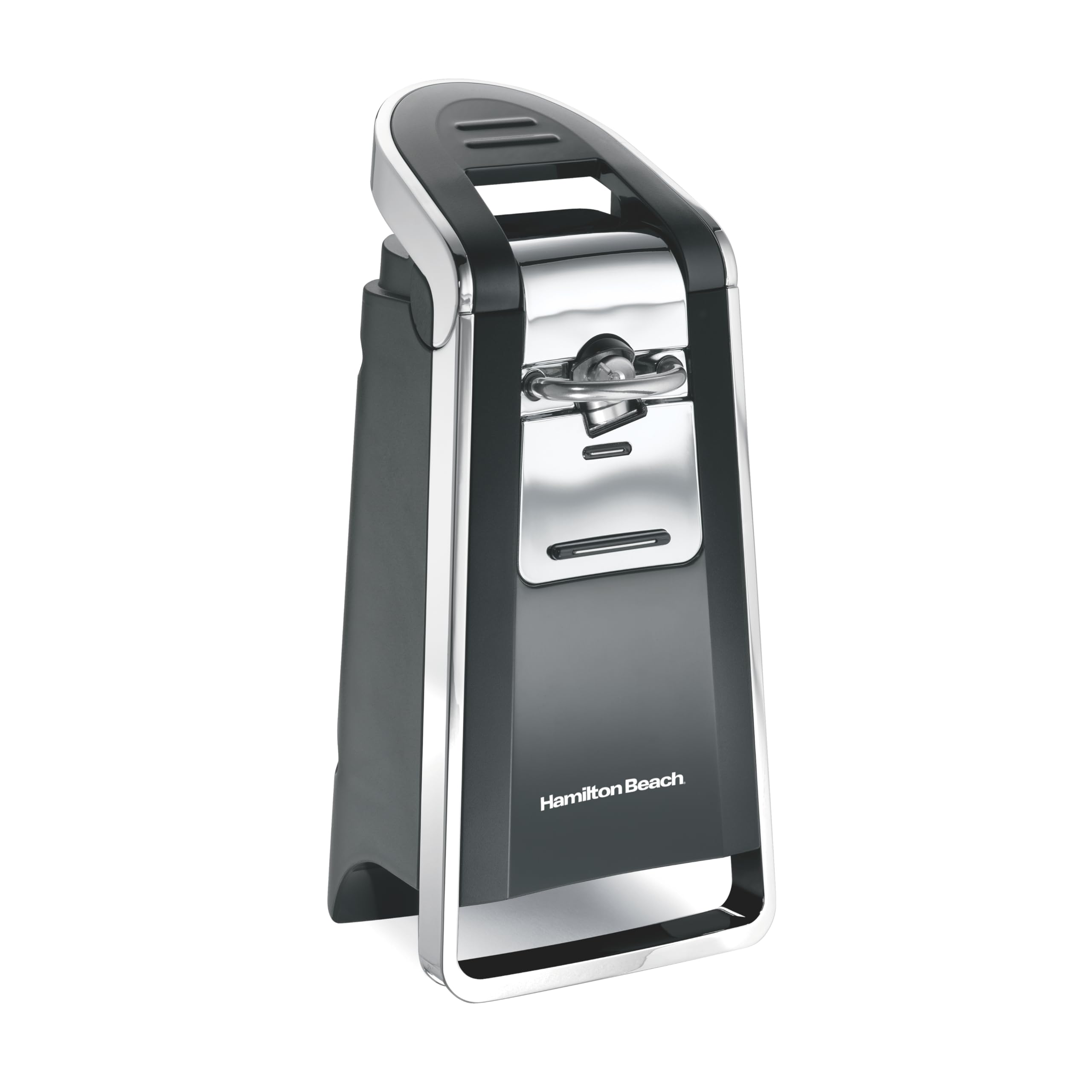
Hamilton Beach Electric
Key Features
- Type: Electric
- Ease of Use: One-push lever
- Durability: Stainless steel, limited life
- Safety: Smooth edge
- Price: $$
The Hamilton Beach Smooth Touch combines one-push lever operation with a side-cut mechanism that leaves lids smooth to the touch, eliminating the sharp edges typical of traditional openers. This makes it a safer option for households with children or seniors. However, electric openers of this type generally have a shorter lifespan than manual models — many units require replacement within a couple years. As such, it’s best for those who value effortless opening and safety over long-term durability and are comfortable with replacing it periodically.
Pros
- One-push lever opens cans with light touch, reducing hand strain.
- Side-cut design leaves no sharp edges on lids or can rims.
Cons
For households that want an effortless, safe can-opening experience and accept a limited lifespan, this is the electric opener to get.
Best for Budget Safety
Good Cook Safe Cut
Key Features
- Type: Manual
- Ease of Use: Smooth turning wheel
- Durability: Stainless steel
- Safety: No sharp edges
- Bonus Features: Lid holder
- Price: $
The Good Cook Safe Cut uses a side-cutting mechanism that leaves both the can and lid with smooth, safe edges — a feature typically found on more expensive openers. Its lightweight design and smooth turning make opening effortless for occasional kitchen tasks. However, durability can be inconsistent; some units may show wear after a few months of regular use, so this opener is best suited for light, occasional use rather than daily heavy lifting.
Pros
- Side-cut design leaves no sharp edges on cans or lids.
- Smooth turning mechanism requires minimal effort to open cans.
- Very affordable price for a safe-edge opener.
Cons
- For daily heavy use, the opener may wear down sooner than expected — some units have shown signs of wear within months.
Choose this if you need a low-cost can opener that prioritizes safety from sharp edges and you only open cans occasionally. For frequent daily use, a sturdier model like the top pick will offer better longevity.
Best for Classic Durable
EZ-DUZ-IT Deluxe
Key Features
- Type: Manual
- Ease of Use: Gear-driven leverage
- Durability: All-metal carbon steel
- Safety: Sharp edges
- Bonus Features: Bottle opener
- Price: $$
The EZ-DUZ-IT Deluxe is an all-metal, gear-driven can opener made in the USA that rewards those willing to maintain it with decades of service. Unlike the classic all-steel opener, this uses a gear mechanism for smoother turning, but the carbon steel blade still requires hand-drying to prevent rust, and cutting consistency varies across cans. This is best for traditionalists who prefer a classic manual opener and don’t mind the extra care.
Pros
- Heavy-duty all-metal construction withstands years of use.
- Manufactured in the United States – a draw for domestic manufacturing advocates.
- Gear-driven turning provides smooth leverage for quick opening.
Cons
- Cutting performance may vary – some cans require multiple passes to open cleanly.
Best suited for buyers who value American-made durability and are comfortable hand-drying the opener and inspecting cut quality on each can.
Best for Hygiene Safety
Kuhn Rikon LidLifter
Key Features
- Type: Manual
- Ease of Use: Patented lid lifter
- Durability: Stainless steel
- Safety: No sharp edges
- Bonus Features: Ring-pull tool
- Price: $$
The patented LidLifter mechanism separates the lid from the can without cutting into the interior, so the opener never contacts your food and the rim stays smooth. Alignment takes a bit of practice — expect a short learning curve before you find the sweet spot. This design suits health-conscious cooks and parents who want to avoid sharp edges and food contact, but it is not ideal for those who prefer a traditional cutting action or need a tool for very heavy daily use.
Pros
- Safe, no sharp edges on cans or lids
- Hygienic lid removal – never touches food
- Well-built stainless steel construction
Cons
- May require practice to align correctly at first
- Durability can vary between individual units
A focused safety and hygiene tool for those who want zero food contact and no sharp edges, though it demands a short adjustment period and shows mixed long-term durability.
Best for Large Cans
Swing-A-Way Crank
Key Features
- Type: Manual
- Ease of Use: Long crank leverage
- Durability: Stainless steel, large
- Safety: Sharp edges
- Bonus Features: Bottle opener, folds
- Price: $$
The Swing-A-Way Easy-Crank delivers its intended value through a long handle that provides real mechanical advantage on commercial-sized #10 cans — the kind used in bulk food prep or camping. The cushioned grips reduce hand strain during repeated use. However, its oversized body won’t fit inside a standard kitchen drawer, and the crank mechanism’s long-term durability can be inconsistent under heavy use. This makes it a sound choice specifically for households or kitchens that frequently handle large cans, not for everyday use on standard sizes.
Pros
- Extra-long crank handle provides leverage on #10 cans without excessive wrist force
- Soft cushion grips reduce hand fatigue during extended can-opening sessions
- Built-in bottle opener adds a practical extra function
Cons
- Large size doesn’t fit in standard kitchen drawers; needs alternative storage
- Crank mechanism’s long-term durability can be inconsistent under heavy use
Buy this if you open #10 cans regularly — otherwise, a standard-sized opener is more practical.
Best for Occasional Electric
Cuisinart One-Touch

Key Features
- Type: Electric
- Ease of Use: One-touch button
- Durability: Stainless blade, plastic lever
- Safety: Sharp edges
- Bonus Features: Magnetic lid holder
- Price: $$
This Cuisinart opens cans at the press of a button and the blade assembly detaches for dishwasher cleaning, making it a tidy option for light kitchen duties. However, the plastic lever and internal gears can wear out within months of moderate use, so it suits infrequent opening rather than a daily routine.
Pros
- One-touch automatic operation with magnetic lid holder
- Removable cutting mechanism is dishwasher-safe for easy cleanup
Cons
- Plastic lever may become loose or snap under repeated pressure
A good fit for the occasional can where you want hands-free opening without a big upfront cost — not for daily use or long-term reliability.
Best for Premium Feel
OXO SteeL

Key Features
- Type: Manual
- Ease of Use: Oversized knob
- Durability: All-metal stainless
- Safety: Sharp edges
- Bonus Features: Bottle opener
- Price: $$$
The OXO SteeL’s all-metal build and oversized knob provide a cutting action that feels unusually smooth. Its premium price and reports of incomplete cuts on some cans make it a niche pick for those who value the tactile experience over cost — most will get similar results from a more affordable manual opener.
Pros
- Smooth cutting action requires minimal hand effort
- Comfortable oversized knob and cushioned handles reduce wrist strain
Cons
- Higher price than many manual openers with similar durability
This opener makes sense if you value a smooth, refined cutting feel and are less concerned about price — expect to pay extra for the tactile upgrade.
Best for Multi-Function
Kuhn Rikon Master

Key Features
- Type: Manual
- Ease of Use: Multi-angle lock
- Durability: Plastic and stainless
- Safety: No sharp edges
- Bonus Features: Bottle & jar opener
- Price: $$
This Swiss-engineered tool replaces five separate openers: cans, bottles, jars, ring-pulls, and crown caps. It leaves smooth rims and is built to last. However, attaching it to a can requires practice; some find the alignment frustrating. It’s a space-saver for those willing to invest time, not a quick solution.
Pros
- Five functions in one: cans, ring-pulls, crown caps, screw tops, and jars.
- Leaves smooth rims – no sharp edges and no contact with food.
Cons
- Requires practice to align and operate – may frustrate until technique is mastered.
Best for those who want a single tool for multiple kitchen tasks and are willing to invest time in learning the technique.
Best for Disposable Cheap
Mebotem Colorful

Key Features
- Type: Manual
- Ease of Use: Ergonomic handles
- Durability: High-carbon stainless
- Safety: Sharp edges
- Bonus Features: Bottle opener
- Price: $
The Mebotem opens cans smoothly right out of the box and comes in ten appealing colors for under $10. However, its construction may not withstand consistent daily use — some units show signs of wear within several months. This makes it a practical choice for a dorm room, vacation rental, or emergency kit rather than a long-term kitchen staple.
Pros
- Very affordable with good initial cutting performance
- Wide range of attractive color options
Cons
- Some units may not hold up beyond a few months of regular use
Fit for a temporary living situation, student housing, or an emergency supply — not for daily kitchen duty.
Best for Nostalgic
Swing-A-Way Classic

Key Features
- Type: Manual
- Ease of Use: Classic crank
- Durability: Carbon steel
- Safety: Sharp edges
- Bonus Features: Bottle opener
The Swing-A-Way’s all-steel construction delivers a satisfying heft and retro charm. Its carbon steel blade can rust if not dried immediately after washing, and cutting performance varies between units, sometimes requiring a second pass on the can. This is a faithful recreation for those nostalgic for the original, but unit-to-unit inconsistency makes it a gamble for daily use.
Pros
- All-steel body provides a solid, retro feel.
- Smooth crank action with cushioned grip handles.
Cons
- Carbon steel blade can rust if not thoroughly hand-dried after use.
Best suited for retro enthusiasts who remember the original Swing-A-Way and are willing to hand-dry the opener after each use to prevent rust.
Best for Lightweight Compact
Starfrit Little Beaver

Key Features
- Type: Manual
- Ease of Use: Ergonomic design
- Durability: Plastic blade
- Safety: No sharp edges
- Price: $$
This opener is notably easy to grip and requires minimal wrist effort, making it a reasonable choice for those with arthritis or limited hand strength. Its small size stows easily in a drawer. However, the plastic blade can dull over time, and some lids may still have sharp edges. For similar money, metal-blade alternatives deliver more consistent performance and durability.
Pros
- Ergonomic handles reduce wrist strain
- Compact size fits small drawers
Cons
- Plastic blade can dull over time and may leave rough edges on lids
Best suited for light, occasional use where compact size and low effort matter more than long-term durability.
How to Choose
The most overlooked factor in buying a can opener is the durability of its cutting mechanism and handles — a cheap plastic gear will fail long before the blade dulls.
Manual vs. Electric
Manual openers are mechanically simpler and typically last years longer than electric models. The trade-off is that they require hand strength and a bit of coordination.
Electric openers offer one-push convenience but rely on plastic gears and motors that often fail within one to two years. If you open more than a few cans a week, a well-built manual opener is the more reliable long-term choice.
Ease of Use and Ergonomics
Soft, oversized handles reduce hand fatigue and are essential for anyone with arthritis or limited grip strength. But cushioning materials can degrade over time; look for handles that are molded onto a metal core rather than glued.
Durability and Build Materials
Stainless steel blades resist rust, but the cutting gear and frame matter more. All-metal gears (steel or brass) outlast plastic ones. Carbon steel openers are durable but require thorough hand-drying — water left on the blade causes rust within weeks.
Dishwasher use accelerates rust and can warp plastic parts. Hand-washing and immediate drying are the only way to make any metal opener last.
Safety: Sharp Edges vs. Smooth Edges
Side-cut openers (also called smooth-edge) cut along the can’s seam, leaving a rolled rim that is safe to touch. Traditional openers cut into the lid, leaving razor-sharp edges on both the lid and can.
The side-cut design is safer for households with children, but it requires a bit more force to turn and can be less forgiving on dented cans.
Bonus Features
A built-in bottle opener is common on manual models and adds little cost. Magnetic lid holders are convenient but can lose strength over time. Other extras like jar openers or ring-pull tools may sound useful but often add complexity without improving core can-opening performance.
FAQ
Why does my manual can opener rust even after I hand wash it?
Rust forms when water remains trapped in crevices, especially around the cutting wheel axle or between the handles. Thoroughly dry the opener with a towel immediately after washing, and occasionally apply a drop of food-grade mineral oil to the pivot points to displace moisture.
How long should an electric can opener last before breaking?
Most electric can openers last between one and two years with regular use. Models with all-metal gears may stretch to three years, but plastic gearboxes are the typical failure point. If you want something that lasts five years or more, choose a manual opener.
What causes a can opener to skip and not cut all the way around?
Skipping usually happens when the cutting wheel is dull, the gear teeth are worn, or the opener isn’t fully engaged on the can rim. Hand-washing and drying prevents debris buildup, but once the wheel is dull, replacement is the only fix.
Which can opener is safest for kids to use?
Side-cut manual openers (like the Good Cook Safe Cut or Kuhn Rikon LidLifter) leave no sharp edges on the lid or the can, making them the safest choice. Electric openers also produce smooth edges but require supervision due to the power cord and moving parts.