This post contains affiliate links. We may earn a small commission when you buy through our links — at no extra cost to you.
Bread is the one thing I cook that can eat an entire Saturday and still come out wrong. A dense, gummy loaf takes a day of feeding starter, folding, and waiting with it. That’s why the cookbook matters more here than in most corners of the kitchen: the good ones explain what the dough is doing, so when your kitchen is cold and nothing is rising, you know what to fix.
I’ve spent five months baking from 14 bread cookbooks, and the ones I keep reaching for share a few traits: weights alongside cup measures, instructions that say what the dough should look and feel like at each stage, and ingredient lists you can shop at a regular grocery store.
Here’s what I’d tell any first-time bread baker: a book’s real value is in its troubleshooting, not its recipe count. Anyone can print a sourdough formula; the one that tells you what to do when your dough is slack or your starter smells off is the book that actually teaches you to bake. Below are the ones that did, from Tuesday-night sandwich loaves to weekend boules.
Best for First Artisan Loaves
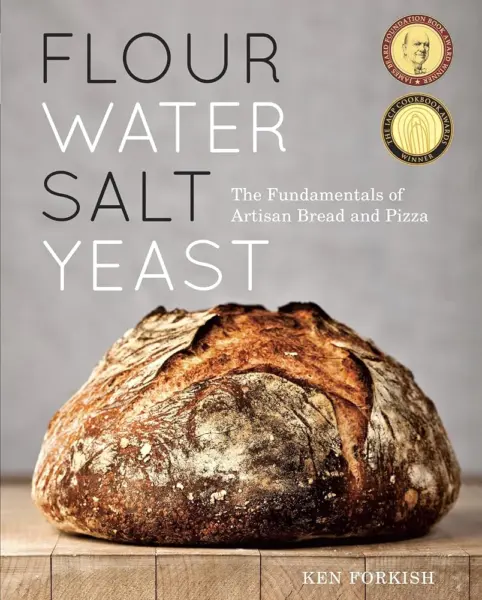
Flour Water Salt Yeast
Key Features
- Pages: 272
- Publisher: Ten Speed Press
- Item weight: 2.63 lb
- Publication date: September 18, 2012
- Price: Premium
What struck us first is how little there is to memorize. The book builds everything from a handful of doughs made with flour, water, salt, and yeast, then repeats one rhythm until it becomes habit: mix in the evening, shape in the morning, bake. That overnight schedule is what makes it usable in a real week, because you are not setting aside an afternoon, you are fitting bread around sleep.
Those 272 pages are a course, not a catalog. Instead of a hundred formulas you get a few doughs made repeatedly, with photographs of the dough at each stage and an explanation of what the room did to it. The pizza chapter earns its place alongside the loaves, and the levain dough produces a crust with real character. We also appreciated a writer who is plain about which rules matter and which are folklore.
The trade-off is range. This is a white-flour, lean-dough book at heart, and anyone wanting rye, whole wheat sandwich loaves, or enriched doughs will be shopping for a second volume. For a first serious bread book that focus is the point rather than an oversight, but it is worth knowing before you order.
Where it keeps earning its spot is troubleshooting. When a loaf comes out flat or pale, the answer is almost always somewhere in the timeline rather than in a new recipe, and that is a lesson worth the shelf space on its own.
Pros
- Teaches a method instead of listing recipes
- Overnight schedule suits a working week
- Pizza dough with genuine character
- Plain about which rules actually matter
Cons
- Leans on white, lean doughs
We hand this to anyone who wants to understand bread rather than collect recipes: four ingredients, a scale, and overnight schedules that fit around a job.
Best for Widest Recipe Range
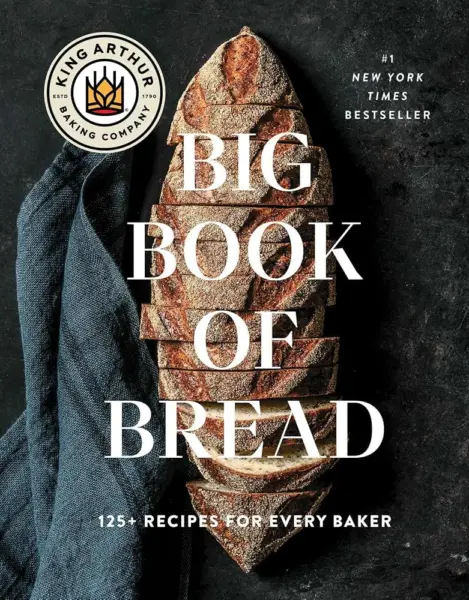
King Arthur Big Book of Bread
Key Features
- Pages: 464
- Recipes: 125+
- Item weight: 2.31 lb
- Publication date: October 22, 2024
Range is the whole argument. At 464 pages and more than 125 recipes, this is the broadest book here, and the organizing idea is generous: each recipe points you to a technique page when the shaping or the pre-ferment is new to you. We found that genuinely useful, because you read an explanation once and then keep baking instead of flipping back to the front of the book.
It is also the newest of the group, published in 2024, and it reads like a test kitchen putting its cards on the table. Close-up photographs show hands kneading and rolling rather than only a finished loaf, individual recipes offer options for how you bake them, and the instructions hold up whether you have been at this a month or a decade. Pullman loaves, everyday sandwich bread, and sourdough all get the same plain treatment.
Our only real complaint is physical. At nearly eleven inches tall with 464 pages between the boards, it is a lot of book to keep open with one hand, and there is no spiral version. Use a stand, or accept that the corner will get floury.
Nothing else about it gave us pause. For a household that wants one volume rather than a shelf, that combination of breadth and clarity is hard to beat.
Pros
- 125-plus recipes across most bread styles
- Technique cross-references built into every recipe
- Photos of hands actually working the dough
- Written for new and experienced bakers alike
Cons
- Nearly eleven inches tall and awkward to prop open
This is the one we keep for range: 125-plus recipes, from sandwich loaves to sourdough, with a technique note beside each formula.
Best for Advancing Bakers
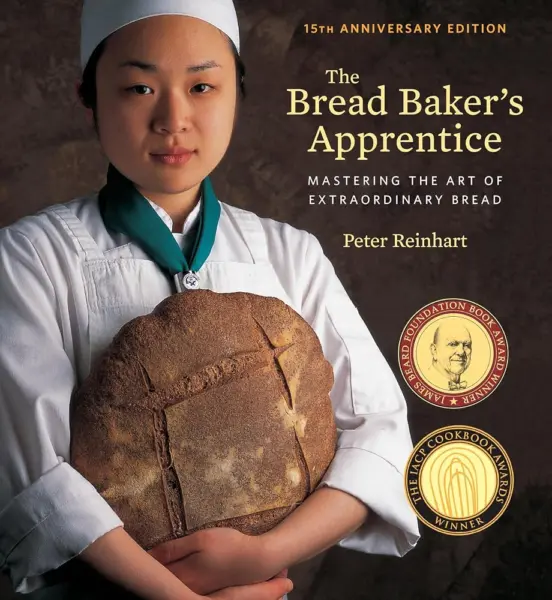
The Bread Baker’s Apprentice
Key Features
- Pages: 336
- Edition: Revised (15th anniversary)
- Item weight: 3.53 lb
- Publication date: September 6, 2016
- Price: Premium
Where our top pick narrows onto one style, this one spreads out. The anniversary edition runs 336 pages and works in formulas rather than recipes, with the biga and other pre-ferments explained before you are asked to build one. It also reaches breads the rest of this list barely touches: rye, whole wheat, buttermilk bread, English muffins, bagels.
What we liked most is the tone. It is demanding without being precious, explaining why a dough is wet, why a crust darkens, and what you lose by skipping a step, and the photographs cover the process as well as the finished loaf. That combination changes how you read a formula: it stops being a set of orders and starts being a starting point.
Read it second, not first. A complete beginner will get more from it after a dozen loaves than before the first one, and once you are past the basics it becomes the most useful reference here, the one we open when a loaf needs diagnosing rather than decorating.
Pros
- Explains pre-ferments before asking you to use them
- Covers rye, whole wheat, bagels, and English muffins
- Photos show process as well as finished loaves
- 50 new master formulas in the anniversary edition
Cons
- Formula-first writing is slow going at first
Once you’ve baked a few loaves, we think this is the book that takes you further: formulas, pre-ferments, and 50 new master recipes in the anniversary edition.
Best for Sourdough from Scratch
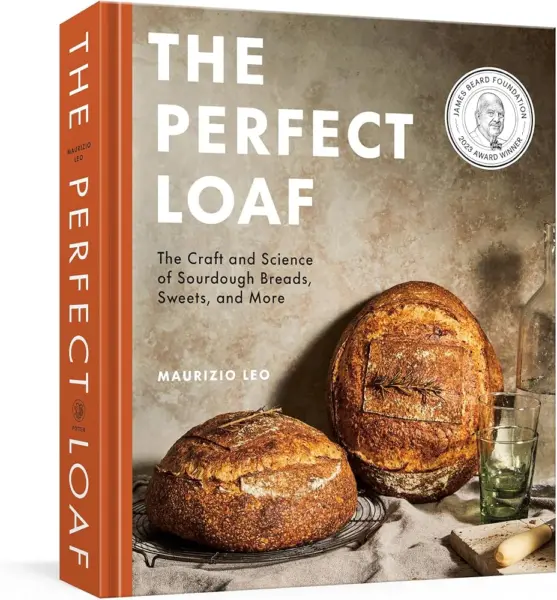
The Perfect Loaf
Key Features
- Pages: 432
- Dimensions: 9.29 x 1.34 x 10.43 inches
- Item weight: 4.27 lb
- Publication date: November 8, 2022
- Price: Premium
Fermentation is the subject here, and the book teaches you to read it rather than time it: how a dough looks when it is ready, how a cold night changes the schedule, what a slack dough is telling you. That is the part of sourdough that does not fit neatly into a recipe, and it is where these 432 pages go.
The photographs show dough at exactly the stages you have to judge, slack or domed or ready to shape, and the troubleshooting is what we kept coming back to, because sourdough failures look alike from the outside and the fix depends on which stage went wrong. There is also a run of sweets and other bakes leavened with the same starter, which is where our weekends ended up.
Be warned that it is a heavy book at 4.27 pounds, which you notice while holding it open with one floury hand, and the science chapters are long enough that plenty of good bakers skip ahead to the formulas and do fine. What you are paying for is the education, not a set of recipes to follow blindly.
Pros
- Starter-to-crust sourdough instruction
- Photos show dough at the stages you judge
- Troubleshooting organized by failure point
- Sourdough sweets beyond the loaves
Cons
- Requires maintaining a starter before the first bake
If sourdough is the goal, we point people here: starters, fermentation, and shaping get more detail than anything else on this list.
Best for Weeknight Baking
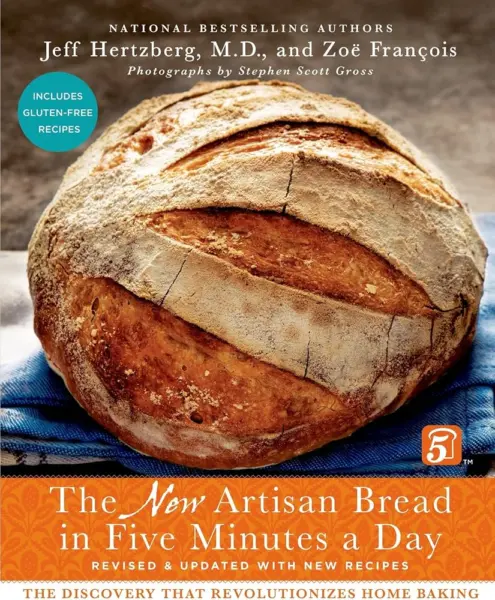
The New Artisan Bread in Five Minutes a Day
Key Features
- Pages: 400
- Edition: 2nd
- Item weight: 2.31 lb
- Publication date: October 22, 2013
- Price: Budget
The method is as simple as the title promises, which is why this book has survived into a second edition. You mix a wet dough in one bowl, put it in the refrigerator, and cut off a piece whenever you want a loaf. There is no kneading, there is very little washing up, and the mixing is brief enough that it does not ask much of your hands or your evening.
Four hundred pages gives the master recipe room to branch: peasant loaves, an olive oil bread we kept returning to, sandwich loaves, pizza, and dessert ideas, with photographs that make the shaping look as unfussy as it is. What stops the method feeling like a trick is the writing, which explains why stored dough behaves the way it does, so a dense loaf gives you somewhere to look.
What it is not is a fermentation book. This is commercial yeast, so the flavor is good rather than deep, and the pleasure comes from having fresh bread on a Wednesday rather than from a three-day process. We think that is a fair trade for most households; just do not buy it expecting sourdough depth.
Pros
- Mix once and bake through the week
- No kneading and minimal cleanup
- 400 pages of variations on the master dough
- Explains why stored dough behaves as it does
Cons
- Takes up refrigerator space for days
The one we suggest for anyone who wants fresh bread on a Tuesday night: mix one batch, keep it in the fridge, bake off what you need.
Best for Machine Owners
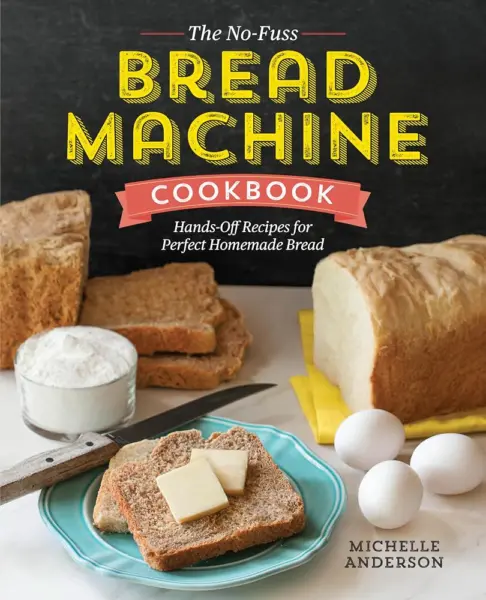
The No-Fuss Bread Machine Cookbook
Key Features
- Pages: 236
- Dimensions: 7.5 x 0.58 x 9.25 inches
- Item weight: 2.31 lb
- Publication date: August 16, 2016
- Price: Budget
Most machines arrive with a thin booklet of recipes, and the machine tends to get retired around the time the booklet runs out. This is the fix: 236 pages of recipes written for the machine rather than adapted to it, portioned for the loaf your pan actually produces, so nothing needs scaling or guesswork.
The lineup is broader than we expected from a machine book, with white, wheat, and rye alongside dessert breads and a peanut butter loaf that sounds like a gimmick until you have made it twice. The instructions are short because the machine does the work, but an opening section explains what the cycles are doing, which is the difference between following a recipe and understanding one.
The one practical snag is measurement. Quantities are given by volume rather than weight, and a cup of flour scooped straight from the bag weighs noticeably more than one spooned and leveled, enough to change how a machine loaf rises. Weigh your flour once, note what your cup actually holds, and the recipes settle down quickly.
Pros
- Recipes portioned for common machine loaf sizes
- Covers white, wheat, rye, and dessert breads
- Explains what the machine’s cycles are doing
Cons
- Recipes measure by volume, not by weight
Own a bread machine? This is the one we buy alongside it, with recipes sized for your pan and written for hands-off baking.
Best for European Breads
Paul Hollywood’s Bread
Key Features
- Pages: 224
- Publisher: Bloomsbury Publishing
- Item weight: 2.06 lb
- Publication date: June 4, 2013
- Price: Midrange
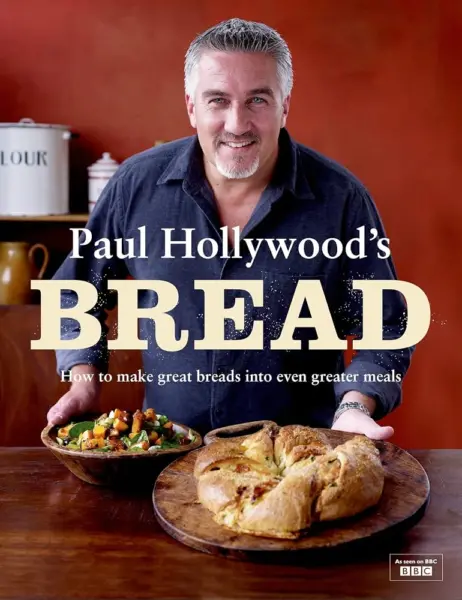
British baking has its own favorites, and this book is the way into them. Across 224 pages it spends its space on loaves a standard American bread book does not cover, including ciabatta with a wide, holey crumb and crumpets cooked on the stovetop. It is tied to the television series of the same name, which explains the pace and the confidence of the instructions.
The teaching is the strength. Techniques get step-by-step explanations with photographs for each recipe, and the text says why a technique is used instead of merely naming it, which made it easier to read than the denser references here. It also treats bread as part of a meal, with serving suggestions that make it more useful on a Sunday than a pure formula collection.
One thing to settle before you order: the measurements are not given in cups, so plan on a scale or a conversion chart you trust. For bread, weighing is the better habit anyway, but it is an extra step for a book that otherwise keeps things simple.
Pros
- Ciabatta, crumpets, and European loaves
- Step-by-step photos with every recipe
- Explains why a technique is used
- Serving suggestions tie bread to meals
Cons
- Assumes some comfort handling dough
We like it for the breads American books skip, like ciabatta, crumpets, and continental loaves, each with process photos and a plain explanation.
Best for Absolute Beginners
My Bread
Key Features
- Pages: 224
- Dimensions: 8.4 x 0.9 x 10.4 inches
- Item weight: 2.31 lb
- Publication date: October 5, 2009
- Price: Budget
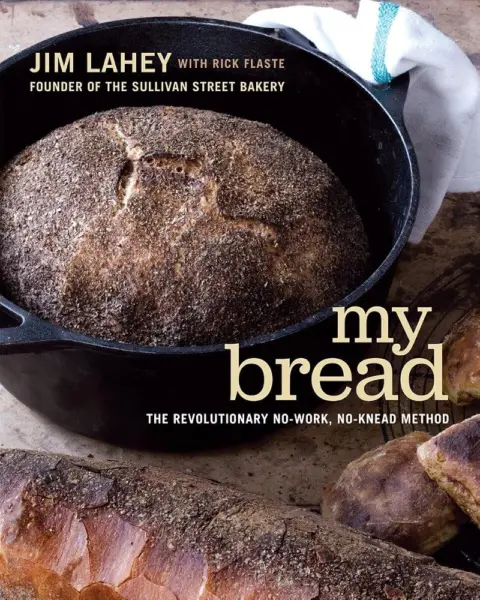
There are meat recipes in here, which nobody expects from a bread book, and they are a fair symbol of how unpretentious the whole thing is. The core method is a wet dough stirred together, left alone for a long stretch, and baked into a round loaf with a dark, crisp crust and a chewy interior, with no kneading, no mixer, and no shaping that takes practice.
Beyond the master method there is a rye, a walnut-raisin loaf, and pizza, and the photographs are generous and in color, which matters when you are deciding whether your dough looks right. What we appreciated most is that the book never implies bread is difficult. It implies bread is patient, and then it is patient with you.
If you have never made bread, this is the shortest path from here to a loaf you are proud of, and the repetition is the point: the same dough, a dozen times, until your hands know it. Experienced bakers will read it in a couple of weekends and move on.
Pros
- No kneading, no mixer, no shaping practice
- Reliable crusty loaves from a simple method
- Includes rye, walnut-raisin, and pizza
- Generous color photographs throughout
Cons
- Stays with one lean, wet dough
Nothing here asks less of you: stir, wait, bake. That’s why we suggest it as a first bread book for someone who has never baked.
Best for Visual Troubleshooting
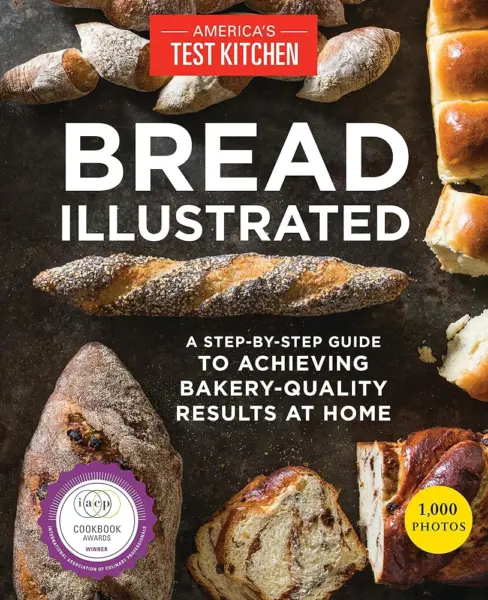
Bread Illustrated
Key Features
- File size: 546.7 MB
- Publisher: America’s Test Kitchen
- Print length: 432 pages
- Publication date: September 6, 2016
Most bread books tell you what to do; this one spends much of its 432 pages on what went wrong. Every recipe carries step-by-step photographs and a short explanation of the mechanism behind it, and the troubleshooting material is the reason we kept it open while baking rather than reading it on the sofa.
It is built as a course, with each recipe using a skill the previous one introduced, so working through in order teaches more than jumping to whatever looks good. The asides on tools and ingredients are worth reading early. America’s Test Kitchen’s habit of testing a recipe until it stops failing shows up in how specific the instructions get.
The catch is the format: this edition is a digital file of more than half a gigabyte, so it lives on a tablet rather than propped open on the counter, and a kitchen is a hard place on a screen. If you already cook from a device, that is an easy call. If you do not, this is probably not the edition for you.
Pros
- Troubleshooting and why-it-works on every recipe
- Step-by-step photos of the process
- Skills build from recipe to recipe
Cons
- Sold as an ebook only
We recommend this to visual learners, since every formula gets step photos and a why-it-works note, provided an ebook-only edition suits how you cook.
How We Tested the Best Bread Cookbooks
We started with a long list of award winners, bestsellers, and the titles baking instructors keep assigning, then cut anything that was mostly photographs or that leaned on equipment most home bakers don’t own. That left 14 books, which we baked from over five months.
Every book got at least two bakes: an everyday loaf we’d plausibly make on a weeknight and one ambitious recipe from its most technical chapter. We also worked each book into the situations it was written for, mixing a no-knead dough on Friday and baking it Saturday, setting a bread machine loaf before bed, making pizza dough on a Sunday, and running one long sourdough project from scratch.
On the first pass we followed each recipe exactly, weighing in grams where weights were given and using cups where they weren’t, then noted whether the dough looked the way the book said it would at every stage, from shaggy to tacky to doubled. We clocked how long a recipe actually took against its stated time, how many steps required a stand mixer, and whether the ingredients were on a supermarket shelf or had to be ordered. Each loaf was tasted warm and again the next day to see how it held up, and we deliberately pushed dough too far, overproofed and overhydrated, to check whether the book had taught us to diagnose it. A loaf that failed while we followed the instructions to the letter counted against the book, unless the book had warned us it might.
How to Choose a Bread Cookbook
The right bread baking book is the one that matches how you will actually bake, because method comes before recipe count and almost everything else is a detail you can work around.
Start With the Method You’ll Actually Use
Bread books divide by method before they divide by anything else. A machine book assumes a machine and writes for its cycles. A sourdough book assumes you will keep a starter alive. A no-knead book assumes you prefer waiting to kneading. Buy across the line you actually bake on and the recipes fight your routine every weekend.
If you are not sure yet, buy a hand-baking book first. Shaping, judging proof, and handling wet dough carry over to everything else, and a book that teaches them stays useful after you have settled on a favorite method.
A Teacher or a Compendium?
Two kinds of bread book earn shelf space. One teaches a handful of doughs thoroughly and explains why they behave the way they do. The other hands you more than a hundred recipes and lets you browse. Buying one of each makes far more sense than buying three books of the same kind.
Our rule: a teacher for your first year, a compendium for the weekend you want one specific loaf. If you are buying only one, buy the teacher, because a good explanation is much harder to find online than another recipe is.
Read the Schedule Before You Buy
Bread books are timelines as much as they are recipes, and the timeline is where most purchases go wrong. A method built on an overnight rest suits someone who plans ahead. A sourdough book will not produce a loaf until a starter is established and dependable. Neither is a flaw, but both are commitments, and one of them is probably wrong for your week.
A practical test before ordering: read the first chapter, not the recipe list. If the opening pages read like a calendar, the book is asking for your week. If they read like a list of ingredients, you can bake tonight.
Weigh the Format and the Measurements
Bread books are heavier than most cookbooks, and page counts here run from a slim 224 to 464. A big book that will not lie flat is a nuisance every single time you bake, so factor in a stand or accept a cracked spine. An ebook solves the space problem and creates a new one: screens sleep, and doughy hands are not kind to them.
Then check the units. Weight is more reliable than volume for flour, and a book that lists grams will give you consistent loaves once you own a scale. A cup of flour varies depending on how you scoop it, which is enough to change how a loaf rises. A digital scale is the cheapest real upgrade in bread baking.
Frequently Asked Questions
Should I buy the newest edition of a bread cookbook?
Usually yes, when the new edition adds material rather than a fresh cover. The Bread Baker’s Apprentice anniversary edition carries 50 new master formulas, and Artisan Bread in Five Minutes a Day is the one to get in its second edition rather than the first.
Check the edition line before you order. Older printings are still sold alongside the current ones, and the recipe counts are not the same.
What’s the difference between a biga, a sponge, and a starter?
They are all ways of building flavor and structure into dough before the main mix. A biga and a sponge are pre-ferments made with commercial yeast a few hours ahead of baking. A sourdough starter is a living culture you keep feeding between bakes.
Practically, buy a book that explains the pre-ferment it uses before asking you to build one. The Bread Baker’s Apprentice does exactly that, which is why it is a gentler introduction to bigas than its reputation suggests.
Is a bread cookbook a good gift?
A good one, yes, and the match matters more than the price. Someone with a bread machine already on the counter will use a machine-specific book within the week. Someone curious but uncommitted does better with a method book that starts from a bowl and four ingredients.
Skip the big reference volumes unless you know the recipient wants to study rather than bake.
Final Verdict
If you are buying one bread book, make it Flour Water Salt Yeast. It teaches a handful of doughs until they become muscle memory, and the overnight schedule fits a working week. That is why it is the one we recommend first, even though it is not the broadest book here.
Choose the King Arthur Big Book of Bread instead if variety is the point: 125-plus recipes with a technique page behind each one make it the better single volume for a household that wants a different loaf every week. And if sourdough is the ambition, go straight to The Perfect Loaf, because nothing else here takes a starter as seriously.