This post contains affiliate links. We may earn a small commission when you buy through our links — at no extra cost to you.
A bad baking book doesn’t just waste flour and butter—it makes you feel like the problem is you. The right one explains why dough behaves the way it does, gives you recipes that taste good and work the first time, and meets you at your skill level, from your first creamed butter to a mature sourdough starter. Over the past five months, I’ve baked from a dozen baking cookbooks, from a kids’ guide to a sourdough deep dive, and the difference between a book you use once and one you keep on the counter is obvious.
Biggest surprise? The most encyclopedic book isn’t always the most useful. A book that explains how to tell when cookies are set or why your bread dough feels slack is worth more than one with hundreds of recipes and no guidance. Some books are weekend projects; others are Tuesday-night reliable, and you want to know which is which before you buy. Below are the books that earned a permanent spot in my kitchen, for a weekend bake or a quick batch of cookies.
Best for One-Book Bakers
King Arthur All-Purpose Baker’s Companion
Key Features
- Pages: 592
- Measurements: Weight and volume
- Recipe focus: All-purpose baking
- Reference extras: Conversion and high-altitude charts
At 592 pages, King Arthur’s All-Purpose Baker’s Companion is the broadest baking book we recommend, and it earns the space by being useful rather than merely big. It covers cakes, cookies, breads, and more, with both weight and volume measurements and a conversion chart that saves you from guessing. For a reader who wants one book to grow with, this is the default.
The teaching is what makes it stick. Headnotes explain why a dough is handled a certain way, and the reference sections cover ingredient weights and high-altitude adjustments. We paid attention to those details because they are the ones that make a recipe repeatable, not just readable. A beginner can start with the simpler recipes; an experienced baker can use the charts and techniques as a check.
It is not a book to flip through for inspiration alone. The pages are dense, and some recipes leave out serving counts, so scan the yield before you plan a bake. That density is the point: this is the book we reach for when we want an answer, not a starting point for daydreaming.
What keeps it at the top of our shelf is the combination of range and precision. It can answer a question about a single dough or walk you through a bake you have never tried. The weight chart has become our first stop for unfamiliar ingredients.
Pros
- Broad 592-page reference for many baking styles
- Both weight and volume measurements
- Conversion and high-altitude reference charts
- Beginner-friendly explanations without oversimplifying
Cons
- Fewer photos than photo-led books
If you want one baking book to grow with, this is the one we recommend: broad, practical, and unusually clear about measurements.
Best for Building Technique
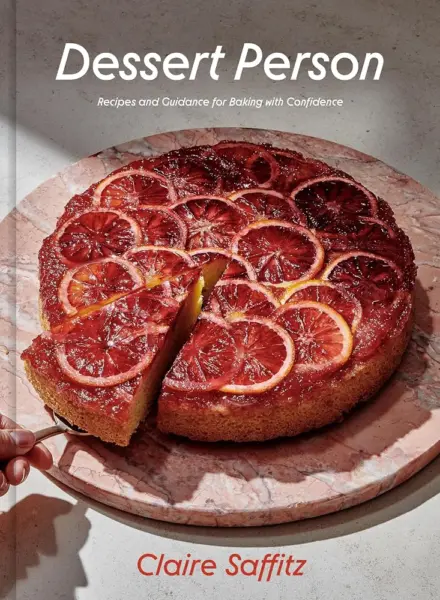
Dessert Person
Key Features
- Pages: 368
- Photos: Recipe photos
- Skill level: All levels
- Recipe guide: Difficulty matrix
The recipe matrix at the front of Dessert Person is the first thing we turn to: it rates each recipe by difficulty, so you can pick a project for a free afternoon or a quick bake for a weeknight. That simple chart changes how the book gets used. It is not a test you have to pass; it is a way to choose.
Claire Saffitz’s instructions are detailed without being fussy, and the photos show what the dough, batter, or finished dessert should look like at the awkward stages. We found the guidance especially good for recipes that usually intimidate home bakers: layered desserts, tarts, and brownies with a precise texture. The point is confidence, and the book delivers it.
The trade-off is that the book leans sweet. If you want a single volume that also covers sandwich bread and pizza, King Arthur’s all-purpose book is the broader choice. Dessert Person is for the baker who wants to go deep on desserts and learn the techniques that carry over.
What we appreciated most was the way the recipes explain the small decisions, like how cold the butter should be and when to stop mixing, rather than just listing steps. That is the difference between a recipe you follow once and a book you keep open on the counter.
Pros
- Difficulty matrix guides recipe choice
- Photo-rich steps show visual cues
- Clear explanations build baking confidence
Cons
- Many recipes are multi-step projects
For bakers who want to stretch their skills without losing the thread, this is the most encouraging teaching book here.
Best for Bread Fundamentals
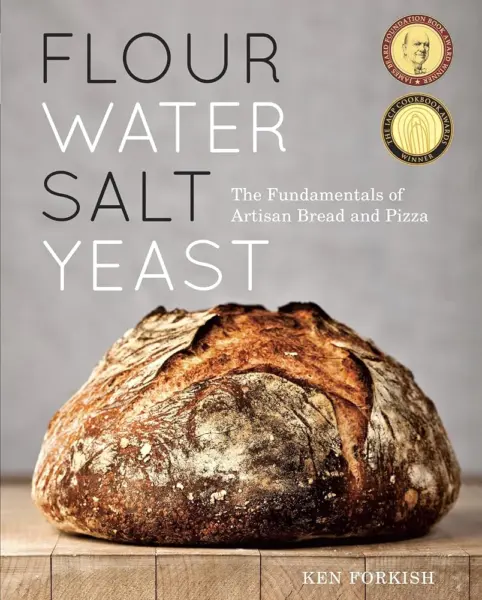
Flour Water Salt Yeast
Key Features
- Pages: 272
- Method: Overnight fermentation
- Skill level: Beginner to intermediate
- Recipe focus: Artisan bread and pizza
Flour Water Salt Yeast does one thing and says so: it teaches artisan bread and pizza. If you want a book that also covers cakes and cookies, this is not it. If you want to understand preferments, folding, and why a loaf opens the way it does, the narrow focus is the advantage.
The formulas are built around simple ingredients and a patient schedule, with overnight fermentation doing much of the work. We liked that the book gives you a sequence to follow rather than a pile of unrelated recipes. The photographs and step-by-step descriptions make the dough’s stages easier to recognize, especially for a first-time bread baker.
Where it asks for patience, it gives back in structure. The formulas are sequenced so one bake teaches the next, and the pizza chapter uses the same dough knowledge rather than switching gears. We also found the instruction more reliable when we read the whole formula before starting rather than dipping in at the mixing step.
That is the useful discipline of the book: it teaches you to watch the dough, not just the clock. For a baker ready to make bread a habit, it is a solid place to begin.
Pros
- Teaches bread and pizza fundamentals
- Clear, sequenced formulas
- Photos clarify dough stages
Cons
- Leans toward white-flour artisan loaves
If bread is the reason you are buying a baking book, start here: it teaches the why behind a loaf, not just a formula.
Best for Foolproof Cookies
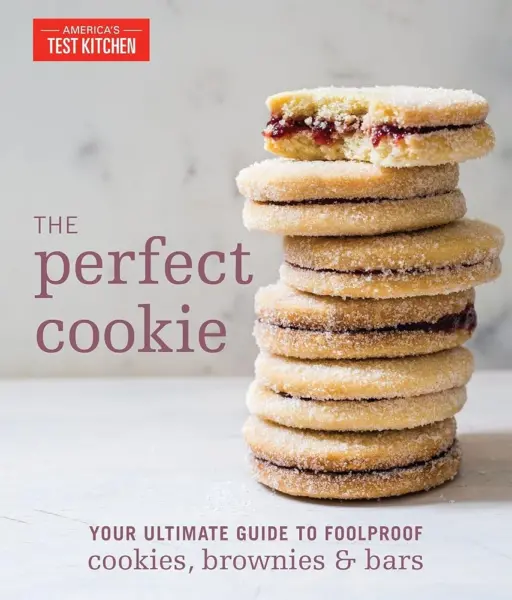
The Perfect Cookie
Key Features
- Pages: 448
- Photos: Color photo per recipe
- Recipes: Cookies, brownies, and bars
- Testing: ATK tested
- Price: Midrange
The Perfect Cookie promises a lot in its title, and the useful part is the testing behind it. America’s Test Kitchen explains why a recipe works, from butter temperature to resting time, so you are not just following steps and hoping. That makes the book feel like a patient teacher standing at the counter.
The range is broad for a cookie book: drop cookies, rolled cookies, brownies, bars, and a few showpieces. We appreciated the color photo for each recipe and the notes on what can go wrong. The gluten-free flour guidance is a bonus, though it is not a full gluten-free baking course.
The detailed headnotes are not built for fast skimming. We found ourselves reading a recipe through before starting, which is the right habit for baking anyway. If you want a quick flip-and-bake book, a simpler photo-led collection may suit you better.
What we keep coming back to is the reliability. When a cookie has to work for a gift, a holiday, or a bake sale, this is the book we trust to explain the variables instead of leaving them to luck.
Pros
- ATK-tested recipes reduce guesswork
- Explains why each step matters
- Photo for every recipe
- Covers cookies, brownies, and bars
Cons
- Heavy to prop open on the counter
When a cookie has to work the first time, this is the book we hand over: tested formulas, clear explanations, and no guesswork.
Best for Cookie Variety
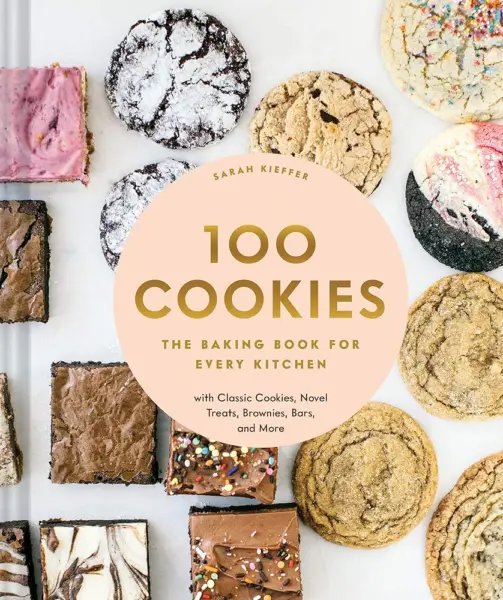
100 Cookies
Key Features
- Pages: 304
- Photos: Photo per recipe
- Recipes: 100 cookie recipes
- Recipe focus: Cookies, brownies, and bars
- Price: Midrange
The pan-banging cookies are the recipe that made us sit up. You bake, tap the tray, bake again, and get those rippled edges without a complicated dough. That kind of technique is why 100 Cookies earns its space: it gives a confident baker something new to try, not just another chocolate chip formula.
The book is organized for browsing, with a photo for each recipe and a mix of classics, brownies, bars, and more unusual treats. We liked that the recipes are approachable enough for a weeknight but still feel worth getting out the mixer for. The flavors are not cloyingly sweet, which makes the cookies easy to serve to a crowd.
If you already have a broad book, this is the add-on that earns its shelf space: a deeper cookie drawer for the baker who has mastered the basics. The collection is strongest when you want variety without a lot of fuss.
We found ourselves marking more recipes than we had weekends for, which is a good problem to have. It is the one we reach for when the baking mood is specifically cookies.
Pros
- 100 cookie recipes to explore
- Photo for every recipe
- Pan-banging technique and variations
- Approachable, not-too-sweet flavors
Cons
- Cookie-only scope, not an all-purpose reference
For the baker who wants a deep cookie drawer, this is the most playful single-subject book here, with pan-banging recipes and a photo for every bake.
Best for Young Bakers
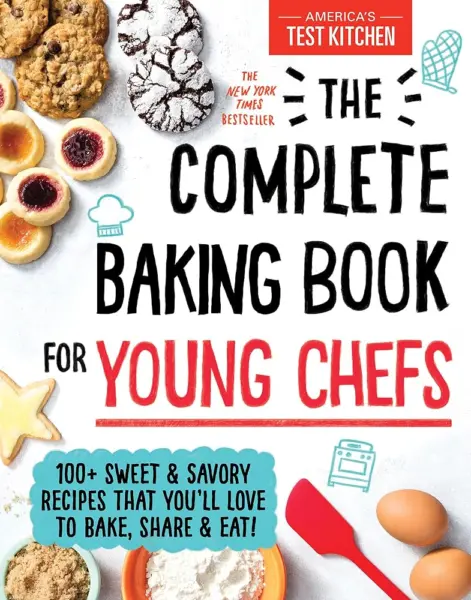
The Complete Baking Book for Young Chefs
Key Features
- Pages: 224
- Photos: Photo per recipe
- Recipes: 100+ sweet and savory
- Age range: 8+ years
- Price: Budget
A kid can use this book without a parent reading every line, and that is the point. The recipes are short, the instructions explain terms instead of assuming them, and the photos show what the finished bake should look like. We liked that it treats young bakers as capable rather than cute.
The range is broader than cookies: 100-plus sweet and savory recipes, from muffins and cupcakes to breads and snacks. The book also covers equipment and basic techniques, so a child can learn why a measuring cup is used one way and a knife another. That makes it a teaching book, not just a recipe collection.
For the right household, the simplicity is the feature: a child can finish a bake and feel ownership. If you want a book for an adult who is new to baking, an all-purpose book will have more depth.
We were impressed by how much independence the format allows. A young baker can pick a recipe, gather ingredients, and follow through on the mixing and shaping.
Pros
- Clear instructions for young bakers
- 100+ sweet and savory recipes
- Photos for every recipe
Cons
- Oven and knife steps need adult help
This is the book we give a kid who wants to bake without a parent reading every line: clear, encouraging, and genuinely useful.
Best for Sourdough Baking
The Perfect Loaf
Key Features
- Pages: 432
- Photos: Photos throughout
- Guidance: Step-by-step technique
- Recipe focus: Sourdough breads and sweets
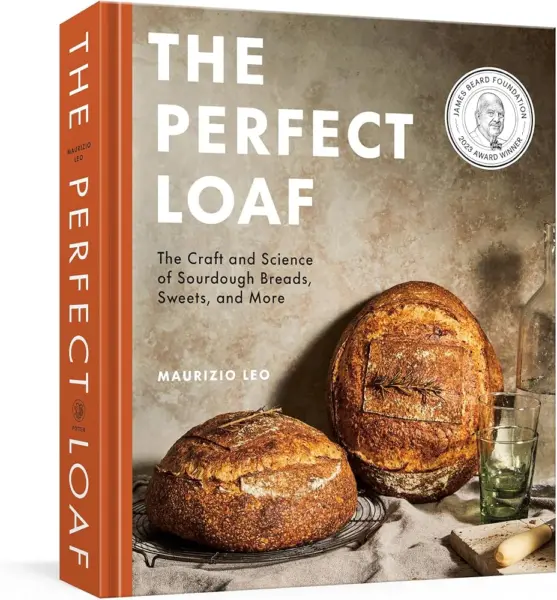
Sourdough has a reputation for being fussy, and The Perfect Loaf takes that reputation seriously. It starts with the starter, moves through fermentation, and explains what the dough is doing at each stage. The result is a book that can feel like a course, which is either the appeal or the barrier.
The step-by-step photos are genuinely useful for judging rise, tension, and the look of a loaf before it goes into the oven. We appreciated the troubleshooting mind-set: when something goes wrong, the book gives you a way to read the dough rather than a single rigid timetable.
The depth is the point, and it is also the limitation. A casual baker who wants a loaf by Saturday may find the detail overwhelming; someone who wants to understand sourdough will keep reading. We think the book rewards that patience, especially if you bake bread often enough to adjust to your own kitchen.
The recipes go beyond plain boules, with sweets and other bakes that use the same starter. That range makes it more than a one-loaf manual, and the guidance is deep enough to keep a serious bread baker busy.
Pros
- Comprehensive sourdough instruction
- Step-by-step photos throughout
- Troubleshooting guidance for dough
Cons
- Requires a maintained starter before you begin
If sourdough is your goal and you want to understand what the dough is doing, this is the deepest guide here.
Best for Retro Baking Fun
Baking Yesteryear
Key Features
- Tone: Humorous commentary
- Pages: 256
- Photos: Color photos
- Recipe era: 1900s to 1980s
- Price: Midrange
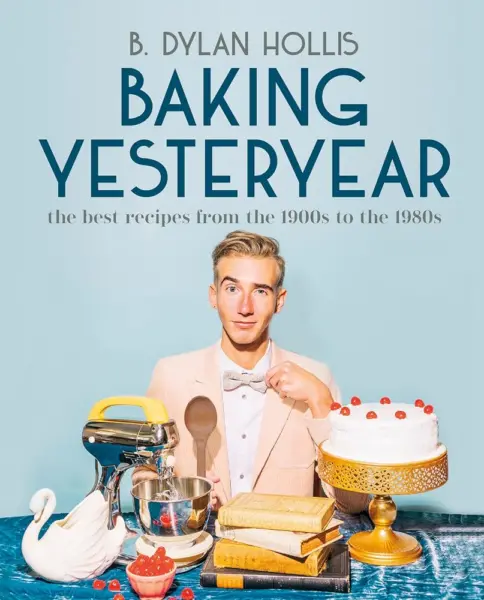
Nostalgia is the hook, but the humor is what keeps the pages turning. Baking Yesteryear collects recipes from the 1900s through the 1980s, adds historical notes and smart-aleck commentary, and makes a book that is as readable as it is bakeable. We found ourselves reading whole chapters before choosing a recipe.
The recipes are clear and the photos are colorful, with some dishes included as curiosities as much as keepers. That is part of the fun: you get mayonnaise cake and peppermint patties alongside oddities from decades past. The book is built for browsing and trying something unexpected.
What we liked most was the way the book lowers the stakes. A failed retro recipe is still a story, and a good one is a small time machine. The commentary gives context without turning the book into a history lecture.
The result is a baking book we reach for when we want to enjoy the process, not just the output. It is a great gift for a baker with a sense of humor, and a fun way to find a recipe nobody else at the potluck brought.
Pros
- Recipes from 1900s to 1980s
- Humorous, readable commentary
- Colorful photos and historical notes
Cons
- Nostalgia-first selection, not a modern course
For the baker who wants a book to read as happily as cook from, this is the one we pick up for a laugh and a bake.
How We Tested Baking Cookbooks
We built the shortlist by reading through bestseller lists, award winners, and baking forums, then filtering for books that covered different ground: weeknight cookies, artisan bread, layer cakes, kid-friendly projects, and vintage recipes. We ended up with 12 cookbooks and spent five months baking from each one.
Each book got at least three recipes: a quick weeknight bake, a weekend project, and one recipe the author treated as a challenge. I baked in my home oven on ordinary weeknights and crowded Sundays, keeping a notebook on the counter. I noted whether the stated times matched the actual browning, whether the instructions told me what ‘golden brown’ should look like, and whether I had to reread a step twice. For bread books, I baked the same lean dough twice to see if the results were repeatable; for cookie books, I sent batches to neighbors and asked for honest feedback. For the kids’ title, I handed the book to a 10-year-old and watched where they got stuck.
We tasted everything warm, cooled, and a day later, because a recipe that only works straight from the oven isn’t very useful. To judge variety and content, I marked how many recipes I actually wanted to make versus how many pages the book had, and whether the front matter taught me something I’d use again. Complexity got its own check: I noted which books were realistic for a Tuesday night and which were better saved for a free weekend, so you know what you’re signing up for.
How to Choose a Baking Cookbook
The most useful baking cookbook is the one that matches what you actually want to bake, not the one with the longest recipe list.
Start With What You Bake Most
The first decision is scope. A broad all-purpose book earns its space if you bake a little of everything and want one reference for cakes, cookies, breads, and pastries. A single-subject book goes deeper: a bread manual can teach fermentation properly, and a cookie book can give you a hundred variations without padding. We prefer starting with one broad book, then adding the subject you keep returning to. That keeps the shelf useful instead of crowded with overlapping recipes.
Read the Instruction Style
Instruction style matters as much as recipe count. Some books read like a class, with difficulty ratings, step-by-step photos, and explanations of why a dough is folded or a batter is chilled. Others are compact references that assume you know the moves. If you are new, choose the teaching style; if you are experienced, a denser book may be more efficient. Read a sample recipe before buying and ask whether the voice gives you confidence or makes you feel behind.
Check Measurements and Testing
Look for weights as well as cups. A scale makes baking more repeatable, especially with flour, and a book that prints both gives you a choice. Testing matters too: a recipe that explains why it works is easier to troubleshoot than one that only lists steps. We put more trust in books that show their testing through headnotes, charts, and specific doneness cues. That is the difference between a collection of formulas and a reference you can learn from.
Match Photos and Format to Your Kitchen
Photos are functional, not decorative. They show browning, crumb, and shape when a timer cannot. If you rely on visual cues, choose a book with a photo for most recipes; if you want depth, accept a denser page and keep a stand nearby. Heft matters on the counter: a 3.5-pound book needs a wide-based stand or a flat surface. Before you buy, picture where the book will live and whether you can keep it open while your hands are covered in dough.
Frequently Asked Questions
Are baking cookbooks worth buying if I already find recipes online?
Yes, when you want a tested sequence rather than a single recipe. A single volume groups techniques, substitutions, and troubleshooting in one place, which matters for breads and pastries where small variables compound. Start with one broad book; add a single-subject book only after you know what you bake most.
Can I bake from these books without a stand mixer?
Usually. Cookies, cakes, and quick breads often work with a hand mixer or a bowl and spoon, while breads are typically mixed by hand and strengthened with folds. Read the method before you start; if a recipe assumes a stand mixer and you do not have one, look for a hand-mix alternative in the same book or choose a book that explains both.
What should I do if a recipe from a baking book does not turn out?
Change one variable at a time: check your oven with an inexpensive thermometer, weigh ingredients if the book gives weights, and reread the recipe for a missed chill or rise. If the result is still off, compare the book’s own troubleshooting notes before blaming the formula.
Final Verdict
King Arthur All-Purpose Baker’s Companion is the one we recommend first because it covers the widest range of baking with the least fuss: weight and volume measurements, conversion charts, and enough explanation for a beginner without coddling an experienced baker.
If you already know your lane, change the pick: Dessert Person for technique, Flour Water Salt Yeast for bread and pizza, or a cookie book for a narrower obsession. That is the useful way to build a baking shelf: one broad reference, then the book that matches what you actually bake.