This post contains affiliate links. We may earn a small commission when you buy through our links — at no extra cost to you.
Many stand mixers list a dough hook in the specs, but few deliver the torque needed for a stiff whole-wheat or high-hydration sourdough. Buyers often pay a premium for brand prestige and end up with a machine that labors or overheats on the second loaf.
The real difference comes down to motor wattage, bowl capacity, and build materials. A 500W motor with metal gears handles repeated kneading cycles; a 300W unit with plastic drive parts may fail within months.
This guide focuses on the mixers that actually pull through heavy doughs without walking across the counter or leaving unmixed flour at the bottom. Each recommendation is matched to a specific baking habit so you get the right power for your routine.


Best for Avid Home Bakers
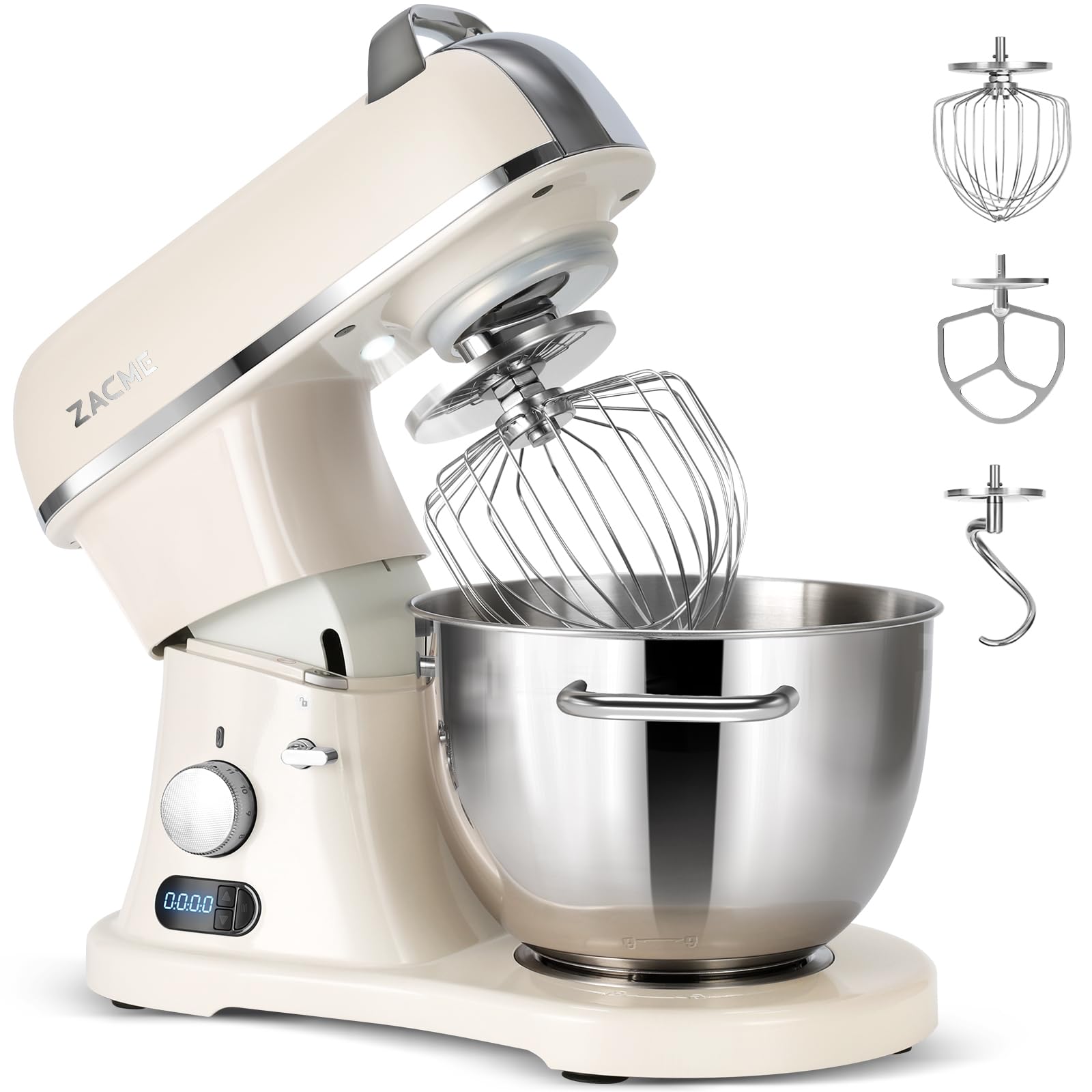
ZACME 8.4Qt 800W
The 800W motor handles stiff doughs without hesitation. Sourdough, whole wheat, or six-pound batches of white bread — the ZACME powers through while remaining notably quiet, a rare combination in a mixer this capable.
The aluminum die-cast body and suction-cup base keep the unit planted even during extended kneading. The 8.4-quart stainless steel bowl accommodates up to 6.6 pounds of dough, reducing the need to split batches when feeding a crowd or a small bakery run.
This mixer suits avid home bakers making bread multiple times a week, or small bakery operations that need a durable workhorse. The tradeoff is a limited attachment ecosystem — no pasta roller or meat grinder add-ons, which matters only if bread isn’t your primary use.
Pros
- Quiet enough for early-morning mixing without waking the household
- Powerful motor kneads heavy doughs like sourdough and large batches with zero strain
- Sturdy all-metal construction stays stable even during thick dough mixing
- Large 8.4qt capacity handles up to 6.6 lbs of dough in one go
Cons
- Optional attachments are far fewer than what KitchenAid offers — not a problem if bread is the primary use
If your kitchen revolves around bread, this mixer delivers commercial-grade torque and capacity at a mid-range price — no brand ecosystem subscription needed.
Best for Large Batch Baker
Bosch Universal Plus 6.5Qt
The Bosch Universal Plus stands out for its belt-driven 500W motor and 6.5 quart bowl, capable of kneading up to 14 loaves of bread dough in a single batch. This makes it a strong contender for home bakers who regularly produce large quantities of sourdough or whole-grain loaves. The dough hook extender helps incorporate ingredients evenly, and the bottom drive allows adding flour without stopping the mixer.
The motor’s torque is genuinely impressive for thick doughs, and the belt drive runs more quietly than some gear-driven alternatives. That said, the plastic bowl and attachments are a trade-off: the whip drive and paddles can fail under heavy stress, especially if the mixer is used for tasks beyond its intended scope, like mixing extremely stiff doughs or running at high speed for extended periods.
This mixer suits bakers who prioritize bread-making capacity over all-metal build quality. It’s ideal for those who make three or more loaves a week and want a machine that can handle the volume without overheating. However, if you prefer metal construction and long-term durability, or need more than four speed settings, a model like the ZACME with its 800W motor and commercial-grade build may be a better fit.
Pros
- Handles large batches of stiff dough (up to 14 loaves) with consistent results.
- Powerful 500W belt-driven motor provides strong torque for kneading heavy doughs.
- 6.5 quart bowl with bottom drive makes adding ingredients easy mid-mix.
Cons
- Noise level may be higher than some stand mixers, especially during heavy kneading.
- Plastic whip drive and paddles can fail under heavy stress; metal alternatives would improve durability.
For home bakers who regularly make three or more loaves of bread per week and are willing to accept plastic components in exchange for high capacity and torque, the Bosch Universal Plus is a capable workhorse. If all-metal construction and quieter operation are priorities, consider the ZACME instead.
Best for Artisan Bread Maker
Ooni Halo Pro Spiral
The Ooni Halo Pro’s spiral dough hook and rotating bowl deliver a kneading action that closely mirrors commercial spiral mixers — the bowl spins while the hook remains stationary, developing gluten more efficiently than planetary mixers. This makes it particularly effective for stiff doughs, high-hydration sourdough, and large batches of pizza dough.
A heavy-duty metal build and 58 speed settings give precise control over mixing intensity, from gentle folding to vigorous kneading. The built-in timer adds convenience for repeatable results, and the included attachments (breaker bar, whisk, flexible beater) cover a range of tasks beyond bread.
This mixer suits the baker who wants spiral mixing without stepping up to a full commercial unit. However, the premium price places it beyond casual use — and in quiet kitchens, the motor’s high-pitched whine may be noticeable. Those who bake weekly and value dough quality over attachment variety will find the tradeoffs acceptable.
Pros
- Spiral mixing technology develops dough evenly and efficiently for artisan bread and pizza.
- Heavy-duty metal construction with a sleek finish that resists movement during kneading.
- 58 speed settings and a timer allow precise control for a wide range of dough types.
Cons
- Premium pricing puts it out of reach for occasional bakers or those on a tight budget.
- In a quiet setting, the motor emits a high-pitched whine that some find distracting — less of an issue in a busy kitchen or with background noise.
For the home baker who regularly works with stiff doughs and wants spiral mixing without commercial space requirements, the Halo Pro delivers — assuming the budget and noise tolerance align.
Best for Mixed Home Baking
KitchenAid Artisan 5Qt
The KitchenAid Artisan 5Qt sets itself apart with an attachment ecosystem unmatched in the category — pasta rollers, meat grinders, spiralizers, and more attach to a single motor head. Add the 25+ color options, and this mixer becomes as much a kitchen design statement as a tool. The tilt-head design and straightforward speed dial keep operation simple, and the zinc die-cast body gives it a solid, premium feel that suits countertop display.
This mixer works well for home bakers who make cookies, cakes, or occasional white bread, and who plan to invest in add-ons that expand its range. However, the 325W motor is not built for daily stiff doughs like whole wheat or large batches of bread — it can bog down or overheat if pushed regularly. Some units have also shown early mechanical issues, so inspecting upon delivery and using the manufacturer’s warranty are wise. For bakers whose primary need is bread dough, a higher-torque machine will deliver more consistent results.
Pros
- Wide selection of attachments (pasta, grinder, ice cream) that use the same power hub
- Classic, visually appealing design with many color finishes
- Tilt-head and intuitive controls make everyday baking straightforward
Cons
- Some units may have quality control issues such as early motor or gear problems
- Motor power (325W) can struggle with heavy or large bread dough batches, making it better for softer doughs
If your baking rarely involves stiff doughs and you want the widest attachment ecosystem available, the Artisan is a strong choice. For weekly bread making, a more powerful mixer would be a better investment.
Best for All-Round Home Baker
Cuisinart Precision Pro 5.5Qt
The Cuisinart Precision Pro’s 500W motor and die-cast metal body deliver a level of power and stability that undercuts most competitors at this price point. This combination gives it a clear advantage over the iconic brand’s entry-level models, which typically offer less torque for dense doughs.
Across its 12 speeds, the mixer handles cake batters, cookie doughs, and whipped cream with consistent results. The tilt-head design and included splash guard simplify adding ingredients and cleaning up. Where bread dough is concerned, the dough hook’s shape may not fully scrape the bottom of the bowl, leaving a ring of unmixed flour that requires a manual scrape—a minor extra step for occasional loaves.
This mixer suits home bakers who make a mix of cakes, cookies, and the occasional loaf of bread. For those baking bread weekly or relying on fully automated kneading, the manual scraping adds friction, and the whisk attachment has been reported to break under heavy use. These limitations make it a strong all-rounder rather than a bread-making specialist.
Pros
- 500W motor handles dense batters and doughs without strain.
- Die-cast metal construction provides stability during heavy mixing.
- Tilt-head design and splash guard make ingredient additions and cleanup convenient.
Cons
- Dough hook may not scrape the bowl bottom, leaving a ring of unmixed flour.
- Whisk attachment may break under heavy or repeated use.
A high-value mixer for general baking that asks for a small compromise during bread making—perfect for buyers who don’t mind a quick scrape, but not the best pick for weekly dough work.
Best for Small Commercial Use
KitchenAid Commercial 8Qt
The KitchenAid Commercial 8Qt uses a gear-driven DC motor that delivers high torque without the noise typical of comparably powered mixers. Unlike the tilt-head Artisan models, this bowl-lift machine handles double batches of stiff bread dough without hesitation.
This mixer is a serious investment for bakers who need 8-quart capacity and quiet operation on a daily basis. The premium price demands confidence in quality control, as some units arrive with electrical defects. Buying from a retailer with a generous return policy and considering an extended warranty is advisable.
The DC motor runs quietly enough to hold a conversation nearby, a rarity for a machine this powerful. The 8-quart stainless steel bowl accommodates large batches, and the bowl-lift design provides stability during mixing.
Pros
- Very quiet operation for a commercial mixer
- Powerful DC motor handles heavy bread dough with ease
- Large 8-quart capacity ideal for big batches
Cons
- Premium cost is hard to justify when other high-power mixers cost significantly less
For heavy-duty bakers who need quiet power and large capacity, the KitchenAid Commercial 8Qt delivers — but only if you’re prepared for the possibility of early electrical problems.
Best for Budget Bread Baker
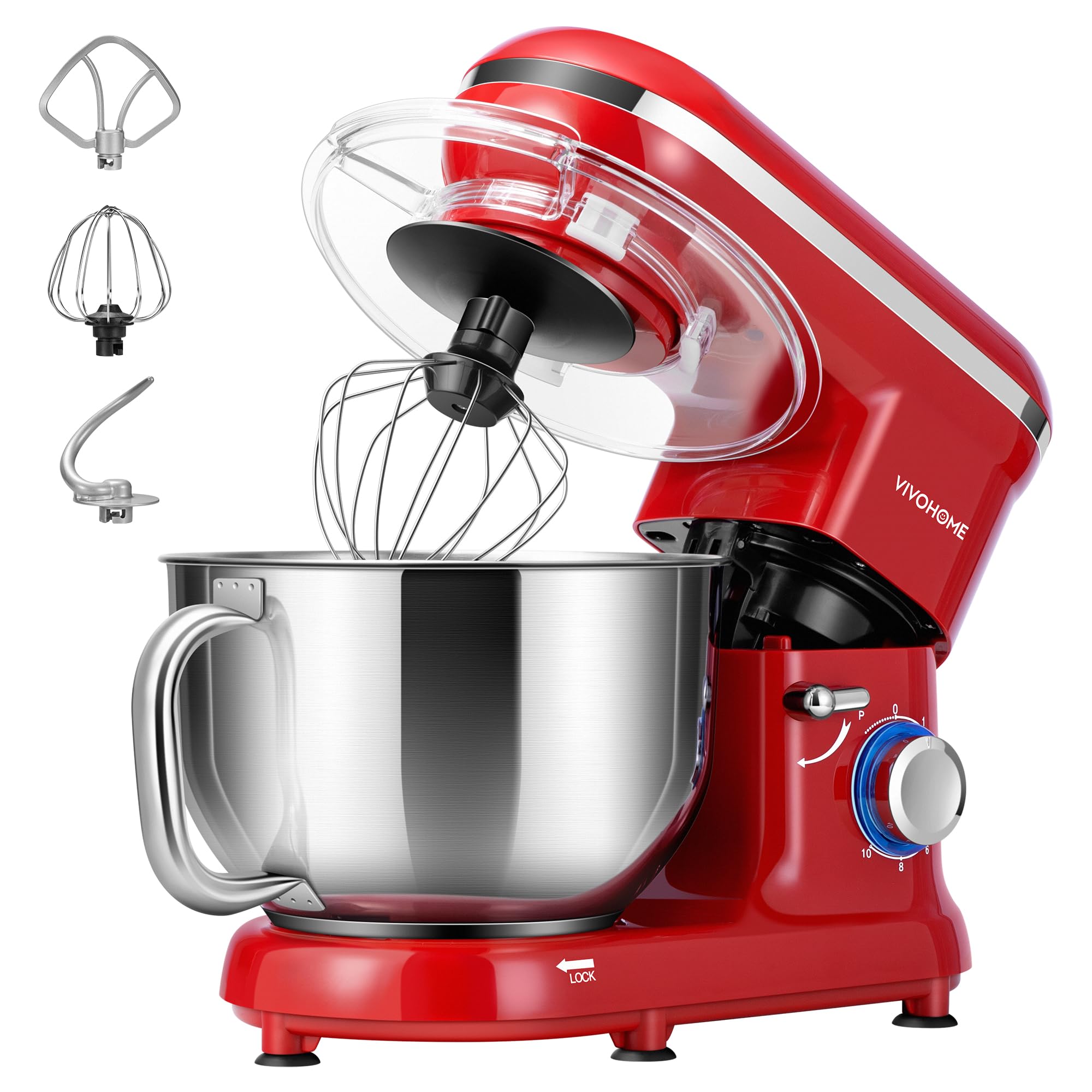
VIVOHOME 6Qt 660W
The VIVOHOME stand mixer delivers a rare combination: 660 watts of motor power and a full 6-quart stainless steel bowl at a price that undercuts almost every competitor. That power-to-cost ratio makes it a compelling option for anyone who needs to handle stiff bread doughs without spending kitchen-aid-level money.
For the occasional bread baker who mixes a few loaves on weekends, this mixer handles the task reasonably well. The dough hook incorporates ingredients adequately, though the hook may not reach the very bottom of the bowl – a quick pause to scrape the sides ensures everything mixes evenly. The tilt-head design makes adding flour and checking consistency straightforward.
Where the budget price shows is in long-term build quality. The handle can snap under repeated head-tilting, and the whisk attachment may loosen or warp after moderate use. These are tradeoffs that matter less to someone who uses the mixer a few times a month rather than daily. The 10 speed dial provides enough control for everything from whipping cream to kneading dough.
Pros
- 660W motor handles bread dough and heavy batters effectively
- Exceptional value: 6-quart capacity and 660W for under $150
- 10 speed settings give fine control for different mixing tasks
Cons
- In households that tilt the head frequently, the handle may eventually snap – less of a concern for occasional use
- When mixing dense doughs, the hook may leave a ring of unmixed flour at the bottom; a quick scrape resolves it
If you bake bread a few times a month and want the most power your money can buy, this mixer delivers – just plan on occasional manual scraping and treat the handle with care.
Best for Budget-Conscious Baker
Martha Stewart 5.3Qt
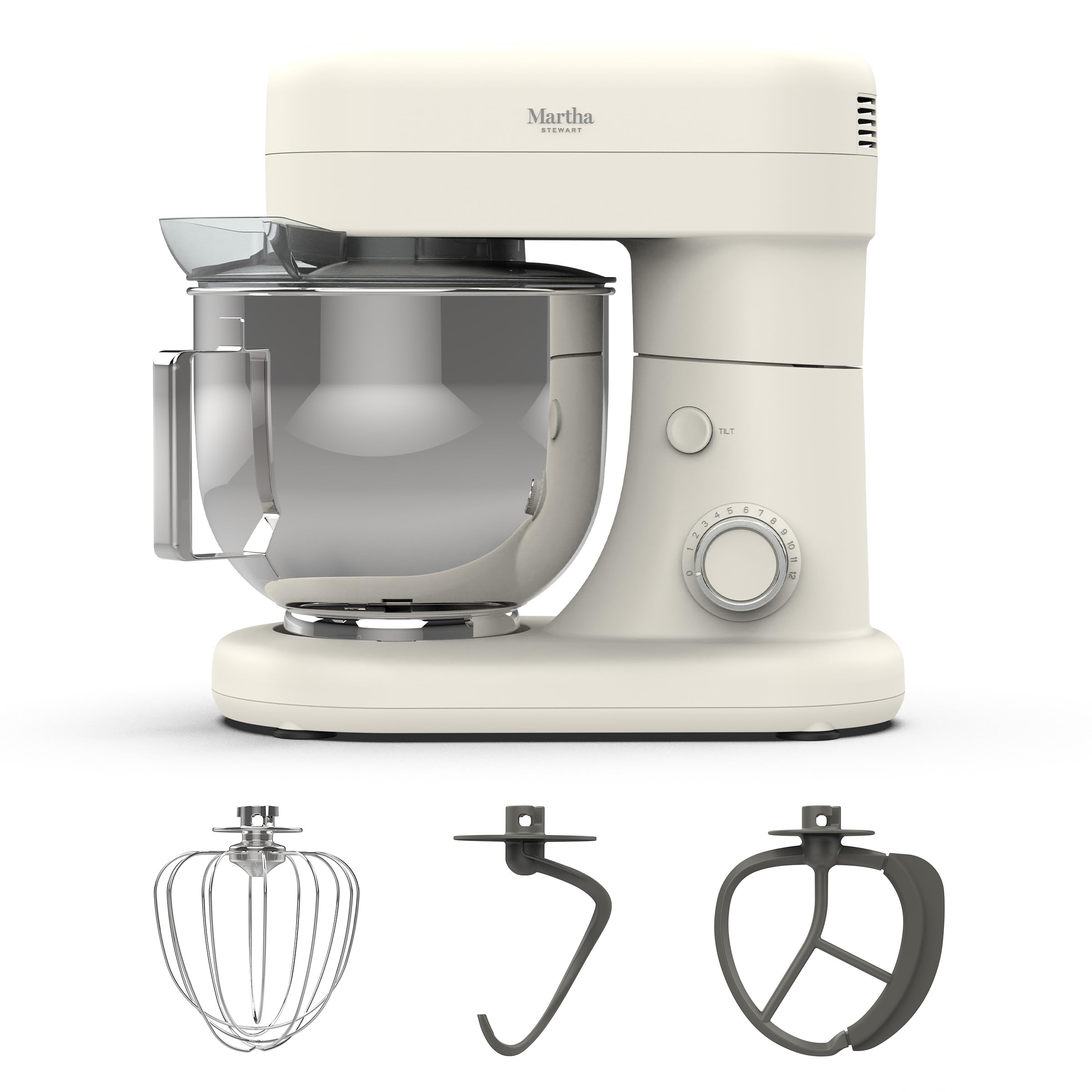
The Martha Stewart Tilt-Head Stand Mixer packs a 660W motor and 5.3qt stainless steel bowl into a budget-friendly package. It powers through cake batters, cookie doughs, and the occasional bread loaf without struggling. The tilt-head design and splash guard make mixing and cleanup straightforward. Where it falls short is in sustained daily bread dough use – the motor and construction are better matched to light or moderate baking schedules. For those who bake bread a few times a month, this mixer offers strong value, but daily bakers should consider models with proven heavy-duty performance.
Pros
- 660W motor handles stiff doughs and thick batters with ease
- Tilt-head design with splash guard simplifies adding ingredients and cleaning
Cons
- Tilt-head may separate when raised in rare cases – inspect before heavy dough use
- 5.3qt capacity handles standard loaves but requires batch processing for larger bakes
Best for occasional bread bakers on a budget – not a daily workhorse.
Best for Casual Home Baker
KitchenAid Classic 4.5Qt

The KitchenAid Classic 4.5Qt is the least expensive entry into KitchenAid’s attachment ecosystem, and its dough hook and flat beater reliably handle weekly white bread and cookie dough. However, the 275W motor is the weakest in KitchenAid’s lineup – it can struggle with stiff whole-grain doughs or large batches, and some units have shown motor strain under heavy use. At 22 lbs, the mixer’s weight makes it less portable for small kitchens.
Pros
- Dough hook works well for occasional white bread and cookie dough.
- Tilt-head design makes bowl access and cleanup simple.
- Compatible with the full range of KitchenAid attachments for added functionality.
Cons
- Motor can strain under stiff or large dough batches, limiting its bread-making capability.
- Weight of 22 lbs may be cumbersome to move or tilt in smaller kitchens.
This mixer fits the casual baker who makes a loaf or two of white bread each week, but anyone needing daily stiff doughs should invest in a higher-wattage model.
How to Choose
The most important factor for bread dough mixing is motor torque, not number of speeds – a 500W motor will knead far better than a 300W unit with 12 speeds.
Motor Wattage
For bread dough, look for at least 500W. Lower wattage mixers (under 350W) often struggle to handle stiff or large batches, causing the motor to overheat or slow down mid-knead.
The wattage determines how much force the motor can sustain under load. A 500W+ mixer maintains consistent speed through whole-wheat or high-hydration dough, while a 300W unit may stall and require rest periods.
Bowl Capacity
A 5-quart bowl fits 1–2 standard loaves. For 3+ loaves or frequent bulk baking, choose 6.5 quarts or larger.
Oversized bowls can leave small batches unmixed, while undersized bowls limit your batch size. Match the capacity to your typical output.
Bowl and Attachment Material
Metal bowls and metal drive gears last longer than plastic components, especially when kneading heavy doughs.
Plastic whip drives and paddles may crack or snap under repeated strain – a common failure point on budget and some mid-range models.
Weight and Stability
A heavier mixer (15+ lbs) resists “walking” across the counter when kneading stiff dough. Lightweight units often need suction cups or one hand on the head.
Check the base design – mixers with wide feet or suction cups stay planted better than narrow or smooth-bottom models.
Dough Hook Design
Spiral hooks (found on commercial and specialty mixers) develop gluten more efficiently than C-shaped hooks, reducing knead time.
C-hooks are common on home mixers and work well for average doughs, but may not reach the bottom of a tall bowl, leaving a flour ring.
FAQ
What wattage stand mixer is best for kneading bread dough?
500W or higher is the safe minimum for regular bread dough, including whole-wheat and high-hydration sourdough. Mixers with 300W–350W can manage occasional white bread, but will struggle with stiff or large batches and risk motor strain.
Why does my stand mixer jump or walk across the counter when mixing bread dough?
This happens when the mixer is too light for the torque needed. Heavy doughs create lateral force that light machines (under 20 lbs) can’t absorb. Solutions: choose a heavier model (20+ lbs) or use suction-cup feet. A flat, non-slip surface also helps.
Is a 4.5 quart mixer big enough for making bread?
Yes, for 1–2 standard loaves. The 4.5-quart KitchenAid Classic handles a single loaf comfortably. For larger batches (3+ loaves) or frequent baking, step up to 6.5 quarts or more. Small bowls also limit dough hydration – wet doughs need room to expand.
Can a plastic bowl stand mixer handle heavy bread dough?
Plastic bowls are lighter and less stable than stainless steel. They can work for light doughs, but heavy kneading may cause flexing, cracking, or the bowl lifting from the base. For regular bread making, a stainless steel bowl is far more durable and holds up to repeated stress.