This post contains affiliate links. We may earn a small commission when you buy through our links — at no extra cost to you.
Programmable coffee makers promise a fresh pot at your first sip, but many share a dirty secret: no matter the price tag, leaks and early breakdowns are common. That hot cup you set last night might come with a puddle on the counter by morning.
The real trade-off isn’t between budget and premium—it’s between feature-packed convenience and the likelihood the machine will still be running in two years. A built-in frother or iced coffee mode adds complexity that can compromise the heating element or seal.
This guide cuts through the marketing to show which compromises are worth making for your morning routine—whether you value temperature control, pod flexibility, or simply a carafe that doesn’t drip.


Best for Large Families
Cuisinart DCC-3200NAS
Key Features
- Capacity: 14 cups
- Timer & Strength: 24hr timer, Regular/Bold
- Heat Control: Adjustable warming plate
- Price: $$
The Cuisinart DCC-3200NAS delivers 14 cups of hot, flavorful coffee with an adjustable warming plate (low/medium/high) and a regular or bold brew option. The 24-hour programmable timer, auto-off, and ready alert make scheduling easy, and the glass carafe keeps coffee at the desired heat.
The intuitive controls and straightforward programming suit daily use. The carafe spout may drip during pouring, a possible nuisance for those who fill directly into a mug.
This machine fits households or offices needing 10+ cups daily who value temperature and brew strength adjustments. For buyers who accept occasional spout drips and potential plastic wear after a few years, the DCC-3200NAS provides consistent coffee performance at a mid-range price.
Pros
- Coffee comes out hot and flavorful across the brew cycle.
- Adjustable warming plate lets you set the desired heat level.
- Intuitive controls and 24-hour timer make programming simple.
Cons
- Plastic components may show wear after a few years of daily use.
- Carafe spout may drip during pouring, requiring a careful pour.
For large households wanting programmable features and heat control, this Cuisinart model is a solid performer – just be mindful of the spout drip and long-term wear.
Best for Single-Serve Users
Keurig K-Elite
Key Features
- Capacity: 4-12 oz sizes
- Timer & Strength: Programmable, Strong Brew
- Heat Control: Temperature control
- Price: $$
The K-Elite delivers consistent coffee quality across four to twelve ounces, with a strong brew setting and an iced coffee mode that works as advertised – all from a programmable timer. It heats water quickly and the controls are straightforward. For a household that already uses K-Cups and wants multiple cup sizes plus iced, this is the most feature-rich option. The trade-off comes in the build: the plastic chassis can feel less substantial than metal alternatives, and a minority of units may experience premature failure, so it suits users who prioritize convenience and versatility over long-term robustness.
Pros
- Produces consistently good coffee with multiple brew sizes and strength control.
- Very easy to set up and operate right out of the box.
- Heats water quickly – ready to brew in under a minute.
Cons
- Plastic construction can feel flimsy compared to all-metal machines.
- Premature failure may occur in some units, requiring early replacement.
For single-serve households that already use K-Cups and want programmable features plus iced coffee, the K-Elite delivers – just don’t expect it to outlast a drip machine built for daily family use.
Best for Specialty Drinks
Ninja CM401 Specialty
Key Features
- Capacity: 6 sizes, cup to carafe
- Timer & Strength: Programmable, Rich, Iced
- Price: $$
Built-in fold-away frother and specialty brew modes produce lattes, macchiatos, and iced coffee without an extra machine. Coffee quality is consistently smooth without bitterness, and the removable reservoir and dishwasher-safe parts make cleanup simple.
This suits coffee enthusiasts who want versatility over a large carafe. However, some units may cease brewing within a year, so it’s best for those willing to accept that risk for the added functionality.
Pros
- Coffee comes out smooth and not bitter, with good flavor across brew styles
- Dishwasher-safe parts and removable reservoir make cleaning straightforward
- Six brew sizes from a single cup to a full carafe, plus an iced coffee mode
Cons
- Long-term durability can be a concern – some units cease to brew after several months
- Coffee temperature may be cooler than some prefer, especially in larger batches
A feature-packed choice for specialty drink lovers who don’t mind a shorter potential lifespan – the top pick Cuisinart is the safer bet for daily family use.
Best for Budget Buyer
BLACK+DECKER CM1110B
Key Features
- Capacity: 12 cups
- Timer & Strength: 24hr timer only
- Heat Control: Keep warm plate
- Price: $
At a rock-bottom price, the CM1110B delivers a full 12-cup pot of hot coffee with a simple 24-hour timer and surprisingly decent flavor. The removable filter basket and vortex showerhead work fine for getting a basic pot brewed each morning. Where the budget shows is in longevity and maintenance – the machine may stop working after a few months, and the clean cycle can be a chore. This makes it a solid choice for a second kitchen, camping, or a temporary setup where you won’t depend on it for years.
Pros
- Rock-bottom price for a programmable 12-cup machine
- Simple 24-hour timer and auto-keep-warm work without fuss
- Produces a satisfying cup of coffee for the price
Cons
- Clean reminder and frequent descaling can be annoying
- Some units stop working after 4–9 months – best suited for temporary use
Buy this if you need the cheapest programmable 12-cup for occasional or temporary use and are prepared for the possibility of an early replacement.
Best for Mixed-Use Households
Hamilton Beach 2-Way
Key Features
- Capacity: 12-cup + single
- Timer & Strength: 24hr timer, Regular/Bold
- Price: $$
This Hamilton Beach model stands out with two independent water tanks—one for the 12‑cup carafe, one for single‑serve brewing—letting you use your own ground coffee for either size. It saves on pods by relying entirely on ground coffee, and the intuitive programming with 24‑hour timer and bold brew option adds convenience.
Best suited for households that want both a morning pot and occasional single cup without buying a pod machine, but durability is a known concern—the carafe and single‑serve components may show wear sooner than expected.
Pros
- Very easy to use – simple programming and intuitive interface
- Good value for money, saves on pods
- Attractive design with stainless steel accents
Cons
- Coffee temperature can be lukewarm rather than piping hot
- Brew cycle takes longer than comparable models
For households that value the flexibility of two brewing modes without pod waste, this is a cost‑effective option—just keep in mind that longevity may not match that of simpler designs.
Best for Budget-Conscious
BLACK+DECKER CM1160B

Key Features
- Capacity: 12 cups
- Timer & Strength: 24hr auto brew, no strength
- Heat Control: Keep hot plate
- Price: $
This machine offers strong value for money and simple controls that make programming a breeze. However, durability can be a concern – the unit may not hold up to years of heavy use. It’s a bit pricier than Black+Decker’s most basic model, which provides similar brew quality for less, but both share comparable longevity.
Pros
- Affordable price for a fully programmable 12-cup coffee maker with timer.
- Intuitive controls and simple programming for setting the auto-brew schedule.
Cons
- Not built for long-term daily use – the machine may have a shorter lifespan than pricier options.
Best suited for a dorm, RV, or temporary setup where budget takes priority over longevity.
Best for Classic 12-Cup
Cuisinart DCC-1200P1

Key Features
- Capacity: 12 cups
- Timer & Strength: 24hr timer, 1-4 cup, auto-off
- Heat Control: Adjustable heater plate
- Price: $$
Makes consistently hot coffee with an adjustable warming plate, and the built-in water filtration improves flavor. Compared to the top pick, it has a smaller 12-cup capacity and an older design; some units may experience reliability concerns over time.
Pros
- Produces consistently hot, flavorful coffee.
- Adjustable warming plate lets you control how hot the coffee stays.
Cons
- Durability may be limited: the switch and plastic components can wear out over time.
Fits best if you prioritize hot coffee temperature control and water filtration over long-term reliability and larger capacity.
Best for Small Batch
Ninja CE251

Key Features
- Capacity: 12 cups
- Timer & Strength: 24hr timer, Classic/Rich
- Heat Control: Adjustable warm plate
- Price: $$
The Ninja CE251 produces rich, robust coffee and cleans up easily with dishwasher-safe parts. The small batch setting handles smaller quantities efficiently. However, some units may stop brewing within months, and the carafe can crack or the reservoir leak, making long-term durability uncertain for this otherwise well-priced machine.
Pros
- Rich, robust coffee flavor from Classic and Rich brew styles.
- Small batch function brews 1–4 cups without waste.
Cons
- Some units may stop functioning after a few months; the carafe can crack.
Best for budget-minded households that want a simple programmable with a useful small batch option and can accept some unit-to-unit variance.
Best for Pod & Grounds
Ninja PB055AST
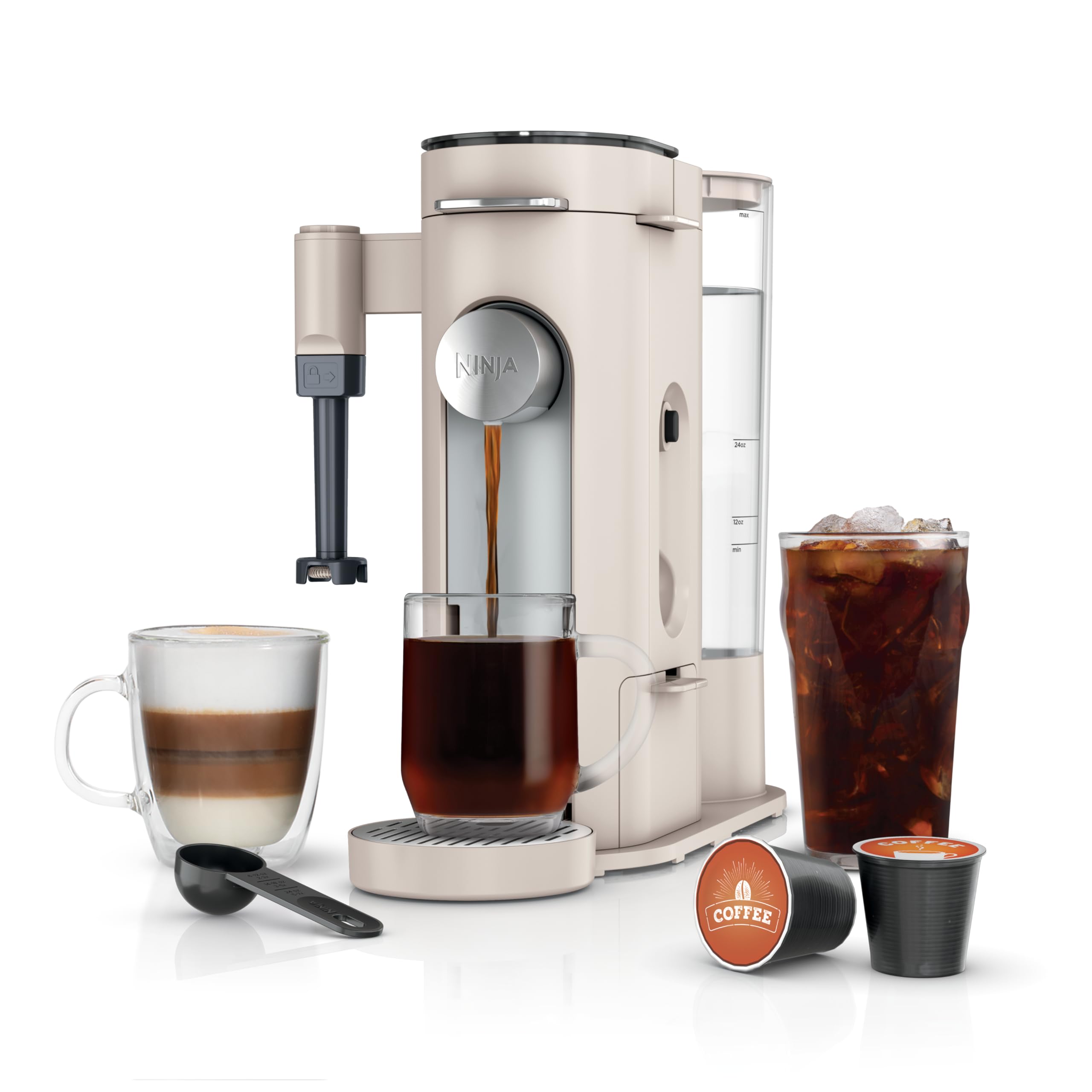
Key Features
- Capacity: 6-24 oz single-serve
- Timer & Strength: Programmable, pod/grounds
- Price: $$
This Ninja delivers noticeably richer flavor than typical pod machines — the 24-ounce brew size and fold-away frother add real flexibility for a single-serve setup. However, it lacks the timer or scheduling features you’re looking for, and some units have stopped brewing within months. If you don’t need automatic brewing and accept the occasional early unit variance, this is a space-saving option with pod-and-grounds versatility.
Pros
- Delivers noticeably richer flavor than typical pod machines.
- Simple interface with intuitive controls.
Cons
- Some units have stopped brewing within months of purchase.
Best suited for single-serve drinkers who want pod and grounds flexibility plus a built-in frother, provided you’re comfortable with the possibility of early unit variance.
Best for Thermal Carafe
BLACK+DECKER CM2046S

Key Features
- Capacity: 12 cups
- Timer & Strength: 24hr auto brew, Strong
- Heat Control: Thermal carafe
- Price: $
The thermal carafe keeps coffee hot for hours with no hot plate needed, and brew strength settings deliver solid flavor. However, the carafe drips when pouring — something to accept if countertop mess isn’t a dealbreaker but a reason it sits below more refined models.
Pros
- Thermal carafe holds heat for hours, no warming plate needed
- Brew strength control produces good coffee flavor
Cons
- Pouring from the carafe tends to drip onto the counter
Best for budget-conscious buyers who want a thermal carafe and are okay with occasional drips — a practical tradeoff for the price.
Best for Budget Basic
Hamilton Beach 46299J

Key Features
- Capacity: 12 cups
- Timer & Strength: 24hr timer, Regular/Bold
- Heat Control: Keep warm plate
- Price: $
The Hamilton Beach 46299J makes good coffee with simple programming and a low cost. Its glass carafe can crack under clumsy handling, and the brew cycle can be slower than some — a sensible pick if affordability matters and you handle the carafe carefully.
Pros
- Produces consistently good coffee.
- Simple to program with 24-hour timer.
Cons
- Glass carafe may crack if handled roughly.
Best for budget-conscious buyers in small households who can be gentle with the carafe and don’t mind a slower brew.
Best for Solo Drinker
Mr. Coffee 5-Cup

Key Features
- Capacity: 5 cups
- Timer & Strength: Brew Later, auto shutoff
- Price: $
This compact 5-cup machine delivers a decent cup of coffee from a footprint that fits anywhere. The simple timer and auto-shutoff make morning brewing effortless. But water can overflow or drip during the brew cycle, and some units may stop working within a few months – a limitation worth accepting only if counter space is your top priority.
Pros
- Brews a clean, hot cup from a compact footprint.
- Simple timer programming for automatic morning brew.
Cons
- Water may overflow or drip during brew, leaving a messy counter.
For a student dorm or office desk where counter space is tight and you can tolerate occasional drips, this tiny programmable gets the job done.
How to Choose
The most important thing to know: a higher price doesn’t guarantee fewer leaks or a longer lifespan — many mid-range and budget models share the same failure rates.
Brew Capacity
Carafe size matters for how many cups you need, but bigger isn’t always better. A 14-cup machine takes up more counter space and requires a larger heating element, which can stress the internal components faster under daily use.
If your household drinks fewer than 6 cups a day, a 12-cup or even a 5-cup model will warm up quicker and may last longer because the heater cycles less often.
Timer and Brew Strength
A 24-hour programmable timer is standard, but brew strength settings (Regular/Bold or Rich) modify water flow rate. The bold setting extends contact time with grounds, which can increase sediment in the carafe if the filter basket isn’t designed for it.
Look for machines where the strength control actually adjusts the pause time rather than just reducing water volume — the latter can produce a weaker, more acidic cup.
Water Reservoir Size and Ease of Filling
A larger reservoir (60 oz or more) means fewer refills, but the real trade-off is fill access. Front-fill designs let you pour without moving the machine, cutting the risk of spills compared to top-fill models that require lifting a heavy carafe.
Removable reservoirs are simpler to clean and fill at the sink, but the seal between the reservoir and the machine is a common leak point. Check for tight, silicone gaskets rather than hard plastic fittings.
Temperature Control and Warming Plate
A warming plate with adjustable low/medium/high settings lets you choose heat level, but the plate itself can scorch coffee if left on high for more than an hour. Thermal carafes eliminate this problem but rely on insulation, which loses heat after about two hours.
The heating element’s wattage determines initial brew temperature. Models that consistently output 195–205°F extract more flavor — anything below 190°F tends to taste flat.
Reliability and Longevity
Plastic components — especially the carafe handle, reservoir lid, and internal pump — are the first to fail. Look for models with stainless steel or metal-reinforced parts in these areas, even if the chassis is plastic.
The heating element and the fill valve are the two most common failure points after 12–18 months. Machines with a separate hot water dispenser (like some Keurigs) add another valve prone to scale buildup and leaks.
FAQ
Why does my coffee maker leak from the carafe spout?
The most common cause is a worn or misaligned rubber gasket where the carafe sits against the drip stop. Over time, heat and repeated pouring deform the seal. If the leak occurs during brewing, the reservoir-to-machine connection may be loose. Tighten the reservoir or replace the carafe gasket — but if the carafe itself is cracked, replacement is the only fix.
How long should a programmable coffee maker last before breaking?
Expect 2–3 years from most mid-range models, and 1–2 years from budget options. The heating element and internal pump are typically the first to fail. Machines with thermal carafes often last slightly longer because they don’t have a warming plate to burn out. If a unit fails within the first year, it’s within warranty range — budget for that possibility.
Is a thermal carafe better than a glass carafe for keeping coffee hot?
A thermal carafe keeps coffee at drinkable temperature for about 2 hours without a warming plate, which prevents the burnt taste that develops on a hot plate after an hour. However, thermal carafes are heavier, more expensive to replace, and often have a narrower spout that can drip. For coffee that’s gone within 30 minutes, a glass carafe with a low-wattage warm plate is fine.
What is the most reliable programmable coffee maker under $100?
There is no single model that’s known for bulletproof reliability under $100. The BLACK+DECKER CM1160B and Cuisinart DCC-1200P1 have the highest review counts and lowest negative percentages among budget-friendly options, but both still see common reports of leaking or early failure. The safer bet is to buy from a retailer with a generous return policy and treat the machine as a 2-year appliance.