This post contains affiliate links. We may earn a small commission when you buy through our links — at no extra cost to you.
Nonstick pans promise effortless cooking, but the coating that makes them slide eventually fades. Many shoppers find their pan sticking within months, regardless of price. The real difference isn’t marketing claims—it’s how the pan matches your cooking habits and stove type.
Some pans excel for eggs on gas stoves, others hold up to high-heat stir-fries, and a few handle induction burners and oven finishing. This guide cuts through the hype to match you with the pan that fits your routine, not a one-size-fits-all promise.
Whether you cook daily or occasionally, the right choice depends on balancing initial cost against replacement frequency—and knowing which features actually extend a pan’s lifespan.




Best for Everyday Home Cooks
OXO Good Grips 12"
Key Features
- Coating Type: PTFE (3-layer)
- Base Material: Hard anodized aluminum
- Induction Compatible: Yes
- Oven Safe Temp: 390°F
- Handle Material: Stainless + silicone grip
- Pieces: Single 12"
- Price: Mid-Range
The OXO Good Grips 12" delivers the sort of even, reliable nonstick performance that keeps fried eggs sliding and caramelized onions from clinging. Its hard anodized aluminum body and three-layer German coating earn it a top rating from America’s Test Kitchen, and the pan works on induction cooktops without hot spots. For everyday cooking—scrambles, seared chicken, vegetable stir-fries—this skillet handles the workload without fuss.
This pan suits home cooks who want a single, high-performing skillet for daily use and don’t mind treating it with care. The coating can scratch from metal or rough silicone utensils, and heavy daily use may wear down the nonstick layer within a year or two. That’s a predictable tradeoff for the level of slick release it provides—this isn’t a lifetime pan, but it’s a superb one while it lasts.
Pros
- Slides food easily with minimal oil, even after months of use
- Heats evenly across the full cooking surface, no hot spots
- Wipes clean quickly with a soft sponge—no soaking required
Cons
- Nonstick surface can develop scratches when using silicone utensils if any grit or edge is present
- Coating performance may degrade after 12–24 months of daily cooking
A top-performing skillet that asks for gentle care in exchange for release that rivals pricier options—right for cooks who prioritize nonstick feel over longevity.
Best for Family Cooking
T-Fal Ultimate Set 10" & 12"
Key Features
- Coating Type: Titanium nonstick (PTFE)
- Base Material: Hard anodized aluminum
- Induction Compatible: No
- Oven Safe Temp: 400°F
- Handle Material: Silicone
- Pieces: 2-pan set
- Price: Mid-Range
The T-Fal Ultimate set has become a popular choice for everyday nonstick cooking, with two useful pan sizes in a hard anodized build that resists warping. It suits families on gas or electric cooktops who want a cost-effective two-pan solution. However, it lacks induction compatibility, and the nonstick coating may degrade over time for some users, especially if used above medium heat.
Pros
- High build quality and durability
- Very easy to clean – wipes clean with a damp cloth
Cons
- Not compatible with induction cooktops
- Nonstick coating may degrade over time in some cases
For non-induction households wanting two dependable nonstick pans without overspending, this set fits the bill.
Best for Serious Home Chefs
Tramontina 10" Pro
Key Features
- Coating Type: Reinforced nonstick (PTFE)
- Base Material: Heavy-gauge aluminum
- Induction Compatible: No
- Oven Safe Temp: 400°F
- Handle Material: Silicone over stainless
- Pieces: Single 10"
- Price: Mid-Range
The Tramontina Professional 10-inch Nonstick Frying Pan brings NSF-certified build quality found in restaurant kitchens to home cooks without the high price tag. The heavy-gauge aluminum body heats evenly and the reinforced nonstick coating releases food with minimal oil. The silicone-over-stainless handle adds significant weight, making the pan feel unbalanced when full – a tradeoff for the sturdiness. It is not compatible with induction cooktops. This pan suits serious home cooks who prioritize even heating and durability over lightweight handling, and who cook on gas or electric ranges.
Pros
- Professional-quality construction with NSF certification
- Effective nonstick surface releases food easily
- Quick cleanup – wipes clean with little effort
Cons
- Handle weight can make the pan feel nose-heavy when full
- Nonstick coating may lose performance over time with heavy use
For gas or electric stove owners who want restaurant-grade build without the restaurant price, the Tramontina delivers even heat and easy release – as long as you can work around the heavy handle.
Best for Induction High-Heat
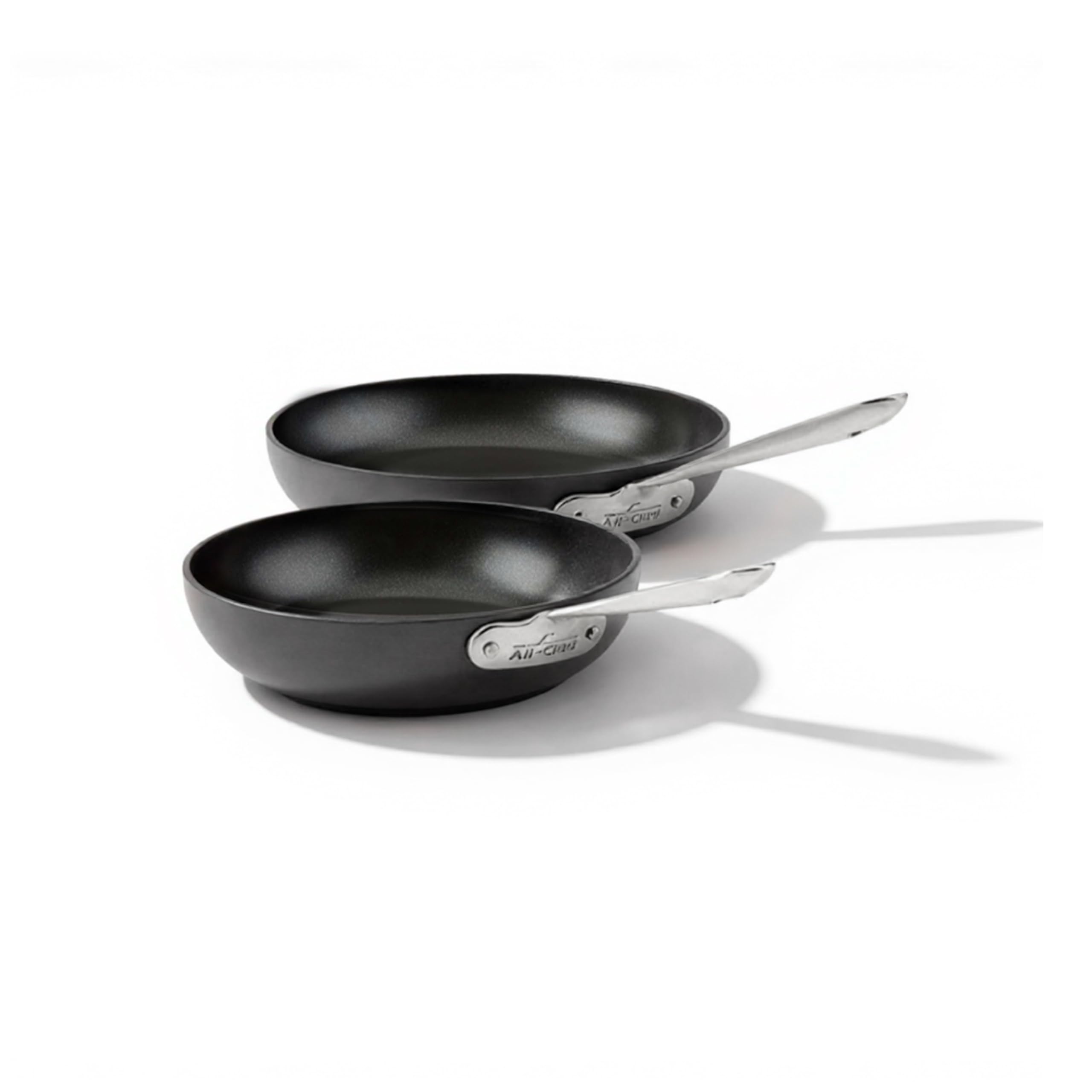
All-Clad HA1 Set 8" & 10"
Key Features
- Coating Type: PTFE nonstick
- Base Material: Hard anodized + stainless base
- Induction Compatible: Yes
- Oven Safe Temp: 500°F
- Handle Material: Double riveted stainless
- Pieces: 2-pan set
- Price: Premium
The All-Clad HA1 set delivers induction-ready performance and 500°F oven safety — capabilities usually reserved for pricier cookware. Hard anodized aluminum with a stainless steel base provides even heating across both pan sizes, and the PTFE nonstick coating cleans up with minimal effort.
This set suits induction cooktop owners who frequently finish dishes in the oven. The double-riveted stainless steel handle, however, has a shape that can dig into the palm during extended use — a design tradeoff rather than a defect. Coating durability over years of heavy use may be inconsistent, so gentle care extends its lifespan.
Pros
- Induction compatible and oven safe up to 500°F — rare for a sub-$100 set
- Hard anodized aluminum with stainless base heats evenly and retains warmth
- Nonstick surface releases food easily and wipes clean quickly
Cons
- Coating may chip or peel over time with heavy use
- Handle shape can press uncomfortably into the palm during longer cooking sessions
The best option for induction users who need oven-safe nonstick pans and can accept a handle that prioritizes function over comfort.
Best for Large Batch Meals
SENSARTE 12" Deep
Key Features
- Coating Type: Granite (ILAG)
- Base Material: Cast aluminum
- Induction Compatible: Yes
- Oven Safe Temp: 302°F
- Handle Material: Woodgrain bakelite
- Pieces: Single 12" deep + lid
- Price: Budget-Mid
The SENSARTE 12-inch deep skillet holds a full 5 quarts with a tempered glass lid, making it a practical choice for large-batch cooking. The nonstick coating works well out of the box and the pan is easy to clean. However, the coating can scratch if metal utensils are used, and the cast aluminum construction makes the pan noticeably heavy – at over 5 pounds it’s better suited for stovetop use than flipping or tossing. This pan is best for home cooks who prioritize capacity over weight and are willing to use silicone tools to preserve the nonstick surface.
Pros
- Large 5-quart capacity with glass lid for one-pan meals
- Nonstick surface cleans up easily
- Cast aluminum body heats evenly for consistent cooking
Cons
- Coating may scratch if exposed to metal utensils or abrasive cleaning
- Heavy weight can make the pan cumbersome when full
A capable deep skillet for large family meals, provided you use non-metal tools and don’t mind the weight.
Best for Health-Conscious Cooks
OXO Ceramic 3-Pc
Key Features
- Coating Type: Ceramic (PFAS-free)
- Base Material: Aluminum + diamond ceramic
- Induction Compatible: No
- Oven Safe Temp: 392°F
- Handle Material: Silicone over stainless
- Pieces: 3-pan set
- Price: Premium
The OXO ceramic set uses diamond-reinforced coating to deliver slick nonstick performance without PFAS or PTFE. The 8-, 10-, and 12-inch pans cover most daily needs, and the silicone-over-stainless handles feel secure. This set suits cooks who prioritize a non-toxic surface and have gas or electric cooktops — induction users need to look elsewhere. The coating can lose effectiveness over time with heavy use, so gentle care (low heat, hand washing) helps preserve it.
Pros
- Solid build quality and well-shaped handles
- Strong nonstick release for everyday cooking
- Quick to clean — food slides off with minimal effort
Cons
- Nonstick coating can degrade with heavy use over time
- Not compatible with induction cooktops
A strong ceramic alternative for non-induction households wanting a PFAS-free set, but expect to treat the coating gently.
Best for Induction Families
T-Fal Experience 3-Pc

Key Features
- Coating Type: Titanium nonstick (PTFE)
- Base Material: Aluminum
- Induction Compatible: Yes
- Oven Safe Temp: 400°F
- Handle Material: Silicone
- Pieces: 3-pan set
- Price: Mid-Range
This set delivers three useful sizes (8, 10.25, 12 inches) with an induction-ready base, making it a straightforward choice for households that cook on multiple burner types. The nonstick surface works well for eggs, pancakes, and general sautéing, and cleanup is quick. However, the coating may flake or peel with extended use, so this is better suited for those who treat nonstick pans as consumables rather than heirloom pieces. Competition from the OXO ceramic set (which skips induction but avoids PFAS) is worth comparing if coating longevity is a priority.
Pros
- Three sizes (8, 10.25, 12 inches) with induction capability
- Nonstick performance satisfies everyday cooking needs
Cons
- Nonstick coating may flake or peel over time – best treated as a consumable item
A solid option for families who need induction-compatible pans in multiple sizes and are comfortable replacing them as the coating wears.
Best for Budget Egg Cooking
SENSARTE 8" Granite

Key Features
- Coating Type: Granite (ILAG)
- Base Material: Cast aluminum
- Induction Compatible: Yes
- Oven Safe Temp: 400°F
- Handle Material: Woodgrain bakelite
- Pieces: Single 8"
- Price: Budget
The SENSARTE 8-inch pan delivers solid initial nonstick performance, ideal for eggs and small meals at a budget-friendly price. However, the coating can degrade within months, making it best for light, occasional use rather than daily cooking.
Pros
- Good build quality for the price
- Initial nonstick performance works well for delicate foods like eggs
Cons
- Nonstick coating can lose effectiveness within months of use
A budget-friendly option for occasional egg cooking or small meals where you’re willing to replace the pan after a few months.
Best for Budget Multi-Size
Utopia Kitchen 3-Pc Set

Key Features
- Coating Type: PFOA-free nonstick
- Base Material: Aluminum alloy
- Induction Compatible: Yes
- Oven Safe Temp: No
- Handle Material: Bakelite
- Pieces: 3-pan set
- Price: Budget
Three pans (8, 9.5, and 11 inches) for under $45 offers a practical range of sizes for light cooking tasks like eggs, pancakes, or sautéed vegetables. The nonstick surface works well out of the box and cleanup takes seconds. However, durability is a tradeoff at this price point: the coating can peel or wear off after a few months, especially if exposed to high heat or metal utensils. This set suits buyers who want multiple pans for low-stakes cooking and are comfortable replacing them within a year rather than investing in longer-lasting alternatives like the T-Fal or OXO sets.
Pros
- Three useful pan sizes at a very low cost
- Nonstick surface releases food easily and is simple to clean
Cons
- Coating can peel or wear off after a few months of use
A budget-friendly choice for occasional cooks who want multiple pan sizes without a big investment, but expect a shorter lifespan than pricier nonstick sets.
Best for Budget Egg Pan
JEETEE 8" Marble

Key Features
- Coating Type: Marble stone (ceramic)
- Base Material: Aluminum
- Induction Compatible: Yes
- Oven Safe Temp: No
- Handle Material: Bakelite
- Pieces: Single 8"
- Price: Budget
The JEETEE 8-inch marble pan delivers impressive nonstick performance for eggs at a budget-friendly price. Its small size and mixed durability reports mean it’s not suited for heavy daily use or general cooking – this is a specialist tool for occasional egg cooking where budget matters most.
Pros
- Strong build quality for the price
- Effective nonstick coating, particularly for eggs
Cons
- Coating and handle durability may decline with extended use
Best for occasional egg cooking on a tight budget where replacing the pan every year or two is acceptable.
How to Choose
Nonstick pans are consumables – even the best last 1-3 years with daily use, so factor replacement cost into your purchase.
Nonstick Coating Type
PTFE (Teflon) coatings offer the best food release but require low heat to avoid fuming at high temperatures. Ceramic coatings are PFAS-free and handle slightly higher heat, but their nonstick performance degrades faster. Granite coatings are a marketing term for PTFE or ceramic with speckles – no inherent durability advantage.
Base Material and Construction
Hard anodized aluminum conducts heat evenly and resists warping better than standard aluminum. Stainless steel bases add induction compatibility but reduce heat responsiveness. Plain aluminum pans heat quickly but develop hot spots and warp under high heat.
Induction Compatibility
Induction cooktops require a magnetic base – not all nonstick pans have it. A pan without induction compatibility will simply not heat on an induction burner. Even if the pan body is magnetic, check that the base is flat to avoid wobbling.
Oven-Safe Temperature
Oven-safe ratings tell you if you can finish a skillet dish under the broiler or in the oven. Budget pans often cap at 350°F-400°F, while premium models reach 500°F. Exceeding the limit damages the coating or handle. If you rarely use the oven, a lower rating is fine.
Handle Ergonomics
Silicone handles stay cool on the stovetop but can loosen over time. Riveted stainless steel handles are durable but may get hot and dig into your palm. Bakelite handles are lightweight and heat-resistant but can crack with age. Test grip comfort before buying.
Number of Pieces and Sizes
A single 12-inch skillet covers most weeknight meals, while a set provides 8-inch for eggs and 10-inch for sides. Deep skillets with lids double as small soup pots. More pieces mean more storage space and higher initial cost – choose based on your most common batch sizes.
FAQ
How long should a nonstick frying pan last before it starts sticking?
With daily use, most nonstick pans begin sticking after 1-3 years, regardless of price. Proper care – hand washing, low to medium heat, and silicone utensils – extends lifespan. Once food starts sticking, it’s time to replace; scratched or peeling coating isn’t safe to use.
Can I use metal utensils on a granite nonstick pan?
No, metal utensils will scratch the coating on any nonstick pan, including granite-coated ones. Granite is a marketing term for a PTFE or ceramic layer – it scratches just as easily. Use silicone, wood, or nylon utensils to preserve the surface.
Why does my nonstick pan have a raised center and oil pools to the sides?
This is called oil pooling and happens when the pan base warps from rapid heating or cooling. Thin aluminum pans are most prone. To avoid it, heat the pan gradually and let it cool before washing. Once warped, the pan won’t cook evenly and should be replaced.
Are ceramic nonstick pans safer than traditional Teflon?
Ceramic pans are PFAS-free and don’t release fumes at high heat, so they’re considered safer in that regard. However, their nonstick performance fades faster than PTFE – typically within a year. If avoiding PFAS is your priority, ceramic is the better choice; if you want longer-lasting nonstick, PTFE is more durable.