This post contains affiliate links. We may earn a small commission when you buy through our links — at no extra cost to you.
Pressure cooking has become a kitchen staple, but the choice between electric and stovetop models isn’t always obvious. Electric multicookers offer convenience with preset programs, while stovetop canners handle large batches and last decades. The real issue many buyers face is reliability: plastic parts that crack, seals that fail, and electronics that stop working after a year or two.
That doesn’t mean you should avoid pressure cookers. It means knowing which trade-offs matter for your cooking style. For daily meal prep, a proven electric model with a stainless steel inner pot and a strong safety record is your best bet. For home canning, a stovetop canner with a metal-to-metal seal eliminates gasket worries entirely.
This guide focuses on matching the right construction and capacity to your kitchen habits, so you end up with a cooker that lasts and performs where it counts.



Best for First-Time Buyers
Instant Pot Duo 6qt
Key Features
- Capacity: 6 qt
- Type: Electric
- Inner Pot: Stainless steel
- Power: 1000W
- Price: $$
The Instant Pot Duo 6qt combines pressure cooking, slow cooking, rice, steaming, sautéing, yogurt making, and warming into a single countertop unit. Its 10 safety mechanisms include lid lock, pressure release, and temperature monitoring, making it a sensible entry point for anyone new to pressure cooking.
Cooks finish notably faster than stovetop methods – dried beans in under an hour, frozen chicken in 20 minutes. The 18/8 stainless steel inner pot resists staining and handles dishwasher cycles without issue, though some owners hand-wash to maintain the brushed finish.
This model suits first-time pressure cooker buyers, families cooking daily, and meal preppers who want one appliance for multiple tasks. It does not include air frying or sous vide – those are available in the Instant Pot Duo Plus and Duo Crisp lines. For most home cooks, the standard seven functions cover the majority of meal prep needs.
Pros
- Seven cooking functions replace multiple appliances in one compact unit.
- Preset programs handle common dishes with one button press.
- Drastically reduces cooking time for tough cuts and dried beans.
- Dishwasher-safe inner pot and accessories simplify cleanup.
Cons
- No air frying or sous vide functions – a tradeoff for those who want those capabilities in a single appliance.
A dependable choice for everyday pressure cooking and multicooking – especially for buyers who want an established performer without extra frills.
Best for Budget Buyers
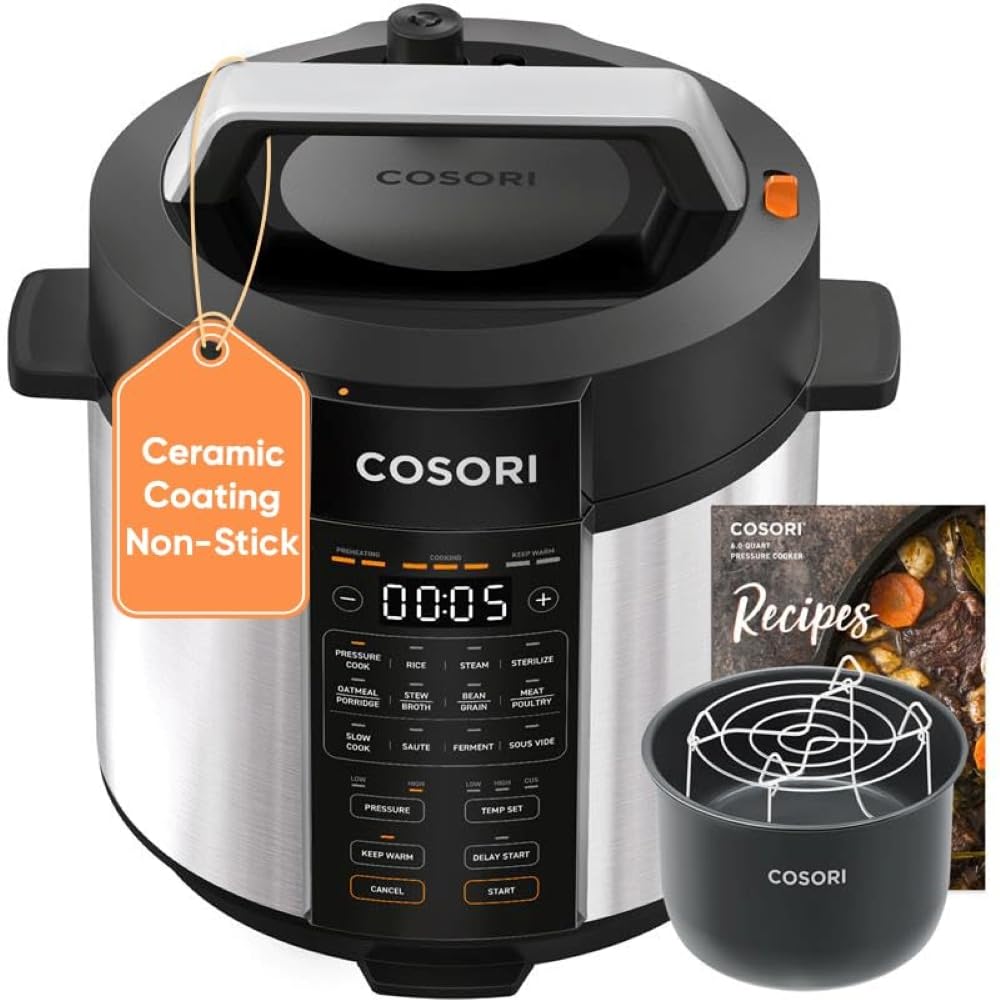
Cosori 6qt Pressure Cooker
Key Features
- Capacity: 6 qt
- Type: Electric
- Inner Pot: Ceramic non-stick
- Power: 1100W
- Price: $
The Cosori 6qt delivers a ceramic non-stick inner pot and 1100W heating that preheats quickly, with a steam vent angled 30° backward to reduce the risk of burns. Performance consistently matches or exceeds the Instant Pot Duo in common tasks like rice, beans, and stews, based on widespread user feedback.
This is the right pick for first-time electric pressure cooker owners who want an intuitive interface and easy cleanup without a steep learning curve. The brand’s ecosystem is smaller than Instant Pot’s — fewer accessories and recipe resources — but for everyday pressure cooking, slow cooking, and sous vide, the included ceramic pot and 9 functions cover the essentials. The 6-quart capacity suits couples or small families; those regularly cooking for five or more should consider an 8-quart model.
Pros
- Matches or outperforms pricier rivals in cooking speed and results
- Control panel is clearly laid out and responds reliably
- Cooks quickly and the ceramic pot rinses clean with minimal effort
Cons
- Smaller brand ecosystem with fewer add-on accessories than the market leader
A strong value-focused alternative to the Instant Pot Duo for budget-conscious cooks who want solid performance and safer venting without paying a premium.
Best for Home Canners
Presto 23qt Canner
While electric pressure cookers like the top pick handle everyday meals, the Presto 23qt Canner focuses on high-volume preserving. Its dial gauge and weighted regulator give two ways to monitor pressure, and the 23-quart aluminum body fits 7 quarts or 20 pints per batch — enough to process a full harvest in one go. This is not a set-and-forget appliance; it rewards attention to heat management.
This canner suits home preservers who need large batch capacity and want a USDA-recommended method for low-acid foods. It works on gas and electric coil stovetops, but not induction. Some units arrive with minor cosmetic flaws or handle parts that may loosen over time — worth inspecting on delivery. If you can work with manual heat adjustment and don’t need induction compatibility, the Presto delivers where it counts.
Pros
- Built for frequent canning sessions with consistent pressure control.
- Simple operation makes it accessible for first-time canners.
- Large 23-quart capacity at a mid-range price suits serious preserving.
Cons
- Gauge and handle parts may degrade over time; occasional cosmetic defects on arrival.
- Not induction-compatible; maintaining steady pressure requires attentive heat management.
For home canners processing large batches who don’t need induction compatibility and are comfortable with manual heat control, this Presto offers high capacity at a sensible price.
Best for Heirloom Canners
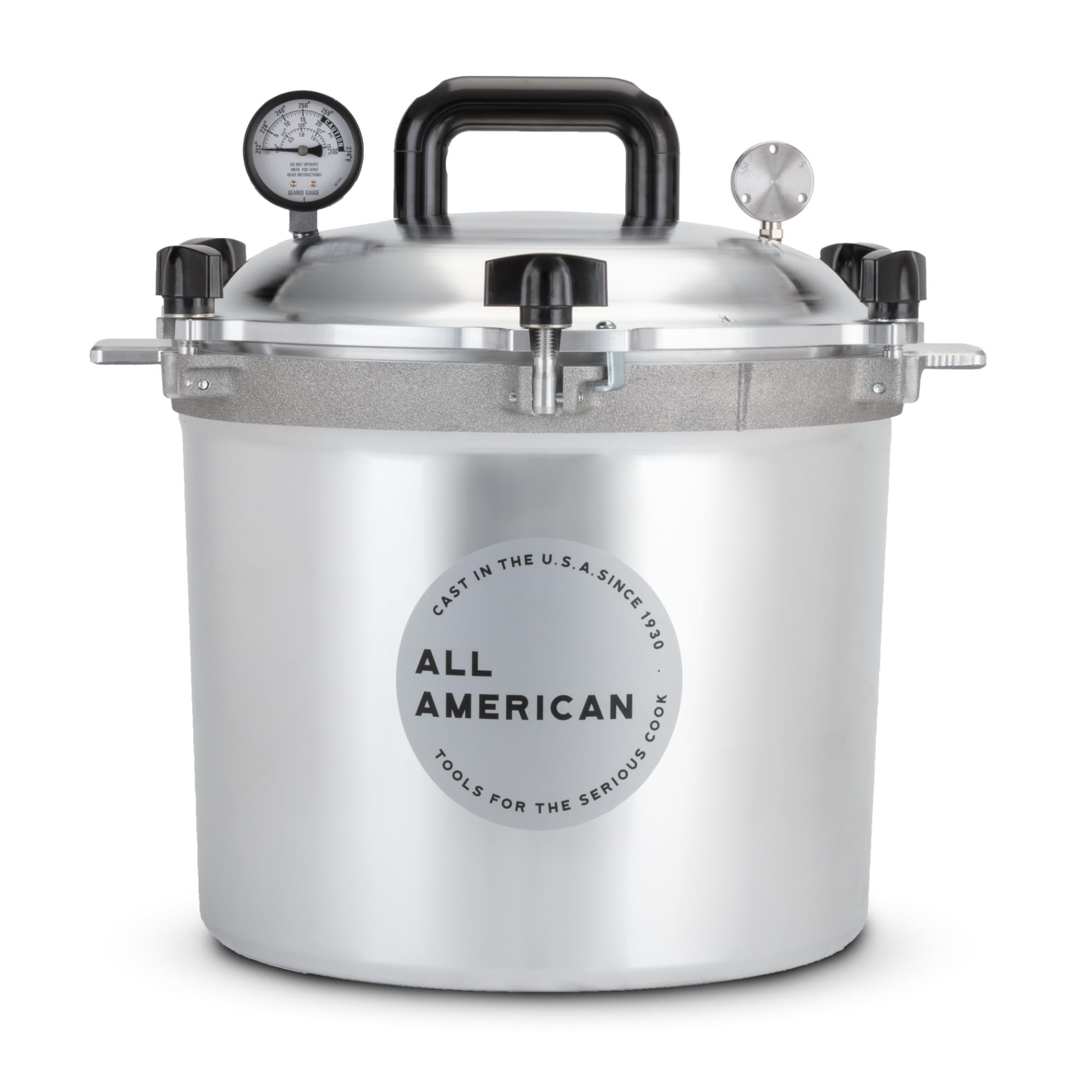
All American 921 21.5qt
Key Features
- Capacity: 21.5 qt
- Type: Stovetop
- Inner Pot: Aluminum
- Price: $$$$
The All American 921 sets itself apart with a precision-machined aluminum body and a metal-to-metal sealing system that eliminates the need for rubber gaskets. This design, combined with US-based manufacturing, gives it a build quality that supports decades of regular canning use without degradation.
This 21.5-quart model is built for dedicated home canners who process large batches and want a tool that will outlast them. The weight (17.75 lbs empty) and premium price place it outside the needs of casual cooks or those with limited physical strength – moving a full canner requires careful handling. For canners who value longevity over convenience, the 921 delivers consistent pressure and reliable sealing season after season.
Pros
- Metal-to-metal seal eliminates gasket replacement – no parts to wear out over time.
- Machined aluminum body withstands high-pressure use without warping or leaking.
- Dial gauge plus weighted regulator provide two methods for accurate pressure control.
Cons
- Heavy at 17.75 lbs – lifting a full canner requires significant strength and caution.
The All American 921 is a lifetime investment for serious canners who don’t mind the physical effort – the seal and build quality justify the premium price.
Best for Families
Instant Pot Duo Crisp 8qt
Key Features
- Capacity: 8 qt
- Type: Electric
- Inner Pot: Stainless steel
- Power: 1500W
- Price: $$$
The Duo Crisp adds a dedicated air frying lid to Instant Pot’s familiar pressure cooking base, letting you crisp, roast, and dehydrate alongside pressure cooking, slow cooking, and steaming – all with one countertop appliance. This space-saving approach means fewer gadgets cluttering your kitchen.
This setup best suits households that want both pressure cooking and air frying without dedicating separate counter space to each. The large 8-quart capacity handles family-sized portions with ease. Do note that the non-stick coating on the air fry basket may chip over time – using non-metallic utensils helps extend its life. Additionally, some units arrive with cosmetic dents, so it’s wise to inspect upon delivery. Electronic longevity under frequent use is also a consideration, so this unit appeals most to buyers who prioritize versatility today over decade-long service.
Pros
- Air fries with less oil while delivering crispy texture
- Replaces multiple appliances – pressure cooker, air fryer, slow cooker, dehydrator, and more
- Large 8-quart capacity easily cooks for four to six people
Cons
- Non-stick coating on the air fry basket may eventually chip; some units arrive with cosmetic dents
- Electronic components may show wear after a couple of years of frequent use
For households that value the combo of pressure cooking and air frying, the Duo Crisp delivers a convenient single appliance – just be aware of the coating’s durability and the possibility of electronic wear over time.
Best for Stovetop Cooks
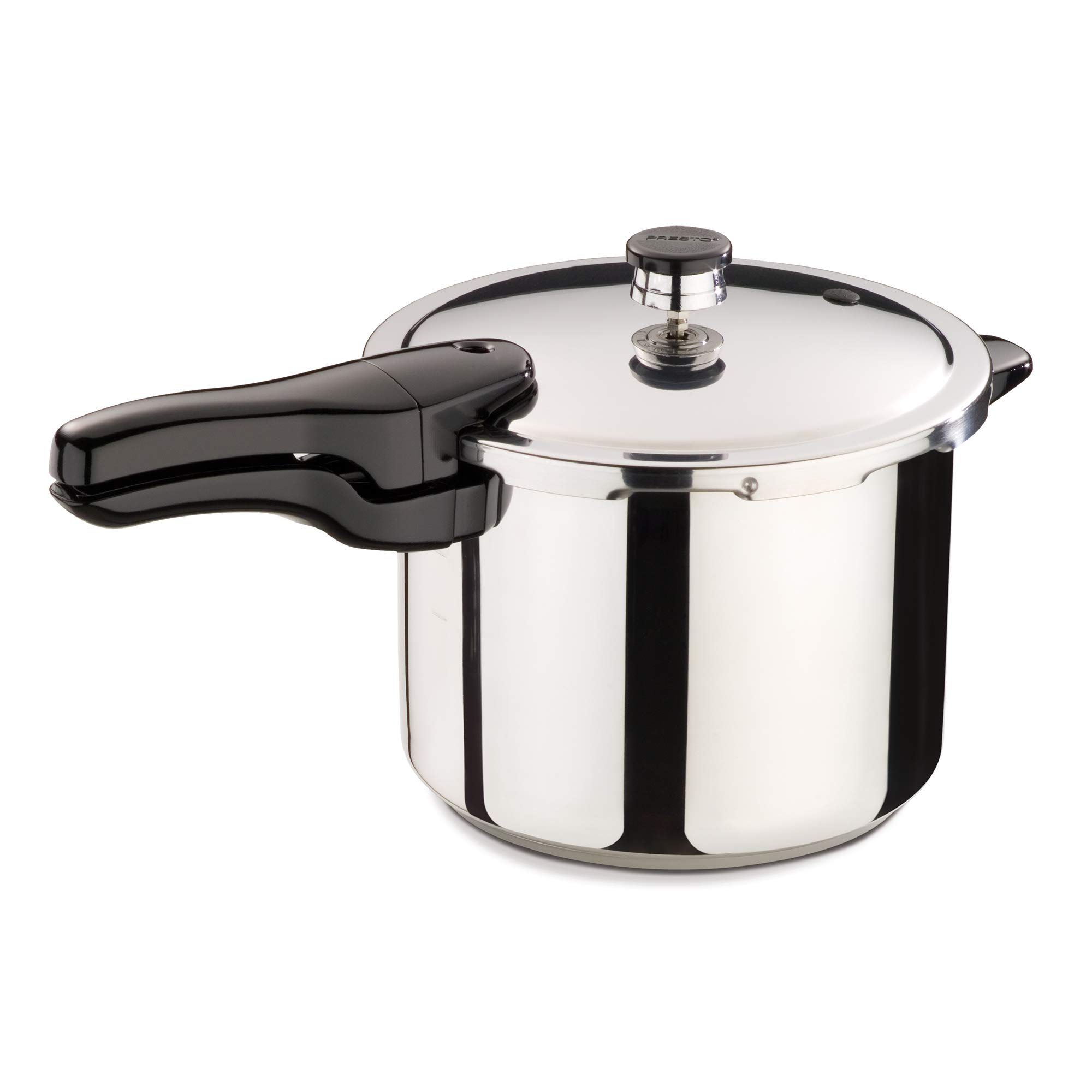
Presto 6qt Stainless
Key Features
- Capacity: 6 qt
- Type: Stovetop
- Inner Pot: Stainless steel
- Price: $$
For induction range owners who prefer stovetop cooking, the Presto 6-quart stainless steel pressure cooker is a cost-effective option that heats evenly and cooks quickly. The solid stainless steel build resists stains and cleans up easily, and it works on induction, gas, and electric coils. Compared to electric models, it lacks preset programs and timer convenience — a tradeoff for those who don’t want plug-in appliances. Some units may develop handle looseness or sealing inconsistencies over time, but these are manageable with periodic screw tightening and gasket care.
Pros
- Solid stainless steel construction for durability and easy cleaning.
- Cooks fast and efficiently on any stovetop.
Cons
- Handles may loosen over time; sealing can be inconsistent in some units.
Best for induction range owners who want a no-frills stovetop pressure cooker and are comfortable with occasional handle maintenance.
Best for Small Batch
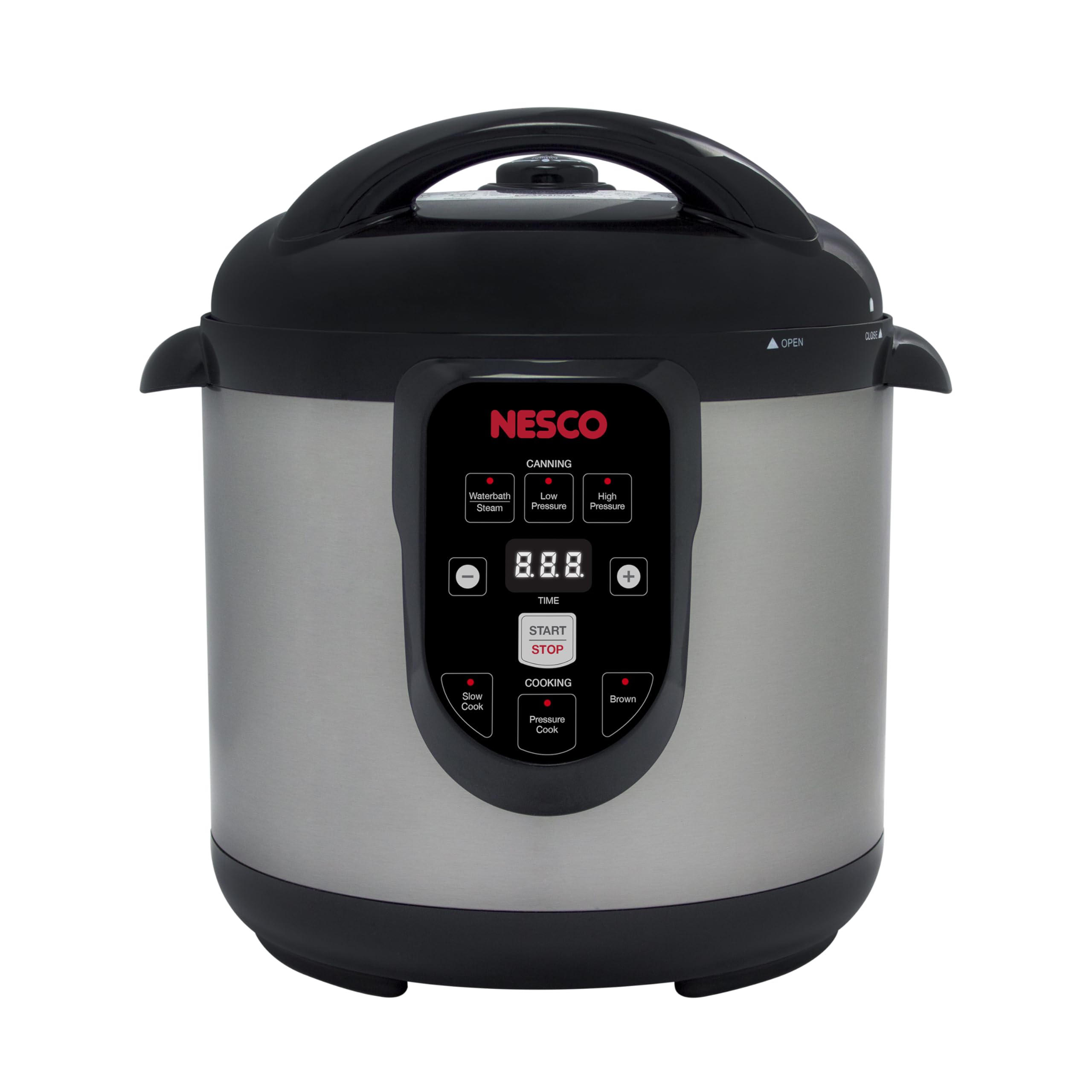
Nesco NPC-9 9.5qt Canner
Key Features
- Capacity: 9.5 qt
- Type: Electric
- Inner Pot: Stainless steel
- Power: 1000W
- Price: $$
The Nesco NPC-9 brings electric pressure canning to home kitchens with 9.5-quart capacity and dual pressure settings (10 and 15 PSI), plus a high altitude valve for flexibility. However, batch size is limited to 4 wide-mouth quarts, and the instruction manual is poorly written, which can be frustrating for new canners. These constraints make it best suited for small batch preserving rather than large harvests or beginners needing clear guidance.
Pros
- Simple operation for small batch canning
- Consistent performance for low and high pressure canning
Cons
- Batch size limited to 4 wide-mouth quarts
- Instruction manual lacks clear directions
For home canners who only preserve small batches and don’t mind learning from external resources, this electric canner offers convenient, stovetop-free operation.
Best for Starter Kit
Yedi 6qt Pressure Cooker

Key Features
- Capacity: 6 qt
- Type: Electric
- Inner Pot: Stainless steel
- Power: 1000W
- Price: $$
This 6-quart electric pressure cooker comes with a glass lid, egg rack, steamer basket, extra sealing ring, silicone mitts, ladle, and rice paddle—everything a new cook needs to get started. It handles pressure cooking, slow cooking, rice, yogurt, eggs, sautéing, and steaming with consistent results. The tradeoff: some units may experience electronic failure within the first year, and the brand has a shorter track record than established alternatives. That risk is manageable for buyers who want a fully outfitted starter package at a mid-range price and don’t plan to rely on it for decades.
Pros
- Generous accessory bundle saves additional purchases
- Easy to operate and clean after cooking
Cons
- Electronic failure may occur within the first year; brand has a shorter track record
Best for budget-conscious first-time pressure cooker buyers who want a complete kit and accept the possibility of early replacement.
Best for Quick Lid
T-fal Clipso 6.3qt

Key Features
- Capacity: 6.3 qt
- Type: Stovetop
- Inner Pot: Stainless steel
- Price: $$
The T-fal Clipso offers easy one-hand lid operation and works on all stovetops including induction, making it convenient for quick cooking across different kitchens. However, the lid seal may be inconsistent, and the plastic components can break over time — a trade-off that matters most for those who rely on a perfect seal every session.
Pros
- Quick-release lid operates with one hand
- Compatible with all stovetops including induction
Cons
- Seal consistency can vary; plastic parts are susceptible to breakage
Best for cooks who prioritize fast lid access and induction compatibility and are willing to accept occasional seal adjustments.
How to Choose
The most common mistake is choosing a pressure cooker that’s too small for your household’s needs.
Capacity
Capacity determines how much you can cook at once. A 6-quart model fits a whole chicken or about 4 servings of stew, while 8 quarts handles a large roast. For families of 3+, 6 quarts is the minimum.
Stovetop canners scale up to 23 quarts for preserving. But larger vessels take longer to heat and are heavier when full. Choose based on your usual batch size, not occasional holiday meals.
Electric vs Stovetop
Electric models offer push-button convenience with automatic pressure regulation and keep-warm settings. They are ideal for set-and-forget cooking but cannot reach the high pressures needed for safe canning.
Stovetop cookers require active heat management but preheat faster and provide direct control over pressure. They are the only option for processing low-acid foods like vegetables and meats in a canner. Induction compatibility varies by model.
Inner Pot Material
Stainless steel is durable, non-reactive, dishwasher-safe, and works with any recipe. It is the standard for electric pressure cookers and many stovetop models. Aluminum heats evenly but may discolor and is not induction-compatible unless bonded.
Ceramic non-stick pots are easier to clean but the coating can chip with metal utensils. They are best for low-fat cooking but less durable than stainless steel over years of use.
Cooking Functions
Basic pressure cookers do one job: pressure cooking. Multicookers add slow cooking, rice cooking, steaming, sautéing, yogurt making, and sometimes sous vide. More functions increase versatility but also complexity.
If you already own a slow cooker or rice cooker, a dedicated pressure cooker may be simpler and cheaper. For minimalists, a 7-in-1 model replaces several appliances without sacrificing performance.
Power (Watts)
Higher wattage means faster preheating and better heat recovery after adding food. Most 6-quart electric models run at 1000W, while larger units or combo machines may use 1200W to 1500W.
The difference is noticeable: a 1200W model can reduce preheat time by about 20% compared to 1000W. For stovetop models, power depends on your burner output and is not a spec you choose directly.
FAQ
Does the Instant Pot Pro actually slow cook properly?
No, the slow cook function on the Instant Pot Pro does not reach a high enough temperature for safe slow cooking. Users report food barely warming after hours. If slow cooking is a priority, choose the Instant Pot Duo or a dedicated slow cooker instead.
How do I check if my pressure canner gauge is accurate?
Contact your local extension office – many offer free gauge testing. Alternatively, a known-good reference gauge or a simple weight-based test (checking that the regulator rocks at the correct pressure) can confirm accuracy. Replace the gauge if it’s off by more than 2 PSI.
Can I use a pressure cooker as a slow cooker?
Electric pressure cookers with a slow cook function can be used for slow cooking, but results vary. The Instant Pot Duo’s slow cook works well, while the Pro’s is unreliable. Stovetop pressure cookers cannot slow cook – they only operate under pressure.
Why is my electric pressure cooker not reaching pressure?
Common causes include not enough liquid (use at least 1 cup), a dirty or misaligned sealing ring, or the steam release valve set to ‘venting’ instead of ‘sealing’. Check the lid gasket for cracks and ensure the float valve moves freely.