This post contains affiliate links. We may earn a small commission when you buy through our links — at no extra cost to you.
A stainless steel water bottle seems simple: keep drinks cold, don’t leak, survive a few drops. But after hundreds of thousands of reviews, a clear pattern emerges—lids fail long before insulation does. Hinges crack, straws split, seals give out, and suddenly that 4.7-star bottle becomes a desk-top puddle.
The good news: you don’t have to gamble. The best bottles balance clever drinking features with hardware that holds up to daily use. This guide focuses on lids that seal consistently, materials that resist dents, and designs that match how you actually hydrate—whether that’s sipping in the car, chugging at the gym, or carrying ice water on a hike.
Understanding which lid style suits your life matters more than chasing the highest rating. The right bottle is the one whose spout, straw, or cap behaves predictably for years, not weeks.


Best for Daily Hydration
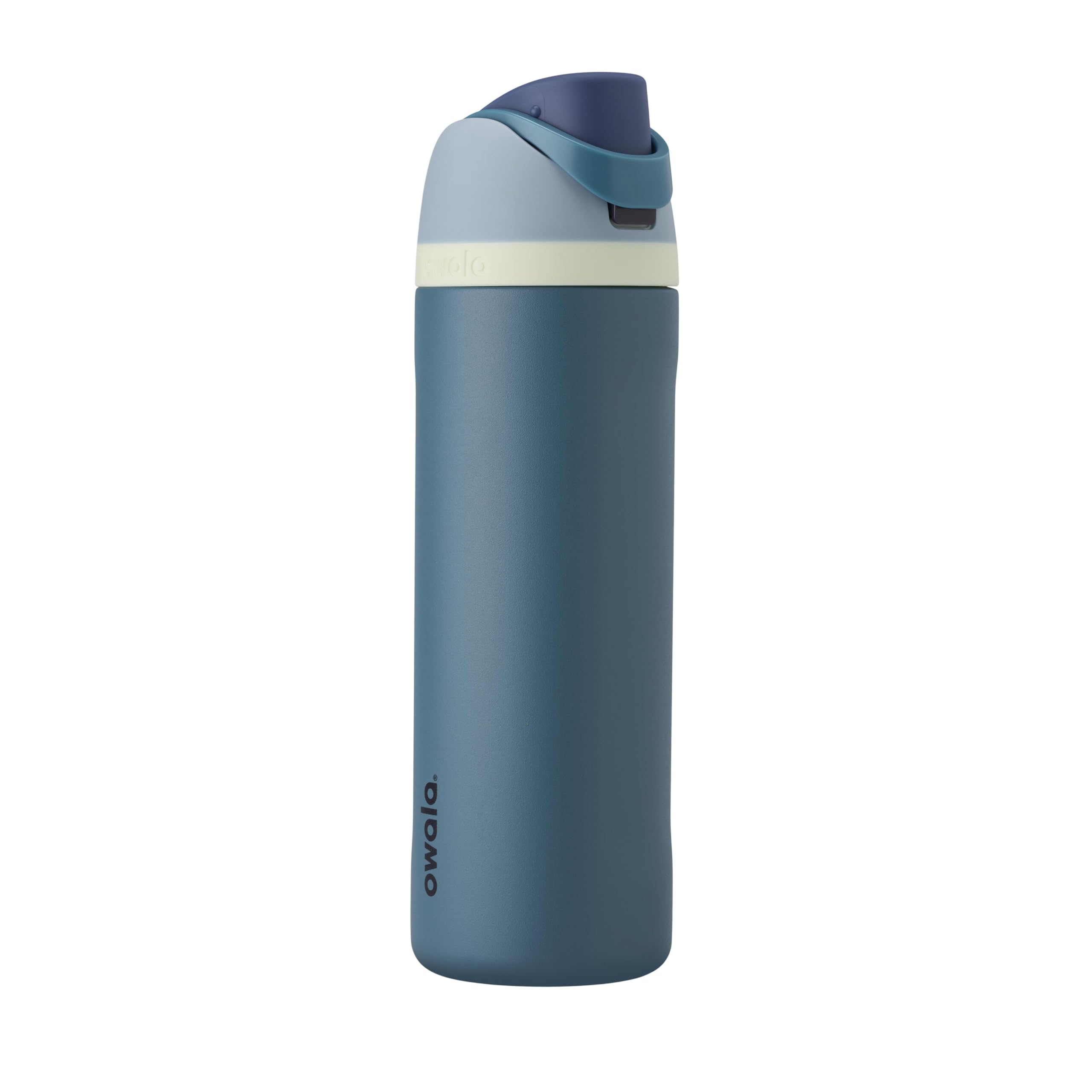
Owala FreeSip 24oz
Key Features
- Capacity: 24 oz
- Insulation: Double-wall vacuum, 24h cold
- Lid Design: FreeSip spout (straw + chug)
- Leak-Proof: Yes when closed
- Cup Holder: Yes, fits most
- Price: $$
The FreeSip spout lets you sip through the straw or tilt back for a chug without swapping lids. Cold retention keeps ice intact from morning to evening, and the push-button lock secures the mouthpiece against spills when closed. The 24-ounce size slides into most car cup holders, making it a natural fit for commutes and gym bags.
This bottle suits anyone who wants the flexibility of two drinking modes in one container — daily hydration, travel, and workouts. The tradeoff: the lid mechanism may wear over time, and the stainless steel body can dent if dropped on concrete. For those who prioritize spout versatility over extreme dent resistance, the FreeSip is a solid everyday carry.
Pros
- Two drinking modes in one lid — straw and chug without changing caps.
- Push-button lock prevents leaks when closed.
- Fits standard car cup holders and is easy to carry by hand.
Cons
- Body may dent if dropped on hard floors or rocks.
- Lid mechanism may fail after extended use, requiring a replacement lid.
If you value having both a straw and a chug opening in one bottle, the Owala FreeSip delivers that flexibility — with the understanding that the lid mechanism may need eventual replacement.
Best for Budget Camping
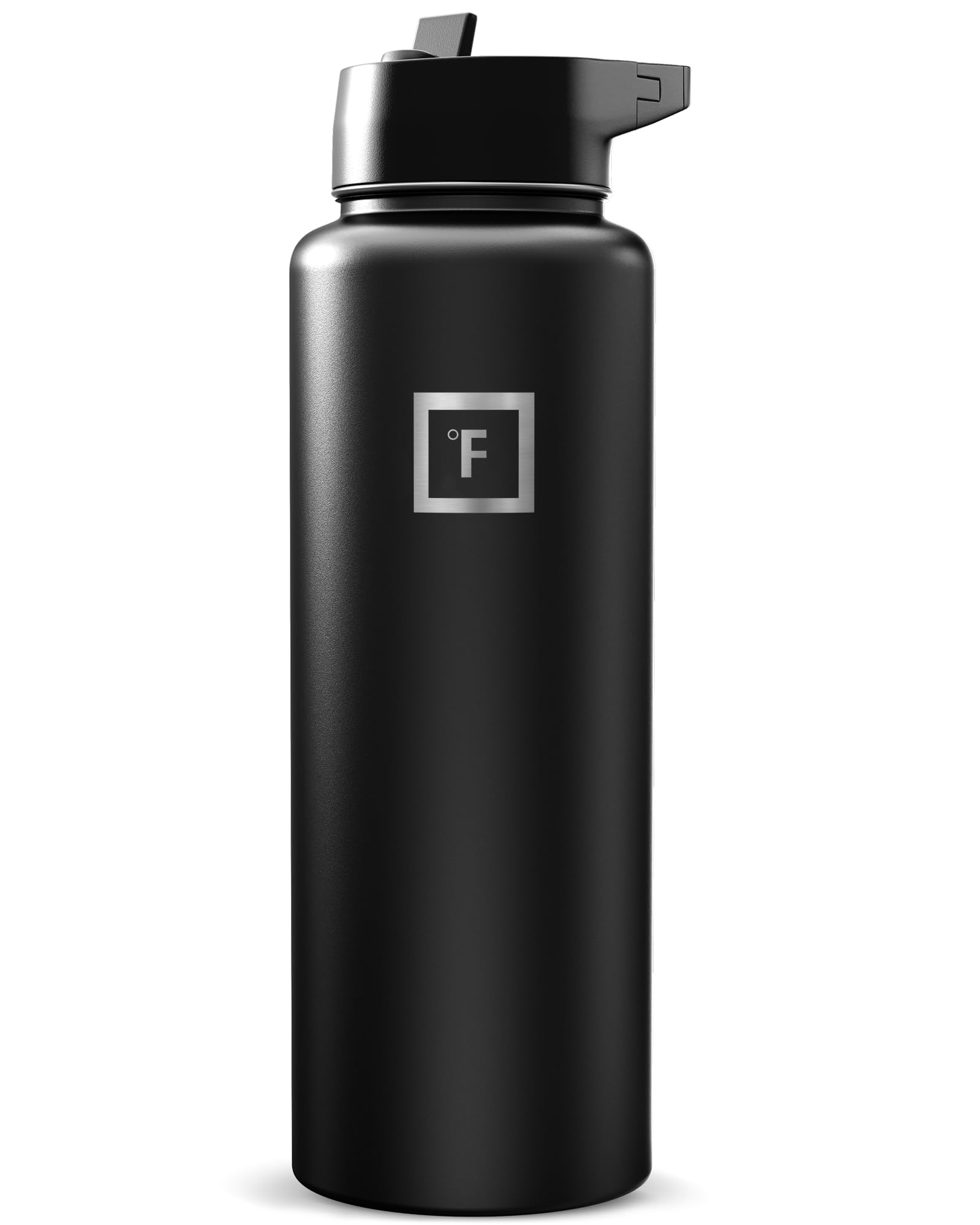
IRON °FLASK 40oz
Key Features
- Capacity: 40 oz
- Insulation: Double-wall, 24h cold / 12h hot
- Lid Design: Straw, spout, flip (3 included)
- Leak-Proof: Straw may leak if not sealed
- Cup Holder: Fits large cup holders
- Price: $
The IRON °FLASK 40oz stands apart from pricier options by including three lids — straw, spout, and flip — in the box. Its double-wall insulation keeps drinks cold for a full day, and the sweat-free exterior means no condensation in your bag. For the price, the temperature retention competes with bottles costing twice as much.
This bottle suits budget-conscious campers and hikers who don’t mind a little extra weight and are careful with the straw lid’s seal — it can leak if not perfectly threaded. The metal dents more readily than thicker-walled competitors, so it’s best for low-impact use rather than rugged daily commuting.
Pros
- Three interchangeable lids (straw, spout, flip) cover hydration from sipping to chugging.
- Keeps iced drinks cold for a full day — double-wall insulation performs well against pricier brands.
- Priced well below most 40oz insulated bottles with similar temperature retention.
Cons
- Straw lid may leak if the threads aren’t aligned tightly — works best when kept upright.
- Thin stainless steel dents more easily than thicker bottles, so drops can leave permanent marks.
A cost-effective choice for campers and hikers who want lid options and don’t need dent-proof durability — keep the straw lid seated and this bottle performs.
Best for Active Use
Takeya Actives 24oz
Key Features
- Capacity: 24 oz
- Insulation: Double-wall vacuum, 24h cold
- Lid Design: Spout lid with carrying loop
- Leak-Proof: Yes, reliable seal
- Cup Holder: Fits most standard
- Price: $$
The Takeya Actives 24oz keeps drinks cold longer than most bottles in this price range, thanks to thick double-wall vacuum insulation that holds ice for well over a day. Its stainless steel body resists dents from drops that would mar competitor bottles — a meaningful advantage for gym bags or car cup holders. However, the spout lid is the only option; those who prefer sipping through a straw or a wide-mouth chug will need to look elsewhere. A small number of units may experience seal leaks from the spout lid — worth checking the seal regularly.
Pros
- Holds ice for over a day with minimal temperature loss.
- Resists dents from drops and crushing better than typical insulated bottles.
- Spout lid is leakproof and dishwasher safe for easy cleaning.
Cons
- Only spout lid available — no straw option for those who prefer sipping.
This bottle suits those who want maximum cold retention and a rugged build, as long as a straw lid isn’t a requirement.
Best for Hot & Cold
YETI Rambler 36oz
Key Features
- Capacity: 36 oz
- Insulation: Double-wall vacuum, hot/cold
- Lid Design: Chug cap with TripleHaul handle
- Leak-Proof: Yes when closed
- Cup Holder: Fits large cup holders
- Price: $$$
The YETI Rambler 36oz keeps ice water cold for days and hot coffee piping hot for hours, thanks to double-wall vacuum insulation. The 18/8 stainless steel body feels substantial, and the chug cap with TripleHaul handle offers a straightforward drinking experience. It’s dishwasher safe, simplifying cleanup.
This bottle suits YETI loyalists and anyone who wants a no-fuss chug experience without a straw. Hot beverage drinkers will appreciate the heat retention. The premium price means it’s not for budget-focused buyers. Those who prefer a straw lid or sipping options may want a different design.
Pros
- Keeps drinks cold for days and hot for hours with reliable insulation
- Dishwasher safe for easy, hassle-free cleaning
Cons
- Bare stainless steel finish may show scratches and dents from regular use
If you prioritize temperature retention and simplicity over cosmetic durability, the YETI Rambler delivers — just accept the patina.
Best for Commuter Travel
HydroJug Traveler 32oz
Key Features
- Capacity: 32 oz
- Insulation: Triple-wall stainless steel
- Lid Design: Flip straw, leak-resistant
- Leak-Proof: Leak-resistant when straw down
- Cup Holder: Designed for cup holders
- Price: $$
The HydroJug Traveler’s leak-resistant flip straw and tapered base deliver a secure cup holder fit and easy sipping for daily commutes. Its handle, however, may separate from the bottle after several months of use, so this bottle suits desk or car environments rather than rough outdoor carry. The straw area can trap moisture if not dried thoroughly after washing, making careful maintenance important for long-term cleanliness.
Pros
- Leak-resistant lid keeps contents inside when straw is stowed.
- Tapered base fits most vehicle cup holders securely.
- Available in multiple colors that retain their finish.
Cons
- Handle can detach from the bottle after several months of regular use.
Best for commuters who want a cup-holder-friendly bottle and can accept the handle’s occasional separation — a tradeoff that’s less of an issue for desk or car use.
Best for Budget Large Capacity
HYDRO CELL 40oz
Key Features
- Capacity: 40 oz
- Insulation: Triple-wall vacuum, 24h cold / 12h hot
- Lid Design: Straw lid and screw cap
- Leak-Proof: Straw lid prone to leaking
- Cup Holder: Fits large cup holders
- Price: $
The HYDRO CELL 40oz delivers the largest capacity in its price class, with insulation that keeps ice for a full day. The included straw lid can leak if not kept upright, and the plastic components show scuffs and dents more readily than metal-lid bottles. This makes it a better fit for desk or countertop use than for tossing into a backpack. Budget shoppers who want a big bottle for home or office and can accept occasional leaks will find strong value here.
Pros
- Exceptional value for a 40 oz bottle at an entry-level price.
- Strong temperature retention keeps drinks cold for 24 hours and hot for 12.
- Available in appealing colors with both a straw lid and a screw cap included.
Cons
- Straw lid may leak when the bottle is not kept upright.
- Plastic lid and bottle body are prone to denting and cracking with drops.
Best suited for stationary use where capacity and insulation matter more than portability and leak-proof performance.
Best for Trendy Tumbler
Stanley Quencher 40oz

Key Features
- Capacity: 40 oz
- Insulation: Double-wall vacuum
- Lid Design: FlowState 3-position lid
- Leak-Proof: Yes (claimed)
- Cup Holder: Yes, cup holder compatible
- Price: $$
Stanley’s 40oz tumbler brings a three-position FlowState lid and 90% recycled steel to the mid-range market. However, without detailed customer feedback, real-world performance under daily use remains unverified—making it a better fit for brand loyalists who trust the name over reviews.
Pros
- Three-position lid switches between straw, drink, and full cover.
- Built with 90% recycled stainless steel for a lower environmental footprint.
Cons
- For buyers who depend on user-reported experiences, the absence of detailed feedback makes it hard to assess long-term performance.
This tumbler suits fans of Stanley who want the latest lid system and are comfortable trusting brand reputation over verified user feedback.
Best for Cup Holder Use
Owala FreeSip Sway 30oz

Key Features
- Capacity: 30 oz
- Insulation: Triple-layer, 24h cold
- Lid Design: FreeSip spout with push-button lock
- Leak-Proof: Yes when locked
- Cup Holder: Excellent fit
- Price: $$
The Sway keeps the same FreeSip spout experience as the original but adds a tapered base that fits most car cup holders and a bucket handle for carrying. The tradeoff is cosmetic: the paint coating can chip and the bottle may dent if knocked around. At a higher price than the original for the same core drinking functionality, it makes sense primarily for Owala fans who want a shape that stays put in a cup holder.
Pros
- Fits most car cup holders without tipping
- Bucket handle makes carrying simple and convenient
Cons
- If you toss it in a bag with keys or tools, the paint coating can show wear and the stainless steel may dent
For Owala enthusiasts who prioritize cup holder fit and a bucket handle over cosmetic durability, the Sway is a worthwhile alternative despite the price premium over the original.
Best for Budget Everyday
Takeya Originals 32oz

Key Features
- Capacity: 32 oz
- Insulation: Double-wall vacuum, 24h cold / 12h hot
- Lid Design: Spout lid with hinge lock
- Leak-Proof: May leak if not closed
- Cup Holder: Fits most standard
- Price: $
The Takeya Originals 32oz keeps drinks cold all day with solid vacuum insulation at a budget price. Its lightweight spout design is easy to carry. The lid may drip if not fully closed, and the metal dents more easily than the Actives — fine for buyers who value affordability over durability.
Pros
- Effective temperature retention keeps ice water cold all day
- Budget-friendly option with reliable performance
Cons
- Spout lid may leak if not fully sealed
A sensible pick for buyers who want proven insulation on a tight budget and don’t mind checking the lid seal.
Best for One-Hand Drinking
Contigo Cortland 24oz

Key Features
- Capacity: 24 oz
- Insulation: Double-wall vacuum, 24h cold
- Lid Design: AUTOSEAL button spout
- Leak-Proof: Spill-proof between sips
- Cup Holder: Fits most
- Price: $$
The Contigo Cortland Chill 2.0’s AUTOSEAL button makes it simple to drink one-handed without worrying about spills, and the insulation performs well for all-day cold drinks. However, the 24oz capacity limits its range, and the autoseal mechanism can wear out over time while the base dents relatively easily — making it a better fit for protected indoor use than rugged outdoor adventures.
Pros
- Button-operated lid seals automatically between sips to prevent leaks.
- Vacuum insulation keeps beverages cold for hours.
Cons
- The autoseal mechanism may develop leaks over extended use.
Suited for commuters and office workers who prioritize convenience over durability and capacity.
Best for Max Cold Retention
Coleman FreeFlow 24oz

Key Features
- Capacity: 24 oz
- Insulation: Double-wall vacuum, 31h cold / 11h hot
- Lid Design: Autoseal button with slide lock
- Leak-Proof: Yes, reliable autoseal
- Cup Holder: Fits most
- Price: $$$
This bottle keeps ice cold for over 31 hours and its autoseal mechanism opens on button press with a slide lock. The build is stainless steel and double-wall insulated. However, the 24oz size at a premium price limits value per ounce, and the carry handle may snap under heavy use. Those needing a larger capacity or a lower cost per ounce should look elsewhere.
Pros
- Maintains ice for over 31 hours, outpacing many similarly sized bottles
- Autoseal lid stays leak-free through daily use with a slide lock for security
Cons
- Carry handle may snap with heavy or extended use
Best for those who prioritize maximum cold retention in a compact bottle and can accept the higher cost per ounce.
Best for Filtered Water
Brita Filtering 20oz

Key Features
- Capacity: 20 oz
- Insulation: Double-wall, 24h cold
- Lid Design: Push-button with built-in filter
- Leak-Proof: Yes when closed
- Cup Holder: Fits most standard
- Price: $$
The built-in filter reduces chlorine and the double-wall insulation keeps water cold, making it a practical option for travelers who distrust local tap water. However, the filter requires strong suction to drink from, and the lid hinge may be vulnerable to breakage with regular handling. This limits it to users who prioritize filtration over drinking convenience.
Pros
- Built-in filter reduces chlorine and improves tap water taste.
- Double-wall insulation keeps water cold for hours.
Cons
- Drinking requires strong suction, which may be tiring over time.
Best for travelers or eco-conscious users who absolutely need filtered water on the go — if you can accept a tighter drinking effort and careful lid handling.
Best for Backup Bottle
POWCAN 26oz

Key Features
- Capacity: 26 oz
- Insulation: Double-wall vacuum, 24h cold / 12h hot
- Lid Design: 2-in-1 straw and spout
- Leak-Proof: Frequent leaks
- Cup Holder: Fits most
- Price: $
Delivers cold retention for a full day at a price that’s hard to beat. The 2-in-1 lid offers straw and spout options. However, the lid may leak and the straw can crack over time, and overall build quality is modest. This makes it a suitable backup or occasional-use bottle rather than a daily workhorse.
Pros
- Incredible value for money
- Good temperature retention
Cons
- Lid may leak and straw can crack under regular use
Best suited for occasional use as a backup bottle or for budget-conscious buyers willing to swap the lid.
Best for Classic Insulated
Hydro Flask 32oz

Key Features
- Capacity: 32 oz
- Insulation: TempShield double-wall, 24h cold / 12h hot
- Lid Design: Flex Cap spout with loop handle
- Leak-Proof: May leak if not tightened
- Cup Holder: Fits most wide cup holders
- Price: $$
The Hydro Flask 32oz keeps drinks cold for hours and the entire assembly goes in the dishwasher—genuine convenience. The powder coat finish and Flex Cap, however, mark easily and the lid can drip if not fully tightened. For the price, competitors like Takeya or Owala deliver similar insulation with noticeably better impact resistance.
Pros
- Double-wall TempShield keeps ice water cold for hours.
- Bottle and lid are dishwasher safe for easy cleaning.
Cons
- Powder coating scuffs quickly and steel dents on impact.
A solid choice if you value dishwasher-friendly insulation and don’t mind a bottle that needs careful handling and a fully tightened lid.
Best for Hiking Kit
RAYMYLO 32oz

Key Features
- Capacity: 32 oz
- Insulation: Triple-wall vacuum, 24h cold / 12h hot
- Lid Design: Straw and spout lids included
- Leak-Proof: Straw may leak
- Cup Holder: Fits most
- Price: $
The included accessories make it a strong value for hikers wanting a complete setup. However, the lid and paracord handle may show wear over time, and the straw lid can leak if not positioned perfectly — compromises that keep it from competing with more rugged options.
Pros
- Comes with paracord handle, pouch, extra lid, straws, and cleaning brushes
- Keeps drinks cold all day with triple-wall insulation
Cons
- Lid and paracord handle may show wear under frequent heavy use
For hikers who want extras without a premium price, this bottle works — but check lid fit if leak-proofing is critical.
How to Choose
Lid design is the most common failure point; prioritize a simple, proven mechanism over gimmicks.
Capacity
Capacity determines how often you refill. A 20–24 oz bottle fits most car cup holders and is light enough for a gym bag. A 32–40 oz bottle cuts refills but adds weight and may not fit standard cupholders.
The trade-off: larger bottles are harder to clean and more likely to dent when dropped. Choose based on your typical day—don’t buy a 40 oz bottle if you’ll rarely need more than a quart.
Insulation Type
Double-wall vacuum insulation is the standard—cold stays cold for 24 hours, hot for 12. Triple-wall adds a third layer for slightly better thermal retention, but the difference is marginal in practice. The real variable is the lid: a straw or spout lid lets out heat or cold faster than a sealed screw cap.
If you use the bottle for both hot coffee and iced water, look for a lid with a narrow opening that minimizes temperature exchange. Wide-mouth tumblers lose temperature faster despite good insulation.
Lid Design
Lids are the first thing to break. Straw lids are convenient but add cleaning steps and failure points—the hinge, the straw seal, the straw itself. Spout lids are simpler and tend to outlast straw designs. Autoseal buttons offer one-handed drinking but can degrade over time as the spring wears.
The most reliable lid is a simple screw cap or chug cap with few moving parts. If you need a straw, choose a bottle where the straw is easily replaceable and the locking mechanism is robust.
Leak-Proof Performance
No bottle is 100% leak-proof in every orientation forever. A well-designed lid seals when closed but can leak if the gasket shifts or the lock wears. Bottles with flip straws are especially prone to leaking if the straw isn’t fully retracted and locked.
For bag or backpack use, prioritize a lid with a positive lock (push-button or screw) and a rubber gasket that stays in place. Test the seal by filling with water and tipping upside down before committing to a daily carry.
Cup Holder Compatibility
Cup holder fit is often exaggerated. Many bottles claim compatibility but wobble in standard car cup holders. The safest bet is a tapered or narrow base—look for a maximum diameter of about 3 inches for a secure fit.
If you drive regularly, measure your cup holder depth and width before buying. A bottle that tips over while driving is more annoying than one that’s slightly larger.
FAQ
Why does my stainless steel water bottle leak even when the lid seems tight?
Leaks usually come from a worn gasket, a misaligned straw seal, or a lid that’s not fully locked. Many straw lids require the straw to be exactly in place and the flip part snapped shut. If the leak persists, check for cracks around the hinge—this is a common failure point. Replacing the lid (often sold separately) is cheaper than a new bottle.
How long should ice last in a double-wall vacuum insulated bottle?
With a good bottle, ice should remain solid for at least 24 hours—some bottles like the Takeya Actives and Coleman FreeFlow keep ice for over 30 hours. Factors like lid type (straw lids lose cold faster) and how often you open the bottle affect longevity. To maximize ice life, pre-cool the bottle with cold water before adding ice.
Is it safe to put hot liquids in a water bottle designed for cold drinks?
Most double-wall stainless steel bottles can handle hot liquids (up to 212°F) as long as the lid is rated for heat. However, straw lids and flip caps often have plastic components that may warp or leak with hot contents. Check the manufacturer’s temperature range. Chug caps and screw caps are usually fine for coffee or tea.
What’s the difference between triple-wall and double-wall insulation?
Triple-wall adds a third layer of vacuum insulation, theoretically providing slightly better thermal retention. In practice, the difference is small—maybe an extra hour of ice retention. The bigger gain comes from a tight-sealing lid. Triple-wall bottles are often heavier and more expensive, so double-wall is sufficient for most users.