This post contains affiliate links. We may earn a small commission when you buy through our links — at no extra cost to you.
The saddest cup of coffee I’ve ever had came from a hotel lobby at 5:40 a.m., which is about when I started carrying a hand pump and a bag of ground coffee in my carry-on. A portable espresso maker fixes that: a compact device that builds real pressure and pulls an actual shot wherever you wake up — a tent, a rental kitchen, a desk.
We’ve spent seven months pulling shots from 12 of these machines — manual pumps and self-heating electric models that run off a battery or a car outlet — and the pressure number printed on the box tells you almost nothing. Temperature hold and grind consistency decide whether you get crema or a thin brown puddle.
Weight is the other fork in the road: electric models are kinder at 6 a.m. but heavier and need charging, while manuals are lighter and never die. Both kinds are represented below, sorted by the kind of trip you’re packing for.


Best for Best Overall
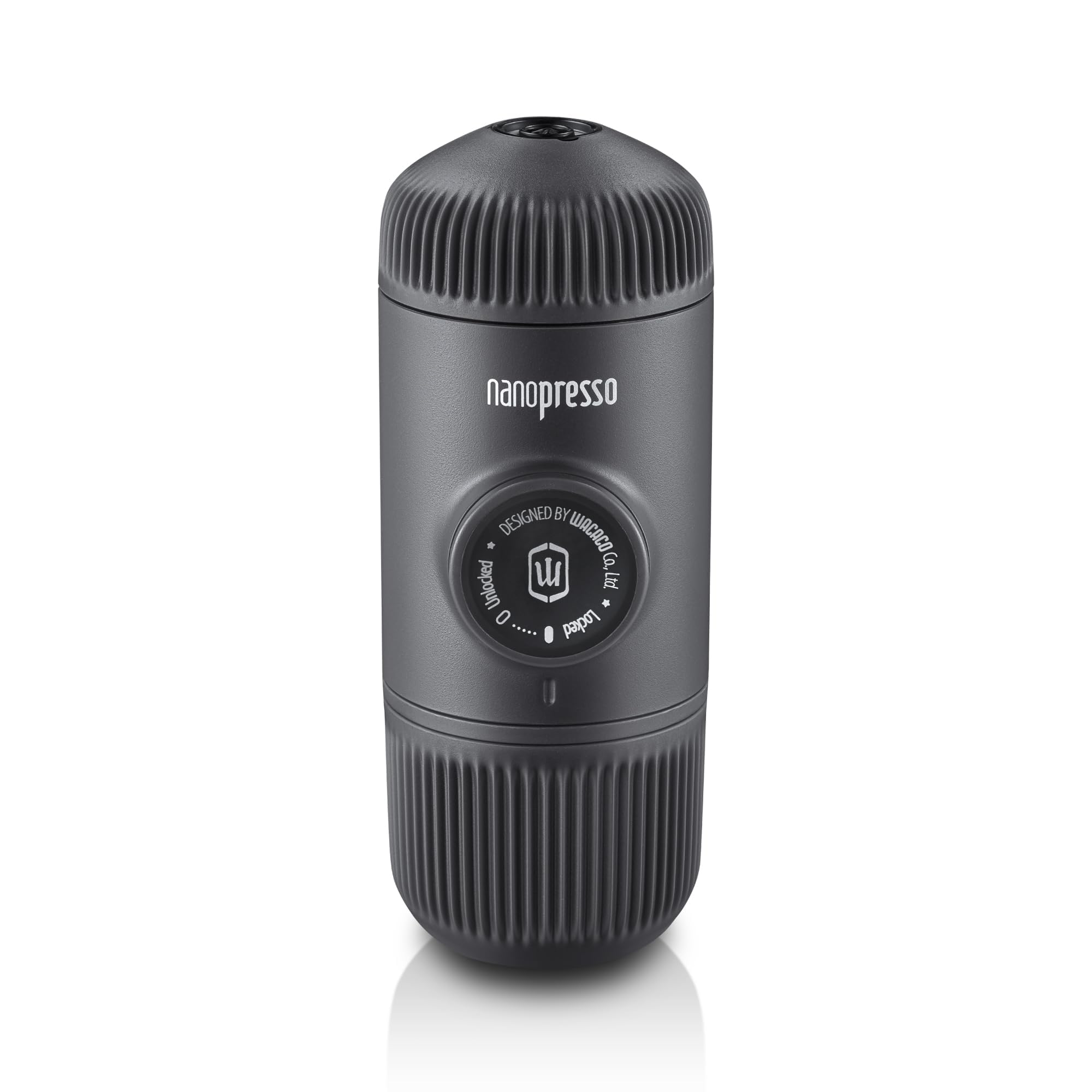
Wacaco Nanopresso
Key Features
- Weight: 12 oz
- Pressure: 18 bar
- Brew method: Manual hand pump
- Water capacity: 2.8 fluid ounces
- Price: Midrange
Hotel-room coffee is the reason we keep reaching for the Nanopresso. It is a manual hand pump with no battery or cord, and it turns hot water and ground coffee into a 2.8-fluid-ounce shot. At 0.34 kg and about 6.14 inches tall, it packs beside a water bottle instead of taking over a bag.
We like how little ceremony it asks for. Fill the basket, tamp, add hot water, and pump; the 18-bar action produces a shot with real crema, and the basket separates for a quick rinse. It is also the most forgiving manual maker here for a first-time user: there are no capsules to seat and no charge to remember. The catch is the grind. Coarse coffee makes the pump feel stiff and the shot thin, so this is not the maker for a bag of pre-ground supermarket coffee.
You supply the hot water—from a kettle, camp stove, or very good thermos—and the small tank means one shot per fill. Against the Picopresso, the Nanopresso gives up some shot quality and basket size but is easier to pack and to learn. Against the electrics, it gives up self-heating but never asks for a charger. That is the balance we keep coming back to for travel.
Pros
- No battery or cord to manage
- 18-bar pump produces real crema
- Packs small at 0.34 kg
Cons
- Needs a separate hot-water source
- Fine, consistent grind is required
We recommend the Nanopresso as the default portable maker: it pulls a solid 18-bar shot without batteries, and its compact, rugged build suits travel better than the electrics here.
Best for Best Shot Quality
Wacaco Picopresso
Key Features
- Weight: 12.3 oz
- Pressure: 18 bar
- Brew method: Manual hand pump
- Water capacity: 80 ml
- Price: Premium
If the Nanopresso is the travel default, the Picopresso is what we unpack when the shot matters more than the schedule. It is still a manual hand pump, but it uses a commercial-style 18-gram basket and a naked portafilter, so you can watch the extraction instead of guessing. The body packs down to about 10 cm and comes with a protective case.
We came away impressed by the shot quality. The 18-bar pump and full basket produce the closest thing to a café espresso in this set, with enough body to stand up in a milk drink. The naked portafilter is more than a gimmick: seeing an uneven pour tells you to adjust the grind or distribution next time. That visible cue is why the Picopresso rewards a little practice.
The cost is fiddliness. There are more parts—basket, tamper, scoop, brush, distribution tool, funnel, case—and the machine wants a genuinely fine, consistent grind. A rushed shot can channel or run thin. It is not a one-minute morning maker. But for a traveler who already owns a good grinder and enjoys the ritual, the extra work buys a clearly better cup than the Nanopresso.
Pros
- 18-gram basket for café-style shots
- Naked portafilter shows extraction
- Protective case included
Cons
- Many small parts to handle
- Requires dialing in and a fine grind
We keep the Picopresso for the traveler who wants the best shot in this group and will trade a few minutes of prep for a café-level result.
Best for Best Electric
OutIn Nano
Key Features
- Weight: 1.5 lb
- Pressure: 20 bar
- Brew method: Battery electric
- Water capacity: 80 ml
- Price: Premium
The OutIn Nano’s party trick is that it heats its own water. Add 1.7 ounces of room-temperature water, press the button, and the machine takes it to 198°F in about 200 seconds before pushing a 20-bar shot. That removes the kettle from the equation, which is the whole point of an electric travel maker.
We found the one-button setup genuinely convenient: it handles ground coffee and NS capsules, and the 80 ml capacity makes a proper single. The 1.5-pound body is heavier than a manual maker but still fits a daypack, and USB-C charging means you can top it up from a car or battery bank. Espresso quality is good for the class, with enough crema to make a hotel-room shot feel like a treat.
The battery is the weak point. Heating cold water drains the 2,500mAh cell quickly, and a full charge may not cover a long day of shots; preheating the water yourself extends it a lot. We also treat any self-heating electric as gear to test at home before a trip, because a pump or charge failure far from an outlet leaves you with a paperweight. The Nano is the easiest electric to recommend here, but it is not the longest-running one.
Pros
- Self-heats water in about 200 seconds
- 20-bar pump with ground and NS options
- USB-C charging from car or bank
Cons
- Battery drains quickly when heating
- Pump or charge failures can strand you
We recommend the OutIn Nano for anyone who wants hot espresso from cold water without a kettle, provided they can live with its battery caveats.
Best for Best Battery Life
CERA+ PCM03S
Key Features
- Battery: 13,500mAh
- Pressure: 20 bar
- Heat time: 140 seconds
- Brew method: Battery electric
- Price: Premium
13,500mAh is the number that separates the CERA+ PCM03S from the rest of the electrics here. That three-cell pack is rated for up to eight hot espresso cups per charge using 1.7 ounces of cold water, and it heats that water from 77°F to 198°F in about 140 seconds. For a long weekend or a car trip, that is the kind of margin that matters.
We like the 20-bar brew and the dual ground/NS capsule setup; it gives you a real choice instead of locking you into pods. The 716-gram body is heavier than the OutIn Nano, but it still packs upright in a bag, and USB-C charging from 10 to 30 watts keeps the refill routine simple. The 140-second heat cycle is quick enough that a second cup does not feel like a project.
The caveat is the battery. A pack that big adds weight and cost, and if it fails, the machine is done until you recharge. This is the electric to choose when capacity is the priority, not when you want the lightest kit. For a weekend off-grid, that trade is easy to make.
Pros
- 13,500mAh battery for long trips
- 140-second heat cycle
- 20-bar brew with pods or grounds
Cons
- Heavier at 716 grams
- Battery failure ends the session
We recommend the CERA+ for long weekends off-grid: its 13,500mAh battery promises the most shots per charge here, and the 20-bar brew is no slouch.
Best for Doubles
STARESSO Plus SP300
Key Features
- Weight: 1.5 lb
- Pressure: 15–20 bar
- Brew method: Manual hand pump
- Coffee dose: 0.85 oz
- Price: Midrange
A 24-gram basket is a lot of coffee for a hand-held maker, and that is the first thing we noticed about the STARESSO Plus SP300. It is built for a double shot—or two people—rather than a single sip, with a 15-to-20-bar pump and a pressurized filter that is more forgiving of an ordinary grind. At 1.5 pounds, it is a packable tool rather than a pocket gadget.
We found the setup straightforward: fill the basket, add hot water, and press. The larger dose gives you a shot with more body than the 18-gram Picopresso, though the Picopresso still wins on clarity and control. The Plus is the better choice when you want a latte-sized base or a second cup without rebuilding the whole basket. The stainless parts feel substantial, and the body separates for cleaning.
Crema is where it gets inconsistent. Some shots come out rich and syrupy; others are thinner, especially if the grind is off or the pressure is rushed. The 1.5-pound weight and handful of parts also make it a car-camping or work-desk maker more than a backpacking one.
Those are fair trade-offs for the capacity, but they are real. The 24-gram basket is the reason it earns a spot; nothing else here gives you that much coffee in one pull.
Pros
- 24-gram basket makes doubles
- 15–20 bar pump
- Stainless parts and simple setup
Cons
- 1.5-pound body is not pocketable
- Crema can be inconsistent
We recommend the STARESSO Plus for couples and double-shot drinkers who need a 24-gram basket and can accept a little more cleanup.
Best for Best Budget Electric
CONQUECO Portable Coffee Machine
Key Features
- Pressure: 15 bar
- Pod system: LOR Barista
- Brew method: Battery electric
- Water capacity: 80 ml
- Price: Budget
The CONQUECO is the least expensive electric maker here, and it gets there by being capsule-only. It takes LOR Barista pods, not the NS capsules most travelers stock, so the savings only hold if that is already your pod system. The 15-bar pump and 80 ml water tank make a full single, and the aluminum body feels more substantial than the price suggests.
We like the car-friendly setup: it can run from a 12-volt outlet or its 13,500mAh battery, and USB-C charging keeps it useful away from home. The self-heating cycle takes about 2.5 minutes with cold water, which is slower than the CERA+ but fine for a single cup. The 80 ml capacity is a genuine improvement over the one-sip makers, and cleanup is quick because the pod drops out.
Battery life is the caveat. The 13,500mAh pack sounds huge, but heating water and pumping shots pull it down, and the behavior is uneven enough that we pack the cable. Pod compatibility is the bigger issue: if you want ground coffee or NS capsules, this is the wrong machine. For a commuter with a LOR habit and a 12-volt outlet, it is a clever, affordable electric; for everyone else, the OutIn Nano is more flexible.
Pros
- Least expensive electric here
- 12-volt and USB-C charging
Cons
- LOR Barista pods only
- Battery drains with heating
We recommend the CONQUECO as the least expensive electric route to pod espresso, as long as you already own LOR Barista capsules.
Best for Wet Outdoor Use
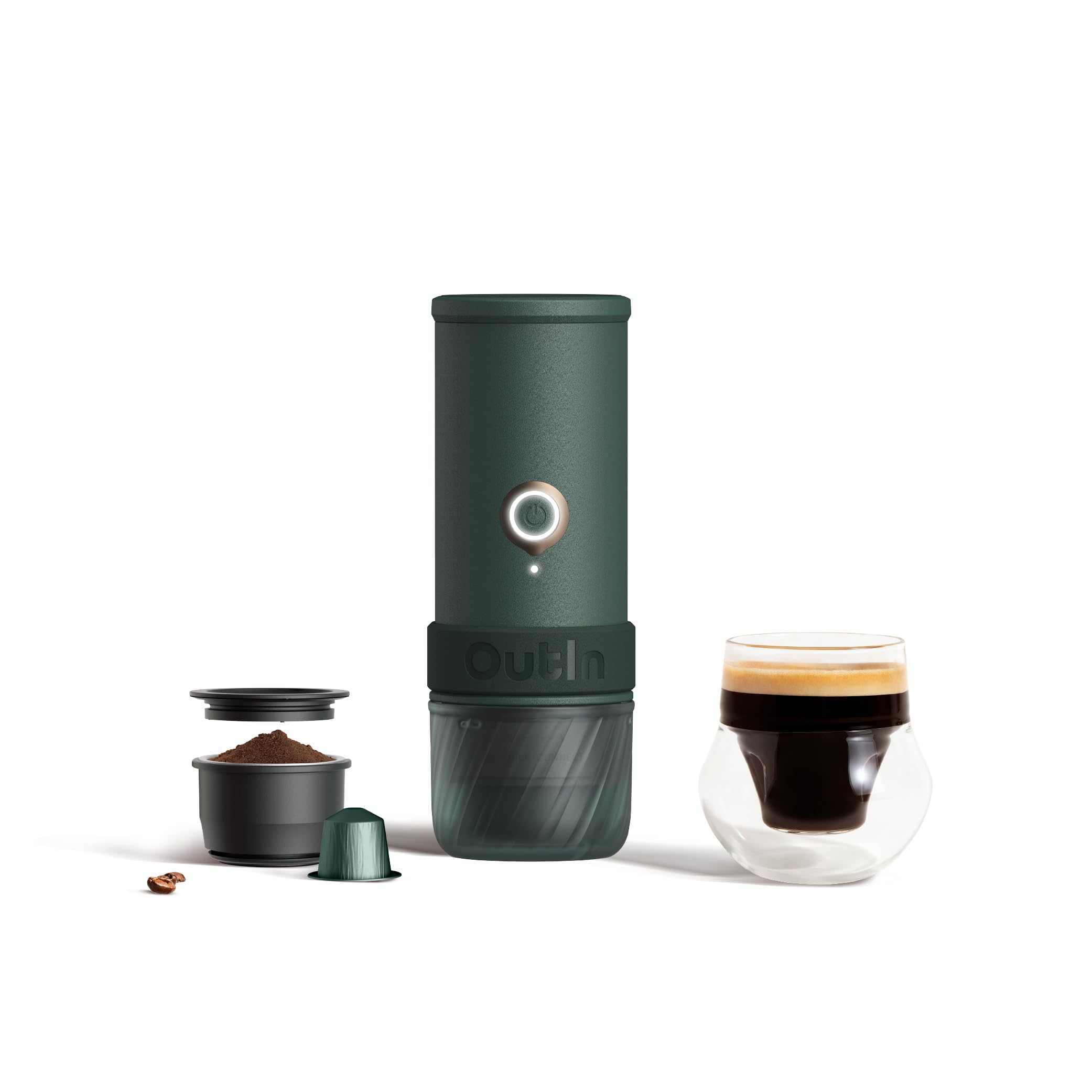
OutIn Mino
Key Features
- Weight: 1.51 lb
- Brew method: Battery electric
- Water capacity: 70 ml
- Water protection: IP67
- Price: Premium
IP67 is the spec that makes the OutIn Mino interesting. It is a 685-gram electric maker with a 2.64-inch body, a 3,000mAh battery, and a sealed case that is rated to shrug off rain and dust. For kayak trips, motorcycle camping, or a dusty tailgate, that protection is more useful than another bar of pressure.
We appreciate how small it packs: 7.68 inches tall and 2.64 inches around, it slips into a bag next to a water bottle. The self-heating cycle and 70 ml capacity make a short shot, and the ground/NS adapter gives you options. The stainless portafilter and BPA-free Tritan cup are sensible choices for a machine that will live outdoors.
The value is harder to swallow. It costs more than the OutIn Nano while making a smaller 70 ml shot, and the 3,000mAh battery is smaller than the CERA+’s. The Mino’s 5°F to 113°F operating range is impressive on paper, but battery life is the recurring question. The sealed body is the reason it earns a spot; nothing else here is built for a wet pelican case.
Pros
- IP67 waterproof and dustproof
- Compact 685-gram body
- 3,000mAh battery with USB-C
Cons
- Costs more than the Nano
- 70 ml capacity is smaller
We recommend the OutIn Mino for wet, rugged trips where IP67 protection earns its keep, but it costs more than the Nano and delivers a smaller cup.
How We Tested a Dozen Portable Espresso Makers
We started with every portable espresso maker we could find sold in the U.S. — close to 30 — then cut the list down. Out went anything without a genuine pressure mechanism, anything that wouldn’t fit in a carry-on next to a laptop, and anything whose grounds basket or pod adapter looked flimsy in the specs and photos. That left 12 machines, split between manual pumps and self-heating electric models, and we bought each one at retail so nothing arrived pre-selected by a brand.
Every machine got the same baseline first: the same beans, the same burr grinder setting, and a shot pulled on my kitchen counter with a scale and a timer so I could compare extraction across the group. Then each one went into real life — a week in a carry-on across two flights and a hotel stay, a cold-weather camping weekend, a month on my office desk, and a road trip where a 12-volt adapter did the heating. I timed heat-up from cold with a stopwatch, counted how many shots a charge actually delivered, and weighed each packed kit in its case before carrying it.
In the cup, I looked at crema first — whether it was real foam that held for a minute or a puff that died on the way to the table — then tasted every shot black, side by side, hunting for the sourness or bitterness that signals temperature trouble. Ease of use got measured in steps and seconds: how many parts came apart for cleaning, whether I could reassemble it half-asleep, and how easily it rinsed clean in a hotel sink. For reliability, the finalists stayed in rotation for months, and I watched for leaking seals, loose threads, and batteries that stopped holding a charge, all while weighing what each machine actually gave you for the money.
How to Choose a Portable Espresso Maker
The first decision is not brand or pressure; it is whether you can supply hot water or need the machine to heat it for you.
Manual or Self-Heating Electric?
Manual makers are lighter, simpler to keep running, and free of charging anxiety. The Nanopresso and Picopresso need a kettle, camp stove, or thermos of hot water, but they ask nothing from a battery. That is the setup we prefer for hotel rooms and car camping, where hot water is usually close.
Self-heating electrics like the OutIn Nano and CERA+ solve the no-kettle problem, but they carry a battery, add weight, and vary in how many shots a charge delivers. If you will brew more than a couple of shots before you can recharge, favor a larger battery and treat the heat function as the main drain.
Match the Basket to Your Cup
An espresso basket is sized by coffee dose, not water. The Picopresso’s 18-gram basket and the Staresso Plus’s 24-gram basket are built for doubles; the 24-gram model is the one to share. Smaller hand pumps are happier making a single short shot.
If you drink one shot a day, a compact 50–80 ml maker is enough. If you make lattes for two, a bigger basket saves a second full setup. Just remember that a larger dose needs a finer, more consistent grind.
Pack for the Trip You Actually Take
Portable is a spectrum. A 685-gram electric maker fits a daypack or car console; a 1.5-pound model is better suited to car camping than a long hike. The OutIn Mino’s 2.64-inch body is genuinely pocketable, while the Picopresso packs down to about 10 cm but brings several small parts.
Check the packed length against your bag, not just the weight. A maker that fits a water-bottle pocket is easier to live with than one that needs its own case, and a case is one more thing to clean and keep track of.
Choose Pods or Ground Coffee
Ground coffee gives you control and freshness, but it demands a fine, consistent grind and a bit of cleanup. Pods are faster and tidier, though they lock you into a capsule line: the Conqueco takes LOR Barista pods, while the OutIn and Wacaco capsule models use NS originals.
If you want one maker for both, a 2-in-1 model like the OutIn Nano is the flexible choice. If you already own a grinder and care about shot quality, a ground-only manual maker is the better long-term buy.
Battery, Heat, and Cleanup
On electric models, battery capacity matters more than the pressure number. A 2,500mAh cell can struggle to heat several rounds of cold water; a 13,500mAh pack is the one to take for a weekend. Heat time is the other clock: 140 to 200 seconds per tank is normal.
Cleanup is where travel makers separate. Removable baskets and pods rinse quickly; narrow brew heads and pump internals take more care. Rinse the basket before the grounds dry, and give the water tank a fresh-water flush after each trip.
Frequently Asked Questions
Do I need a separate coffee grinder for a portable espresso maker?
For ground-coffee models, yes—or at least access to a grinder set for espresso. The 18-gram Picopresso and 24-gram Staresso Plus are sensitive to inconsistent grounds, which can cause channeling or a thin shot. Pre-ground espresso can work in a pressurized basket, but it is usually a compromise. If you travel without a grinder, pods are the simpler route.
Can I take a portable espresso maker on a plane?
Manual models travel like any thermos, though you should empty the water tank before security. Electric models with lithium batteries belong in carry-on, not checked luggage, and airline watt-hour limits vary. Check your carrier’s battery rule before you pack, and keep the maker within reach for screening.
How do I keep the espresso hot in a manual maker?
Preheat the cup and the brew chamber with hot water before you fill the basket; metal and plastic parts pull heat from a small shot fast. Brew into the warm cup, then drink it soon—2 ounces of espresso cools quickly. A self-heating electric helps, but a preheated cup still makes a noticeable difference.
Final Verdict
Buy the Wacaco Nanopresso if you want one portable travel coffee maker that asks for nothing but hot water and a fine grind. It is the most reliable default here, and it makes a real espresso without a battery or a cord. If shot quality is the priority, the Picopresso is the upgrade; if you cannot count on a kettle, the OutIn Nano is the electric pick to beat, with the CERA+ for longer weekends. The Conqueco only makes sense if you are already stocked with LOR pods.