This post contains affiliate links. We may earn a small commission when you buy through our links — at no extra cost to you.
A microfiber cloth looks like a rag right up until you put it against a mirror. The fibers are split so thin that they grab grease and dust instead of pushing it around, which is why one cloth leaves glass clear and the next leaves a haze of lint you have to buff away. I started keeping a stack under the sink to buy fewer paper towels, and what surprised me was how badly some of them fail once they’re actually wet.
We’ve spent the past four months testing 14 packs — window cloths, all-purpose cloths, dish cloths, tear-away rolls — and the ones worth keeping share a few traits. Thickness tells you more about absorbency than any label does, though thicker isn’t automatically better on glass: a plush cloth smears a windshield and a thinner flat weave finishes it. Size matters for shower doors and car interiors, and since these are sold by the pack, the price per cloth counts as much as the sticker. The ones that survived the sink, the car, and the laundry are below.


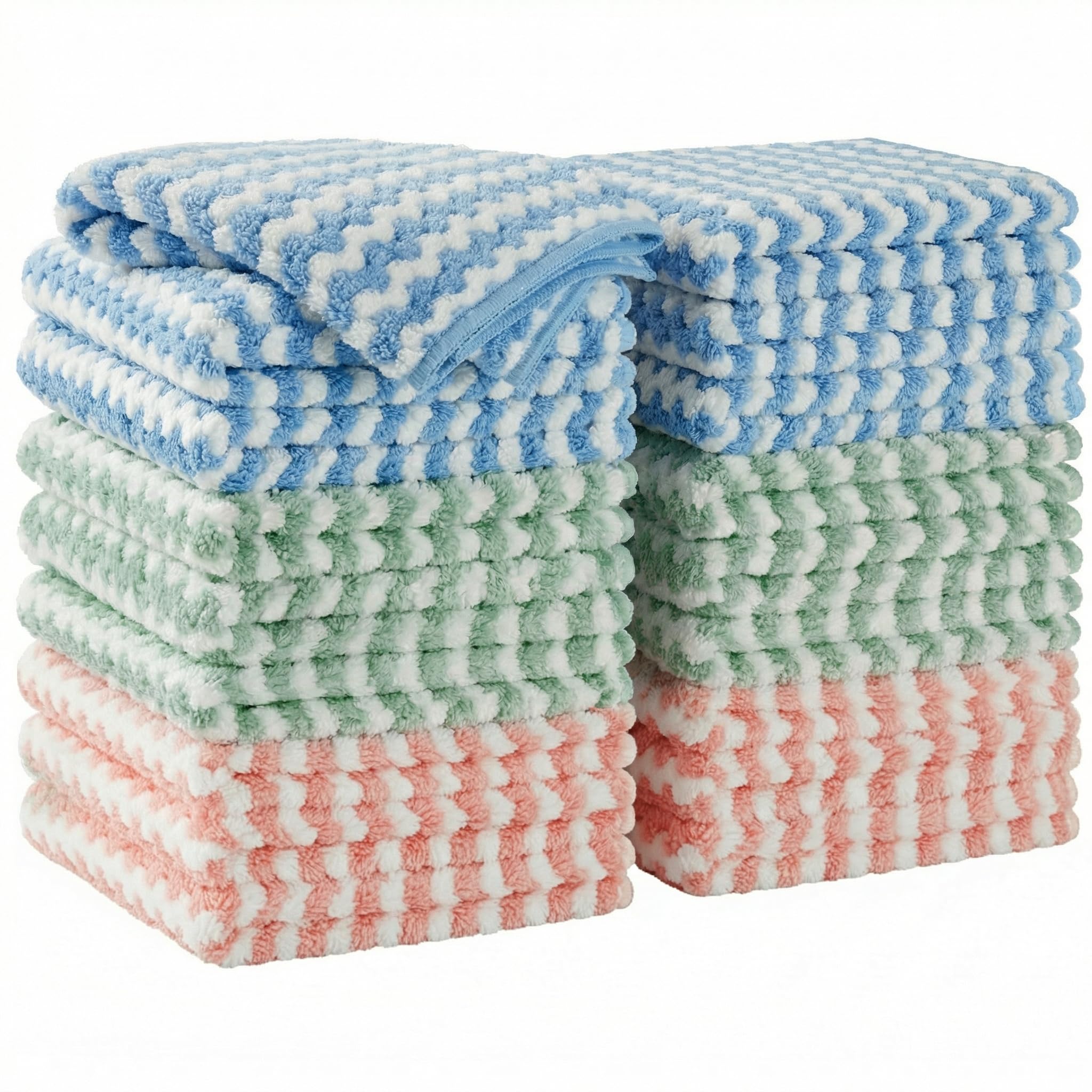

Best for All-Purpose Cleaning
MR.SIGA Microfiber Cleaning Cloths
Key Features
- Colors: Color-coded assortment
- Fabric: 85% polyester, 15% nylon
- Cloth size: 12.6 x 12.6 in
- Pack count: 12
- Price: Midrange
Twelve cloths in clearly different colors sounds like a small thing until two people are cleaning the same kitchen and neither wants the cloth that just wiped the floor going anywhere near the dish rack. Colors you can tell apart at a glance are the reason this set stays sorted: bathroom cloth, kitchen cloth, car cloth, no guessing. At 12.6 inches square they cover a counter in two passes and still wring out in one hand.
This is the set that ended up doing most of the everyday work in our kitchens. The 85/15 polyester-nylon blend lifts a spill rather than pushing it into a smear, and it leaves a glass stovetop clear instead of hazed with the film a damp paper towel leaves behind. Reinforced stitched edges are the quiet advantage: they stay flat through the wash instead of curling into loose threads, which is how cheap cloths usually end up in the rag bin.
Twelve is sized for a household rather than a cleaning business. One can live in the car and one under the sink without leaving the kitchen short, and there is a spare for the mess nobody planned for. If you are buying microfiber for the first time, this is the set that covers the whole house without a second order.
Pros
- Colors keep kitchen, bath, and car cloths apart
- Lifts spills instead of smearing them
- Stitched edges stay flat through washing
- 12.6-inch square suits counters and hands
Cons
- Leaner than a plush detailing towel
- Costs more per cloth than bulk packs
We recommend this 12-pack as the default for most homes: right-sized cloths, colors that keep tasks apart, and enough substance for daily spills.
Best for Glass and Mirrors
Puomue Microfiber Glass Cloths
Key Features
- Color: Blue
- Cloth size: 16 x 16 in
- Pack count: 6
- Fabric weight: 320 GSM
- Price: Premium
Weight is the first thing you notice. At a stated 320 GSM these are the heaviest cloths in this group, and a 16-inch square gives you enough fabric to fold into quarters and work a window in sections. For windows, mirrors, and stainless, these are the ones we hand people.
The size does real work on big glass. A folded cloth gives you several clean faces before you need a fresh one, and the density holds water where you put it instead of letting it drip down the frame. They also come out of the wash without matting or going stiff, which is more than we can say for a thin all-purpose cloth pressed into window duty.
Six cloths goes quickly if you are doing a whole house of windows, so two packs is the honest way to buy these when glass is a big part of your cleaning. For a bathroom mirror and a patio door, six is plenty and then some.
Pros
- Heaviest fabric in this group at 320 GSM
- 16-inch square folds into quarters for windows
- Streak-free and lint-free on glass and stainless
- Washes without matting or stiffening
Cons
- Highest price per cloth in this group
Buy these if glass is the job: the heaviest cloth here, big enough to fold into quarters, and it finishes a mirror without streaks.
Best for Kitchen Counters
Fantasticlean Microfiber Cloth Roll
Key Features
- Fabric: 87% polyester, 13% polyamide
- Cloth size: 12 x 12 in
- Fabric weight: 175 GSM
- Sheets per roll: 75
- Price: Budget
A roll of tear-away cloths sitting where the paper towels used to be changes how often you reach for one. Seventy-five 12-inch sheets come on a roll sized for a standard holder, so you pull one off the way you would pull a paper towel, wipe the counter, and drop it in the wash basket instead of the trash.
The format is the pitch, and it is why this one ranks where it does. A cloth within arm’s reach gets used; a stack in a drawer does not. Each sheet is rated for about 50 washings, the fabric is an 87/13 polyester-polyamide blend, and the care label is short: no bleach, no iron. That is a realistic lifespan for a cloth wiping counters twice a day.
The one thing the roll cannot do is take a cloth back. Once a sheet comes off, it lives in a basket until wash day, so plan a spot for the used ones or they pile up on the counter. It is the most natural paper-towel replacement here, and the one we hand to someone who keeps buying the big packs out of habit.
Pros
- Roll format fits a standard paper towel holder
- 75 sheets, each rated for about 50 washes
- Absorbs spills and leaves counters streak-free
- Low cost per cloth for a washable wipe
Cons
- Sold in pink only
- Used sheets cannot go back on the roll
Worth it if you want to quit paper towels: the roll puts a cloth where your hand already reaches, and each sheet survives dozens of washings.
Best for Bulk Household Cleaning
Amazon Basics Microfiber Cleaning Cloths
Key Features
- Colors: Blue, white, yellow
- Fabric: Polyester and nylon
- Cloth size: 16 x 12 in
- Pack count: 48
- Price: Budget
Forty-eight cloths is a commitment, and that is the point. A stack in the hall closet and another in the garage means you stop rationing: you grab a clean one for the bathroom mirror, another for the car, and a third for whatever the dog did, without pausing to decide whether it is worth using one up.
They are 16 by 12 inches, so there is real surface to work with, and the three colors are enough to keep categories apart: yellow for the car, white for the kitchen, blue for the bathrooms. The stated numbers, eight times their own weight in liquid and hundreds of reuses, are the sort that depend on how you wash them, which is true of every cloth here.
Where this pack earns its place is the jobs you do not want your good towels near: garage shelves, bike chains, the inside of a trash can, patio furniture in spring. We used them for exactly that and never once minded that they were the cheap ones. For those tasks, dozens of flat microfiber towels you can launder without ceremony beat one plush towel you are afraid to ruin. Buy it to stock a house, a workshop, or a rental turnover; skip it if your cleaning is mostly windows and you want more substance in hand.
Pros
- 48 cloths per pack, three colors for sorting
- 16 by 12 inches gives real coverage
- Machine washable and reusable many times
Cons
- Thin next to a plush detailing towel
The volume buy: 48 large, flat cloths that cover every room and every grubby job, as long as you do not expect plush.
Best for Dishes and Sinks
JOYMOOP Microfiber Cleaning Cloths
Key Features
- Colors: Pink, green, blue
- Fabric: 85% polyester, 15% polyamide
- Cloth size: 10 x 10 in
- Pack count: 18
- Price: Midrange
Ten inches square is small for a countertop and exactly right for a sink. These are the cloths that ended up living by the faucet in our kitchens: soft enough to wring bare-handed, small enough to wring one-handed, quick to rinse between plates.
The 85/15 blend is the same family as the MR.SIGA set, but the surface is softer and less grippy than a flat microfiber cloth, so it slides over a plate instead of catching on it. They hold a surprising amount of water for their size and release it when you squeeze, which is why the same cloth works as a dish rag and a counter wipe in one session. On granite and glass they finish without streaks.
Eighteen cloths across three colors is enough to give the bathroom and kitchen separate sets with spares left over, and the price sits in the middle of this group. What you are paying for is the feel rather than the count.
Pros
- Soft, low-grab surface is gentle on hands
- Absorbs a lot and wrings out easily
- 18 cloths across three colors
Cons
- Hand wash and air dry only
These are the dish cloths we keep by the sink: soft enough for bare hands, absorbent enough for a stack of plates, small enough to wring one-handed.
Best for Cars and Garages
USANOOKS Microfiber Cleaning Cloth
Key Features
- Color: Gray
- Cloth size: 12.5 x 12.5 in
- Pack count: 12
- Fabric weight: 300 GSM
- Price: Budget
The texture tells you what this cloth is for. Instead of the usual flat, brushed face, USANOOKS uses a raised grip-root weave that snags dust and grime rather than sliding over it, which is exactly what you want on a dashboard, a door panel, or a baseboard where dust has settled into a groove.
The specifications are aimed at hard use: a stated 300 GSM, 2.5 mm thick, overlocked braided edges, and a claimed 1,200 washes. We treat wash-count claims loosely, but the construction backs the idea, since hems are the first thing to go on a cheap cloth and these are finished properly.
The open weave releases water quickly, so they dry on a hook instead of sitting damp in a bucket, and the uniform gray hides the grime that shows badly on a white cloth. That is a small thing that turns into a real one when the same cloth is going from wheels to interior trim.
For the money, this is the 12-pack we hand someone about to clean out a car for the first time, or anyone who wants a garage set that will not get borrowed for the kitchen. Nothing here finishes glass like the Puomue, but for dust, grime, and a car interior, the weave is the point.
Pros
- Grippy raised weave traps dust and grime
- Overlocked braided edges resist fraying
- Dries quickly between uses
- Cheapest 12-pack in this group
Cons
- Feels thinner in hand than the stated weight
- Sold only in gray
A workmanlike 12-pack for car interiors and dusty surfaces, where the grippy weave does more for you than a plush finish would.
Best for High-Volume Homes
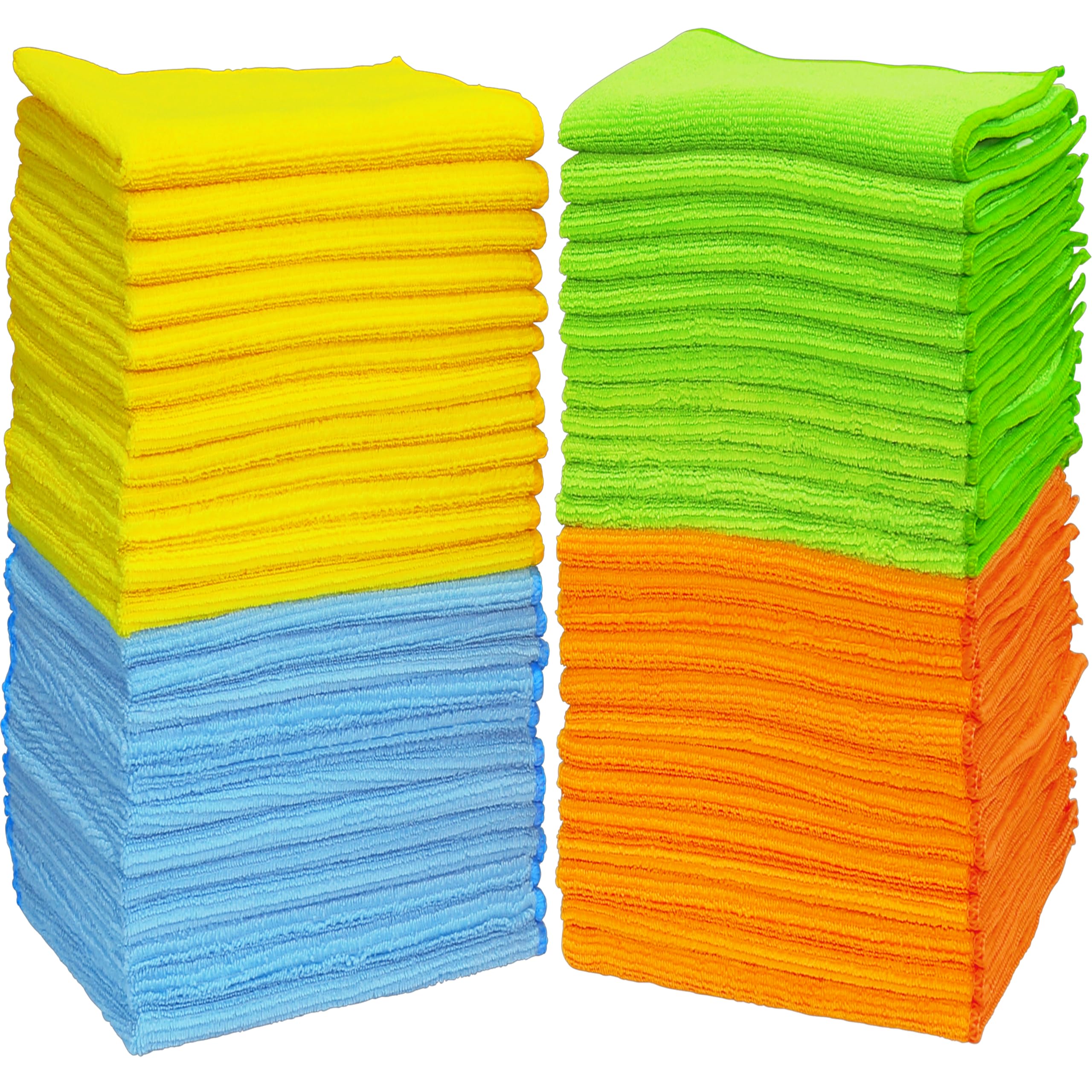
Simple Houseware Microfiber Cleaning Cloths
Key Features
- Colors: Green, yellow, blue, orange
- Cloth size: 12 x 16 in
- Pack count: 50
- Fabric weight: 258 GSM
- Price: Budget
Twelve by sixteen inches is the largest everyday cloth in this group, and that changes what one cloth can do. A single one covers a shower wall or a car hood without folding, and it is big enough that cutting it in half still leaves two usable squares for smaller jobs.
Simple Houseware states 258 GSM and eight times its weight in liquid, and the four colors mean the bathroom set never migrates to the kitchen. These are work cloths: they mop a spill, scrub a bathtub, and go through the machine without complaint, and they dry fast enough that a stack does not sit damp in the bottom of a bucket.
Fifty is the number that makes this make sense. It is a pack for a house with pets, a garage, a rental, or a small cleaning business, anywhere cloths disappear into the laundry and do not come back fast enough. We treat it as the pack you do not have to be careful with. Run a fingernail along the seam and trim any tag before a cloth touches paint or glass.
Pros
- 50 cloths at a 12 by 16 inch size
- Four colors for task separation
- Washes well and dries fast
- Large enough to cut in half
Cons
- Thinner in hand than the stated weight suggests
A sensible bulk buy for big surfaces: 50 large cloths you can cut down, provided thin fabric does not bother you.
Best for Wax and Polish
Chemical Guys Professional Microfiber Towels

Key Features
- Pile: High-pile
- Color: Gold
- Cloth size: 16 x 16 in
- Pack count: 12
- Price: Premium
Sixteen inches square, gold, and noticeably plusher than anything else on this list. Chemical Guys built these for paint, and it shows in the pile: one side is long and fluffy, the other a tighter microfiber, so you can lift residue with the soft face and finish with the flat one.
For wax and polish they do what a flat cloth cannot. The pile holds the residue and lifts it off the panel instead of smearing it back across the paint, and a 16-inch towel is big enough to do a whole hood before it loads up. They launder well, and twelve towels will keep a weekend detailer going for years.
The exception is glass. High pile and lint-free pull against each other, and on interior windows these can leave fibers behind, so keep a flat glass cloth for that job and save these for paint, chrome, and interior trim.
If you wax your own car, we think twelve 16-inch towels at this quality are worth the top-of-group price. If you do not, the money is better spent on a pack that multitasks.
Pros
- High pile lifts wax and polish cleanly
- 16-inch square covers a panel per towel
- Holds up to repeated washing
Cons
- Highest price per cloth here
- Single gold color, no task coding
For wax, polish, and paint, these are the plushest towels here; if your cleaning is mostly glass and counters, spend elsewhere.
How We Tested: 14 Packs, Four Months, a Lot of Dirty Windows
We started by pulling the best-selling and highest-rated cloths across the sizes people actually buy, from roughly 12 to 16 inches square, in pack sizes ranging from a half dozen to a bulk roll. We read through customer reviews looking for the complaints that repeat — lint left on mirrors, edges that unravel, cloths that shrink into dishrags — and we dropped anything whose cost per cloth was wildly out of line with the rest. That left 14 packs, which went into rotation in our own kitchens, bathrooms, and cars for four months.
Every cloth got the same jobs: a glass shower door and a bathroom mirror, stovetop grease after dinner, a sink full of dishes, and a car windshield and dashboard. We counted how many passes it took to clear a mirror without streaks, held each one up to a window after wiping a dark surface to see what lint it shed, and poured a measured spill onto a counter to watch whether the cloth soaked it up or just shoved it into a puddle. We also stacked them side by side to compare thickness and checked whether the smaller cloths covered a shower door without needing to be wrung out halfway through.
Then came the laundry. Every cloth went through repeated hot washes with no fabric softener, since softener coats the fibers and quietly kills absorbency, and we noted which ones frayed at the edges, curled, shrank, or started shedding. Softness was judged by hand after the fifth wash rather than out of the bag. Finally we counted how many cloths in a pack were still usable at the end against what the pack cost, because a 50-pack of thin cloths that fall apart in a month is worse value than a dozen that keep going. The ones still in my cleaning caddy after four months are the ones that made the list.
How to Choose Microfiber Cleaning Cloths
The right cloth is decided by the surface in front of you and the fabric in your hand, and both are easier to judge from a number than from the adjectives printed on the package.
Size Comes First, Because Size Picks the Job
A 10-inch cloth belongs at the sink: small enough to wring one-handed, quick to rinse, easy to squeeze out over a stack of plates. A 12- to 12.5-inch square is the all-purpose size, wide enough for a counter pass and still comfortable in hand. Sixteen inches is for glass and large flat surfaces, where you fold the cloth into quarters and work in sections without re-wetting. A package that says only compact or large tells you nothing; look for the inch dimensions before anything else.
Fabric Weight Is the Number Worth Trusting
Fabric weight, given in grams per square meter, is the closest thing to a thickness you can check before buying. Cloths in the 175 to 210 GSM range are light: good for quick wipe-downs and dusting, fast to dry, thin in the hand. The 250 to 320 GSM range has more substance for spills, scrubbing, and repeated washing.
The trap is a listing that says thick, plush, or premium and never gives a number. Those are the packs that arrive thin, and it is the single most common complaint about this category. Weight is not everything either: it says nothing about how a cloth absorbs, whether it sheds fibers, or how it will feel against your hands.
Buy the Pack Size That Matches Your Habits
Count cloths the way you count paper towels. A 6- to 12-pack serves an apartment or a single kitchen, where the supply gets washed before it runs out. Forty-eight- and fifty-packs suit garages, pets, rentals, and anyone cleaning for a living, because volume lets you use a cloth hard instead of saving it. If paper towels are the habit you are trying to break, a tear-away roll puts a cloth exactly where your hand already goes.
Care Is What Decides How Long They Last
Three habits shorten a microfiber towel’s life more than any manufacturing detail: fabric softener, dryer sheets, and high heat. Softener coats the fibers so they push water around instead of absorbing it, and a hot dryer mats the pile. Wash in warm water, skip the softener, and air dry or use low heat.
Wash new cloths separately the first time, since dyes can bleed, and keep them out of a load of cotton towels that will shed lint into the fibers. A cloth that never sees softener keeps grabbing spills long after a softener-treated one starts smearing them.
Frequently Asked Questions
Do microfiber cloths really clean with just water?
For dust, fingerprints, and light grease, yes. The split fibers lift and trap particles, and a barely damp cloth does most of what a spray would do on a countertop or a mirror. Warm water cuts kitchen grease better than cold. For disinfecting you still need a product labeled for it, because microfiber removes soil but does not sanitize on its own.
What is the trick to streak-free glass?
Two cloths, not one: a damp cloth to lift the film and a dry one straight behind it to finish. Fold each into quarters so you have eight clean faces to work with, and keep the damp cloth only barely damp, since water running down the pane is what dries into streaks. Work top to bottom and turn the cloth before it loads up.
Will microfiber scratch car paint or a TV screen?
The fiber itself is soft enough for paint, glass, and coated screens. What scratches is grit trapped in the cloth, so rinse it out after a job that picked up sand or crumbs and keep the cloth that cleaned a wheel well away from the hood. Trim any tag sewn into a seam before that cloth touches a finish.
When should I throw a microfiber cloth away?
Retire a cloth when it stops clinging to your hand, when the edges fray into loose threads, or when it starts leaving lint on glass. Most quality cloths last dozens to hundreds of washes. The ones that have been handling oil, grease, or bathroom cleaners go soft first, so demote them to garage duty before you bin them.
Final Verdict
The MR.SIGA 12-pack is the one we point most people to, because it covers a whole house without a second order: sized for counters and hands, colored so the bathroom cloth stays in the bathroom, and sturdy enough to survive the wash cycle it will live in. If glass is most of your cleaning, the Puomue 16-inch cloths finish a window better than anything else here, and if paper towels are the habit you want to break, the Fantasticlean roll is the switch that actually sticks.