This post contains affiliate links. We may earn a small commission when you buy through our links — at no extra cost to you.
Packing a school lunch at 6:45 a.m. is a small act of faith: you seal the box, zip the bag, and hope the yogurt stays put until noon. A kids’ lunch box has to do more than hold a sandwich—it needs to keep cold food cold, survive a backpack toss, and come apart for cleaning without a scavenger hunt. I’ve packed enough lunches to know that a clever design means nothing if the latch pops or the zipper snags on day three.
Over the past five months, my team and I tested 14 lunch boxes the way families actually use them—packed before school, carried through drop-off, opened at the lunch table, and washed at night. We looked at capacity and weight, how easily kids could open and close them on their own, whether drinks stayed cold, and how the seams and zippers held up after repeated washing. We also weighed price against performance, because the best box is the one that still works in June. The picks below are the ones that earned a spot in the rotation.




Best for Young School Lunches
Bentgo Kids Prints 5-Compartment
Key Features
- Capacity: 2.4 cups
- Tray care: Top-rack dishwasher-safe
- Dimensions: 8.5"L x 6.5"W x 2"H
- Compartments: 5
- Price: Midrange
A packed lunch for a 4-year-old can turn into a pile of small containers, but the Bentgo Kids Prints puts the whole lunch in one box. Five compartments hold 2.4 cups total, enough for half a sandwich, fruit, yogurt, crackers, and a treat, each in its own section. We packed wet foods next to dry ones and the lid kept them from running together; the tray also stayed put when the box rode upright in a backpack.
The latches are the part that decides whether a young child can use a box independently. These flip open with little resistance and click shut without a wrestling match, which is why this is the box we recommend for a child who opens lunch alone. The rubberized edges add some forgiveness for drops, and the tray lifts out for top-rack dishwasher cleaning.
Capacity is the catch for older kids. For a preschooler or a young elementary student, 2.4 cups is a sensible lunch; a hungry third-grader will likely need a larger box. If your child routinely finishes a sandwich plus two sides and comes home hungry, size up rather than packing this one to the brim. For the younger lunch crowd, it is the one we reach for first.
Pros
- Five compartments keep wet and dry foods separate
- Latches work for small hands
- Removable tray is top-rack dishwasher safe
- Rubberized edges cushion everyday drops
Cons
- Outer shell needs hand washing
We recommend the Bentgo Kids Prints as our default for preschoolers and early elementary students: sealed compartments and easy latches make daily lunches simpler.
Best for Bentgo Box Owners
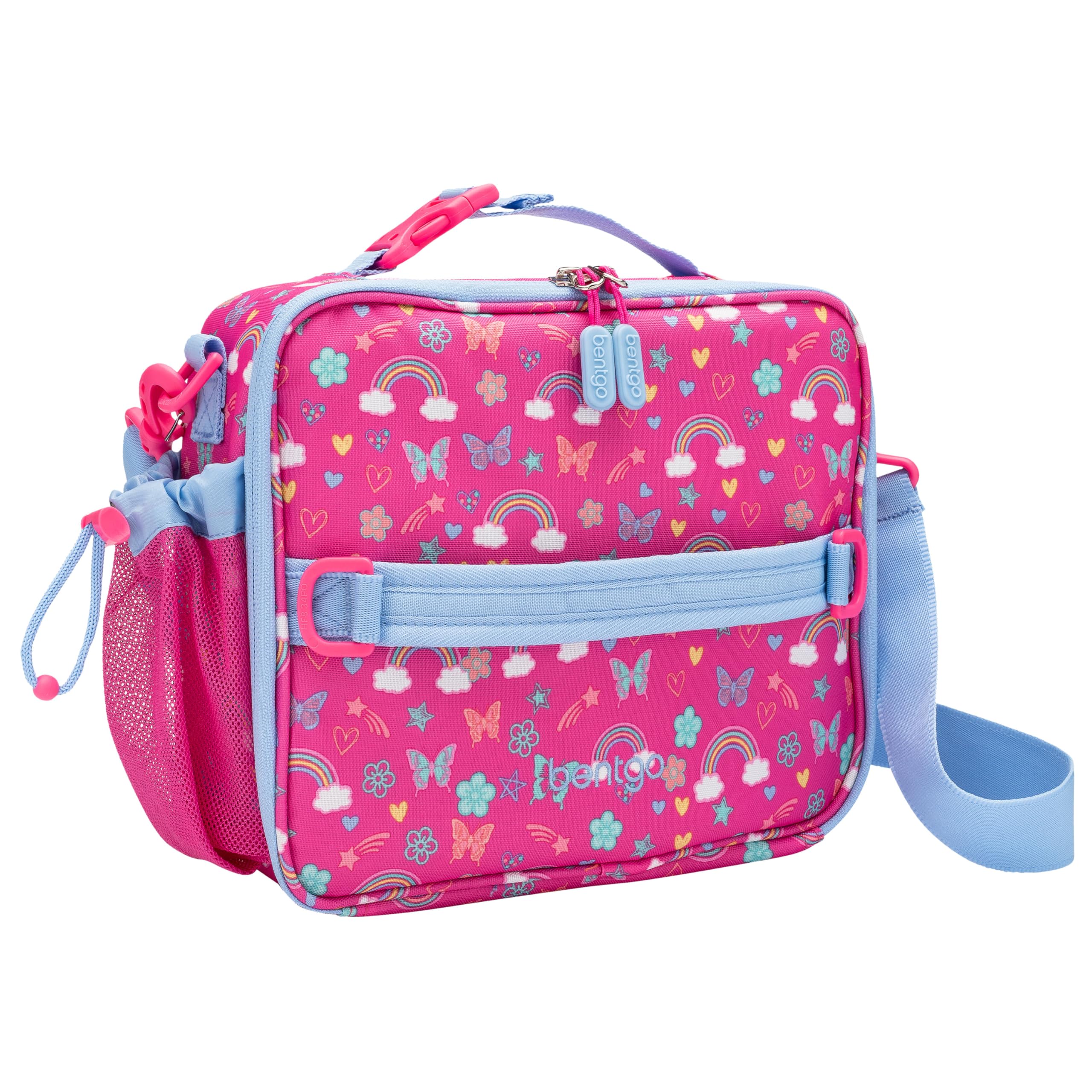
Bentgo Kids Prints Lunch Bag
Key Features
- Care: Wipe clean
- Capacity: 4.5 liters
- Dimensions: 11"L x 9.5"W x 3.5"H
- Carry options: Shoulder strap, handle, backpack buckle
- Price: Midrange
A lunch bag is only as good as the box it carries, and this Bentgo bag was designed around the matching Bentgo Kids box. The 11 by 9.5 by 3.5-inch body holds the box plus a drink and a couple of snacks, with interior and exterior pockets for utensils and notes. We clipped it to a backpack with the buckle handle and carried it by the shoulder strap; both felt secure.
Double insulation helps an already-cold lunch stay cool through the morning, but it is not a replacement for an ice pack. The water-resistant lining wipes clean after a yogurt cup leaks, and the bag has enough structure to load without collapsing. The fabric and zipper are fine for a school year, though this is not the bag we hand to a child who drags it across pavement every day.
What sold us is the carrying flexibility. The shoulder strap adjusts small enough for a preschooler, the top handle is easy to grab, and the buckle lets it ride on a backpack when hands are full. Mornings are easier when a child can carry lunch without a separate bag sliding off a shoulder.
Pros
- Fits the matching Bentgo box plus snacks
- Shoulder strap, handle, and backpack buckle
- Water-resistant lining wipes clean
- Double insulation helps keep lunch cool
Cons
- Wipe-clean only, not machine washable
We recommend this Bentgo bag for families who already own the matching lunch box and want a roomy, easy-to-carry way to bring it, snacks, and a drink to school.
Best for No Ice Packs
PackIt Freezable Classic
Key Features
- Care: Wipe-clean lining
- Weight: 1.5 lb
- Cooling: Built-in freezable gel walls
- Freeze time: 12 hours
- Price: Midrange
The PackIt Classic solves the ice-pack problem by turning the bag itself into the ice pack, but the frozen walls add weight before you put a single sandwich inside. Freeze it overnight for 12 hours, and the built-in gel chills the lunch for hours; there is no separate block to remember, leak, or lose. That is a genuinely useful trick on busy mornings.
The cost is heft. The bag weighs 1.5 pounds empty, and the frozen walls make it feel denser in hand than a soft tote. For a parent packing a lunch that goes into a backpack, that is fine. For a 4-year-old carrying lunch from the car to daycare, it is a lot. We recommend it for older elementary kids or for days when cold food matters more than a featherweight bag.
Inside, a sandwich, fruit, and a drink fit, and the wide zip opening lets you load without excavating. The interior wipes clean, and the whole bag collapses flat for the freezer. Its real value is the morning you do not have to hunt for a frozen ice pack.
Pros
- Built-in gel walls replace loose ice packs
- Freezes overnight for 12 hours
- Wide zip opening makes packing easy
- Interior lining wipes clean after spills
Cons
- Single compartment limits lunch variety
We recommend the PackIt Classic for older elementary kids and parents who want built-in cooling; its frozen walls add weight, so it is not the easiest first bag for a preschooler.
Best for Character-Print Fans
Simple Modern Disney Princess
Key Features
- Care: Hand wash only
- Closure: Zipper
- Capacity: 4 liters
- Insulation: Triple insulated
- Price: Midrange
The Disney Princess print is the reason a child picks this bag up, but the construction is why we are comfortable recommending it. The polyester body feels sturdy, the zipper runs smoothly, and the 4-liter interior has room for a sandwich, snacks, a drink pouch, and an ice pack without turning into a suitcase. It is one of the better-looking bags here, and the print is the kind a child wants to show off.
Inside, the water-resistant lining wipes clean. The zipper is the part to watch: it works smoothly when the bag is packed normally, but overstuffing puts strain on the teeth. Keep it to a normal school lunch rather than a full picnic.
It is not the biggest bag here, and a bento box plus a water bottle will fill it. That is fine for most preschool and elementary lunches, but not for a child who needs a full thermos and multiple containers. The reward is a bag that feels personal, wipes clean, and has enough room for the lunch most kids actually eat.
Pros
- Disney prints appeal to kids
- Sturdy polyester body and smooth zipper
- 4-liter interior fits lunch and ice pack
- Water-resistant lining wipes clean
Cons
- Hand wash only, not dishwasher safe
We recommend the Simple Modern bag for kids who want a character print and a sturdy, roomy school bag; it is a strong choice if the print earns its place.
Best for Hot and Cold
Omie OmieBox
Key Features
- Weight: 1.8 lb
- Food jar: Included
- Compartments: 3
- Temperature zones: Hot and cold
- Price: Premium
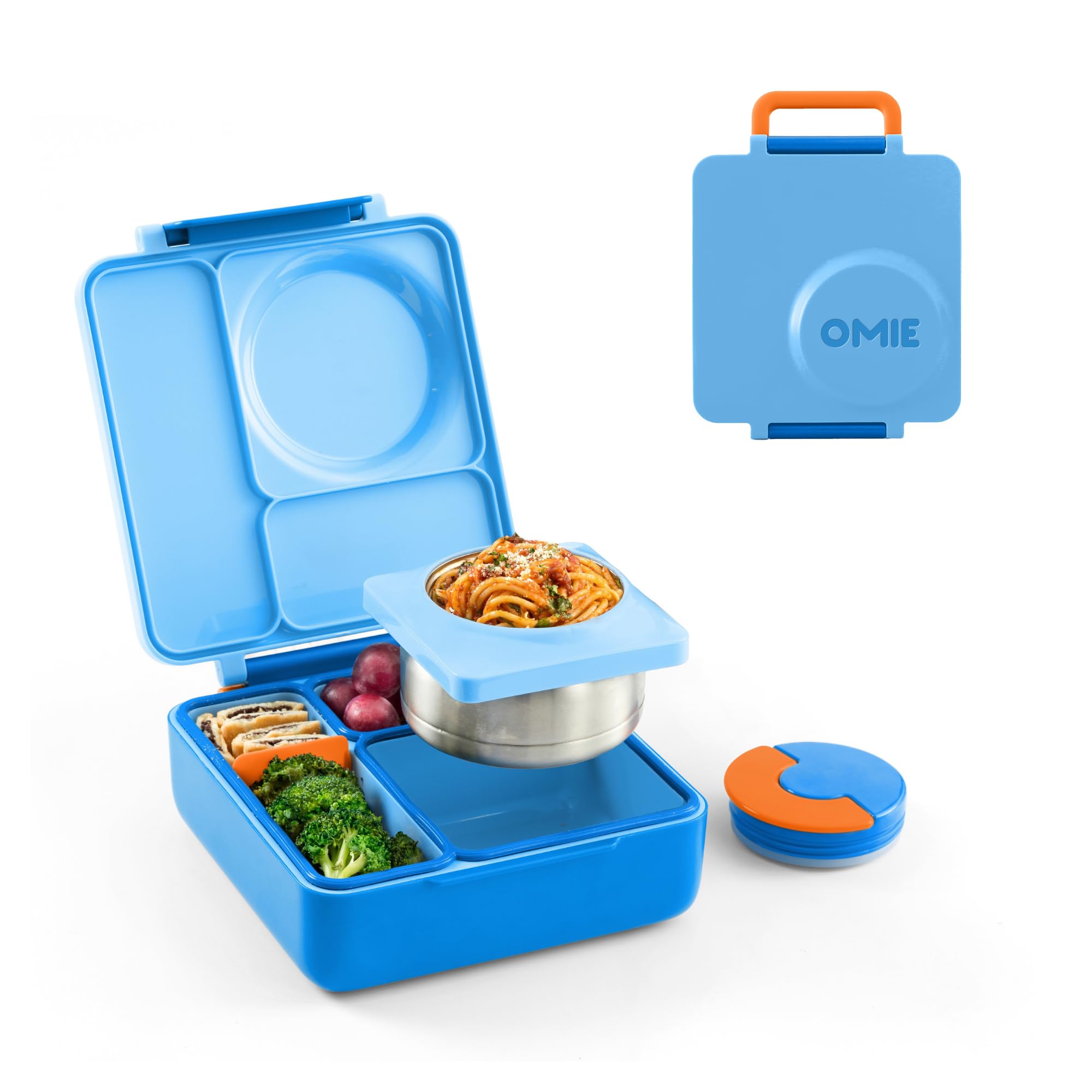
Most kids’ lunch boxes make you choose: keep the yogurt cold or pack the soup warm. The OmieBox is built to do both at once, with an insulated food jar and separate compartments for cold food. That is a meaningful upgrade for a child who wants pasta or leftovers at school, and it is the reason this box earns its dedicated space.
The box comes apart for cleaning, including removable seals, which matters because a thermos and compartments can trap smells. We liked that the food jar is separate from the cold sections; you can pack soup, crackers, and fruit without everything tasting like soup. The three compartments are generous enough for a full lunch, and the stainless-steel jar is the piece that makes the whole thing worthwhile.
This is a parent-packed lunch box. It rewards the person who assembles lunch the night before and wants hot food to still be warm at noon, but it is not the box we recommend for a kindergartner rushing out the door. If your child buys lunch some days and carries a simple sandwich on others, the extra parts are more than you need.
Pros
- Food jar keeps hot food warm
- Separate compartments hold cold sides
- Removable seals make thorough cleaning easier
- Three compartments fit a full lunch
Cons
- Heavy and bulky for small kids
- Lid needs careful seating
We recommend the OmieBox for families who want hot and cold foods in one lunch and will do the packing; it rewards a parent’s effort more than a child’s independence.
Best for Toddler and Preschool
mibasies Kids Lunch Bag
Key Features
- Care: Hand wash
- Carry: Top handle
- Capacity: 2.5 liters
- Dimensions: 10"L x 3"W x 8"H
- Price: Budget
The mibasies bag is small in the way a preschool lunch is small: a sandwich box, a pouch, and a slim ice pack fit, and the bag still slides into a toddler backpack. The 2.5-liter body measures 10 by 3 by 8 inches, so it will not swallow a full-size bento plus a thermos. That is the point. For a 3- or 4-year-old, a smaller bag is easier to carry and less likely to come home with uneaten food.
We like the wipe-clean lining and the smooth zipper, and the top handle is easy for little hands. The prints are cute without being babyish, which matters if your child has opinions about what goes to school. The bag has a front pocket for napkins and a mesh pocket inside, but do not expect it to organize a huge lunch.
As a first lunch bag, it is a sensible choice. It will not fit a Bentgo box and a drink and an ice pack all at once; it is best with a compact container or a sandwich plus snacks. If your child is still in daycare or preschool and carries a small lunch, this is an easy one to say yes to.
Pros
- Compact size fits toddler backpacks
- Wipe-clean lining handles spills
- Smooth zipper and easy top handle
- Cute prints kids want to carry
Cons
- Hand wash only, not machine washable
We recommend the mibasies bag as a budget first lunch bag for toddlers and preschoolers, where a compact size and easy wipe-clean lining matter more than fitting a full bento spread.
Best for Compact School Lunches
opux Insulated Lunch Bag

Key Features
- Care: Wipe with damp cloth
- Capacity: 6 liters
- Dimensions: 10" x 8" x 4"
- Insulation: 5 mm thermal lining
- Price: Budget
The opux bag’s wide top opening is the detail that makes it pleasant to use: you can see what is inside, slide a sandwich container in without wrestling, and grab a snack without unpacking the whole bag. At 6 liters, it holds a full lunch plus a drink, and the side mesh pockets keep a water bottle from crushing the food.
The insulation is basic but useful: the 5 mm thermal lining keeps an already-cold lunch cool for a school morning, and the wipe-clean interior handles crumbs. It is a straightforward bag rather than a standout.
It is less child-specific than the Bentgo or mibasies bags, and the plain styling will not excite a kid who wants a character print. Still, it holds enough for an adult lunch or a bigger kid’s meal, and the side pockets keep a drink separate. That is the trade-off: useful, roomy, and easy to clean, without much personality.
We recommend it most for a parent who packs lunch for a child and wants a simple bag that will not be outgrown in a year. It is the one we grab when the lunch is bigger than the bag.
Pros
- Wide opening makes packing and grabbing easy
- Six-liter capacity fits lunch and drink
- Side mesh pockets hold water bottles
- Wipe-clean interior handles crumbs
Cons
- Zipper can bind when overpacked
We recommend the opux bag as a roomy, practical all-purpose lunch bag for families who care more about capacity than character prints.
Best for Budget Daycare Lunches
RHCPFOVR Kids Lunch Bag

Key Features
- Care: Wipe with damp cloth
- Capacity: 5.29 liters
- Dimensions: 10.2"L x 7.4"W x 4.5"H
- Leak resistance: Leak resistant
- Price: Budget
The RHCPFOVR bag looks like a basic budget tote until you start packing it. The main compartment measures 10.2 by 7.4 by 4.5 inches, and it swallowed a Bentgo-style box, an ice pack, a drink, and a few snacks without bulging. That is more room than several pricier bags here, and it is the reason it stayed in our rotation.
The insulation is enough for a school morning, the lining wipes clean, and the outside pocket keeps napkins or utensils from disappearing into the main compartment. The zipper needs a little slack to run smoothly; pack it with a little room and it behaves.
What you get instead is capacity: a bento box, an ice pack, and a drink fit without a struggle, which is more than some prettier bags manage. The bag is simple, but it does the job for a daycare or elementary lunch without asking much.
We recommend it for a family that needs a daycare or elementary lunch bag and wants to keep the spend low. It is not the bag we choose when a child wants a specific character, but it is a sensible spare for busy weeks.
Pros
- Fits a bento box, ice pack, and drink
- Wipe-clean lining and outside pocket
- Enough insulation for a school morning
- More capacity than many pricier bags
Cons
- Less refined fabric than premium bags
- Smaller print selection than other picks
We recommend the RHCPFOVR bag for budget-minded families who need room for a bento box, ice pack, and drink; it is plain but capable.
What We Put Every Kids’ Lunch Box Through
To build the shortlist, I started with lunch boxes parents in our office actually owned, then added current best sellers and a few smaller brands, filtering out anything with a listed capacity too small for a full lunch, a latch a preschooler couldn’t work, or a price that felt hard to justify. We ended up with 14 boxes and used them for five months, cycling them through our own families’ school weeks.
Each box was packed on a Sunday night with a sandwich, cut fruit, a yogurt tube, and a water bottle, then carried in a backpack on the bus or in the car. At noon, kids opened them without help while we watched for stuck latches, sharp edges, and containers that tipped over. We checked temperature by tucking an ice pack in with a dairy item and taking a reading four hours later; for leaks, we filled the compartments with water, sealed the lid, shook it, and set it upside down on a paper towel in a bag.
After lunch, we noted how much food fit, how heavy the box was when full, and whether the compartments matched what our kids actually ate. Cleaning happened in the sink and, when the manufacturer allowed it, the dishwasher; we tracked warped lids, trapped crumbs in gaskets, lingering smells, and zippers that skipped or snagged after repeated use. We also compared price against how each box looked and performed by month five, because a cheap box that needs replacing midyear is no bargain.
How to Choose a Kids Lunch Box
The right lunch box is the one your child can open, carry, and finish, so start with the lunch you actually pack rather than the feature list.
Start With a Box or a Bag
A compartmented box does the work of keeping foods separate, while a soft bag carries the box, a drink, and an ice pack. If your child takes a sandwich and a few sides, a box with a sealed lid is usually enough. If lunch includes a drink, a cold pack, and extra snacks, choose a bag sized around the box you already own.
The trap is assuming a bag’s listed capacity means it fits your container. A roomy bag can still be too shallow for a bento box plus an ice pack. Check the interior dimensions and whether the maker names your box; a bag that fits the Bentgo box is a different purchase from one that only fits a sandwich container.
Size the Portions to Your Child
Capacity should match the lunch your child actually eats, not the biggest container you can find. A 2.4-cup box is a sensible preschool-to-early-elementary lunch; a hungry older kid will need more. Too much space often means uneaten food, and a box that comes home full is not saving anyone time.
Watch the compartment sizes, not just the total. A big main well suits a sandwich, but small side wells are better for fruit, crackers, and yogurt. If your child likes variety, a five-compartment box earns its keep; if they want one big sandwich and a drink, a simpler bag and container are easier.
Make Sure Little Hands Can Work the Closure
A secure latch is only useful if your child can close it without help. Latches that flip open easily but need a firm press to seal are common; zippers are simpler to work but can bind at corners if the bag is overstuffed. Before school starts, have your child open and close the lunch box a few times while it is empty and then packed.
We prioritize a closure that a child can manage alone, because a lunch box that comes home open is a mess in a backpack. If your child is still learning, choose a simple snap or a smooth zipper over a multi-step latch. A slightly less sealed box that gets used beats a complicated one that gets left on the counter.
Choose How You’ll Keep Food Cold
An insulated bag slows warming but does not replace an ice pack. If you pack perishables, add a slim ice pack or choose a bag with built-in freezable walls. The built-in approach removes the morning hunt for a cold pack, but the frozen walls add weight before food goes in.
Think about who carries the bag. A heavier cooling bag is fine for a parent packing a backpack or an older elementary kid, but it can be a burden for a preschooler. If your child carries lunch all day, a lighter insulated bag with a small ice pack is often the easier routine.
Plan for Cleaning and Wear
The tray is the part that gets messy, so a removable, top-rack dishwasher-safe tray saves weekday effort. Soft bags are usually wipe-clean only, and the zipper and seams are the first places to show wear. A smooth zipper that is not overstuffed lasts longer than a fancy print.
Look for removable seals on bento boxes and a lining that wipes out without trapping crumbs. We treat lunch gear as school-year equipment, not an heirloom: buy the closure and cleaning routine you will actually maintain, and replace the bag when the zipper starts catching.
Frequently Asked Questions
Will a kids lunch box fit in a backpack?
Most bags here run about 10 inches wide and 3 to 4.5 inches deep, a common size for a kids’ backpack front pocket. If you pack a 2-inch bento box plus an ice pack, look for a bag at least 4 inches deep; a 3-inch bag will zip but put strain on the zipper.
How do I stop a lunch bag from smelling like old food?
Empty it every afternoon, wipe the lining with warm soapy water, and leave it open to dry overnight. Do not seal a damp bag; trapped moisture is what makes the lining smell. If the bag has a removable tray or seals, wash those separately and let every part air-dry before it goes back together.
Can I pack soup in a kids lunch box?
Only in a separate insulated food jar or a compartment designed for liquids. A standard bento seal keeps moisture and yogurt in place, but it is not a soup container. If hot soup is a regular lunch, choose a box with a dedicated jar, like the OmieBox, and pack it upright.
Final Verdict
The Bentgo Kids Prints 5-Compartment is the lunch box we recommend first for most families with a preschooler or early elementary student. It gets the daily routine right: sealed compartments, latches a child can work, and a tray that goes in the dishwasher. The 2.4-cup capacity is the limit; if your child eats more, size up rather than cramming.
Choose the OmieBox if hot food is non-negotiable, and the matching Bentgo bag if you need to carry the box, a drink, and an ice pack. For a small first bag on a tight budget, the mibasies bag is the one we recommend.