This post contains affiliate links. We may earn a small commission when you buy through our links — at no extra cost to you.
A standard gas grill cooks with hot air. An infrared grill puts a superheated emitter plate between the flame and the grate and beams heat straight at the food, which is why a good one throws a hard sear on a ribeye in minutes and mostly stops flare-ups from torching dinner — and why a mediocre one is so irritating, since thin emitters cool the moment the lid comes up.
I’ve cooked on infrared grills for years, and over the past eight months my team and I ran eight of them, from full-size cabinets to tabletop sear boxes. We timed assembly, watched temperature swings, and scrubbed grease trays on Sunday mornings, because a grill you dread cleaning is a grill that stops getting used.
One thing first-time buyers miss: the number on the box is emitter temperature, not what your steak actually sees. Preheat time and how quickly a grill recovers after you open the lid tell you far more. The picks below cover backyard cooking, tailgates, and small decks, and none of them is the cheapest option — that’s deliberate.
Best for Family Cookouts
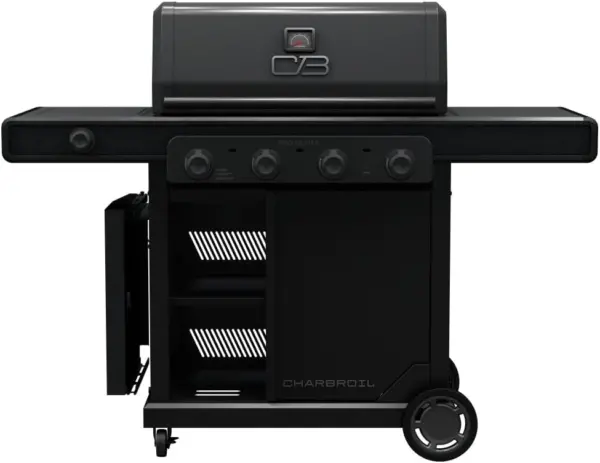
Char-Broil Pro Series 4-Burner
Key Features
- Weight: 178.2 lb
- Main burners: 4 plus side burner
- Cooking system: Infrared (Amplifire)
- Cooking surface: 802.9 square inches
- Price: Premium
At 802.9 square inches, the cooking surface here is more than five times the size of the 140-square-inch portables in this guide, and that gap is most of the reason it takes the top spot. Char-Broil’s Amplifire system puts a perforated radiant emitter between the burners and the grates, so drippings hit hot metal and vaporize instead of feeding a flame. We cooked burgers and strip steaks across the whole surface for a group and got the same browning at the front rail as at the back, with no flare-up to chase.
What settles it is the flexibility built around that emitter: four main burners, a side burner for a pot of beans, and a griddle insert in the box for bacon and pancakes on a Sunday. Most infrared grills are specialists. This one is set up to be the only grill you own, and the enclosed cabinet — tank hidden, shelf out of the rain — is part of that pitch.
The costs are physical and financial. At 178.2 pounds and 61.4 inches wide it is a two-person build and a permanent patio address, so measure the space before you order and buy the cover with it. It is also the most expensive grill here, a margin that buys surface area and a cabinet rather than more heat.
The burner carries a ten-year warranty and the firebox three, which is worth more on an infrared grill than on a standard one: the emitter is the part that matters most, and long coverage on it is real money set aside.
Pros
- Largest cooking surface in this guide
- Radiant emitter all but eliminates flare-ups
- Side burner and included griddle insert
- Ten-year burner warranty backs the key part
Cons
- Heavy enough to demand two people
- Most expensive pick in this set
Our pick for full-size infrared cooking: even searing across a huge surface, no flare-ups to chase, and a ten-year warranty on the burner itself.
Best for Steak Searing
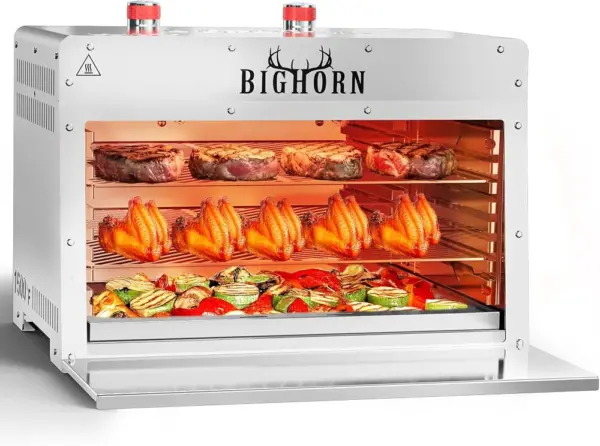
BIG HORN 1500°F Infrared
Key Features
- Max heat: 1500°F
- Dimensions: 21.4 x 21.2 x 14.1 inches
- Burner type: 2 top-down infrared
- Heating power: 19,000 BTU
- Price: Midrange
Restaurant salamanders cook from above, and BIG HORN copied the idea: two infrared burners sit over the grate and fire downward at up to 1500°F, so the surface of a steak crusts over without a flame ever touching it. It is the best pure searing tool in this roundup and the most entertaining thing to cook on — a one-inch ribeye is a matter of minutes a side, and you spend most of that deciding when to pull it.
Nineteen thousand BTU across two burners is not much next to a four-burner cabinet grill, and it does not need to be, because the design concentrates heat instead of spreading it. The seven-position rack gives you more usable zones than the footprint suggests, and the chamber is roomy enough for a cast-iron pan when you want to finish something in butter.
What it will not do is a cookout. Twenty-one inches of chamber is a few steaks or a couple of chops, and the burners are more or less on and blazing or off, with not much middle ground for a beer-can chicken. The parts lift out for cleaning and a dishwasher handles the worst of it, though a fatty session leaves the grate wanting a scrub first. A pizza stone comes in the box, which is a nicer surprise than it sounds.
Pros
- Top-down infrared produces a steakhouse crust
- Comes up to searing heat in minutes
- Small enough for a balcony or a tailgate
- Strong value for a dedicated sear station
Cons
- Cooks a few steaks at a time, not a party
- One-year warranty is short for this heat
Steak is the reason to buy the BIG HORN: no other grill here sears like a restaurant broiler, and none asks so little space to do it.
Best for Rv and Camping
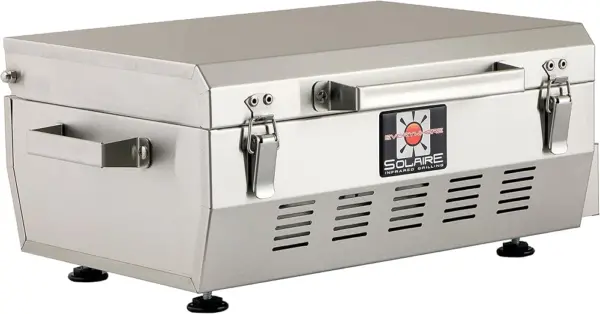
Solaire Everywhere Portable
Key Features
- Weight: 15 lb
- Burner type: 1 ceramic infrared
- Heating power: 12,000 BTU
- Cooking surface: 140 square inches
- Price: Premium
Fifteen pounds, 8.25 inches with the hood down, a handle on each side: the Everywhere is built to disappear into a camper compartment or the back of an SUV, and that is the reason it is here. Under the V-shaped grate sits a ceramic infrared burner that actually glows rather than a perforated plate laid over a standard burner, and the V pattern channels drippings away from the heat instead of letting them catch.
It sears like a much bigger grill and gets there after a few minutes of preheat. The catch is that it only knows how to be hot: even the low end of the dial is aggressive, so thin pork chops and bone-in chicken need attention and a quick hand. We treat it as a steak, burger, and vegetable-charring tool and cook the gentle stuff somewhere else.
The 140 square inches flatters it too — the genuinely hot zone is the middle of the grate, so plan on two good-sized steaks at a time rather than six burgers that all behave the same. What the money buys is stainless construction, push-button ignition, and an accessory line that includes a tripod, a stand, and a tank adapter, so the same grill can sit on a picnic table or hang off a rail.
Pros
- Real ceramic infrared burner, not a diffuser plate
- Fifteen pounds with handles for packing
- Sears hard for its size and heats fast
- Stainless build with one-button ignition
Cons
- Premium price for 140 square inches
For RV, tailgate, and small-space cooking, the Everywhere packs real infrared searing into fifteen pounds and a few minutes of preheat.
Best for Roasts and Turkeys
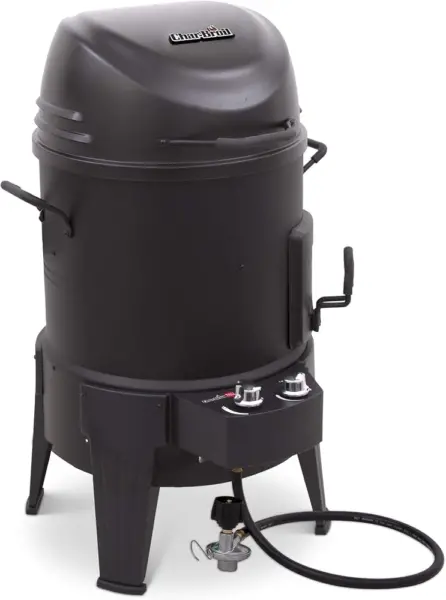
Char-Broil The Big Easy 3-in-1
Key Features
- Fuel: Propane
- Weight: 22.7 lb
- Grill grate: 180 square inches
- Roasting capacity: Fits a 21-pound turkey
- Price: Budget
The basket swallows a 21-pound turkey, the burner does its work with infrared heat and no oil at all, and the bird comes out with skin that crackles like fried and meat that stays wet — the closest thing to a fried turkey without a vat of peanut oil on the driveway. That is the job this odd upright cabinet was built for, and nothing else in this guide comes close at it.
It grills as well, over a 180-square-inch TRU-Infrared grate that handles burgers and steaks without a flare-up, and the whole thing weighs 22.7 pounds, so it moves and stores more easily than any cabinet grill here. Rotary ignition lights it without a fight.
Where it gives ground is control at the bottom of the dial. The lowest setting still runs hot, which makes its smoking more hot-smoke than low-and-slow; if you want to hold a brisket at 225°F overnight, this is not the cooker for it. As a roaster that also handles a quick round of burgers, it has no equal here.
Pros
- Roasts a 21-pound turkey without oil
- Infrared grate grills without flare-ups
- Light enough to move and store
- Outstanding value for a 3-in-1 cooker
Cons
- Small 180-square-inch grate limits burger duty
The Big Easy is the holiday-bird cooker we reach for: nothing here roasts like it, and it turns out burgers without a single flare-up.
How We Tested the Best Infrared Grills
We started by pulling every infrared grill we could find from brands with a real parts and service record, then filtered by format — full-size cabinet versus portable tabletop — along with burner layout, cooking surface, and price. Anything with a thin stamped emitter or a spotty warranty network came off the list, which left eight grills.
Assembly came first, stopwatch running, one person with a socket set. We counted the moments we actually needed a second set of hands and noted which hoods, side shelves, and cabinet doors needed shimming to sit square. For heat, we logged grate temperatures with an infrared thermometer every few minutes through preheat, then again right after lifting the lid to see how fast each grill climbed back toward its set point.
Then we cooked: weeknight burgers, thick ribeyes for a sear, salmon, corn, and a lot of vegetables. We paid attention to whether fat flared or drained away, whether the front of the grate ran noticeably cooler than the back, and how the control knobs behaved at low settings, where most grills are fussiest. The portables got folded, carried one-handed, and set on uneven picnic tables and a tailgate spread.
Durability ran the whole eight months — these sat outside uncovered through rain and a few frosty nights. At the end we pulled the burners and grease trays to check for rust and tested whether hinges, shelves, and cabinet doors still felt tight. Value was the final filter: what came in the box, and what we’d have to buy separately to actually use the thing.
How to Choose an Infrared Grill
Infrared grills all promise a hotter, flare-up-free sear, but where the burner sits and how low the dial goes decide what you can actually cook on one.
Where the Burner Sits
Two designs carry the infrared label, and they cook differently. The common one is a perforated radiant emitter mounted between the burners and the grate — Char-Broil’s Amplifire and TRU-Infrared both work this way — which heats the grate directly and turns drippings into smoke rather than flame. The other is a top-down burner in the lid, the BIG HORN’s approach, that blasts the surface of the food like a steakhouse salamander.
Below-grate suits general grilling; top-down is a searing specialist and little else. Watch for listings that call a plain diffuser plate over a standard burner infrared — a real emitter is the part that glows.
How Low Will the Dial Go
The catch with infrared is control at the bottom, not power at the top. These burners are built to run hot, and on plenty of models the lowest setting is still too hot for chicken quarters or a gentle roast. If you mostly sear steaks and burgers, that is a feature rather than a flaw.
If you want a cooler side of the grill, look for more than one burner with independent zones. The Pro Series gives you four plus a side burner, so you can run one half hard and leave the other low or off. A single-burner portable gives you one temperature: hot.
Cooking Area, Weight, and Where It Lives
Cooking area is the number we compare first and think about least after a month, but weight and footprint you live with every time you move the grill. Read the figure carefully: some listings fold the warming rack into it, and 140 square inches of actual grate is a two-steak surface, not a party.
For scale, 140 to 200 square inches covers two to four people and fits a balcony or a camper compartment; 800 square inches feeds a crowd and asks for two people at assembly, a permanent spot, and a cover. Infrared emitters do not like a winter of wet weather, and a cover costs far less than a replacement burner.
Fuel, Rules, and Running Cost
Propane supplies the heat infrared needs. A portable runs happily on a small cylinder, while a cabinet grill wants a 20-pound tank and somewhere to chain it. Before you order, check the rules for where the grill will live: many leases and local fire codes restrict open-flame cooking on balconies and decks in multi-unit buildings, and no infrared grill is exempt.
Electricity is the usual workaround, but you give up the high heat that makes infrared worth choosing in the first place.
Cleanup and Care
Anything that touches food should lift out easily, and a removable drip tray or a closed cabinet saves your patio. Grease on an infrared emitter is the real enemy — it bakes on, and a clogged emitter leaves a hot spot that never evens out.
Scrape the grate while it is still hot, empty the tray every few cooks, and cover the grill between uses. It is the cheapest maintenance you will ever do.
Frequently Asked Questions
Can you use an infrared grill on a balcony?
Check the rules before the grill. Many leases and local fire codes bar propane cooking on balconies and decks in multi-unit buildings, and a landlord’s ban applies regardless of how safe the grill itself is.
If gas is out, an electric grill is the usual fallback, though you give up the high heat that infrared searing depends on. Keep any grill clear of vinyl siding, wooden railings, and anything overhead.
How long does a 20-pound propane tank last on an infrared grill?
A full 20-pound tank holds roughly 430,000 BTU, so do the arithmetic on the burners you will actually light. A 19,000 BTU two-burner sear station running flat out gets a bit over twenty hours from one tank.
A four-burner cabinet grill burns several times faster and will want a spare. Searing is quick work, though, so most steak sessions use a small fraction of a tank.
Can an infrared grill be converted to natural gas?
Only with a manufacturer’s conversion kit, and only on models sold for it — the Solaire portables list natural-gas conversion among their accessories. The conversion changes the orifice size, so a generic hose and regulator will not do the job.
Run an unapproved conversion and you get a grill that either starves or overfires. If you want plumbed gas, buy a model the maker supports converting and have a licensed plumber make the connection.
Final Verdict
The Char-Broil Pro Series is the infrared grill we recommend to most households, because it is the only one here that pairs a real radiant emitter with the size and flexibility to be your only grill: four burners, a side burner, a griddle insert, and long coverage on the burner itself. If steak for two is the entire point, the BIG HORN sears better than anything else on this list. If the grill travels, the 15-pound Solaire is the one that fits in the camper.