This post contains affiliate links. We may earn a small commission when you buy through our links — at no extra cost to you.
Gluten-free pasta has a reputation problem, and it’s mostly deserved: noodles that fall apart in the boil, or hold together and arrive at the table with the texture of a wet sponge. The good ones have gotten genuinely good, and the difference usually comes down to the flour. A rice-and-corn blend, a brown rice pasta, and a chickpea-flour noodle cook like three different foods, and no amount of sauce hides that.
I cook gluten-free pasta constantly, and over three months our team boiled, sauced, and reheated 16 boxes to sort the keepers from the rest. We wanted to know whether it tastes like pasta or like the box it came in, whether it holds its shape when you stir it, and whether it’s still worth eating the next day.
One thing first-time buyers miss: a gluten-free claim on the front of the box isn’t the same as a third-party certification, and if you’re cooking for someone with celiac disease, that distinction matters more than any texture test. You’ll also pay more for the boxes worth eating, so value deserves a closer look than the price tag gets. The picks below are the ones we’d buy again with our own money.
Best for Everyday Spaghetti
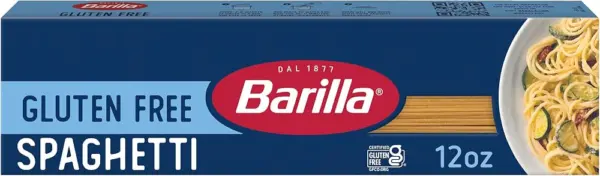
Barilla Gluten Free Spaghetti
Key Features
- Cook time: 10-11 minutes
- Base flour: Rice and corn blend
- Package size: 12 oz
- Certification: Certified gluten-free, dedicated line
- Price: Budget
Every pantry needs one gluten-free pasta that doesn’t require a plan, and Barilla’s spaghetti is the box we keep coming back to. Rice and corn together get closer to semolina than either flour manages alone: it twirls on a fork, takes a ragù without going slack, and doesn’t carry the beany aftertaste that sends people back to wheat. As the budget box of this roundup, it’s also the one we restock without thinking about it.
The details back that up. Barilla runs this pasta on a dedicated gluten-free line and certifies the box, which is the first thing a celiac household should check. The stated al dente window is 10 to 11 minutes, and we found it honest as long as you start tasting a minute before the timer instead of trusting it all the way.
What it doesn’t do is forgive. Rice-and-corn pasta keeps drinking water after it leaves the pot, so the distance between a good bite and a soft one is short, and a strand parked in a colander for two minutes will turn mealy on you. Stir it for the first thirty seconds, pull it early, and get it straight into the sauce, and the margin comes back. If you want a shape that survives a baking dish, the 365 penne is the sturdier choice.
Pros
- Tastes like semolina, no aftertaste
- Budget box of this roundup
- Certified, made on a dedicated line
- 10-11 minute cook time it keeps
Cons
- Clumps and breaks apart when reheated
The box we buy two at a time: it’s the least expensive pasta here, and it tastes close enough to regular spaghetti that nobody at the table asks.
Best for Baked Dishes
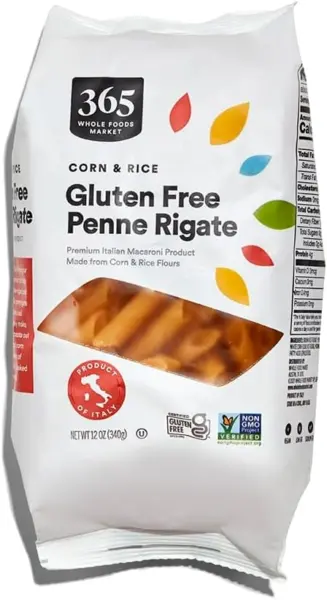
365 Corn & Rice Penne Rigate
Key Features
- Shape: Penne rigate
- Base flour: Corn and rice flour
- Package size: 12 oz
- Certification: Certified gluten-free, Non-GMO
Gluten-free pasta usually fails on the second day. The tubes clump in the container and then collapse the moment they hit heat again. Penne rigate is the shape that fights this best, and the 365 version is the one here that wins: hollow, ridged, and dried firm, it comes out of the microwave still separate and still chewy.
That’s why it’s our pick for anything headed into the oven or into a lunch bag. The ridges grab sauce, the thick walls hold their bite under a layer of mozzarella, and the flavor is neutral enough to disappear into whatever you’re building. It eats more like wheat pasta than most rice-and-corn shapes do, with a slight chew and no gritty finish. It also comes as a single 12-ounce box, so trying it costs you one dinner rather than a six-pack commitment.
Pros
- Holds its shape through reheating
- Chewy, wheat-like bite
- Ridged tubes hold sauce well
Cons
- Takes longer to boil than the label implies
Our choice for baked dishes and next-day lunches: it keeps its shape through the oven and the microwave, where most gluten-free pasta gives up.
Best for Soup and Casseroles
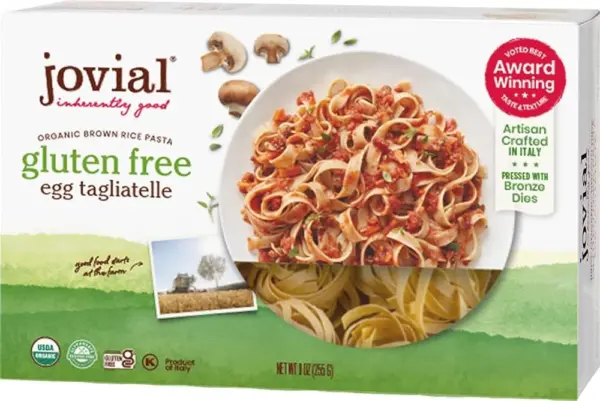
Jovial Brown Rice Egg Tagliatelle
Key Features
- Origin: Made in Italy
- Base flour: Whole-grain brown rice
- Package size: 9 oz
- Certification: Certified gluten-free, under 10 ppm
There’s a hole in the gluten-free aisle where egg noodles should be, and Jovial fills it. This is a wide tagliatelle made in Italy from whole-grain brown rice, pressed through bronze dies and slow-dried, in a box certified gluten-free at under 10 parts per million.
It earns its place in the dishes other shapes ruin: chicken and noodles, beef stroganoff, a tuna casserole, a baked noodle pudding. The ribbons hold together in the oven and don’t dissolve in broth, and the brown rice gives them a mild, slightly nutty flavor that sits behind a sauce instead of arguing with it. It’s the one pasta here with a genuinely different job rather than a different texture.
We were struck by how much the shape does on its own. A casserole built on these ribbons eats like the version you grew up with, in a way that penne or spaghetti standing in for noodles never quite manages. It’s a narrow job, and it’s the only pick here that does it.
Pros
- Holds together in soup and casseroles
- Real egg-noodle texture, not a stand-in
- Certified gluten-free under 10 ppm
Cons
- Small 9-ounce box at a specialty price
The one egg tagliatelle here: it survives soup, stroganoff, and a bake without turning gummy, and no other pick does that job.
Best for Company Dinners
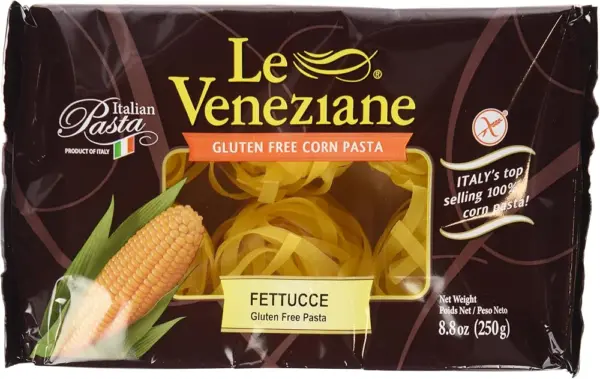
Le Veneziane Italian Fettucce
Key Features
- Origin: Product of Italy
- Base flour: 100% Italian corn
- Package size: Four 8.8-ounce packages
- Certification: Gluten-free, no dyes
- Price: Premium
The highest-rated box in this roundup is also the plainest: made in Italy from 100% corn, pressed into a wide fettucce, with no dyes. Corn pasta has a firm, faintly springy bite that rice blends spend a lot of effort imitating, and this is the version we hand to guests without a disclaimer.
It behaves, too. The ribbons stay solid under a heavy sauce, hold their shape as leftovers, and finish with a clean, slightly sweet corn flavor rather than the chalky finish that gives gluten-free pasta away. It’s the box that gets the most suspicious reaction at the table, the one where someone turns the package over to check.
We use it where a wide noodle earns its keep: mushrooms and cream, a corn pasta bake, butter and parmesan with black pepper. It’s a plate you set down rather than a bowl you stir together, and it’s the pick when dinner is the occasion.
Pros
- Firm, springy corn bite
- Stays solid in sauce and as leftovers
- No dyes, just Italian corn
Cons
- Sold only as a four-pack
The box that convinces skeptical guests: a firm corn fettucce with a clean bite, and the highest rating of anything here.
Best for High-Protein Meals
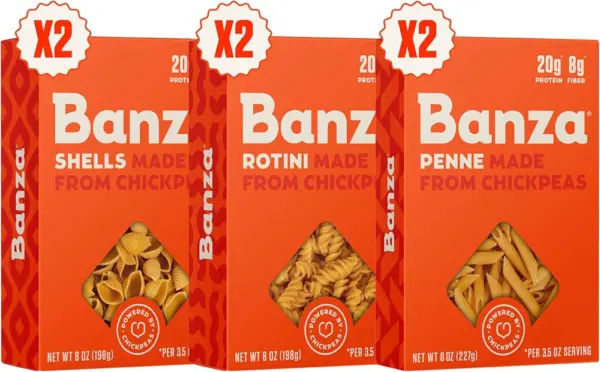
Banza Chickpea Pasta Variety Pack
Key Features
- Diet: Vegan, plant-based
- Protein: 20 grams per serving
- Base flour: Chickpea
- Package size: Six 8-ounce boxes
- Price: Midrange
Twenty grams of protein per serving, three times the fiber of wheat pasta, and half the net carbs — Banza leads with numbers, and for once they describe something real. Chickpea flour makes a denser, more savory pasta than a rice blend, and it’s the only pick here that turns a bowl of noodles into a genuine protein source rather than a starch delivery system.
The cost is in the pot. Chickpea pasta goes from firm to chalky faster than anything else here, and it keeps softening in a hot sauce, so pull it early and keep the sauce loose. Strong flavors carry it: sausage and broccoli rabe, garlic and oil with chili, a spicy tomato. Cream sauces let the graininess show through. It does hold up in a casserole or a soup, where the other ingredients give it somewhere to hide.
Where it earns a place in our kitchen is not the Sunday spaghetti dinner but the container we take to work on Monday, the meal where we actually want the protein. The six boxes are a variety pack, so you find out which shape you like before committing to a case. If you’re feeding kids who want the pasta they remember, the rice-and-corn boxes do that job better; if you’re tracking what’s on the plate, the numbers make Banza worth the fussier cooking.
Pros
- 20 grams of protein per serving
- Triple the fiber, half the net carbs
- Plant-based and vegan
Cons
- Turns mushy fast if you overcook it
- Eight-ounce boxes go quickly
Buy it for the macros, not for mimicry: the most protein and fiber here, the fussiest pot, and a heavy sauce covers the difference.
How We Cooked, Sauced, and Reheated 16 Boxes of Gluten-Free Pasta
We built the shortlist from labels before reviews. Candidates were sorted by what the flour actually is — rice-and-corn blends, straight brown rice, and legume flours — because that one choice drives how a box behaves in the pot. From there we checked for third-party gluten-free certification, compared price per dry ounce, and asked whether the shape was something we’d actually cook on a weeknight. Sixteen boxes made the cut and stayed in our kitchens for three months.
Each box got cooked at least twice: once plain, drained and tossed with olive oil so we could taste the noodle on its own, and once under a heavy sauce to see whether the sauce clung to the pasta or slid straight off into the bowl. We stirred the pot the way an impatient person does, watched for cloudy, starchy water, and pulled a noodle at eight, ten, and twelve minutes, since gluten-free pasta has a habit of going from chalky to mush in about sixty seconds.
Then came the part that separates the good boxes from the rest. We cooled what was left, refrigerated it overnight, and reheated it for lunch the next day, noting which ones loosened back up in a pan and which fused into a single noodle-shaped brick. Alongside that we read every ingredient panel for whole grain versus refined flour and fiber content, and weighed how many people a box actually serves against what it costs.
How to Choose Gluten-Free Pasta
The flour on the ingredient line decides how a gluten-free pasta cooks and holds together, so choose by blend before you choose by shape.
Start With the Flour Blend
Rice-and-corn blends are the closest everyday match for semolina: neutral flavor, familiar chew, and the widest margin for error. Corn-only pasta such as Le Veneziane’s fettucce runs firmer and slightly sweeter, which suits a dressed plate better than a quick pan sauce. Brown rice brings a mild nuttiness and good structure, and legume flours like Banza’s chickpea deliver protein and fiber at the cost of a denser, chalkier bite.
We keep one rice-and-corn box for weeknights and one specialty box for the dish that needs it. Buying three legume pastas before you know whether you like the taste is how a pantry fills with boxes nobody finishes.
Cook to Taste, Not to the Box
Every gluten-free pasta here keeps absorbing water after it leaves the pot, and it keeps going in a hot sauce, so the printed time is a starting point rather than a schedule. Taste a minute or two before the timer, stir for the first thirty seconds so the pieces don’t weld together, and drain it straight into the sauce instead of into a colander where it sits and steams.
For a baked dish, stop a full two minutes short. The oven finishes the job, and pasta that was already tender going in comes out as porridge.
Match the Shape to the Dish You Actually Cook
Long shapes need a sauce that clings; hollow shapes are for bakes, salads, and containers. Wide ribbons belong in soup and stroganoff, where a thin strand slips off the spoon. Two shapes cover almost everything a household cooks: one long and one hollow.
That’s the practical argument for the 365 penne if you cook once and eat twice, and for Barilla’s spaghetti if dinner is a bowl and a fork. Buying five shapes is how you end up with three half-used boxes and nothing for Tuesday.
Read the Certification for a Celiac Kitchen
Gluten-free on the front of a box is a claim; certified gluten-free with a dedicated production line is what to look for when someone in the house has celiac disease. Barilla runs this pasta on a dedicated gluten-free line, and Jovial certifies its tagliatelle to under 10 parts per million.
If the package says neither, treat it as pasta for a sensitivity rather than for celiac disease, and check the manufacturer’s facility statement before it becomes a staple in your house.
Compare Cost by the Ounce, Not the Box
Boxes here run from 8 ounces to 12, and two of the picks arrive as multipacks, so the number on the shelf tells you very little. Divide the price by the ounces to see what a serving costs. A four-pack of fettucce that looks expensive can land near a single specialty box, and a budget box that holds half the weight isn’t the bargain it appears to be.
Serving size is worth doing the math on too: a standard portion of dry pasta is about 2 ounces, so the smaller boxes empty faster than the shape of the package suggests.
Frequently Asked Questions
Why does gluten-free pasta cost more than regular pasta?
Two reasons: gluten-free flours cost more than wheat, and the pasta usually has to run on a dedicated line to avoid cross-contact, which limits how much a plant can produce in a day. Box size stretches the gap further — several picks here are 8 or 9 ounces against a standard 16-ounce pound of wheat pasta. Divide the price by the ounces before you decide a box is expensive.
Can I cook gluten-free pasta in the same pot or colander as regular pasta?
Not if someone in the house has celiac disease. Wheat residue clings to a colander, a wooden spoon, and the water itself, and a quick rinse won’t clear it. Use a clean pot, fresh water, and a separate colander or a slotted spoon. If you’re cooking both, do the gluten-free batch first, in water that hasn’t had wheat in it.
How much dry gluten-free pasta is a serving?
About 2 ounces of dry pasta per person, which means a 12-ounce box serves six and an 8-ounce box serves four. That math is why the smaller specialty boxes empty so fast: a family of four eating a main-course bowl will finish one in a single dinner. Cook two boxes if pasta is the whole meal rather than a side.
Final Verdict
Barilla’s spaghetti is the box we point most people to. It’s the budget pick of the group, cooks predictably, and tastes close enough to wheat pasta that dinner doesn’t turn into a conversation about what’s missing.
If the pasta is headed for a baking dish or a lunch container, switch to the 365 penne, which keeps its shape where spaghetti gives out. And if what you actually miss is egg noodles, Jovial’s tagliatelle is the only pick here that fills that slot.