This post contains affiliate links. We may earn a small commission when you buy through our links — at no extra cost to you.
The first cup of the morning is a small ritual — the kettle, the grind, the smell filling the kitchen before you’re fully awake. Then you sip and it’s just fine: flat, thin, or bitter in a way no amount of milk rescues, and now you own a whole bag of it. Most coffee letdowns come down to two things the label rarely tells you — how recently it was roasted and whether those beans suit the way you actually brew. Get both right and the same scoop tastes alive on day one and still tastes alive three weeks later.
I’ve brewed at home for years, and the gap between a great bag and a dull one has less to do with price than you’d expect. Over the past four months my team and I worked through 18 brands, from supermarket staples to small-batch roasters, brewing each the way its label suggested and then a few ways it didn’t. The keepers all had a roast date you could actually read, and they still tasted like themselves a week after opening. What follows covers everyday drip, weekend pour-over, and a serious espresso habit alike.




Best for Everyday Medium Roast
Dunkin’ Original Blend Ground Coffee
Key Features
- Roast: Medium
- Format: Ground
- Canister size: 30 oz
- Price: Midrange
Pods are quicker, but the coffee that ends up in most of our mugs comes out of a canister, and that is the case for buying ground: a drip machine, a pour-over cone, and a cold brew jar all take the same coffee. You are choosing a flavor instead of a brewing system, and you are not locked into one appliance.
Dunkin’ Original Blend is the one we recommend to most kitchens. It carries the highest buyer rating in this set, and the cup backs that up: a rounded, mellow medium roast with no bitter edge and enough body that milk does not flatten it. It is the rare coffee that satisfies the black-coffee drinker and the cream-and-sugar drinker at the same table.
The 30-ounce canister is a real part of the appeal. It is a wide-mouth can with a lid that seals properly, so the last scoop still smells like coffee, and there is enough in it that a two-cup household is not reordering every other week. It also takes well to being brewed strong for iced coffee and cold brew, which is more than we can say for most supermarket ground.
What it is not is a dark roast or a bright light one, and that is the trade: medium is the compromise roast. A one-cup-a-day drinker will also find the can outlasts the coffee’s best weeks, and a smaller bag is the smarter buy at that pace.
Pros
- Highest buyer rating in this set
- Smooth medium roast with no bitter edge
- Works in drip, pour-over, or cold brew
- Resealable 30-ounce canister
Cons
- Medium roast only, no bold dark profile
- Large canister outpaces a one-cup household
We recommend it as the default: a smooth, forgiving medium roast that works in any brewer and comes in a canister that keeps it fresh.
Best for Dark Roast Pods
Peet’s Major Dickason’s K-Cup Pods
Key Features
- Bean: 100% Arabica
- Roast: Dark
- Pod count: 75
- Brewer compatibility: All Keurig K-Cup brewers
- Price: Midrange
Dark roast is where pods usually go wrong: thin, bitter, and burnt at the edges. Major Dickason’s is the exception in this set. It is full-bodied and rich, smooth enough that we drink it black, and it is the best dark-roast pod here by a clear margin. If you own a Keurig and want an actual cup of coffee rather than a convenient one, this is the box we point you to.
Seventy-five pods is a serious commitment, about two and a half months at a cup a day, so it suits a household that already knows it likes dark roast. Compatibility is the easy part: these are genuine K-Cup pods built for all Keurig K-Cup brewers, and the coffee is 100% Arabica. Keep the box somewhere cool and dark; sealed pods hold their flavor far better than a rolled-up bag of grounds.
Pros
- Bold dark roast that stays smooth
- Works in all Keurig K-Cup brewers
- 100% Arabica coffee in genuine K-Cup pods
Cons
- Large box to commit to before tasting
For a Keurig household that wants a dark roast with body and no bitter finish, this is the box we recommend.
Best for Espresso at Home
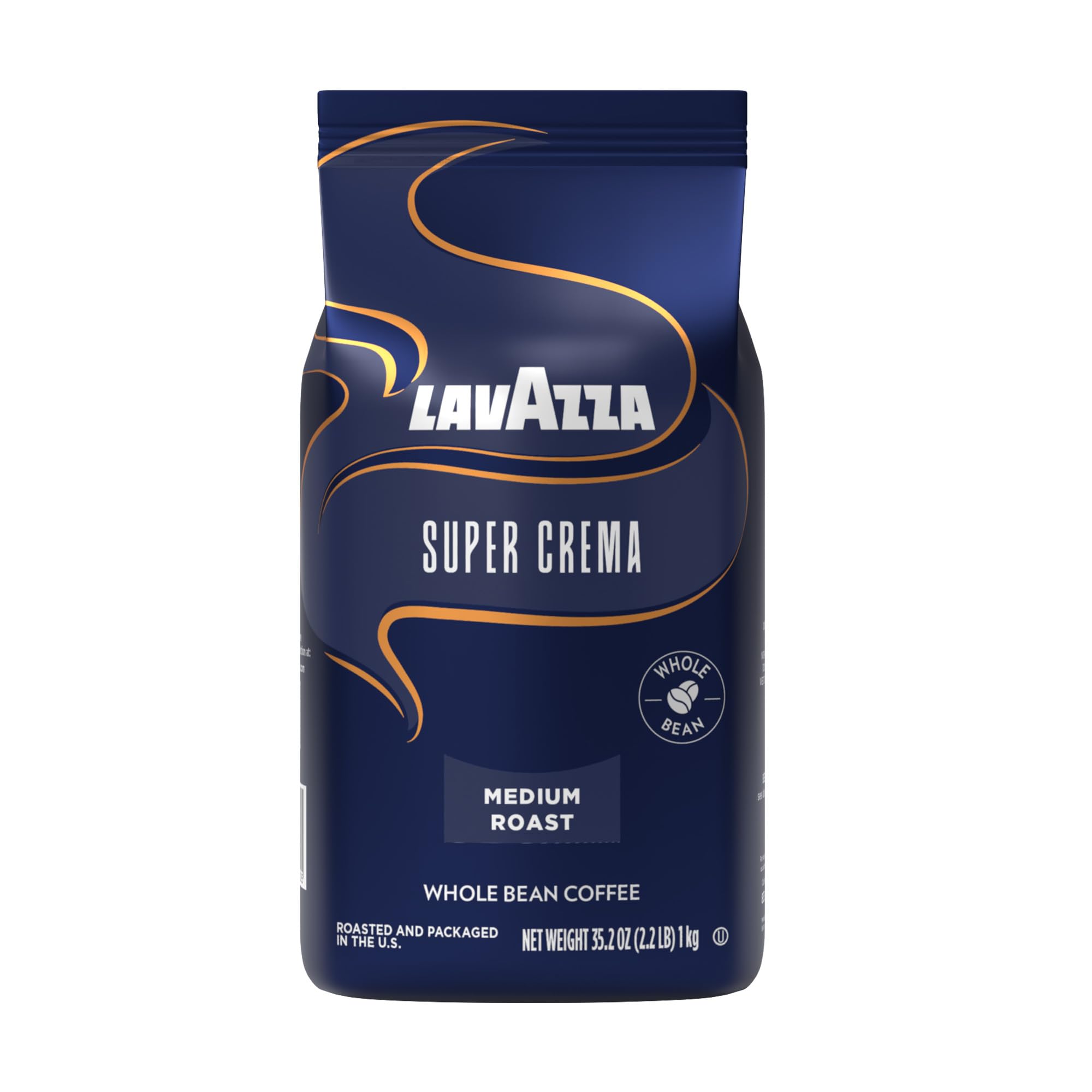
Lavazza Super Crema Whole Bean
Key Features
- Bean: Arabica and Robusta
- Roast: Medium espresso
- Bag weight: 2.2 lb
- Preparation: Espresso
- Price: Midrange
A 2.2-pound bag of whole beans is a lot of espresso, and that is the first thing to understand about this one: it is built for a machine with a portafilter, not a drip pot. Lavazza blends Arabica with Robusta here, and the Robusta is doing the visible work. The crema is thick and persistent, the kind that survives a milk drink instead of dissolving into it.
The roast is a medium espresso roast, which keeps the shot sweet rather than ashy, and the texture is the standout, creamy with very little harsh acidity. You need a grinder and you need to dial it in. This is not a bag that forgives a careless grind setting, but it rewards ten minutes of adjustment.
Our reservation is freshness. A bag this size outlasts most home setups, beans fade once the seal is broken, and plenty of bags arrive well past their best. Split it into smaller airtight containers the day it lands and keep it out of the light. It is the lowest-rated pick in this guide for exactly that reason. The coffee itself is excellent; the logistics are on you.
Pros
- Thick, persistent crema
- Creamy texture with low harsh acidity
- Big bag lowers the cost per shot
Cons
- Freshness varies from bag to bag
- Requires a grinder and espresso setup
The espresso pick: a big bag of Arabica and Robusta that pulls thick, sweet, low-bitterness shots, as long as you own a grinder and a plan for the bag.
Best for Budget Daily Cup
Maxwell House Original Ground Coffee
Key Features
- Roast: Original
- Format: Ground
- Canister size: 27.5 oz
- Price: Budget
This is the cheapest coffee in the guide by the ounce, and it does not taste like a punishment. Original Roast is smooth and mild with a rounded middle, and it holds together when you brew it strong. The usual failure of inexpensive coffee is a harsh, ashy cup once you add a scoop; that is not what happens here.
We keep it in the budget slot for a specific household, one that goes through a lot of coffee, takes it with milk or sugar, and is not looking for a tasting note. The 27.5-ounce canister seals well and the coffee stays drinkable to the bottom. Black-coffee drinkers who want character will find it flat, and that is the honest boundary rather than a defect.
Pros
- Lowest cost per ounce here
- Stays smooth when brewed strong
- Airtight 27.5-ounce canister
Cons
- Flat for black-coffee drinkers
The budget pick for households that drink a lot of coffee with milk or sugar: smooth, never harsh, and the lowest cost per ounce here.
Best for Mild Light Roast
Green Mountain Breakfast Blend K-Cup Pods
Key Features
- Roast: Light
- Pod count: 32
- Brewer compatibility: All Keurig K-Cup coffee makers
- Price: Midrange
If dark roast tastes burnt to you, start here. Breakfast Blend is the light roast of this group, clean and bright with a nutty middle and a silky finish, and it stays mild enough that a second and third cup do not leave you jittery. It is the pod we hand to people who insist they do not like coffee.
It is also more versatile than a light roast usually gets credit for. Brewed strong and poured over ice it keeps its flavor instead of going watery, which makes it the one pod here we would happily drink cold. The 32-count box is small enough to try without committing to three months of it, and that matters with a roast this mild.
The limit is intensity. Anyone after a bold, syrupy cup will find it thin, and it does not stand up to a heavy pour of milk. Treated as a morning blend for gentler palates, it does precisely what its name promises.
Pros
- Bright, nutty light roast
- Holds its flavor over ice
- 32-pod box suits a first trial
Cons
- Some pods may fail to register
Our pick for light-roast drinkers: bright, nutty, and mild enough to drink black all morning, in a box small enough to try.
Best for Travel and Desks
Nescafé Taster’s Choice House Blend
Key Features
- Pack: 2 jars, 7 ounces each
- Roast: Light-medium
- Yield: Up to 210 cups
- Format: Instant
- Price: Budget
One teaspoon per six ounces of water is the entire method, and that spoon is why this instant earns a place: you can make a weak afternoon cup and a strong first one from the same jar. Two seven-ounce jars make up to 210 cups when mixed as directed, which is a long stretch of coffee for the money.
The flavor is light-to-medium and genuinely smooth. The bitter, metallic edge people brace for with instant is not here, and it holds up under frothed milk. The glass jars seal tightly and the coffee stays loose in them rather than caking, which is more than we can say for the tubs we have tried.
What we miss is body. This is a thin cup next to anything brewed, and no amount of stirring changes that. As the coffee for a desk drawer, a hotel room, or the ten minutes before a commute, though, it is the best instant in this guide and it is not close.
Pros
- Smooth, without instant’s metallic edge
- Strength adjustable by the spoonful
- Up to 210 cups from two jars
Cons
- Thinner body than brewed coffee
The instant worth keeping: smooth, light-to-medium, adjustable by the spoonful, and two jars make up to 210 cups.
Best for Bulk Pod Buyers
McCafé Premium Roast K-Cup Pods

Eighty-four pods is roughly three months of one-cup mornings, which tells you exactly who this box suits: an office, a two-drinker household, or anyone who resents reordering. It is also the cheapest pod in this guide, and the difference per pod is big enough to notice across a box that size.
The coffee is the medium roast McCafé built its name on, smooth with a clean finish and a faint sweetness in the middle. It is a crowd coffee in the best sense: nobody at the table objects, and it takes milk without collapsing into it.
Strength is the variable. This is a mild pod, and brewed on a large cup setting it can come out watery. Dropping to a smaller cup size on the machine fixes most of that. If you want a punchier cup, the Peet’s pods in this guide are the better fit.
We keep it as the bulk option rather than the best-tasting pod here, and that is a real distinction rather than a knock. Buy it when volume and cost per cup matter more than character, and think about cupboard space first, because that box is a commitment.
Pros
- Lowest cost per pod in this set
- Smooth, familiar medium roast
- 84 pods per box
Cons
- Some pods may fail to brew
A smooth, crowd-pleasing medium roast at the lowest cost per pod here, and the box to buy when the machine runs all day.
Best for Dark Drip Coffee
Peet’s Major Dickason’s Ground Coffee

Key Features
- Roast: Dark
- Format: Ground
- Bag size: 18 oz
- Grind for: Drip and pour-over
- Price: Midrange
Dark roast and smooth usually pull in opposite directions. This bag manages both: full-bodied and dark, with a low, rounded bitterness instead of a burnt edge, and enough weight to stand up in a mug without milk. It is the smoothest dark roast on this page.
The grind is the detail that decides whether it works for you. Peet’s grinds this for drip and pour-over, and points espresso, French press, and cold brew buyers to the whole bean version instead. They are right to. Load this into an espresso basket and you get a slow, choked shot rather than a good one, no matter how carefully you dose it.
Freshness is the other thing to watch. The bag prints a roast date, which we appreciate, and it is the first thing to check when the coffee lands. A bag near the end of its window tastes flat no matter how good the roast is, so order from a seller that moves stock.
For a drip setup that wants a dark, smoky cup without the ash, this is the bag we recommend. It is also the smallest ground option here, which suits a household that prefers to buy fresh twice rather than keep a big canister going stale.
Pros
- Dark roast without a burnt edge
- Grind set for drip and pour-over
- Roast date printed on the bag
Cons
- Not ground for espresso or French press
Our dark-roast pick for drip and pour-over: full-bodied and smooth, ground for a cone rather than an espresso basket.
How We Chose and Tested the Best Coffee Brands
We started with a list of roughly 60 brands — grocery-aisle mainstays, subscription roasters, and regional outfits — and cut it down by reading the bags. Did they print a roast date or only a best-by? Was there a one-way valve? Could you buy the same coffee whole bean and pre-ground, and in a grind that wouldn’t choke an espresso machine? That left 18 brands, which we bought ourselves in the size we’d buy for our own kitchens.
Every brand got brewed at least three ways: a standard drip machine on a weekday morning before work, a pour-over on a slower Sunday, and either espresso or a week’s batch of cold brew depending on the roast. We smelled each bag the moment it was opened and again right after grinding, then drank the coffee black and hot, and once more after it had sat for ten minutes — bitterness and sourness show up late. To judge strength, we added the same splash of milk to every cup and noted which ones went thin. Freshness got its own check: we tasted each bag again on day seven and day fourteen, stored the way a normal person stores coffee, rolled shut on a pantry shelf, and marked which ones faded first.
Value came down to arithmetic — price per ounce against how many cups we actually wanted to drink — plus whether the cheap bags tasted cheap. The brands that survived were the ones we refilled before the testing period ended.
How to Choose a Coffee Brand
The name on the bag matters less than the shape of the coffee inside it, so settle the format first and the brand shortlist gets much shorter.
Pick the format before the brand
Pods are the least effort and the least flexible, because they fit one kind of machine. Ground coffee works in a drip brewer, a pour-over cone, or a cold brew jar, which is why the widest range of brands competes there. Whole beans need a grinder and reward it with a fresher cup. Instant needs a kettle and nothing else.
The trap is grind compatibility. An espresso machine wants a fine, espresso-specific grind, and a bag ground for drip will choke a portafilter. If there is an espresso machine in your kitchen, buy whole bean or coffee labeled for espresso. Peet’s is unusually clear about this on its ground bags, pointing espresso, cold brew, and French press buyers toward the whole bean version.
Match the roast to how you take it
Light roasts are bright and clean, easy to drink black and easy to lose under milk. Medium is the all-purpose middle, which is why most of the picks here sit there, and it is the safest choice if you take milk and sugar. Dark roasts hold their own against ice and dairy, and a good one stays smooth instead of turning ashy.
Be honest about the cup you actually drink. A dark roast sipped black at six in the morning and a light roast poured over ice at noon are two different products, and one bag rarely does both well.
Freshness is what the listing can’t tell you
Coffee is at its best in the weeks after roasting, and a product page rarely tells you when that was. A roast date printed on the bag is the most useful thing to look for, and Peet’s prints one on its ground coffee. Sealed canisters and valve bags help, but neither stops coffee fading once it is opened.
Buy at a pace you can drink. A 30-ounce canister is convenient for a two-cup household and a mistake for a one-cup drinker, who ends up brewing the last of it long after it peaked. Split large bags into smaller airtight containers and keep them cool and dark.
Do the pod math
A box of pods is a subscription paid upfront. Eighty-four pods is roughly twelve weeks at one cup a day, seventy-five is about eleven, and a 32-count box is under five, which is why the small box is the sensible way to try a brand. Cost per pod varies a lot across this set, and the cheapest box is not automatically the cheapest cup.
Run that arithmetic before committing to bulk, and start with the smallest box a brand sells if you have not brewed it before. Pods also take up cupboard space, and a three-month supply is a three-month reminder if you do not like them.
Frequently Asked Questions
Does dark roast coffee have more caffeine than light roast?
Not meaningfully. Roast level changes flavor far more than it changes caffeine, and a dark roast can lose a little of it in the longer roast. What makes a cup feel strong is the dose and the brew ratio, which with pods is fixed and with ground coffee is set by how many scoops you use.
So if you want more punch from a pod, choose a bolder blend rather than assuming a darker one will deliver it, and if you brew your own, add coffee rather than chasing a roast.
Why does my Keurig sometimes fail to brew a pod?
It is usually the pod seating rather than the machine. If a pod is not fully punctured or sits slightly off, water finds a path around it and you get a weak, slow, or stalled cup.
Try a second pod from the same box before you change anything on the machine. If several pods from one box misbehave while a different box brews normally, treat it as a batch problem and ask the seller for a replacement rather than replacing the brewer.
Will K-Cup pods work in a Nespresso machine?
No. K-Cup pods are built for Keurig brewers and Nespresso machines take their own capsules. The two systems are not interchangeable, and a pod from one will not fit a machine from the other.
Check which system your brewer uses before ordering a bulk box. Buying three months of the wrong capsule is an expensive way to learn the difference, and the format is printed on the pod and on the box.
Final Verdict
Most people should buy ground coffee, and most of those should buy Dunkin’ Original Blend. It is the highest-rated coffee here, the cup is smooth enough to satisfy a table of mixed preferences, and the 30-ounce canister seals well enough to keep it fresh between scoops.
If your mornings run on a Keurig, take the Peet’s Major Dickason’s pods instead: the same dark-roast satisfaction with none of the brewing. And if there is an espresso machine on the counter, Lavazza’s Super Crema is the only bag here built for it.