This post contains affiliate links. We may earn a small commission when you buy through our links — at no extra cost to you.
Coffee pod machines promise instant convenience, but the real test is how they hold up after months of daily use. Many buyers discover that a low price often comes with short-lived components – cracks in plastic tanks, heating elements that scale up, or pumps that fail entirely. This guide focuses on the models that reliably deliver a hot cup without becoming a recurring expense.
Beyond reliability, choosing between Keurig and Nespresso boils down to whether you prioritize pod variety and speed or espresso-quality crema. We highlight the features that actually affect your morning routine – from reservoir size and brew temperature consistency to the trade-offs in iced coffee settings. The right machine exists once you know what to look for.



Best for Versatile Coffee Drinkers
Keurig K-Elite
Key Features
- Brew Sizes: 4,6,8,10,12 oz
- Reservoir: 75 oz removable
- Pod Compatibility: K-Cup
- Specialty Features: Strong brew, iced, temp control
- Price: $$
Five brew sizes, iced coffee capability, and on-demand hot water make this the single brewer that covers a wide range of coffee routines. Temperature control and a strong brew setting let you dial in strength and heat, so light roasts get the same treatment as dark ones. The 75-ounce removable reservoir keeps refills minimal, and the machine heats up in under a minute.
The plastic tank and pump assembly is built for average home use, not heavy commercial settings. Some units have been known to stop brewing within months, so this machine favors buyers who prioritize feature density over long-term durability. For a household that wants iced coffee in summer, hot water for tea, and a full range of cup sizes, the K-Elite bundles convenience that few competitors match at this price tier.
Pros
- Consistent brew quality across all cup sizes
- Quick heat-up and brewing – ready in under a minute
- Strong brew and temperature controls let you customize each cup
Cons
- Some units may stop brewing after a few months of use
- Plastic components can feel flimsy and may not withstand daily heavy use
This is for the coffee drinker who wants one machine to brew a travel mug, an iced latte, and a cup of tea – versatility is the priority, and the tradeoff is a shorter expected lifespan.
Best for Espresso Lovers
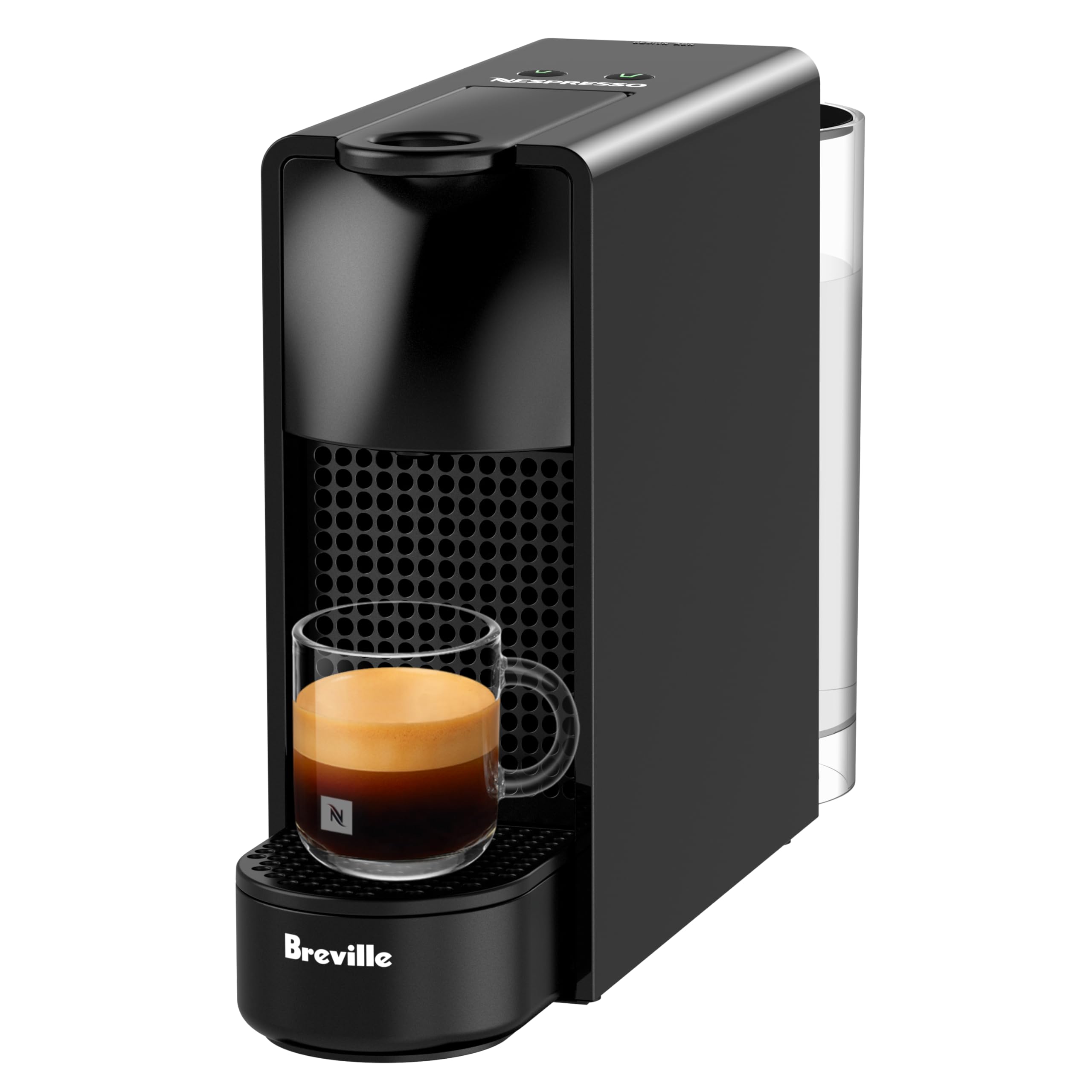
Nespresso Essenza Mini
Key Features
- Brew Sizes: Espresso, Lungo
- Pod Compatibility: Nespresso Original
- Price: $$$
The Essenza Mini brews consistent espresso and lungo in about 25 seconds from a machine that’s just 4.3 inches wide – ideal for espresso purists with tight counter space. However, it’s limited to those two sizes only, so it won’t produce a standard cup of coffee. Proprietary Nespresso pods also carry a higher per-cup cost compared to K-Cups, and coffee temperature may run slightly cooler than some prefer.
Pros
- Consistent espresso quality with rich crema shot after shot
- Ultra-compact footprint (4.3" wide) saves valuable counter space
- Two-button operation makes it the simplest pod machine to use daily
Cons
- Only brews espresso and lungo – not suitable for standard coffee drinkers
- Proprietary Nespresso pods cost more per cup than K-Cup alternatives
For espresso lovers who value shot quality and counter space over cup variety and pod cost, the Essenza Mini delivers exactly what it promises.
Best for Iced Coffee Lovers
Keurig K-Iced
Key Features
- Brew Sizes: 8,10,12 oz
- Reservoir: 42 oz removable
- Pod Compatibility: K-Cup
- Specialty Features: Iced setting
- Price: $$
The Keurig K-Iced is the only pod machine that automatically adjusts brew temperature for iced coffee, producing a concentrated cup that holds up to melting ice. Unlike the top-pick K-Elite which offers broader versatility, the K-Iced focuses on one task. This makes it ideal for occasional iced coffee drinkers who want a dedicated machine, but some units may develop issues after a few months – best for light use rather than daily heavy brewing.
Pros
- Delivers intense iced coffee that stays flavorful with ice.
- Compact footprint saves counter space.
Cons
- Hot coffee brews at a lower temperature – may come out lukewarm for those who prefer piping hot drinks.
- Some units may develop issues after a few months – better suited for occasional rather than daily use.
Produces top-tier iced coffee, but durability is geared toward light, occasional use rather than daily brewing.
Best for Households
Hamilton Beach FlexBrew Trio
Key Features
- Brew Sizes: 12-cup carafe, 6-12 oz single
- Reservoir: 60 oz
- Pod Compatibility: K-Cup & grounds
- Specialty Features: Programmable, bold brew
- Price: $$
Offers three brewing modes — 12-cup carafe, single-serve with K-Cups or your own grounds — all in one countertop footprint. Brew speed is slower than dedicated single-serve machines, and the single-serve side may stop working after about six months. Temperature consistency also varies between brews.
Best for households that need both pot and pod flexibility on a budget and aren’t in a rush for their morning coffee. The gold-tone filter produces rich flavor from ground coffee, and the programmable timer adds convenience. Just be aware that the single-serve side has known longevity limits, so this suits moderate daily use rather than heavy office duty.
Pros
- Rich coffee flavor from the gold-tone filter and both brew sides.
- Simple operation with intuitive controls and programmable timer.
- Mid-range price for a dual-machine that handles pods and grounds.
Cons
- Carafe side brews noticeably slower than dedicated drip machines — expect 10+ minutes for a full pot.
- Coffee temperature can be lukewarm, especially with the single-serve side — pre-warming the cup helps.
A sensible pick for budget-conscious families who want both carafe and K-Cup flexibility — just factor in the slower brew and possible longevity issues.
Best for Single-Serve Fans
Ninja PB051
Key Features
- Brew Sizes: 6–24 oz (grounds), pods: 8,10,12 oz
- Reservoir: 56 oz removable
- Pod Compatibility: K-Cup & grounds
- Specialty Features: Frother, over ice, specialty
- Price: $$
The Ninja PB051 delivers rich, hot coffee from both K-Cup pods and your own grounds, with four brew styles that include iced and specialty options.
The built-in frother only cold-foams, so warm lattes require pre-heated milk. Some units have shown durability concerns within the first year, making this best suited for lighter daily use rather than heavy household demand.
Pros
- Rich, hot coffee with multiple brew styles including iced and specialty.
- Accepts both K-Cup pods and ground coffee for flexible brewing.
Cons
- Frother only cold-foams – warm lattes need pre-heated milk.
- Brew function can cease in some units within the first year.
A feature-packed single-serve machine for those who enjoy variety in their daily cup, provided they’re comfortable with a cold frother and moderate longevity.
Best for Singles, Budget
Keurig K-Classic

Key Features
- Brew Sizes: 6,8,10 oz
- Reservoir: 48 oz removable
- Pod Compatibility: K-Cup
- Price: $$
This entry-level Keurig offers three brew sizes and a large 48-oz reservoir at a budget-friendly price. Setup and operation are simple, and coffee is ready quickly. However, it lacks temperature control, iced settings, and strong brew. Some units may stop working within months, so it’s best treated as a short-term solution for singles or small households.
Pros
- Extremely easy to use and set up – intuitive operation.
- Fast brewing speed – ready in under a minute.
Cons
- Some units may stop working within months – treat as a short-term purchase.
Best for budget-focused singles or small households who plan to replace the machine within a year.
Best for Coffee Enthusiasts
Nespresso Vertuo (Breville)

Key Features
- Brew Sizes: 5,8 oz coffee, espresso
- Reservoir: 40 oz
- Pod Compatibility: Nespresso Vertuo
- Specialty Features: Barcoded pods, crema
- Price: $$$
Barcoded Vertuo capsules produce thick crema on both coffee and espresso with one-touch ease and 25-second heat-up. Pod costs are high (about $0.70–$1.00 per cup) and store availability is limited. Reliability varies; some units may require service after months, and coffee temperature runs warm rather than hot.
Pros
- Thick crema on coffee and espresso – a step up from typical pod coffee.
- One-touch operation with 25-second heat-up.
Cons
- Per-cup cost is premium compared to other pod systems.
Best for those who prioritize thick crema and are willing to pay more per cup, accepting that reliability and temperature may vary.
Best for Nespresso Fans
Nespresso Vertuo Plus (De’Longhi)

Key Features
- Brew Sizes: 5,8 oz coffee, espresso
- Reservoir: 40 oz
- Pod Compatibility: Nespresso Vertuo
- Specialty Features: Barcoded pods, crema
- Price: $$$
This De’Longhi model uses the same Nespresso Vertuo system as the Breville version, producing coffee and espresso with thick crema. It shares the same drawbacks: pod cost is high and availability limited, and some units have shown durability concerns over time. It offers no meaningful advantage over the Breville, making it a secondary option for Nespresso fans who prioritize coffee quality above long-term reliability.
Pros
- Produces delicious, frothy coffee and espresso with crema.
- Quick to set up and simple daily operation.
Cons
- Pod costs add up quickly and selection is limited at local stores.
A reasonable pick for committed Nespresso Vertuo fans who find the Breville version out of stock, but be prepared for ongoing pod expenses and potential unit variability.
Best for Households, Specialty
Ninja DualBrew Pro

Key Features
- Brew Sizes: 12-cup carafe, single-serve
- Reservoir: 60 oz
- Pod Compatibility: K-Cup & grounds
- Specialty Features: Frother, specialty brew
- Price: $$$
The Ninja DualBrew Pro combines a 12-cup carafe, single-serve brewing for both pods and grounds, and a built-in frother – offering more drink options than almost any other machine in its class. At a premium price, occasional issues with the warming plate and frother have been noted, so long-term durability is a consideration for daily heavy use.
Pros
- Rich coffee flavor from both K-Cups and ground coffee.
- Built-in milk frother produces creamy lattes and specialty drinks.
Cons
- Coffee may come out lukewarm for those who prefer a hotter brew.
Best suited for households that want maximum drink variety and are willing to accept potential service needs over time.
Best for Budget Families
Hamilton Beach 2-Way

Key Features
- Brew Sizes: 12-cup carafe, 14 oz single
- Reservoir: Separate reservoirs
- Pod Compatibility: Grounds only
- Specialty Features: Programmable, bold
- Price: $$
The Hamilton Beach 2-Way keeps per-cup costs low with its reusable gold-tone filter – no need for plastic pods. It offers both a 12-cup carafe and single-serve brewing, but build quality can vary: some units may develop carafe cracks or mechanical issues within months.
Pros
- Uses ground coffee with a permanent filter – cheaper per cup and reduces waste compared to pods.
- Provides the flexibility of brewing a full pot or a single cup up to 14 oz.
Cons
- Brew speed on the carafe side can be slower than typical drip machines – a tradeoff for quick morning brews.
A sensible option for households that want ground-coffee flexibility and low ongoing cost, provided brew time and build consistency are secondary priorities.
Best for Light Users
Keurig K-Compact

Key Features
- Brew Sizes: 6,8,10 oz
- Reservoir: 36 oz removable
- Pod Compatibility: K-Cup
- Specialty Features: Smart Start
- Price: $
This is the most affordable way into the Keurig ecosystem, delivering the same consistent K-Cup flavor in a frame that fits tight counter spaces. The tradeoff: a 36-oz tank means frequent refills if you brew more than a couple of cups, and the pump is loud enough to be noticeable in a quiet room. Long-term durability under daily use is uncertain, but for light, occasional brewing the low upfront cost makes sense.
Pros
- Compact footprint fits small kitchens and dorm rooms
- Simple one-button operation with Smart Start heating
Cons
- Pump noise is noticeable during brewing – suits a kitchen better than a quiet workspace
Worth considering for occasional coffee drinkers on a tight budget who don’t mind refilling the tank and have a counter where pump noise won’t bother them.
Best for Small Households
Keurig K-Express

Key Features
- Brew Sizes: 8,10,12 oz
- Reservoir: 42 oz removable
- Pod Compatibility: K-Cup
- Specialty Features: Strong brew
- Price: $$
The strong brew setting and quick heat-up make this a capable machine for bolder cups, and its compact body fits neatly on small counters. The removable 42-oz reservoir simplifies refills. However, some units may develop issues after a few months, so this is best treated as a short-term purchase rather than a long-term daily driver.
Pros
- Strong brew setting delivers bolder flavor from any K-Cup.
- Compact footprint works well on tight countertops.
Cons
- Durability can vary; some units may stop working after a few months.
Best for occasional use or as a secondary machine where low upfront cost is the priority and a longer lifespan is not expected.
Best for Space-Limited Counters
Keurig K-Slim

Key Features
- Brew Sizes: 8,10,12 oz
- Reservoir: 46 oz removable
- Pod Compatibility: K-Cup
- Specialty Features: Multistream
- Price: $$
Narrow design with multistream brewing and a 46-oz reservoir fits tight counters. Simple buttons and fast heat-up make it effortless for occasional use. However, the unit may require early replacement – best suited for light users who prioritize slimness over longevity.
Pros
- Compact design fits narrow counter spaces
- Fast heat-up with intuitive button controls
Cons
- Plastic components can lead to premature replacement under regular use
Works best for light, occasional use on a tight counter where other brewers won’t fit – accept it as a two-year machine.
Best for Small Spaces
Keurig K-Mini

Key Features
- Brew Sizes: 6–12 oz
- Reservoir: One-cup fill
- Pod Compatibility: K-Cup
- Price: $
At 4.5 inches wide, the K-Mini fits where few other brewers can – a dorm shelf, RV counter, or cramped office corner. Brew sizes from 6 to 12 ounces with a single button, and cleaning is minimal since there’s no reservoir. The tradeoff: long-term durability is a concern, with some units becoming unreliable within months. This works best for occasional use, not daily heavy brewing where a more robust machine would be worth the larger footprint.
Pros
- Ultra-compact footprint fits tight spaces like dorms and RVs
- Simple one-button operation with easy setup
Cons
- Some units may stop working after a few months of use
If space is so limited that nothing else fits, the K-Mini works – but plan on it being a short-term solution for light, occasional brewing only.
How to Choose
The brewing temperature and descaling frequency are the two factors that most affect your machine’s lifespan and coffee taste over time.
Brew Sizes & Range
Brew size options determine how much coffee you can make per cycle. Machines with a wider range (e.g., 4–12 oz) let you switch between a small cup and a large travel mug. However, brewing a larger size at maximum extraction often results in weaker coffee because the water passes through the same amount of grounds faster. If you want a strong 12-oz cup, look for a “strong brew” setting that slows the flow rate rather than simply increasing the volume.
Reservoir Capacity
Reservoir size directly affects how often you refill. A 40-oz tank handles about 4–5 medium cups before needing a refill – fine for one person but limiting for a household. Removable reservoirs make it easy to fill at the sink, but some models have fixed tanks that must be filled with a cup. Larger reservoirs (60 oz+) save trips but require more counter space. Consider your typical daily volume and whether the tank sits on a shelf or is integrated into the machine.
Pod Compatibility
K-Cup machines offer the widest pod variety from dozens of brands, but the coffee is brewed under lower pressure than espresso machines. Nespresso Original capsules produce a true espresso with crema, but the pod selection is more limited and generally more expensive. Vertuo machines brew both coffee and espresso using barcoded pods that dictate brew parameters – convenient but proprietary. If you value flexibility and lower pod cost, K-Cup wins; if you want café-style espresso, Nespresso is the route.
Specialty Features
Features like iced coffee settings, milk frothers, and smart connectivity add convenience but often come with trade-offs. Iced settings brew the coffee hotter to account for ice melting – but the resulting hot coffee may not be piping hot if you drink it straight. Milk frothers on pod machines are often cold-foam only, requiring pre-heated milk for warm lattes. Smart Wi-Fi features let you schedule brews, but the app setup can be clunky and adds another point of failure. Prioritize features you’ll actually use daily over novelty.
Heating Speed & Temperature
Heating speed (how fast the water reaches brewing temperature) is often 25–45 seconds in modern machines. Faster heat-up is convenient but can come at the cost of temperature consistency – some machines cool down between cups. Coffee temperature directly affects extraction: water that’s too cool (below 195°F) under-extracts, leaving a sour, weak cup. Many pod machines brew around 190°F, which is acceptable but not as hot as drip coffee. If you prefer very hot coffee, look for machines with adjustable temperature settings or those that heat to a verified higher range.
FAQ
Why does my Keurig stop working after a few months?
Mineral scale buildup from hard water is the top cause of early pump and heating element failures. Even machines with a water filter need descaling every 3–6 months with a descaling solution. Neglecting this routine leads to blockages and permanent damage. If your Keurig dies within a year, descaling frequency is likely the culprit.
Does Nespresso Vertuo make regular coffee or just espresso?
Vertuo machines brew both coffee (5 oz or 8 oz) and espresso (single or double) using barcoded capsules that adjust brew parameters. The larger coffee capsules produce a cup with a thick crema layer, similar to a drip coffee but with more body. It is not a traditional 12-oz mug of coffee – the largest size is 8 oz.
How often should I descale my Keurig?
Keurig recommends descaling every 3 months, but frequency depends on water hardness. If you have hard water, descale every 2 months. Using distilled water reduces scale but still requires periodic descaling. Ignoring descaling leads to slow brewing, noise, and eventual failure.
Can I use reusable pods in Nespresso machines?
Yes, third-party reusable capsules exist for both Nespresso Original and Vertuo (though Vertuo is more limited due to the barcode system). Original line capsules are easier to refill with your own coffee. However, using reusable pods may void the warranty, and the brew quality – especially crema – is often inferior to the original capsules. If you prioritize convenience, stick with the branded pods.