This post contains affiliate links. We may earn a small commission when you buy through our links — at no extra cost to you.
Compact coffee makers often force a trade-off between convenience and longevity. Electric machines give you one-button brewing, but many Keurigs and Mr. Coffee units stop working within months. Manual brewers like the AeroPress and Bialetti Moka require a bit more effort but have no pumps or heating elements that break.
Material choices add another layer: glass French press carafes are elegant but can crack from thermal shock, while plastic handles on stovetop pots can deform under heat. This guide helps you navigate these trade-offs by focusing on real-world durability and coffee quality — not marketing claims.
Whether you need a single-serve for a dorm room or a portable brewer for camping, the key is matching your tolerance for maintenance with the right technology. The most durable brewers in this category have no power cord — they rely on your hands, not a heating element.


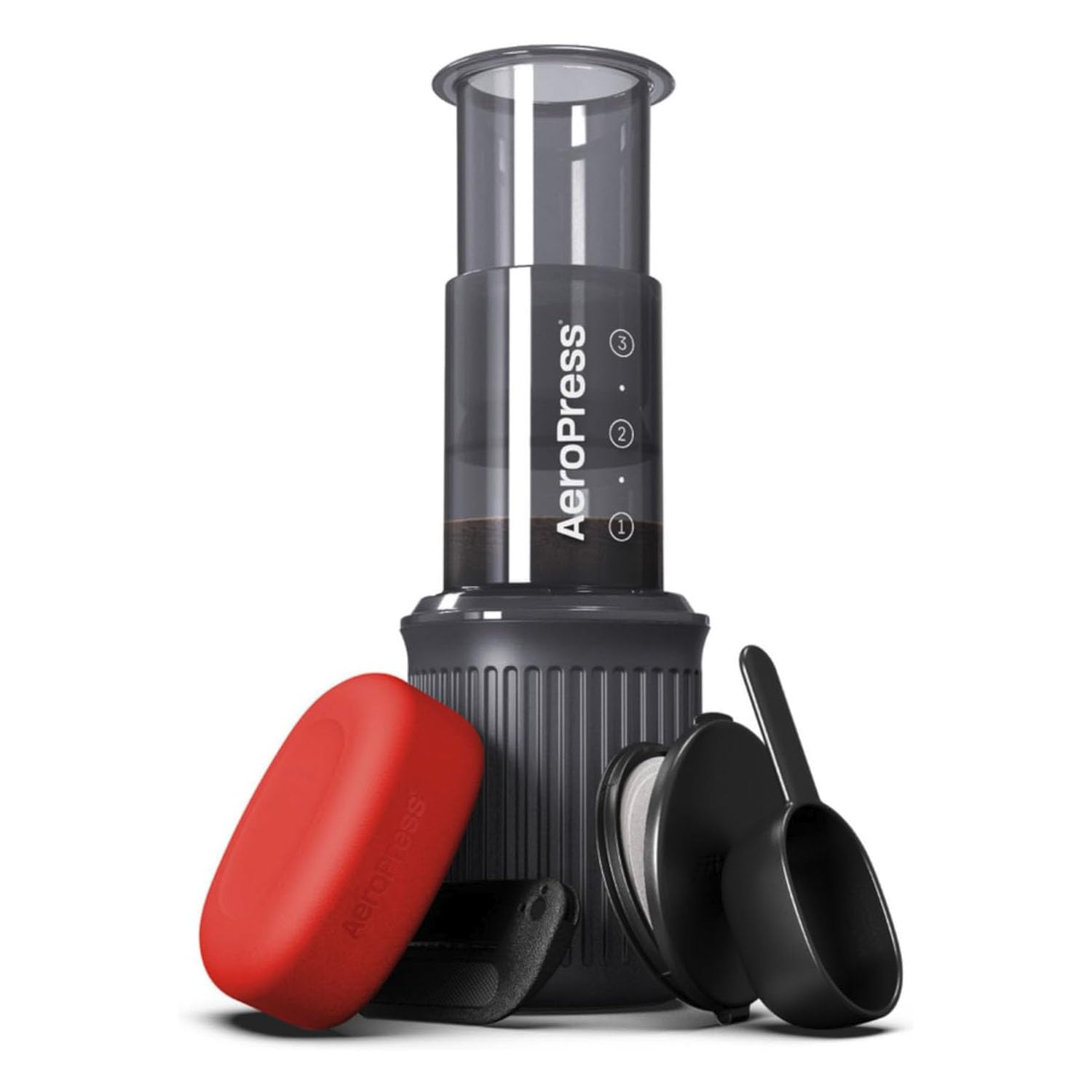


Best for Best-Tasting Single Cup
AeroPress Original
Key Features
- Brew Method: Manual pressure
- Capacity: 10 oz single serve
- Footprint: 1.9 x 1.9 in base
- Build Material: Plastic chamber
- Ease of Cleaning: Very easy, rinse & dry
- Price: Budget
The AeroPress Original produces exceptionally smooth, non-bitter coffee by using manual pressure instead of prolonged steeping or high heat. Brewing takes under two minutes, and cleanup is nearly effortless—rinse the chamber and plunger, and you’re done. The plastic construction keeps it lightweight for daily use or for taking along on trips.
This brewer suits anyone who wants a fast, clean, and flavorful single cup without relying on pods or a bulky machine. It fits well in small kitchens, dorms, or offices where counter space is limited. The plastic chamber may develop a slight coffee oil stain over time—a cosmetic issue that doesn’t affect function. If you need more than 10 ounces per brew or prefer an automatic process, this isn’t the right fit.
Pros
- Makes an exceptionally smooth, non-bitter cup of coffee with full flavor.
- Quick to use and even quicker to clean—rinse and go.
- Portable and rugged enough for travel, camping, or small spaces.
Cons
- Plastic chamber may show coffee oil stains over time.
- Brews just one 10-ounce serving at a time—not for multiple cups.
For a budget-friendly manual brewer that delivers café-quality coffee with minimal fuss and full control, the AeroPress Original sets the standard.
Best for Espresso Aficionado
Bialetti Moka 1-Cup
Key Features
- Brew Method: Stovetop Moka pot
- Capacity: 2 oz espresso
- Footprint: 2 in cube
- Build Material: Aluminum
- Ease of Cleaning: Hand wash only
- Price: Budget
This compact stovetop pot brews a 2-ounce shot of intense, authentic Italian-style coffee on gas or electric stoves (induction needs an adapter). Its all-aluminum build makes it portable for camping or small kitchens, and the manual process yields a rich flavor that rivals pricier electric machines. The plastic handle can weaken over time under high heat, and it’s not induction-ready out of the box — tradeoffs for its budget-friendly price and iconic design. Best for espresso lovers who want a traditional brewing ritual and don’t need large cups or electric convenience.
Pros
- Rich, concentrated coffee with authentic Italian flavor
- Simple to use and clean once the technique is learned
- Compact and portable for travel or small spaces
Cons
- Plastic handle can weaken over time with repeated high heat exposure
- Not compatible with induction cooktops without an adapter plate
If you want real stovetop espresso without the cost of an electric machine and can accept the small 2-oz output and handle care, this is the budget-friendly classic.
Best for Travel and Camping
AeroPress Go
Key Features
- Brew Method: Manual pressure
- Capacity: 8 oz single cup
- Footprint: Stores in mug
- Build Material: Plastic, mug included
- Ease of Cleaning: Very easy, rinse
- Price: Mid-Range
The AeroPress Go stands apart from the standard model by including a mug, lid, and filter holder that store together, making it a self-contained travel kit. This is purpose-built for travelers, campers, and office workers who want a personal brewer that fits in a bag and produces consistently smooth, low-bitter coffee. The included mug doubles as a drinking vessel, so no extra cup is needed. Cleanup is as simple as rinsing the chamber and plunger. The tradeoff is a single 8 oz serving and a higher price than the Original, so it suits those who prioritize portability over capacity or value.
Pros
- Ultra-compact design stores everything inside the mug for true portability.
- Quick to use and clean – rinse the chamber and filter after each brew.
- Produces smooth, low-acid coffee with less bitterness than drip or French press.
Cons
- For those who want a larger morning cup, the 8 oz capacity needs a second brew cycle.
- Premium pricing compared to the standard AeroPress, which offers the same brew quality at a lower cost.
Ideal for travelers who refuse to compromise on coffee quality and want a complete, no-fuss kit that fits in any bag.
Best for Foolproof Pour-Over
OXO Pour-Over
Key Features
- Brew Method: Pour-over with auto-drip
- Capacity: 12 oz single cup
- Footprint: 5.25 in cube
- Build Material: Polypropylene plastic
- Ease of Cleaning: Dishwasher safe
- Price: Budget
The OXO Brew Pour-Over automates the pour-over process by distributing water evenly across the coffee bed via its reservoir, producing a clean, balanced cup with no need for controlled pouring or a gooseneck kettle. This removes the variable that trips up most manual brewers while keeping the paper-filtered clarity pour-over drinkers expect.
This is best for pour-over enthusiasts who want convenience and avoid pods, but it’s a fixed countertop item — similar footprint to a small electric brewer. The water reservoir markings can be misaligned, and the drip rate may run slower than a manual pour. Those minor quirks don’t affect flavor, but impatient brewers should note the pace.
Pros
- Consistently even extraction without needing pour-over skill.
- Dishwasher-safe parts make cleanup simple.
- Uses no pods — compatible with any #2 cone filter.
Cons
- Water reservoir markings can be off, leading to guessing on volume.
- Drip rate may be slower than a manual pour-over — a pace consideration.
If you want pour-over quality without the technique and don’t mind a fixed countertop brewer, this delivers reliably clean, balanced coffee.
Best for Smallest Electric
Keurig K-Mini
Key Features
- Brew Method: K-Cup pod
- Capacity: 6-12 oz single
- Footprint: 4.5 in wide
- Build Material: Plastic
- Ease of Cleaning: Descaling needed
- Price: Mid-Range
With a footprint barely wider than a coffee mug, the K-Mini slides into cramped corners other brewers can’t reach. The one-button operation and quick brew time are convenient, but the plastic body feels budget-level and the auto-off timer may cut your session short if you like to sip slowly. For occasional use in a dorm or office where every inch counts, this Keurig works fine — though some units may stop brewing within months of regular use, making it a short-term space-saver rather than a daily driver.
Pros
- Ultra-compact 4.5-inch width fits in tightest spaces
- Simple one-button brewing with quick heat-up
Cons
- Some units may stop brewing within months; best for occasional use where disruption is acceptable
- Auto-off after 90 seconds can be inconvenient during a slow morning routine
The K-Mini makes sense only if space is your primary constraint and you’re comfortable with a machine that may need replacement sooner than typical coffee makers.
Best for Classic French Press
Bodum Chambord 12oz
Key Features
- Brew Method: French press
- Capacity: 12 oz (3 small cups)
- Footprint: 4.4 x 6.6 in
- Build Material: Glass, stainless steel
- Ease of Cleaning: Dishwasher safe
- Price: Budget
The three-part stainless steel filter of this Bodum Chambord traps fine grounds effectively, giving you a clean, full-bodied French press brew. Its classic glass-and-metal design has been a kitchen staple for decades.
This 12oz press is best for a single or couple who want a compact brewer for a small counter. The glass carafe is thin, so careful handling is required — it may chip with rough use. It yields about three 4oz cups, fine for one morning mug but not for serving multiple people.
Pros
- Three-part stainless steel filter effectively traps fine grounds for a clean cup.
- Classic design that looks elegant on any counter; produces rich, full-bodied coffee.
- Dishwasher safe borosilicate glass and stainless steel parts simplify cleanup.
Cons
- 12oz capacity brews only three small cups; not enough for multiple people or a large morning mug.
If you want a classic French press for personal use and can handle a delicate glass carafe, this Bodum delivers the rich flavor you expect. For heavy-handed users or larger households, a stainless steel press is a better fit.
Best for Budget French Press
Veken French Press

Key Features
- Brew Method: French press
- Capacity: 21 oz (2-3 cups)
- Footprint: 6.1 x 3.6 x 7.2 in
- Build Material: Borosilicate glass, SS frame
- Ease of Cleaning: Easy to disassemble
- Price: Budget
The Veken’s 4-layer stainless steel filter produces noticeably clean coffee with minimal sediment, and the included accessories add convenience for the price. The glass carafe can crack if exposed to sudden temperature changes — this is a practical limit for those who prefer unbreakable materials.
Pros
- Thick borosilicate glass and multi-layer filter for rich, sludge-free coffee.
- Easy to disassemble and clean by hand.
Cons
- Glass carafe can crack from thermal shock or impact with hot water.
A solid value for budget-minded French press users who prioritize flavor and style, as long as they handle the glass carafe with care.
Best for Eco-Friendly Pour-Over
Bodum Pour Over 34oz

Key Features
- Brew Method: Pour-over, reusable filter
- Capacity: 34 oz (8 small cups)
- Footprint: 5.6 x 8 in
- Build Material: Borosilicate glass, cork
- Ease of Cleaning: Reusable filter, easy
- Price: Budget
The Bodum Pour Over 34oz delivers clean, flavorful coffee with a reusable filter that eliminates paper waste. The cork grip and borosilicate glass look elegant on a counter. However, the glass carafe can break if knocked or exposed to rapid temperature changes, and the 8-cup capacity is larger than what most compact-space brewers need. If you have the room and prefer a bigger pour-over, this budget-friendly option works well—just handle with care.
Pros
- Reusable stainless steel filter saves money and reduces waste over time.
- Cork-wrapped carafe looks polished on any countertop.
Cons
- Thin glass carafe can crack from impact or thermal shock in typical kitchen use.
Worth a look if counter space allows a larger carafe and you prefer a permanent filter—but not the most compact option for tight kitchens.
Best for Budget French Press
Bodum Brazil 12oz

Key Features
- Brew Method: French press
- Capacity: 12 oz (3 small cups)
- Footprint: 4.3 x 3.2 x 7 in
- Build Material: Glass, plastic frame
- Ease of Cleaning: Dishwasher safe
- Price: Budget
At the lowest price point for a Bodum press, this 12-ounce model delivers classic French press flavor with easy cleanup. The plastic frame and handle feel less substantial than the Chambord, and the borosilicate glass carafe is fragile — it can crack from minor knocks. For someone testing French press brewing on a tight budget, the value is real, but careful handling is required.
Pros
- Great value for a classic French press; makes excellent coffee
- Lightweight and easy to use and clean
Cons
- Glass carafe is fragile and may crack with normal handling
Best for first-time French press users on a strict budget who can ensure gentle handling — the price is low but the glass demands care.
Best for Cheapest Electric
Mr. Coffee 5-Cup
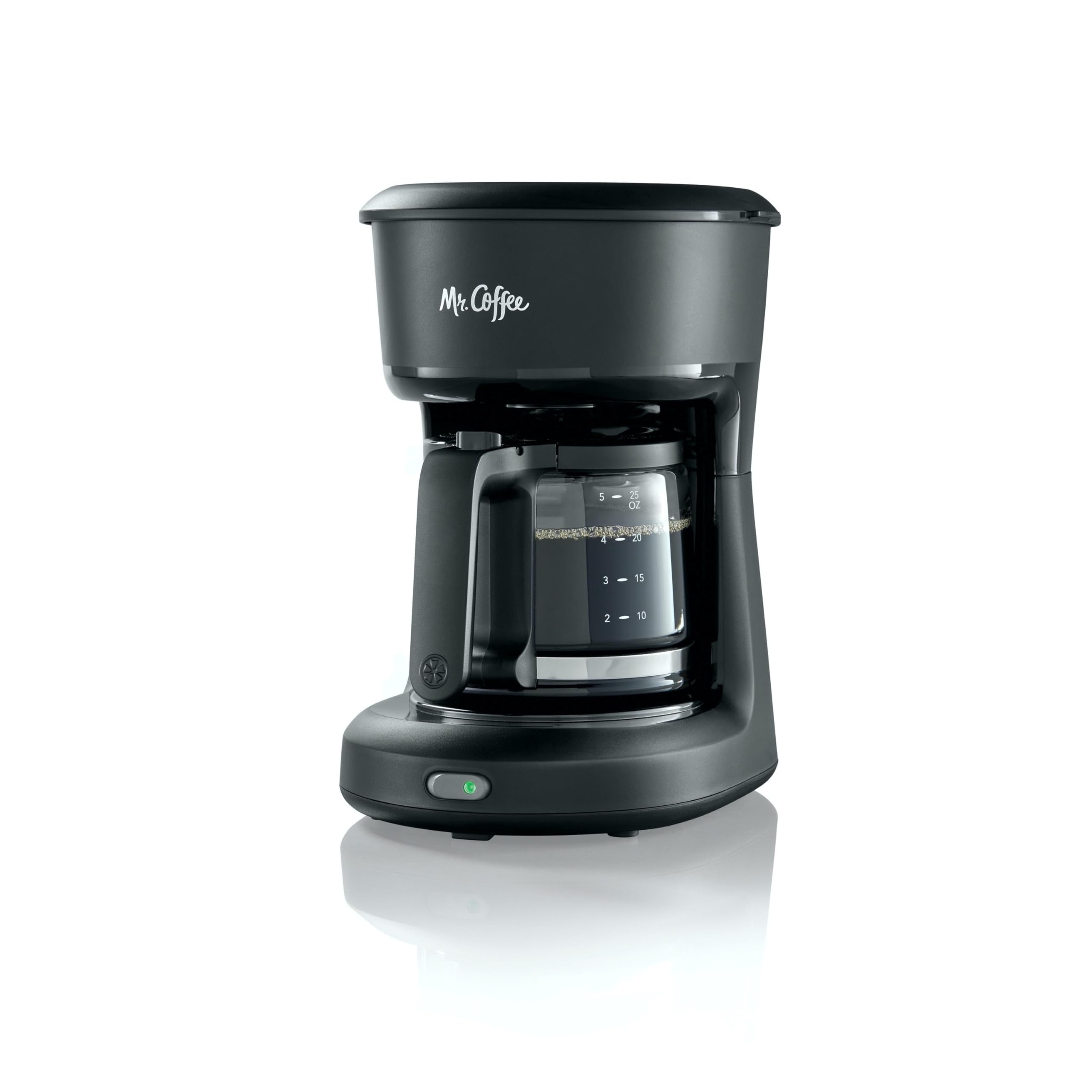
Key Features
- Brew Method: Drip coffee
- Capacity: 25 oz (5 cups)
- Footprint: 10.7 x 9.8 x 7.2 in
- Build Material: Plastic
- Ease of Cleaning: Lift & clean basket
- Price: Budget
This mini drip machine makes decent coffee at a rock-bottom price, and its small footprint suits dorms or RV kitchens. However, build quality can vary – some units may develop switch or handle issues over time. For occasional use where you don’t need long-term reliability, it’s a low-risk option.
Pros
- Compact size fits countertops under 10 inches deep.
- Brews flavorful coffee quickly and keeps it warm.
Cons
- No automatic shut-off – the heating element stays on until manually turned off, a safety concern if left unattended.
Suits budget-conscious buyers who can stay nearby during brewing and don’t expect long-term durability from a budget machine.
Best for Compact Keurig
Keurig K-Compact

Key Features
- Brew Method: K-Cup pod
- Capacity: 6-10 oz single
- Footprint: 13.2 x 8.2 in
- Build Material: Plastic
- Ease of Cleaning: Descaling needed
- Price: Mid-Range
The K-Compact offers simple button operation and consistent coffee temperature in a mid-size footprint. The 36oz reservoir reduces refill frequency. However, brew noise may be intrusive in quiet spaces, and some units have experienced early issues. If you need a smaller footprint, the K-Mini is worth considering.
Pros
- Smart Start heats and brews in one step without waiting for a separate preheat cycle.
- Coffee comes out at a consistent temperature across all three brew sizes.
Cons
- Brew cycle noise may be noticeable in quiet rooms, especially early in the morning.
A decent choice for occasional single-serve users who want Smart Start convenience and can tolerate some brew noise.
Best for Strong Brew Keurig
Keurig K-Express

Key Features
- Brew Method: K-Cup pod
- Capacity: 8-12 oz single
- Footprint: 12.8 x 5.1 in
- Build Material: Plastic
- Ease of Cleaning: Descaling needed
- Price: Mid-Range
The K-Express stands out among pod brewers for its strong button that deepens flavor without changing the pod, and its 5.1-inch width saves counter space. However, reliability is less consistent than manual alternatives — some units may develop operational issues within months — and the brewing cycle is loud enough to notice in a quiet kitchen. It’s a capable choice if you value a bold cup and tight footprint, but not the most dependable long-term option in this category.
Pros
- Strong brew button extracts bolder flavor from any K-Cup.
- Narrow 5.1-inch design fits small countertops.
Cons
- Some units may develop operational issues within months.
Suits buyers who prioritize a strong brew and compact size over long-term dependability.
Best for Stylish Large Press
Cafe Du Chateau 34oz
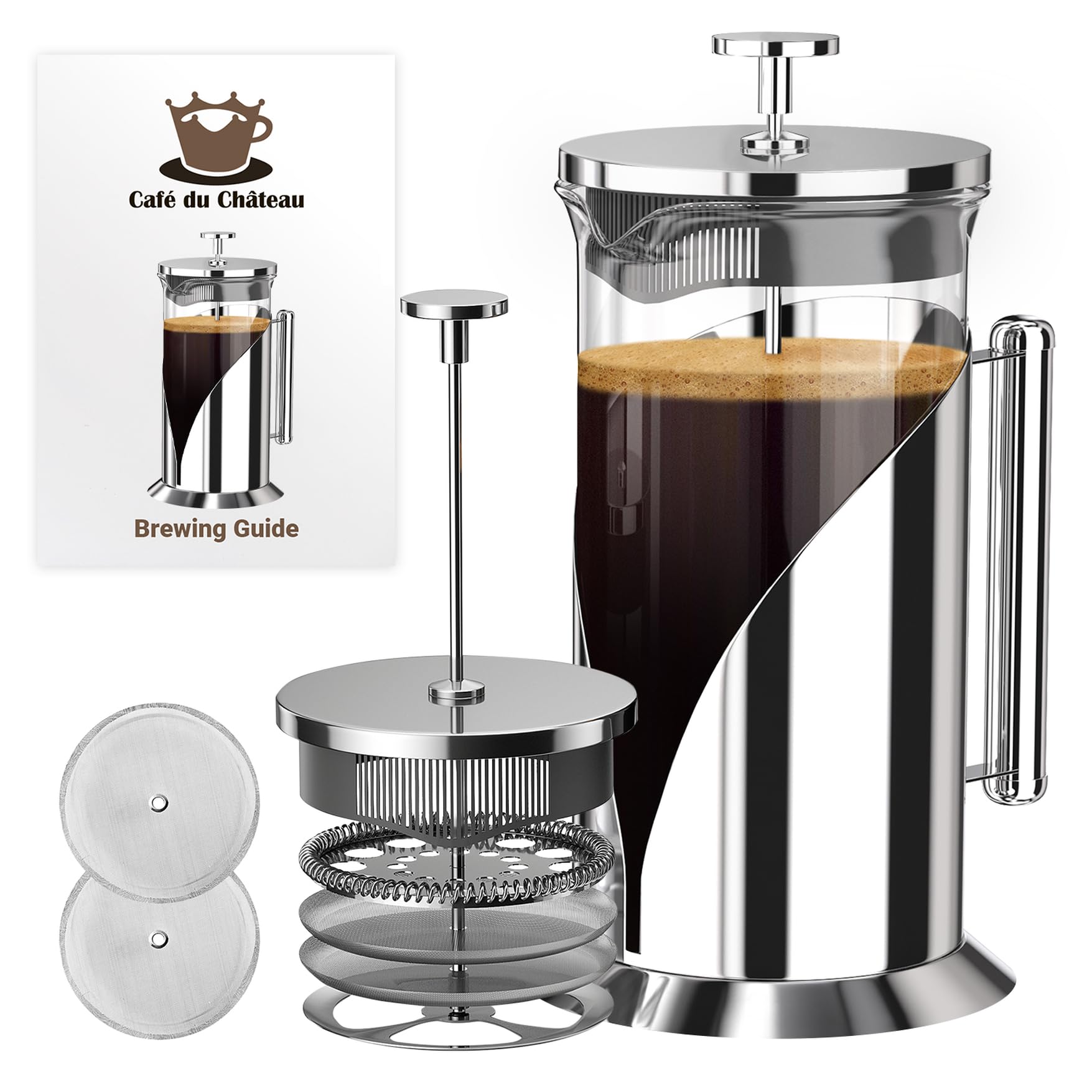
Key Features
- Brew Method: French press
- Capacity: 34 oz (4 cups)
- Footprint: 8.7 x 4.8 x 6.5 in
- Build Material: Glass, stainless steel
- Ease of Cleaning: Easy disassembly
- Price: Mid-Range
This 34-ounce French press turns heads on the counter and keeps coffee hot through a second round. Four-level filtration leaves minimal sediment, and the borosilicate glass disassembles completely for easy cleaning. The trade-off: the glass carafe and handle can crack under routine use, and some units arrive with a filter mesh that bends. Best suited for style-conscious hosts who brew for a group and can handle occasional glassware replacement.
Pros
- Stainless steel frame and borosilicate glass retain heat well for multiple pours.
- Fully disassembles for thorough cleaning—no trapped coffee oils.
Cons
- Glass carafe and handle may crack under normal use; not suited for rough handling.
A good choice if you want a large, attractive press for occasional entertaining and accept that the glass components may need replacing sooner than a metal-bodied brewer.
How to Choose
Manual brewers like the AeroPress and Moka pot consistently outlast electric machines because they lack pumps and heating elements that break.
Brew Method: Manual vs Electric
The biggest durability divide in small coffee makers is between electric and manual brewing. Electric machines rely on pumps, heating elements, and circuit boards — components that fail more often than they should, especially in pod brewers.
Manual brewers like French presses, pour-overs, and Moka pots have zero moving parts. A $30 Moka pot will likely outlast a $100 electric machine by several years. The trade-off is time and technique: manual brewing takes 4-5 minutes of active involvement instead of pushing a button.
Capacity: Single Cup or More
Capacity is often the first spec buyers check, but the numbers can be misleading. A ’12 oz French press’ actually makes three 4-oz espresso-sized cups, not one 12-oz mug. Most single-serve brewers max out at 10-12 oz per cycle.
If you’re the only coffee drinker in the house, a single-cup brewer is efficient. For couples or small families, a 5-cup drip machine or a larger French press (21 oz or more) reduces repeat brews. However, bigger carafes often mean more leftover coffee that goes stale.
Footprint: Measuring Your Counter Space
Counter space is at a premium in small kitchens, but dimensions alone don’t tell the full story. A 4.5-inch-wide Keurig K-Mini may seem perfect, but you need clearance above to open the pod compartment and fill the reservoir. A French press requires no such overhead space but needs a stable 6-inch diameter footprint.
For the tightest spaces, manual brewers have the smallest overall footprint because they don’t need a dedicated spot — they can be stored away between uses. Electric machines with water reservoirs need to stay on the counter for daily use.
Build Quality and Durability
The materials used in a coffee maker directly affect how long it lasts. Glass carafes offer the clearest view and cleanest flavor but crack from thermal shock or a knock. Plastic bodies are light and cheap but can stain and may feel flimsy over time.
Stovetop Moka pots are often made of aluminum with plastic handles — the handle is the weak point and can melt if left on heat too long. Stainless steel versions avoid this issue but cost more. For French presses, a stainless steel frame around a glass carafe offers the best compromise between looks and impact resistance.
Ease of Cleaning
A coffee maker that’s hard to clean leads to stale, bitter coffee over time. French presses require disassembling the plunger and rinsing the mesh filter thoroughly. Pod machines need periodic descaling to prevent mineral buildup that clogs the internal lines.
Manual brewers like the AeroPress and OXO pour-over are the easiest to clean — rinsing takes 10 seconds and parts are dishwasher safe. If you want minimal maintenance, avoid complex electric machines that require descaling and filter replacements.
FAQ
Why does my Keurig K-Mini stop working after a few months?
The most common cause of early failure in the K-Mini is a faulty pump or a stuck internal switch. These components are not user-serviceable, so repairs often cost more than a replacement. If you need a single-serve electric, budget for a new unit every 12-18 months, or switch to a manual brewer that won’t break.
Can I use regular ground coffee in a Moka pot?
Yes, you can use any ground coffee in a Moka pot, but the grind size matters greatly. Use a medium-fine grind — about the consistency of table salt. Too fine will clog the filter and cause over-extraction; too coarse will produce weak, watery coffee.
How do I clean a French press to avoid bitter coffee?
Clean your French press immediately after use to prevent coffee oils from building up. Disassemble the plunger and scrub the mesh filter with dish soap and a non-abrasive sponge. Rinse thoroughly — leftover soap can ruin the next brew. Regular deep cleaning with vinegar every few weeks removes mineral deposits.
Is the AeroPress better than a French press for single cups?
For a single cup, the AeroPress produces a cleaner, smoother cup with less bitterness and sediment than a French press. It’s also faster to brew and easier to clean. French press fans prefer its heavier body and aromatic oils. If you want maximum convenience and flavor control, the AeroPress wins for single servings.