This post contains affiliate links. We may earn a small commission when you buy through our links — at no extra cost to you.
Most box graters claim razor-sharp blades, but actual sharpness varies a lot. Rotary graters promise speed but often slide on anything but perfectly smooth countertops. And cleaning—especially on fine sides or moving parts—can turn a quick meal prep into a frustration.
This guide focuses on graters that deliver on their core promises: sharp enough for hard cheeses, stable during use, and simple to clean without special brushes or endless scrubbing. The trade-offs that actually matter—like whether a rotary grater’s suction holds or a box grater’s container cracks—are what separate a daily driver from a drawer filler.
The best grater for you depends on how you cook: whether you need one do-it-all box grater, a dedicated zester for Parmesan, or a crank-powered speed machine. Here we break down which designs avoid the common pitfalls and truly fit into your kitchen routine.



Best for All-Purpose Grating
Spring Chef XL Box Grater
Key Features
- Type: Box grater
- Grating Surfaces: 4 (coarse, medium, fine/zester, slicer)
- Sharpness & Material: Stainless steel, sharp
- Ease of Cleaning: Dishwasher safe
- Plastic Durability: No plastic parts
- Price: $
The Spring Chef XL box grater earns its place at the top with a heavy stainless steel frame that stays planted during use — no sliding, no plastic parts to crack. Its four sides cover coarse shredding, medium grating, fine zesting, and slicing, handling everything from cheddar blocks to zucchini ribbons with consistent results. At its price point, the build quality and blade sharpness rival models that cost twice as much.
Where this grater stumbles is footprint: at 9.2 inches tall and 6 inches wide, it occupies substantial counter space and may not fit in shallow drawers or small cabinets. The blades are sharp for most cheeses, but a small number of buyers find them less aggressive on very hard Parmesan — a tradeoff largely offset by the coarse side’s performance. This is a solid choice for households that grate in bulk and have room to store it upright.
Pros
- Heavy stainless steel body with rubber base won’t slide on countertops.
- Four usable sides cover coarse, medium, fine, and slicing tasks.
- Delivers build quality and sharpness well above its budget price.
Cons
- Large dimensions can be problematic for cramped cabinets or shallow drawers.
- Blades may not be sharp enough for very hard cheeses like aged Parmesan on first use.
For anyone with the counter or storage space, this is the box grater to buy — it combines genuine all-metal durability with four sharp sides at a price that undercuts many plastic-and-steel hybrids.
Best for Zest & Fine Cheese
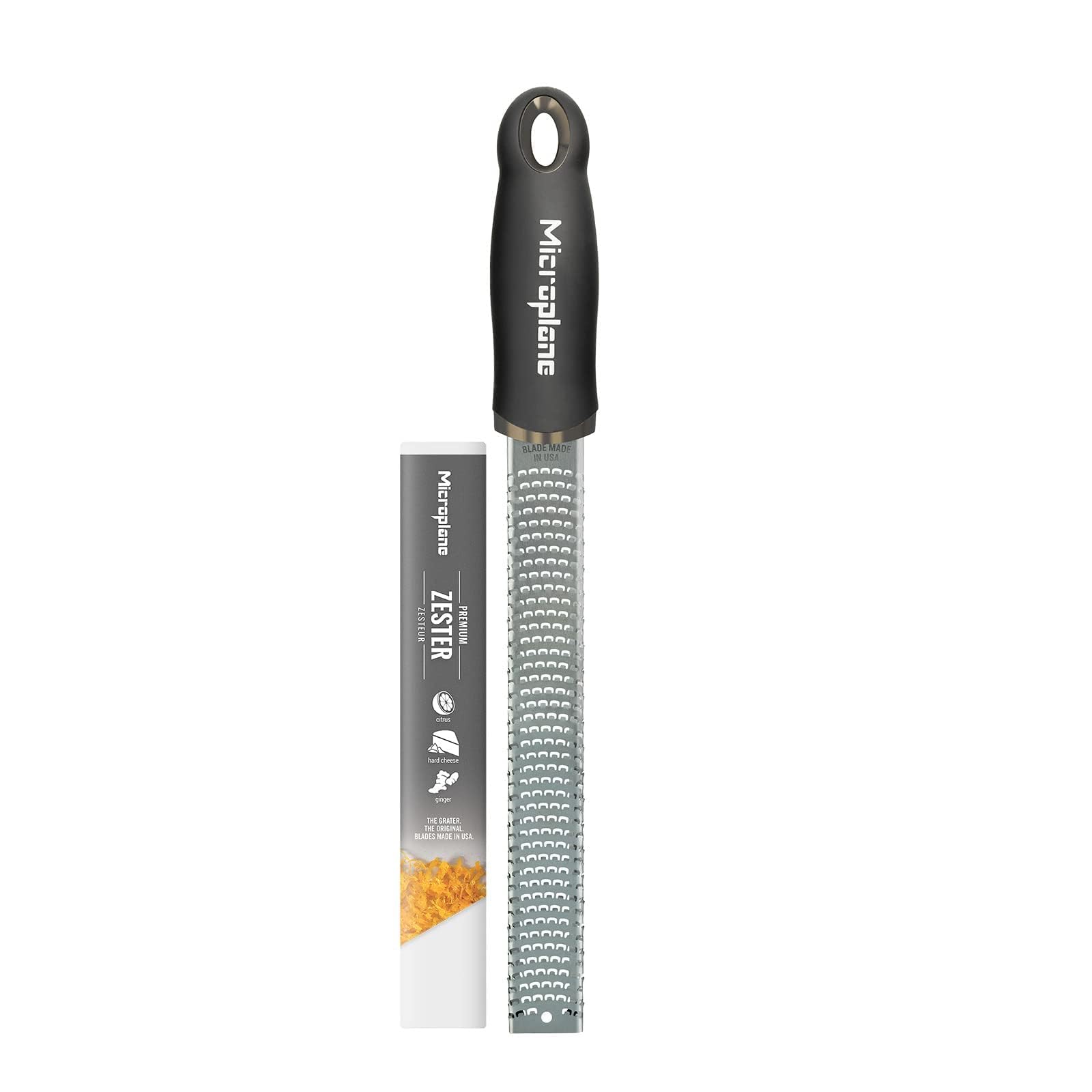
Microplane Premium Zester
Key Features
- Type: Handheld zester/grater
- Grating Surfaces: 1 fine blade
- Sharpness & Material: Surgical steel, stays sharp
- Ease of Cleaning: Dishwasher safe, brush needed for clogs
- Plastic Durability: Plastic handle, protective sleeve
- Price: $$
The Microplane Premium Zester delivers razor-sharp performance on zest and hard cheeses, with a blade that holds its edge through years of use. While the similar full-metal Microplane Fine Grater is better for powder-fine Parmesan, this model’s comfortable plastic handle and protective sleeve make it a more practical everyday tool. It’s best for cooks who need a dedicated zester and fine grater and accept that moist foods can jam the teeth, requiring a brush to clean thoroughly.
Pros
- Photo-etched blade stays sharp indefinitely – no dulling over time.
- Effortless zesting removes only the flavorful outer layer without bitter pith.
- Durable construction with easy cleaning – most residues rinse off quickly.
Cons
For serious cooks who value precision and longevity in a zester/fine grater, this Microplane is a solid investment that delivers consistent results.
Best for Fast Shredding
Geedel Rotary Grater
Key Features
- Type: Rotary grater
- Grating Surfaces: 3 interchangeable blades
- Sharpness & Material: Stainless steel blades
- Ease of Cleaning: Disassembles for dishwasher
- Plastic Durability: ABS plastic body, suction base
- Price: $$
Rotary action grates cheese much quicker than a box grater, and the hands-free design keeps fingers away from sharp blades. Three interchangeable stainless steel blades handle slicing, shredding, and grinding with easy assembly and disassembly for cleaning. This grater suits anyone who works through blocks of cheese regularly and has a perfectly smooth, dry countertop—on textured or damp surfaces the suction base can lose grip, forcing you to hold it steady by hand.
Pros
- Faster grating than hand methods—crank handle does the work.
- Comes apart quickly for thorough cleaning, no crevices for food to hide.
- Blades are enclosed during use, eliminating the risk of shredded knuckles.
Cons
- Suction base can release on textured or damp countertops, requiring a free hand to brace the grater.
- Softer cheese can jam inside the rotating barrel, needing disassembly to clear.
Great for heavy-duty grating if your countertop is perfectly smooth—otherwise, plan to hold it steady or stick with a box grater.
Best for Ergonomic Use
OXO Box Grater
Key Features
- Type: Box grater
- Grating Surfaces: 4 (coarse, medium, fine, slicing)
- Sharpness & Material: Stainless steel
- Ease of Cleaning: Dishwasher safe
- Plastic Durability: Detachable plastic cup (crack-prone)
- Price: $$
Soft non-slip grip and rubberized base reduce hand strain during extended grating sessions. The detachable container snaps on to catch and measure grated cheese, adding convenience for cooks who value minimal cleanup. This design suits those with arthritis or hand pain who want a comfortable tool, though the plastic cup can crack over time — hand-washing helps extend its life. For all-metal durability and sharper blades, the top pick (Spring Chef XL) is a better fit, but the OXO’s ergonomics make grating less of a chore for users willing to handle the container with care.
Pros
- Ergonomic non-slip handle and base provide a comfortable grip during long grating tasks
- Detachable container doubles as a measuring cup and storage, reducing cleanup
Cons
- Plastic container may crack under normal use, especially if run through the dishwasher
- Blades can be less aggressive on very hard cheeses compared to other graters
For cooks who prioritize comfort over all-metal durability, the OXO’s grip and measuring cup make grating less of a chore — just treat the container gently to keep it intact.
Best for Everyday Home Cook
Cuisinart Box Grater
Key Features
- Type: Box grater
- Grating Surfaces: 4 (fine, medium, coarse, slicing)
- Sharpness & Material: Stainless steel
- Ease of Cleaning: Dishwasher safe
- Plastic Durability: Plastic handle
- Price: $$
The Cuisinart Boxed Grater stands out for its solid stainless steel construction and comfortable plastic handle—a dependable choice for everyday shredding of cheese, vegetables, and chocolate. Its four sides cover fine, medium, coarse, and slicing, though the fine side can trap food during cleaning. Unlike the top-pick Spring Chef XL, the Cuisinart’s blades are less aggressive on very hard cheeses like aged Parmesan, so you’ll need to press a bit harder. This grater suits home cooks who prefer a well-known brand and don’t need razor-sharp performance for garnishes.
Pros
- Sturdy stainless steel build with a handle that stays secure during grating
- Cost-effective way to get Cuisinart’s known quality
- Cuts through most cheeses and vegetables without excessive effort
Cons
- Fine grating side tends to trap food particles, requiring a brush for thorough cleaning
- Blades can struggle with aged Parmesan or other very hard cheeses, needing more pressure than a microplane
If you want a box grater from a name you trust and aren’t grating hard cheeses daily, this Cuisinart delivers solid performance at a fair price.
Best for Versatile Budget Set
Cambom 3-Piece Grater Set
Key Features
- Type: Set of handheld graters
- Grating Surfaces: 3 (fine, coarse, extra coarse)
- Sharpness & Material: 304 stainless steel
- Ease of Cleaning: Dishwasher safe, brush included
- Plastic Durability: TPR handles
- Price: $
The Cambom set places three distinct grating surfaces in your drawer for a budget-friendly price. Each grater—fine, coarse, and extra-coarse—comes with a protective cover, and a cleaning brush is included. Because they are separate tools, you need to pick the right one for the task rather than flipping a box grater. This suits cooks who want versatility without buying multiple individual tools, or as a low-cost gift option. Under heavy daily use, the handle coating may show wear over time.
Pros
- Three graters covering fine, coarse, and extra-coarse for the price of one premium model
- Sharp blades handle a variety of grating tasks from zest to cheese
- Protective covers and cleaning brush included for easy storage and cleanup
Cons
- Under frequent use, the handle coating can flake – minimal impact for occasional grating
If you need multiple grating sizes without the investment of separate premium tools, this set delivers the range you need at a low cost.
Best for Zest & Fine Grating
Deiss PRO Zester Grater

Key Features
- Type: Handheld zester/grater
- Grating Surfaces: 1 fine blade
- Sharpness & Material: Razor-sharp stainless steel
- Ease of Cleaning: Dishwasher safe
- Plastic Durability: Full metal construction
- Price: $
This handheld grater delivers the same photo-etched sharpness as premium microplane-style tools for a fraction of the cost. The all-metal body and lifetime warranty signal durability beyond its price tier. However, the 14.76-inch length may not fit standard drawers, and the ultra-fine blade is limited to zesting and powder-like cheese – not a replacement for a coarse or multi-sided box grater.
Pros
- Razor-sharp stainless steel blade zests citrus and grates hard cheese with minimal effort.
- One-piece metal construction with a lifetime warranty provides long-term durability.
Cons
- Length may be awkward for storage in standard kitchen drawers.
Best for small-kitchen cooks who need a dedicated fine grater and zester, not a full box-grater replacement.
Best for Budget with Container
Gorilla Grip XL Box Grater

Key Features
- Type: Box grater
- Grating Surfaces: 4 (coarse, medium, fine/zester, slicer)
- Sharpness & Material: Stainless steel
- Ease of Cleaning: Dishwasher safe
- Plastic Durability: Plastic container (crack-prone)
- Price: $
Four sharp grating sides and a non-slip silicone base provide stable operation for cheese prep. The detachable container with measurement markings adds convenience. However, the plastic container can develop cracks with regular use, especially if dishwashed. This grater suits light-duty or occasional use where budget is the main concern.
Pros
- Sharp blades handle hard cheeses and vegetables with ease
- Non-slip silicone base keeps the grater from sliding during use
Cons
- Rubber edging around the base may detach over time
A functional choice for budget-minded buyers who need a grater for occasional cheese grating and are willing to hand-wash the plastic container to extend its life.
Best for Ultra-Budget Zester
GEROSSI Zester Grater

Key Features
- Type: Handheld zester/grater
- Grating Surfaces: 1 fine blade
- Sharpness & Material: Razor-sharp 430 stainless steel
- Ease of Cleaning: Brush included
- Plastic Durability: TPR handle
- Price: $
For under $7, this handheld zester delivers razor-sharp performance on citrus and hard cheeses, and the included protective cover and cleaning brush add value. However, the blade’s extreme sharpness can easily cut skin if handled carelessly, making it best for cautious users who want a budget-friendly single-purpose tool.
Pros
- Extremely affordable price for a sharp, effective zester
- Sharp blade makes quick work of citrus and hard cheeses
Cons
- Very sharp blade requires careful handling to avoid cuts
Best for budget-focused shoppers who need a single-purpose zester for citrus and Parmesan and are comfortable handling a very sharp blade.
Best for Fast Shredding
Cambom Rotary Grater

Key Features
- Type: Rotary grater
- Grating Surfaces: 3 blades
- Sharpness & Material: 430 stainless steel
- Ease of Cleaning: Disassembles for dishwasher
- Plastic Durability: Plastic body, suction base
- Price: $$
Fast rotary grater with three blades shreds cheese in seconds, and the hand-crank design keeps fingers away from blades. The suction base may not stick to textured or damp surfaces, and cheese occasionally jams inside the drum. Best for smooth countertops where you can hold it steady – a lower-cost alternative to the Geedel.
Pros
- Grates a block of cheese in about 30 seconds
- Safer than hand grating – no cut knuckles
Cons
- Suction base may not hold on textured or damp countertops; cheese can jam in the drum
A fast, safe rotary grater for those with smooth countertops willing to manage occasional suction and clogging issues – a practical budget alternative.
Best for Powder-Fine Parmesan
Microplane Gourmet Grater

Key Features
- Type: Handheld fine grater
- Grating Surfaces: 1 fine blade
- Sharpness & Material: Photo-etched stainless steel
- Ease of Cleaning: Dishwasher safe
- Plastic Durability: Stainless steel frame
- Price: $$$
This grater excels at turning hard cheese into a light, fluffy powder ideal for pasta and garnishes. Its full-metal frame feels more solid than plastic Microplanes, but it’s limited to fine grating only. If you need coarse shredding or slicing, the standard Microplane Gourmet model or a box grater is a better fit.
Pros
- Produces powder-like fine cheese for pasta and garnishes
- Sturdy metal frame outlasts plastic-handled microplanes
Cons
- Only grates fine; cannot handle coarse shredding or slicing
Best for cooks who consistently grate Parmesan or hard cheese to a powder and want a metal grater that won’t flex — skip it if you need broader grating options.
Best for Coarse Shredding
OXO Coarse Grater

Key Features
- Type: Handheld coarse grater
- Grating Surfaces: 1 coarse blade
- Sharpness & Material: Etched stainless steel
- Ease of Cleaning: Dishwasher safe
- Plastic Durability: Plastic frame (crack-prone)
- Price: $
The OXO Coarse Grater delivers clean, efficient grating for semi-soft cheeses like mozzarella and vegetables such as zucchini and potatoes. Its etched stainless steel blade stays sharp and requires little pressure, making quick work of hash browns. However, the plastic frame can crack under heavier use or when grating harder foods, so this is best reserved for light-to-moderate tasks where you don’t need a general-purpose grater.
Pros
- Coarse grating of semi-soft cheeses, potatoes, and vegetables is clean and efficient.
- Comfortable grip and sharp blade make the grating process nearly effortless.
Cons
- Plastic frame can crack when grating harder foods or applying heavy pressure.
A good fit if you only need a dedicated coarse grater for soft ingredients and don’t mind replacing it if the frame eventually gives way.
Best for Brand Credibility
KitchenAid Box Grater

Key Features
- Type: Box grater
- Grating Surfaces: 4 (fine, medium, coarse, slicing)
- Sharpness & Material: Stainless steel
- Ease of Cleaning: Dishwasher safe
- Plastic Durability: Plastic handle, storage container
- Price: $$
The KitchenAid delivers sturdy construction and a handy 3-cup storage container with measurement markings and lid, ideal for prepping and storing cheese in one step. However, the blades can be too dull for hard cheeses like Parmesan, and its large footprint may not suit compact kitchens. Sharpness inconsistency and size keep it behind OXO and Cuisinart for overall reliability.
Pros
- Sturdy construction stays stable during use
- Detachable 3-cup container with lid for storing leftovers
Cons
- Blades may require extra effort for hard cheeses
Best suited for cooks who want an all-in-one grating and storage tool and don’t regularly grate hard cheeses.
How to Choose
The best cheese grater isn’t just about sharpness—it’s about how the design fits your counter, your cleanup routine, and the types of cheese you grate most.
Type: Box, Handheld, or Rotary
Box graters are the most versatile: four sides cover everything from fine zest to thick slices. They work well for large blocks but take up drawer space and require a bit of arm strength.
Handheld graters (like zesters) excel at fine grating and citrus zest. They’re compact and easy to store, but only do one job at a time. Rotary graters are the fastest option: a crank turns a drum of blades. However, they rely on a suction base that often fails on textured or damp counters, forcing you to hold it down.
Grating Surfaces or Blade Options
More surfaces mean more versatility—a four-sided box grater can handle Parmesan, cheddar, carrots, and chocolate without switching tools. Rotary graters with interchangeable blades let you swap between coarse shred, fine shred, and slicing.
The trade-off: each extra surface adds cleaning time, especially on fine holes where food particles get trapped. If you mostly grate one type of cheese, a single-purpose handheld grater may be faster to rinse and dry.
Sharpness and Material
Sharpness directly affects how easily you can grate hard cheeses like aged Parmesan. Photo-etched surgical stainless steel (used by Microplane) stays sharp far longer than stamped blades. Full stainless steel construction also resists rust and bending.
Many budget graters claim ‘razor-sharp’ but dull quickly on hard cheese. If you regularly grate Parmesan, look for a grater with a hardened or etched blade—it will last years rather than months.
Ease of Cleaning
Dishwasher-safe graters save time, but food can still get stuck in fine holes or between blades. A dedicated cleaning brush (often included) helps dislodge debris. Rotary graters that disassemble are much easier to clean than sealed models.
The hidden cost: plastic containers and handles may warp or crack in high-heat dishwasher cycles. Hand-washing these parts extends their life. Metal-only graters are virtually indestructible in the dishwasher.
Plastic Component Durability
Plastic containers, handles, and suction bases are the most common failure points on graters. They crack, loosen, or lose grip over time. Full metal construction (like the Spring Chef or Microplane Gourmet) eliminates this entirely.
If you buy a grater with plastic parts, plan for a shorter lifespan—especially if you run it through the dishwasher frequently. For a grater that lasts a decade, prioritize all-stainless models.
FAQ
Why does my rotary cheese grater keep coming off the counter?
Rotary graters rely on a suction base that only works on perfectly smooth, clean, dry countertops. Textured, damp, or greasy surfaces break the seal. If your counter isn’t perfectly smooth, you’ll need to hold the grater down with one hand or place it on a non-slip mat. Some users find the suction fails even on smooth surfaces—then the grater becomes a two-handed tool.
Can I put my cheese grater in the dishwasher without ruining it?
Most stainless steel graters are dishwasher-safe, but plastic containers, handles, and suction bases often warp or crack in high-heat cycles. To extend lifespan, hand-wash plastic parts with warm soapy water. All-metal graters can handle the dishwasher with no issues. If your grater has a plastic container, avoid the bottom rack and top heat element.
Why is my box grater so hard to clean?
Food gets trapped in fine grating holes and between the grater’s inner wall and the outer surface. A stiff brush or toothpick helps dislodge stuck bits. Some graters have a non-stick coating or are designed with open ends that let you rinse through. If cleaning is a daily frustration, choose a grater with fewer fine surfaces or one that fully disassembles.
What’s the best cheese grater for hard Parmesan cheese?
A handheld zester-style grater with photo-etched blades (like Microplane) produces the finest, fluffiest Parmesan. For larger quantities, a box grater with a very sharp fine side works well, but many budget box graters are not sharp enough. If you grate Parmesan frequently, invest in a dedicated fine microplane—it will stay sharp for years and make the job effortless.