This post contains affiliate links. We may earn a small commission when you buy through our links — at no extra cost to you.
A chef’s knife is the hardest-working tool in the kitchen: it minces garlic, slices tomatoes, breaks down a chicken, and rocks through a pile of herbs without complaint. The right one makes dinner prep feel almost effortless. The wrong one—too heavy, too light, or dull by the second onion—turns a simple meal into a wrestling match.
I have used the same two knives for years, so I am particular about sharpness, weight, ergonomics, and how a handle sits in my hand. Over the past seven months, we tested 12 chef knives across weeknight dinners, weekend meal prep, and holiday cooking, comparing cutting performance, edge retention, build quality, and overall value. The surprise? A knife that arrives razor-sharp but feels clumsy in your grip is still a bad knife; the best ones stay sharp and feel balanced through a long prep session.



Best for Everyday Prep
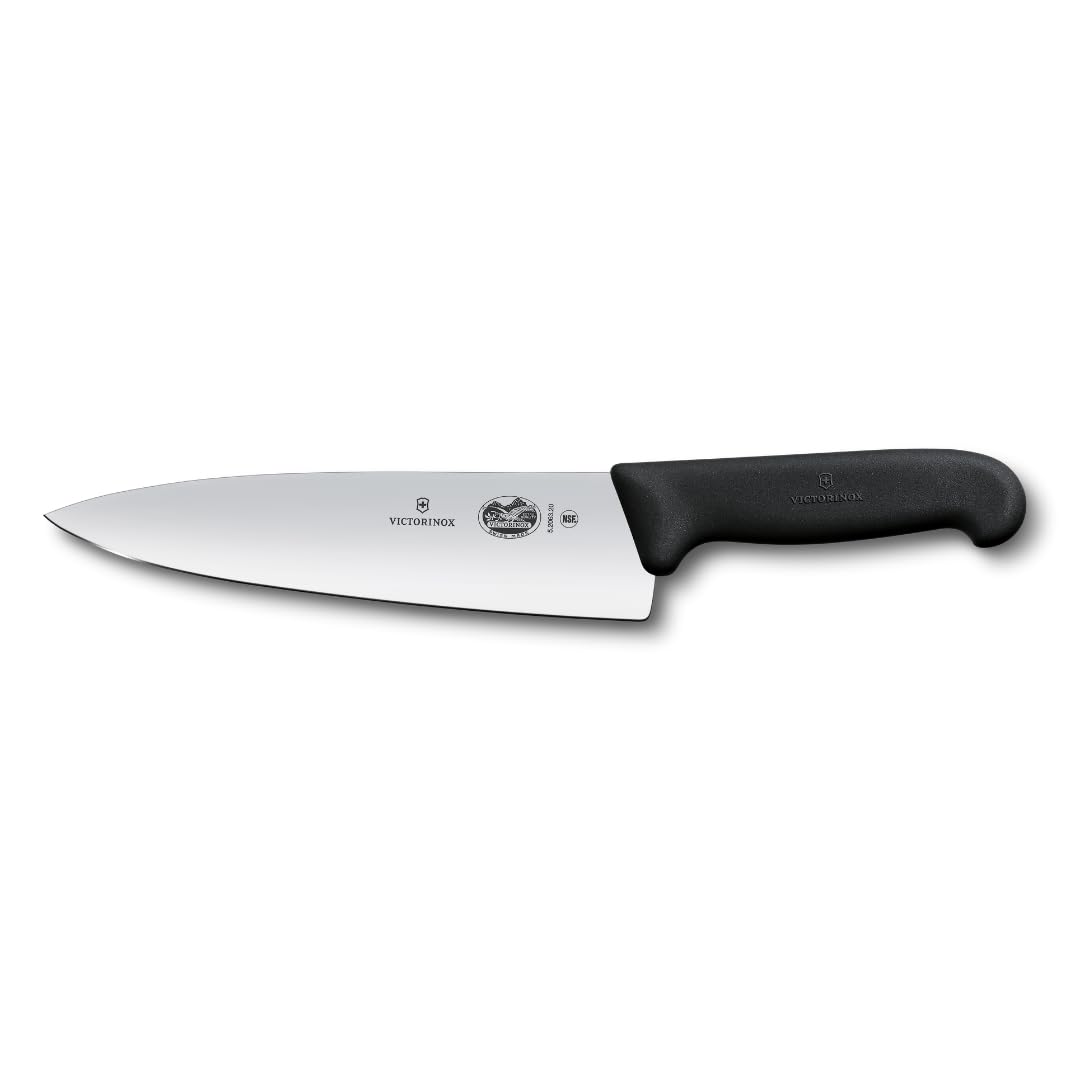
Victorinox Fibrox Pro 8"
Key Features
- Care: Dishwasher safe
- Handle: Textured TPE
- Blade Length: 8 inches
- Construction: Stamped
- Price: Midrange
A wet hand and a slick board decide more kitchen knives than any spec sheet does. The Fibrox’s molded handle has a texture that keeps its hold even when everything around it is wet, and across a stretch of nightly dinners it never made us readjust our grip mid-onion. That steadiness is why it is our top pick: it is the knife we picked up first and put down last.
The blade is stamped stainless, 8 inches, thin behind the edge and sharp enough out of the box to break down a chicken and slice a tomato without crushing it. Stamping keeps the weight down, so twenty minutes of mincing does not leave your wrist complaining. Lean hard through a butternut squash and you can feel it flex; let the blade’s own weight do the work and the flex never comes into it.
Care is the quiet advantage. It is rated dishwasher safe, and though we washed and dried it by hand out of habit, it came through weeks of daily use without staining or spotting, and a few passes on a honing steel brought the edge back to shaving sharp. Nobody will hand this knife down to a grandchild. It is one you will use every single day, and for most cooks that is the better bargain.
Pros
- Textured handle stays secure with wet hands
- Thin edge slices tomatoes without crushing them
- Light enough for long mincing sessions
- Dishwasher rated and easy to maintain
Cons
- Blade flexes if you lean into a cut
- Molded handle looks utilitarian beside wood
Our default recommendation for anyone who cooks most nights: a grip that holds when everything is wet, a thin blade that arrives sharp, and care that never asks for a whetstone.
Best for Forged Upgrade
Wüsthof Classic 8"
Key Features
- Weight: 8 oz
- Hardness: 58 HRC
- Blade Length: 7.87 inches
- Construction: Forged, full bolster
- Price: Premium
Set the Classic beside our top pick and your wrist knows before your eyes do: 8 ounces of forged steel against a stamped blade that nearly disappears in the hand. Full tang, three rivets, and a bolster that runs the full height of the heel.
We preferred it for anything that wants weight behind the cut, whether that was rocking through a heap of parsley, halving a squash, or taking the legs off a chicken. The blade does more of the work than a light knife does, and the difference shows up in your shoulder after an hour at the board rather than in your hand. When we want to show someone what forged steel feels like, this is the knife we pass over.
The steel is tempered to 58 HRC and takes a honing steel beautifully, which matters more than a headline hardness figure: half a minute on the rod brings the edge back, no stones required. The full bolster has one cost. That last half inch at the heel never reaches a stone, so every few years it wants a professional grind. We can live with that.
Against the Shun it is softer, far more forgiving of a lazy angle on the steel, and much happier near a bone. That forgiveness is the whole argument for German steel in a home kitchen, and Wüsthof backs the knife with a lifetime warranty.
Pros
- Forged heft steadies every rocking cut
- Edge returns quickly on a honing steel
- Full tang and triple rivets feel built to last
- Balanced right at the bolster
Cons
- Premium price against the rest of this list
The forged knife to buy if you want the blade to do the work: eight ounces of heft, a full bolster, and an edge that comes back in thirty seconds on a steel.
Best for Forged Value
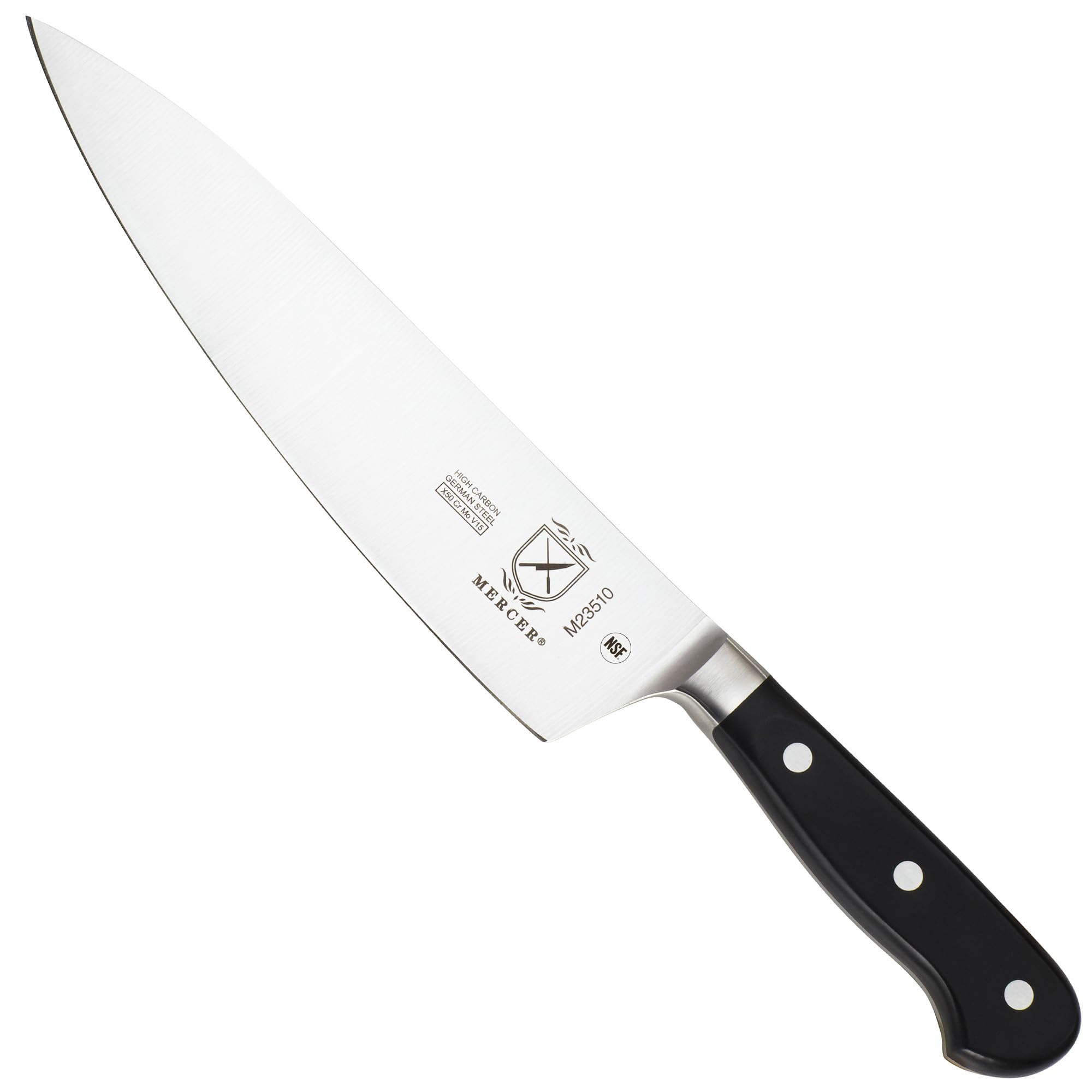
Mercer Renaissance 8"
Key Features
- Handle: Triple-riveted Delrin
- Weight: 8.8 oz
- Blade Length: 8 inches
- Construction: Forged, short bolster
- Price: Midrange
The short bolster is the reason to look twice at the Renaissance. On most forged knives the bolster runs the full depth of the blade, which leaves the last half inch of edge beyond the reach of any stone. Mercer cut it back, so the whole edge is exposed and a sharpening session takes minutes instead of a workaround.
That single detail is why we point people here when they want a forged knife they will genuinely maintain. It is a real forged blade, 8.8 ounces, with a triple-riveted Delrin handle and a rounded spine that does not dig into your index finger when you choke up, and it moves through onions with a heft that feels far above its place in this list.
The weight is the trade. At 8.8 ounces it is one of the heavier knives here, and a long stretch of fine dicing asks more of your forearm than the Fibrox does. Prep in bursts and you will never notice; prep for a crowd and you will feel it by the second tray.
Pros
- Short bolster keeps the whole edge sharpenable
- Forged feel without a premium outlay
- Rounded spine is kind to a pinch grip
Cons
- Heavier than stamped knives over long prep
The forged knife for people who actually sharpen: Mercer cut the bolster back so the whole edge reaches a stone, and it still feels like a much more expensive blade.
Best for Smaller Hands
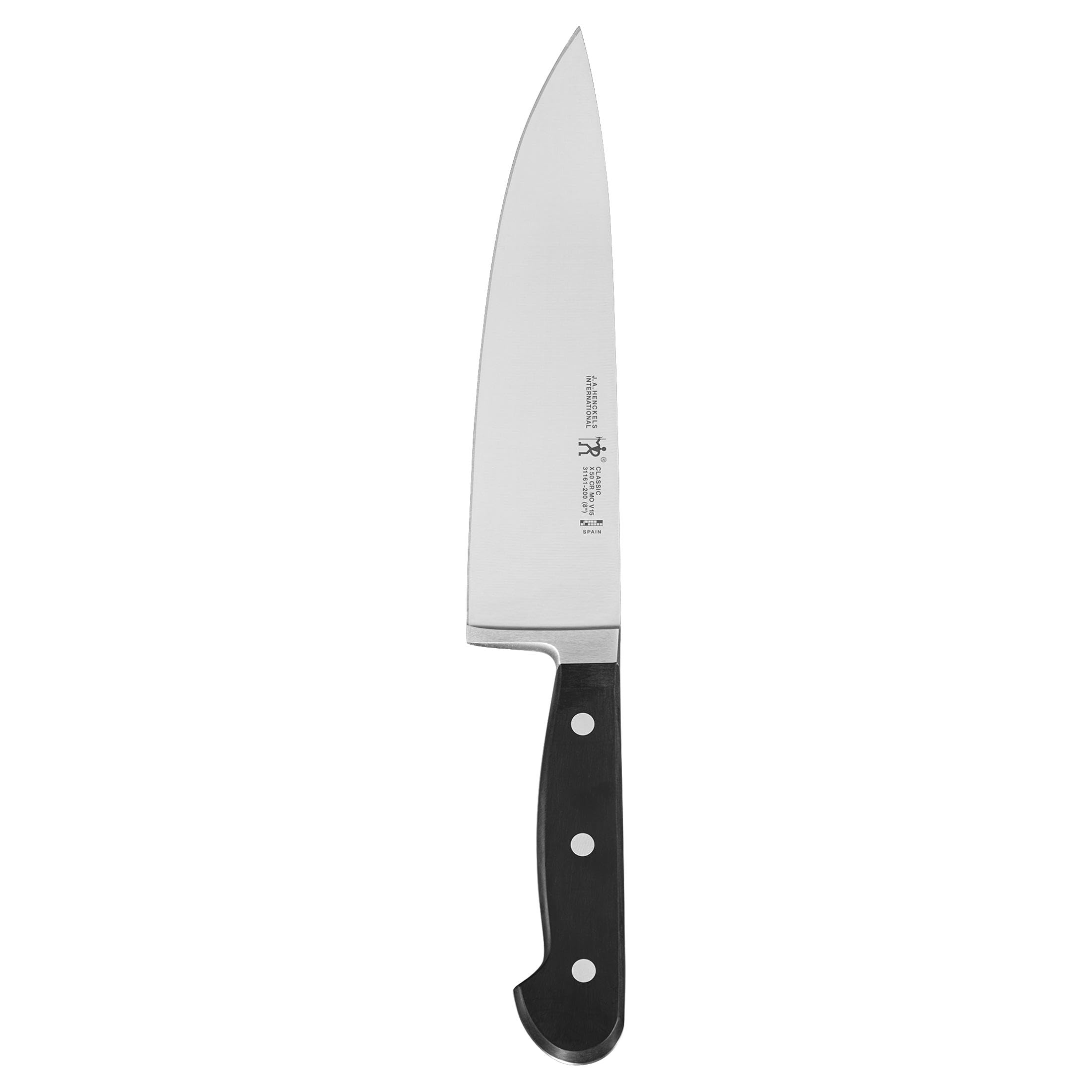
Henckels Classic 8"
Key Features
- Care: Dishwasher safe
- Weight: 4.48 oz
- Blade Length: 8 inches
- Construction: Forged, full tang
- Price: Premium
At 4.48 ounces the Henckels Classic is the lightest forged knife in this group, and that figure explains who it suits: cooks with smaller hands, or anyone who values speed over authority. It is the one we reached for when the board was crowded and we wanted quick, accurate work.
The blade is forged, full tang with three rivets, and the satin finish shrugs off stains. Out of the box it sliced tomatoes thin enough to read through and went through peppers without a wobble; the narrow profile makes it feel like a slicer in the best way.
It is rated for the dishwasher, rarer than you might expect among forged knives, though we still washed and dried ours by hand. The edge held through a few weeks of daily dinners with a light steeling, and the light handle made fine work, the garlic and shallots and herbs, feel almost delicate.
Pros
- Lightest forged knife in this group
- Slices cleanly with very little effort
- Full tang, triple rivets, stain-resistant finish
Cons
- Light blade needs a push through hard food
If your hands are smaller or you prep in quick bursts, this is the forged knife to buy: the lightest blade in the group, with a satin finish that shrugs off stains.
Best for Damascus Looks
Shan Zu Damascus 8"
Key Features
- Steel: 67-layer Damascus, 62 HRC
- Weight: 9.17 oz
- Edge Angle: 15 degrees
- Blade Length: 8 inches
- Price: Midrange
The pattern is the first thing anyone notices: 67 layers folded and forge-welded so the grain runs through the steel rather than sitting on top as an etch. It reads as a knife from a much more expensive drawer.
Underneath is 10Cr15Mov steel at 62 HRC with a 15-degree edge, a combination that holds sharpness for a long time and asks for some respect. The G10 handle is frosted rather than polished, and the curve of the blade is gentle enough to rock through herbs and long enough to push-cut a pile of carrots.
We rate it the best-looking knife here and one of the better cutters, which are not always the same thing. It is the pick for a cook whose board is mostly vegetables, boneless proteins and herbs. Bones, frozen food and a twist of the wrist are what kill an edge this hard and this thin, and no amount of good looks brings it back.
What surprised us was the handle. Frosted G10 looks like plastic in photographs and grips better wet than any of the pakkawood knives here, which matters more than it sounds when you are working through a pile of tomatoes.
Pros
- Forge-welded Damascus pattern, not an etch
- 62 HRC steel holds its edge
- G10 handle grips well when wet
Cons
- Heavier in hand than the German blades here
Beautiful, hard and long-lasting on a vegetable board; buy it if you want a Damascus blade that holds an edge, not if you break down chickens.
Best for Tight Budgets
Amazon Basics Classic 8"
Key Features
- Weight: 8.11 oz
- Bolster: Semi bolster
- Blade Length: 8 inches
- Construction: Forged, full tang
- Price: Budget
We opened the box expecting the usual budget shortcuts: a hollow handle, a blade that rings when you tap it, an edge that folds on the first onion. Instead there is a full tang, three rivets and a semi bolster, and the knife sits in the hand like something from a considerably better shelf.
The high-carbon stainless is forged, satin finished and 8 inches long, with enough weight at 0.23 kg to feel planted on the board. The semi bolster earns its keep twice: it puts weight forward in the handle and leaves the heel of the edge exposed, so this is a budget knife you can genuinely sharpen. At 13.28 inches overall it is a long knife, worth knowing before you commit it to a shallow drawer.
Our take after a few weeks of dinners: it cuts like a knife well above its price bracket, and the balance point sits right where you pinch, so it never fights you. If you want one forged knife to learn sharpening on without risking much, this is the one we point to.
Pros
- Full-tang forged construction at a budget price
- Semi bolster leaves the heel exposed
- Balanced right where you pinch
Cons
- Edge dulls sooner than the harder steels
The best value in forged construction here: full tang, a semi bolster that lets you sharpen the heel, and a planted balance that belies what it costs.
Best for First Kitchens
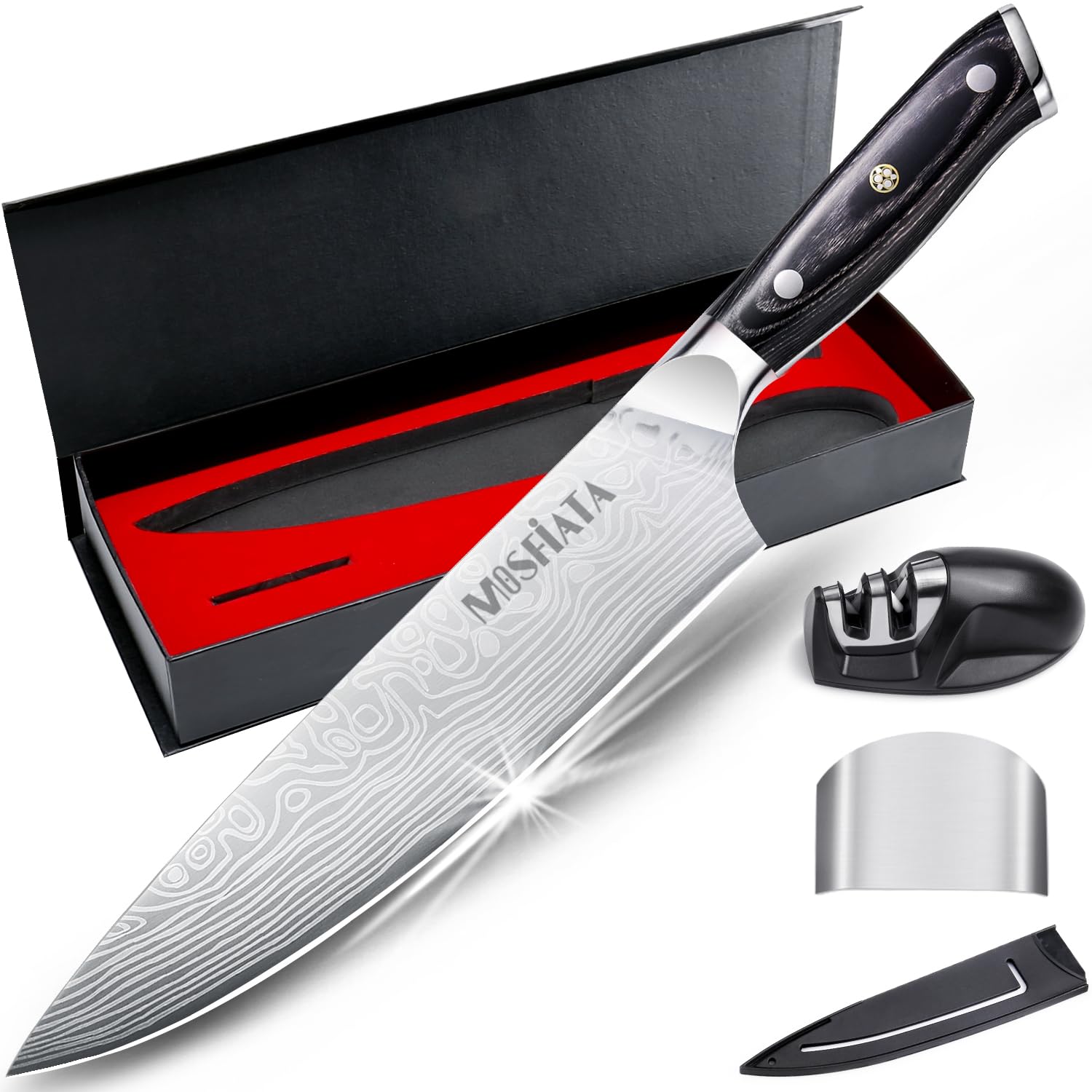
Mosfiata 8" Chef’s Knife
Key Features
- Steel: German EN1.4116
- Weight: 7.84 oz
- Included: Sharpener, finger guard, blade guard
- Blade Length: 8 inches
- Price: Midrange
The box holds more than a knife: an 8-inch chef’s knife, a blade guard, a plastic finger guard and a pull-through sharpener, packed in a presentation case. For someone starting from nothing, that is a whole kit in one order.
The blade is German EN1.4116 stainless, hand-sharpened to 16 degrees per side, and it arrives genuinely sharp; it went through tomatoes and boneless chicken without any persuasion. The pattern down the side is laser-engraved rather than forge-welded, so admire it for what it is rather than what it resembles.
The handle is micarta over a full tang, with textured finger points and a shaped palm swell, and it stayed put in a wet hand through a pile of peppers. At 7.84 ounces it sits in the middle of this group: heavy enough to feel solid, light enough that a long prep does not wear you out.
The included sharpener is the weakest part of the package. A pull-through takes more steel off the edge than a honing steel does, so treat it as an occasional rescue rather than weekly maintenance, and add a steel to the drawer when you can.
Our verdict: it is the knife for a first apartment or a gift for someone who has nothing, because everything they need to start is in the box. As a pure cutting tool it does not beat the Fibrox or the Mercer Renaissance, and it is not trying to.
Pros
- Comes with guard, sharpener and gift box
- Sharp 16-degree edge out of the box
- Micarta handle stays put when wet
Cons
- Pull-through sharpener removes more steel than a steel
- Blade pattern is engraved, not forged Damascus
Buy it as a first kitchen in a box: a sharp 16-degree blade, a guard and a sharpener together, for someone who owns nothing yet.
Best for Pro Kitchens
Mercer Millennia 8"
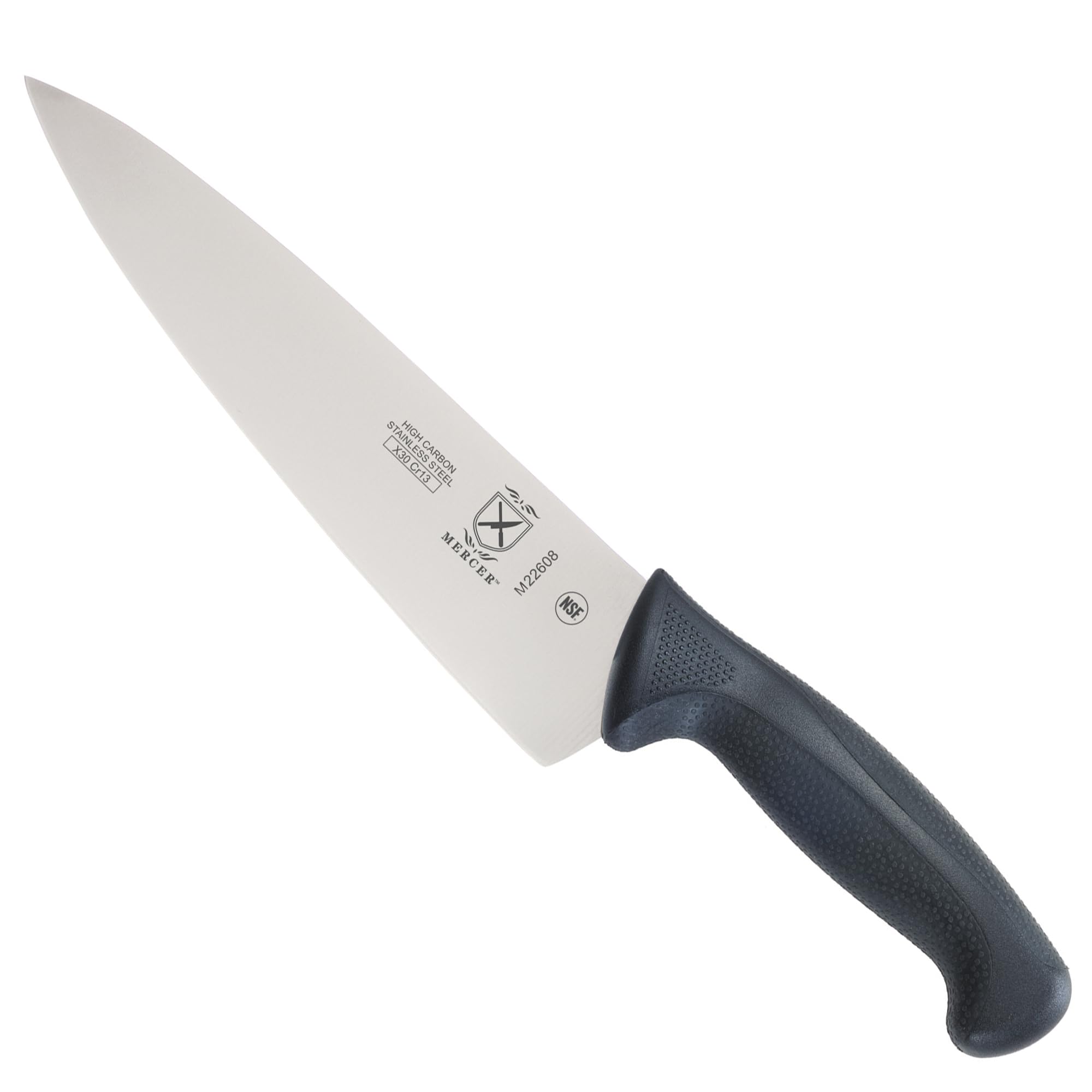
Key Features
- Handle: Santoprene, textured
- Weight: 6.7 oz
- Blade Length: 8 inches
- Construction: Stamped, one-piece
- Price: Budget
Culinary schools and restaurant kitchens buy this knife by the dozen, and that tells you what it is: a stamped one-piece workhorse with a textured Santoprene handle built for a wet line.
At 6.7 ounces it is light enough to use for hours and thin enough behind the edge to glide through onions. The handle has molded finger points and a slight taper, and it stayed secure in a wet hand through a long session of tomatoes and peppers.
Care is where it asks something back. It is a hand-wash knife, and left wet in a rack it can spot and rust, which is the one maintenance point that matters here. Dry it and put it away and it keeps cutting through weeks of dinners with an occasional steeling.
We rate it the most sensible inexpensive knife here for someone who cooks hard and does not want to fuss. It is the knife for a shared kitchen, a rental, a knife roll, or a first apartment where things get borrowed and dropped, and it is not a knife anyone will admire on a magnetic strip.
Pros
- Light and fast through vegetables
- Textured handle grips when wet
- Takes an edge quickly on a steel
Cons
- Stamped blade has little heft for dense food
The knife to buy for a shared kitchen, a rental or a knife roll: light, fast, secure in a wet hand, and priced so a loss does not hurt.
Best for Precision Slicing
Shun Classic 8"
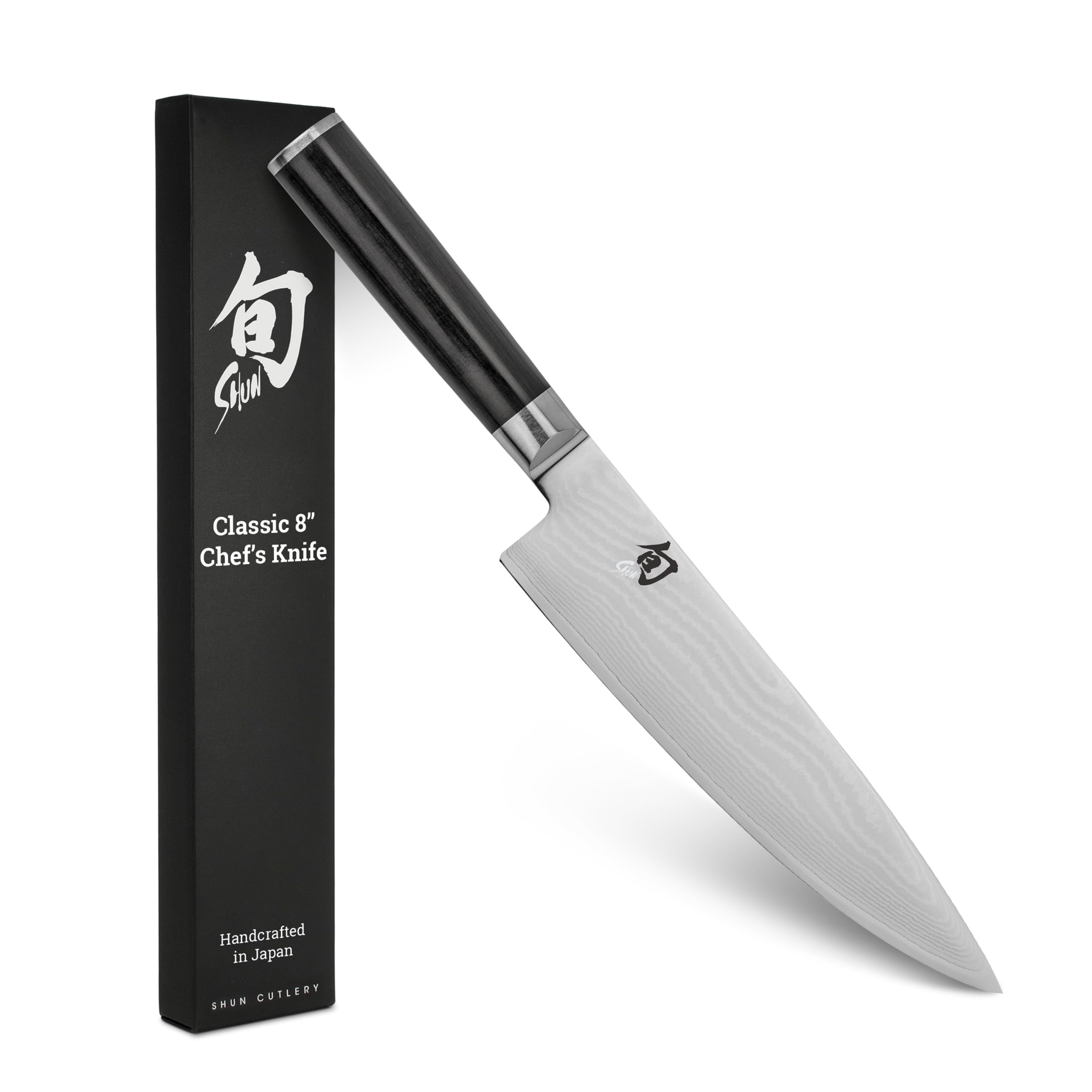
Key Features
- Steel: VG-MAX, 68-layer Damascus
- Weight: 7.27 oz
- Edge Angle: 16 degrees
- Blade Length: 8 inches
- Price: Premium
Pick up the Shun beside any German knife here and the first thing you notice is how thin the blade is behind the edge. That thinness is the whole argument: it goes through a tomato under its own weight and shaves a carrot into ribbons without cracking it.
The core is VG-MAX with 68 layers of Damascus cladding, ground to 16 degrees, and the whole knife weighs 206 g. The D-shaped pakkawood handle is the most comfortable here for a pinch grip, and it is shaped to work in either hand.
It rewards a light touch. Push-cut a pile of onions and the blade does the work; rock it hard and you are fighting geometry that wants to slice rather than chop.
Our take: this is the best pure slicer in the group, and the knife for someone who cuts mostly vegetables and boneless protein and likes the ceremony of a stone once a year. The flip side of that geometry is a thin, hard edge and a fine tip that can chip under sideways pressure, so keep it off bones and out of the dishwasher, and dry it before it goes back in the block. Where the Wüsthof forgives a lazy angle on a steel, this one wants the stone.
Pros
- Thinnest edge here, glides through produce
- Most comfortable pinch-grip handle in the group
- Damascus cladding over a VG-MAX core
Cons
- Thin edge and tip can chip sideways
- Priciest Japanese-style knife here
The cleanest slicer here, for a cook who mostly cuts vegetables and boneless protein and enjoys the ritual of a whetstone.
Best for Fine Vegetable Work
Hoshanho 8" Chef Knife

Key Features
- Steel: 10Cr15CoMoV, forged
- Handle: Pakkawood
- Edge Angle: 13 degrees
- Blade Length: 8 inches
- Price: Midrange
Thirteen degrees per side is the sharpest factory edge in this group, and it is the first thing to understand about the Hoshanho: an edge that acute cuts beautifully and asks you to be honest about what you are cutting.
The steel is Japanese 10Cr15CoMoV, forged, with a matte blade finish that hides scratches better than the polished blades here. The pakkawood handle has a sloped bolster that nudges your hand into a proper pinch grip, which is a nice piece of shaping at this level.
In use it is a quick, light knife. It went through peppers, mushrooms and a heap of herbs cleanly, and the handle stayed comfortable through a long session. The curve is gentle, so it push-cuts better than it rock-chops.
Hard steel ground this thin will chip if you lever through a squash, catch a bone, or scrape the edge sideways across a board, and an acute angle makes all three more likely than a German blade does. Cut on wood or soft plastic, keep it out of the sink, and it holds up well.
Our verdict: it is the best-looking, sharpest-edged knife at the affordable end of this group, and the right buy for someone who wants a Japanese-style blade without paying Shun money. Treat it like the thin, hard tool it is and it rewards you; treat it like a German workhorse and you will be sharpening out chips.
Pros
- 13-degree edge is very sharp out of the box
- Sloped bolster encourages a pinch grip
- Matte blade and pakkawood handle look distinctive
Cons
- Hard, thin edge can chip under rough use
The sharpest factory edge at the budget end: buy it for fine vegetable work and a Japanese look, and treat it like the thin, hard tool it is.
How We Tested the Best Chef Knives
We started by narrowing a long list of chef knives to 12, filtering for blade length, steel type, handle shape, and cost. We skipped novelty shapes and focused on 8-inch and 10-inch models built for everyday prep. Each knife went into our home kitchens for seven months, where we used it for weeknight dinners, weekend meal prep, and holiday cooking—a steady rotation of onions, garlic, tomatoes, herbs, chicken, and winter squash.
Out of the box, we sliced ripe tomatoes and checked whether the skin split under the knife’s own weight, minced parsley to see if the leaves bruised, and diced onions to judge whether the blade followed through cleanly or needed pressure. We used each knife through full 30-minute prep sessions to see when the weight started to tire our wrists, then tried pinch, pointer, and hammer grips to look for hot spots and handle discomfort. For value, we compared performance and build quality against what each knife cost.
To test durability and blade durability, we hand-washed and dried every knife after each use, honed when it felt dull, and tracked how often it needed steeling. We checked for chips or rolled edges after cutting through chicken joints and squash, and noted whether handles stayed tight. After seven months, we compared edge retention, comfort, and overall construction to decide which knives earned a place in the kitchen.
How to Choose a Chef’s Knife
The decision that shapes everything else is how hard the steel is and what you cut with it most nights; handle, bolster and finish matter, but they matter second.
Match the Edge to What You Cut
Hardness is a trade, not a ranking. A 62 HRC blade ground to 15 or 16 degrees will fall through a tomato under its own weight and hold that edge for months, but the same steel chips if you lever through a squash or catch a chicken bone. German-style steel in the high fifties is softer and tougher, and a few strokes on a honing steel bring it back.
Decide from your board, not from the marketing. If most of your cutting is vegetables, boneless protein and herbs, take the hard edge. If you break down whole chickens and halve squash, buy the softer one.
Stamped, Forged and the Bolster Question
Stamped blades are cut from sheet steel: thinner, lighter and less expensive. Forged blades are denser, heavier and usually full tang, which makes a rocking cut feel planted. Neither is better in the abstract; the difference shows up in how much of the work the blade does for you.
The detail shoppers miss is the bolster, the thick collar between handle and edge. A full bolster adds a finger guard and forward weight, but it covers the heel, so the last half inch never touches a stone. A short or semi bolster, as on the Mercer Renaissance and the Amazon Basics, keeps the whole edge serviceable.
A Handle That Works When It’s Wet
Handles fall into three camps. Textured rubberized grips, like the Fibrox’s TPE or the Millennia’s Santoprene, are the most secure with wet or greasy hands and the least interesting to look at. Pakkawood and Delrin look warmer, feel better dry, and want drying rather than soaking. Frosted G10 is the sleeper: dense, grippy wet, effectively maintenance free.
Whatever the material, hold the knife in a pinch grip before you commit. If your fingers cannot comfortably wrap the bolster and rest on the blade, the handle is too large for your hand and no amount of good steel will fix it.
Weight and Balance Change Your Motion
Light knives are quick and precise and suit cooks who prep in short bursts or do a lot of fine dicing. Heavy forged knives let the blade fall through hard food and steady a rocking chop, at the cost of forearm fatigue over a long session.
Balance matters as much as total weight. A knife that balances at the bolster feels lighter than the scale says; a handle-heavy one makes you steer it, and you notice that most at the end of a big meal.
What It Asks of You After You Buy It
Every knife here cuts well on day one; maintenance separates them later. A honing steel realigns an edge in seconds and belongs on the counter. A 1000-grit whetstone, used once or twice a year, properly restores a hard Japanese-style edge, while a pull-through sharpener belongs in the rescue-tool drawer rather than the weekly routine.
Boards matter too. End-grain wood and soft plastic spare an edge; glass and stone will roll any knife in a single session. If you take one thing from this section, take the board.
Frequently Asked Questions
Is an 8-inch chef’s knife the right size for most people?
For most home cooks, yes. Eight inches is enough blade to rock through a pile of onions and still leaves room on a standard board; 10-inch knives are for volume, and 6-inch ones suit cramped kitchens or very small hands.
To check before you buy, set your board on the counter and lay a ruler across it diagonally at 8 inches. If the tip clears the edge with space left for a pile of chopped food, the size is right.
Can I put a chef’s knife in the dishwasher?
Some knives here carry a dishwasher-safe rating, including the Victorinox Fibrox Pro and the Henckels Classic, but heat, long cycles and detergent dull an edge and work at rivets over time. Hand washing and immediate drying is what keeps any of them sharp.
If you use the dishwasher anyway: top rack, no heated dry, and take the knife out before the cycle finishes so it dries in the air rather than against a wet basket.
What’s the difference between a chef’s knife and a santoku?
Shape and motion. A chef’s knife has a long curved belly for rocking and a pointed tip for detail work. A santoku is shorter and flatter with a sheep’s-foot tip, which suits push-cutting straight down and scooping what you’ve cut.
If you rock-chop, stay with the chef’s knife. If you push-cut, a santoku will feel natural, though every 8-inch chef’s knife here will push-cut perfectly well too.
Do I need to spend a lot on a chef’s knife?
No. The budget knives in this guide cut as cleanly as the premium ones on the first day. What money buys is steel that holds an edge longer, tighter fit and finish, and a handle you’ll enjoy looking at.
Spend more only if you sharpen often enough to notice the difference, or if you want one knife to keep for decades. Otherwise put the difference into a honing steel and a better board.
Final Verdict
Buy the Victorinox Fibrox Pro and put what you save toward a honing steel and a decent board. It has the most secure grip of anything here, a thin edge that arrives sharp, and care requirements you can meet half asleep.
If a forged blade matters to you, the Wüsthof Classic is the lifetime purchase and the Mercer Renaissance gets most of the way there for far less. For thin, hard Japanese geometry, the Shun Classic slices cleaner than anything else on this list, as long as it stays away from bones.