This post contains affiliate links. We may earn a small commission when you buy through our links — at no extra cost to you.
Green tea’s bad reputation is usually a brewing problem. Pour water that’s still boiling over a bag and you get a cup that tastes like wet hay and bitterness, which is why so many boxes end up shoved to the back of a cabinet with two bags missing. A good green tea is mild, faintly sweet, and forgiving of a distracted steep — and it doesn’t need to cost much to be one.
Format matters as much as the leaf. There are everyday bags, pods for the machine in the office kitchen, unsweetened bottles that live in the fridge door, and matcha, which is green tea ground to powder and drinks like a different beverage altogether. Our team brewed, chilled, and compared 15 green teas across all of those over four months, paying as much attention to what’s on the label as what’s in the cup.
One thing I’d pass along to a first-time buyer: look at the color before you judge the flavor. A bright, clear yellow-green usually means a lighter, sweeter cup, while a dull olive pour tends to drink flat or stewed. The picks below are sorted by how you’ll actually use them, not by how they look on a shelf.
Best for Everyday Hot Tea
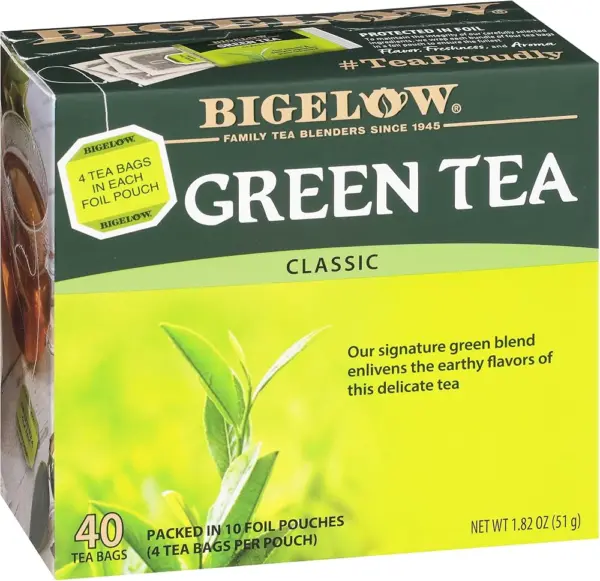
Bigelow Classic Green Tea Bags
Key Features
- Type: Tea bags
- Count: 240 tea bags
- Caffeine: Caffeinated
- Packaging: Individually foil-wrapped
- Price: Budget
Green tea is easy to ruin. Answer an email with the bag still in the cup and most of it turns bitter and hollow. Bigelow’s classic is the one we don’t have to watch: smooth, mild, and forgiving enough that a forgotten bag still makes a drinkable cup. That’s a low bar to clear, and a surprising number of teas don’t.
It’s why this is our top pick. Two hundred and forty bags arrive in six boxes, each bag sealed in its own foil pouch, so the last one tastes like the first — which matters when you’re buying most of a year of tea at once. At a cup a day that’s roughly eight months of tea, and it’s the lowest cost per cup of the bagged picks here.
The trade is body. This is a light, delicate cup, and in a big mug it can taste like a memory of tea; brew it in an 8-ounce cup, or use two bags when you want a full mug. If your idea of green tea is grassy and assertive rather than soft, FGO’s organic bags or a bottle of Oi Ocha will suit you better.
What keeps us coming back is the packaging. Individual foil pouches are the reason a 240-count purchase doesn’t turn into stale tea by spring — the one detail that makes buying in bulk a good idea rather than a gamble.
Pros
- Mild and slow to turn bitter
- Every bag individually foil-wrapped
- Lowest cost per cup of the bagged teas here
- Brews well hot or iced
Cons
- Light body; a big mug tastes thin
Our top pick: a smooth, forgiving cup that never turns bitter, sealed bag by bag, at the lowest cost per cup of the bagged teas here.
Best for Keurig Owners
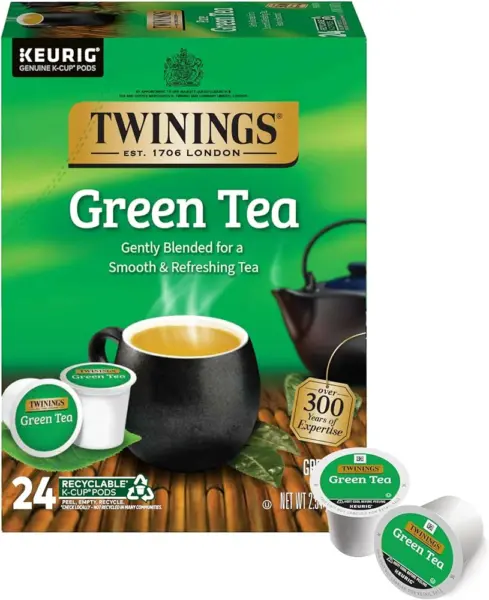
Twinings Green Tea K-Cup Pods
Key Features
- Type: K-Cup pods
- Count: 24 pods
- Brewer: Keurig and other single-serve brewers
- Brew settings: 6 oz or 8 oz
- Price: Midrange
If the Keurig is where your hot water comes from, this is the tea to keep next to it. No kettle to watch, no wet bag to fish out with a spoon, nothing to rinse — set the brewer to 6 ounces, which is what Twinings recommends for flavor, and the cup is done before a kettle would have boiled. The pods work in Keurig 2.0 machines and other single-serve brewers, and the same pod brews over ice when you want it cold.
What you give up is control. The machine decides how the water moves through the leaf, so the cup varies a little from pod to pod and you can’t pull the bag when the tea is exactly where you want it. That’s the whole trade: speed and no cleanup in exchange for the ability to tune a cup.
Against our top pick, this is the same habit with less nuance — decent, occasionally sharp, never as delicate as a bag you can pull early. Twenty-four pods is a sensible size to try before committing to a bigger box, and the price per cup makes it a supplement to bagged tea rather than a replacement.
Pros
- No kettle and nothing to clean
- Works in Keurig 2.0 and other single-serve brewers
- Brews hot or over ice from the same pod
Cons
- Flavor thins at the 8-ounce setting
- Costs more per cup than bagged tea
The one to keep beside the Keurig: no kettle, no bag to fish out, and nothing to clean up afterward.
Best for Evening Cups
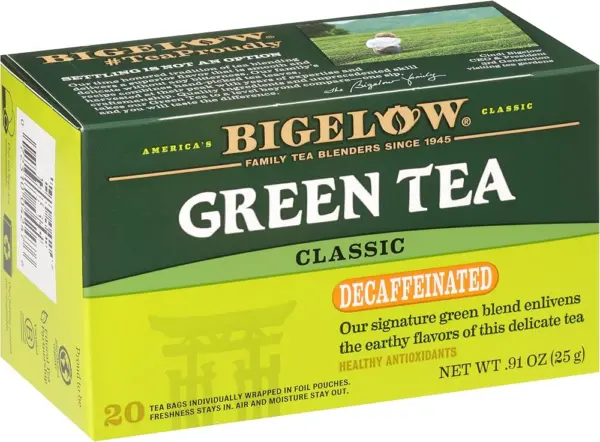
Bigelow Decaffeinated Green Tea
Key Features
- Type: Tea bags
- Count: 120 tea bags
- Caffeine: Decaffeinated
- Packaging: Individually foil-wrapped
- Price: Midrange
This is our top pick with the caffeine taken out, and it keeps almost everything else: the same mild leaf, the same foil-wrapped bags, the same habit of not turning bitter if you get distracted.
That’s what makes it useful rather than an afterthought. A cup at nine at night shouldn’t cost you sleep, and a decaf you actually like means you stop skipping tea after dinner altogether. The cup is soft and clean — a plain, pleasant green tea rather than a grassy one — and it works iced as well as hot.
Decaf bags cost about the same per cup as the regular ones, so there’s nothing to ration: 120 bags is roughly four months of evenings at a cup a day. We keep both boxes on the shelf, regular for the morning and decaf after dinner, and that’s the honest case for this one.
Pros
- Same mild flavor as our top pick
- Decaffeinated, so it works after dinner
- Individually foil-wrapped for freshness
Cons
- Half the bag count of the regular box
For the cup after dinner: the same mild Bigelow leaf without the caffeine, in foil pouches that keep it fresh to the last bag.
Best for Organic Shoppers
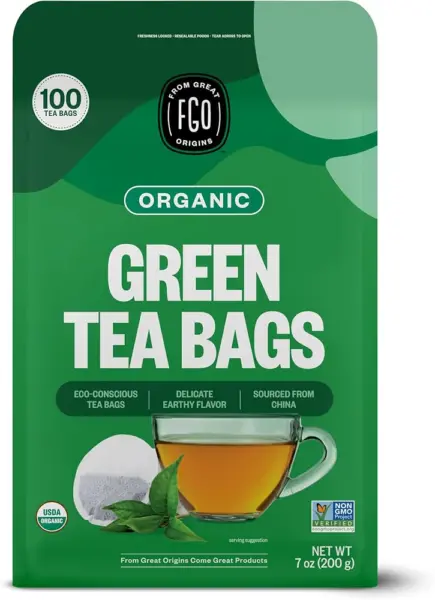
FGO Organic Green Tea Bags
Key Features
- Type: Tea bags
- Count: 100 tea bags
- Bag material: Abacá hemp fiber paper
- Certification: USDA Organic, Non-GMO
- Price: Midrange
The first thing to notice about FGO’s bags is what isn’t there: no string, no tag, no staple. The bag itself is abacá hemp fiber paper, free of dyes, adhesive, glue, and chlorine bleach, so bag and leaves can go into the compost bucket together. After years of untangling wet strings, we appreciate that more than we expected to.
The cup is a different proposition from our top pick. This is organic tea sourced in China and packed in the States, and it brews stronger and greener, with the vegetal edge that Bigelow smooths away. Give it two minutes rather than three — the assertive side of the leaf is also the part that turns bitter first.
A hundred bags come in a resealable pouch instead of individual wrappers, which is the right call for waste and the wrong one for a slow drinker: once the seal is open, the clock runs. At a bag or two a day that’s a nonissue, and this is the best organic option here — USDA Organic, Non-GMO, with the bag material spelled out rather than left to guesswork.
Pros
- Certified USDA Organic and Non-GMO
- Bag has no string, tag, or staple
- Resealable pouch keeps the rest fresh
- Stronger, more vegetal cup than our top pick
Cons
- Assertive flavor won’t suit mild-tea drinkers
- Stales faster than individually wrapped bags
The organic choice here: certified and compostable, bag and all, for drinkers who like their green tea strong and grassy.
Best for Unsweetened Iced Tea
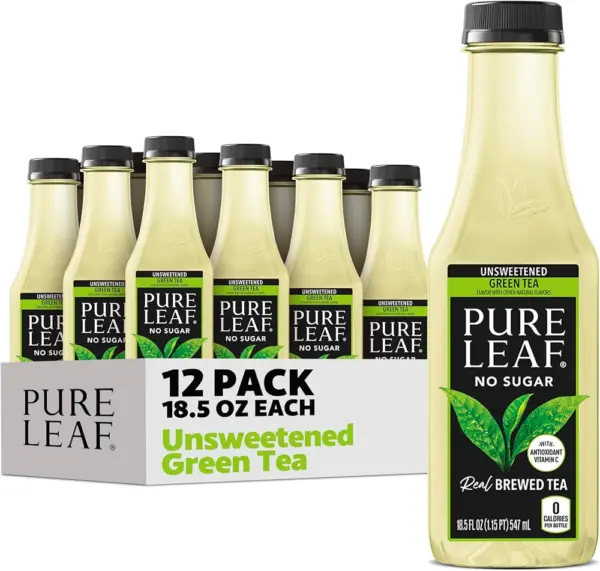
Pure Leaf Unsweetened Green Tea
Key Features
- Type: Ready-to-drink
- Count: 12 bottles, 18.5 fl oz each
- Calories: 0 per bottle
- Sweetener: Unsweetened
- Price: Midrange
When the fridge needs cold tea and there’s no time to boil a kettle, this is the case we restock. Pure Leaf brews from real leaves — no powder, no concentrate — and bottles it unsweetened with no artificial sweeteners and no added color, at zero calories. It’s light and clean, mild enough to drink straight from the bottle and dry enough at the finish to remind you it’s tea.
The catch is the calendar. A 12-bottle case is only worth it if you can drink it before the best-by date, and these can arrive with just weeks left on the code. Check the stamp on the bottle the day the box lands; if it’s close, work through that case first and hold off on reordering.
On flavor it sits in the middle of the bottled picks: milder and cleaner than Oi Ocha’s grassy Japanese blend, far less sweet than Lipton’s citrus tea. The 18.5-ounce bottles are also the biggest here, a small thing that adds up over a case.
Pros
- Unsweetened with zero calories
- Brewed from real leaves, not concentrate
- Bigger bottles than the other bottled picks here
Cons
- Faint bitterness as the bottle warms
Cold and unsweetened, brewed from real leaves instead of powder: the bottle to stock when nobody wants to boil water.
Best for Soda Swaps
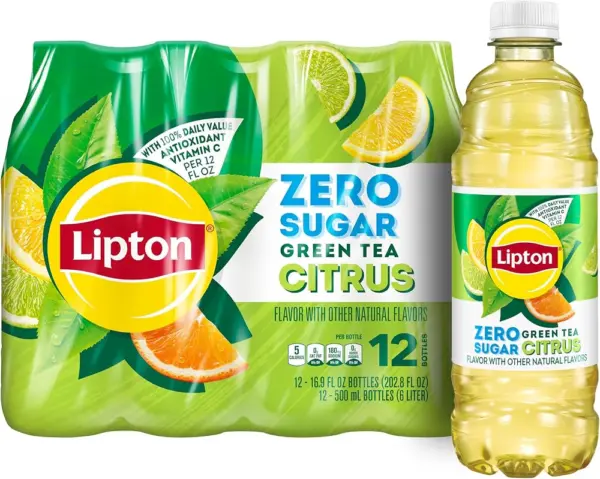
Lipton Zero Sugar Green Tea Citrus
Key Features
- Type: Ready-to-drink
- Count: 12 bottles, 16.9 fl oz each
- Sugar: Zero sugar
- Calories: 5 per bottle
- Price: Budget
Lipton’s zero-sugar citrus tea is the lowest-priced bottle in this group, and it’s built for a different job than the rest: not a cup of tea, but something cold and flavored to take a soda’s place. Zero sugar, five calories a bottle, 100% of your daily vitamin C in every 12 ounces, and enough citrus tang that nobody will mistake it for plain green tea.
We like it precisely because it doesn’t pretend to be anything else. The green tea is a background note under the citrus, and that’s a real compromise — but it’s the one that gets a soda drinker reaching for tea instead. Keep a case in the fridge for afternoons when water isn’t going to cut it, and buy Pure Leaf on the days when the tea itself is the point.
Pros
- Zero sugar and five calories a bottle
- 100% daily vitamin C per 12 ounces
- Lowest-priced bottled tea here
Cons
- Citrus dominates; tea is a background note
The budget case: zero sugar, five calories, and enough citrus to make a soda habit easier to break.
Best for Tea-Forward Bottles
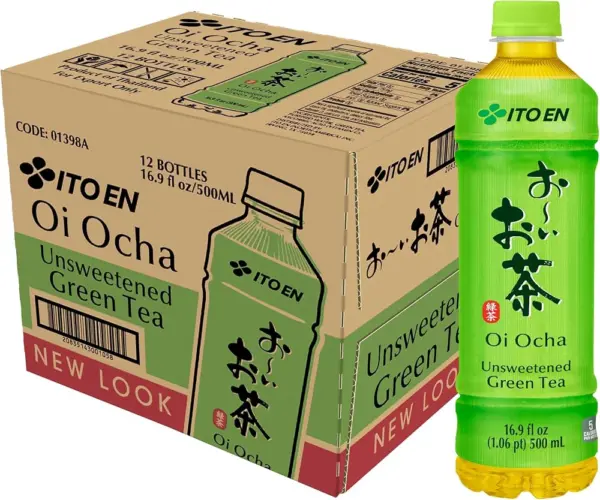
Ito En Oi Ocha Unsweetened Green Tea
Key Features
- Type: Ready-to-drink
- Count: 12 bottles, 16.9 fl oz each
- Calories: 5 per bottle
- Sweetener: Unsweetened
- Price: Premium
Oi Ocha is the bottle to hand someone who insists bottled green tea doesn’t taste like tea. It’s brewed from first-flush whole leaves grown in Japan, not from powder or concentrate, bottled unsweetened at five calories with no artificial colors or flavors. It also has the strongest personality of anything in this guide.
Grassy, savory, and just astringent enough to reset your palate, it tastes like the green tea you get with a meal in a Japanese restaurant — which is to say it tastes like a vegetable to anyone raised on mild bagged tea. We like it cold and we like it with food. We don’t think it’s the place to start if your usual cup is Bigelow.
The flavor draws more disagreement than any other bottle here, and it’s the one that gets called out for price: a case costs more per bottle than the zero-sugar pick, with no sweetener to hide behind if you don’t like the leaf.
What it earns is authenticity you can taste — the closest thing in a bottle to brewing loose leaf and chilling it. Keep a case for the days when sweet or mild won’t do, and pour it over ice in a glass rather than drinking from the bottle; it opens up that way.
Pros
- Brewed from whole first-flush Japanese leaves
- Unsweetened, five calories, no additives
- Closest to fresh-brewed iced tea here
Cons
- Grassy, astringent flavor divides drinkers
- Costs more per bottle than the budget picks
The most tea-forward bottle here: grassy, unsweetened, and best for drinkers who find mild green tea boring.
Best for Entry-Level Matcha
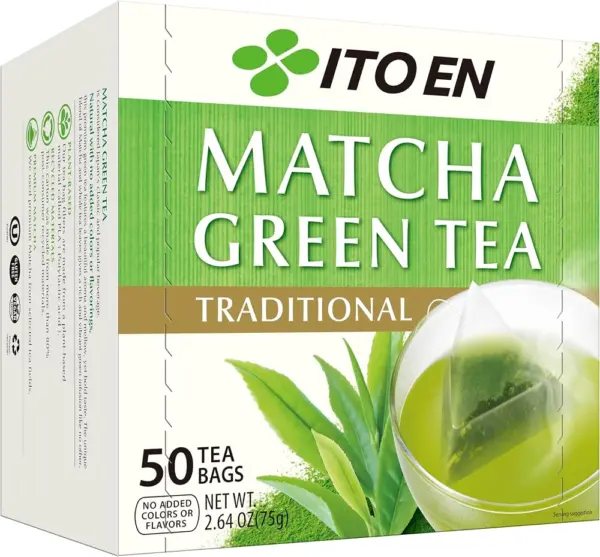
Ito En Matcha Green Tea Bags
Key Features
- Type: Matcha tea bags
- Count: 50 tea bags
- Caffeine: Caffeinated
- Calories: Zero calories
- Price: Budget
The box says matcha, and there is matcha in the bag — but what steeps out is green tea with a matcha accent, not the thick, opaque bowl you get from whisked powder. Go in expecting that and this is a useful little box; go in expecting a bowl of matcha and you’ll be disappointed.
Fifty bags, zero calories, caffeinated, hot or iced. We treat it as desk-drawer tea: something greener than a plain bag for the mornings when there’s no time for a whisk, a bowl, or any of the ceremony.
Strength is the dividing line with this one. It lands light in a full mug, so use two bags when you want it to stand up, and judge the cup as a flavored green tea rather than as matcha.
Where it fits is a first taste of matcha flavor without buying a whisk, a bowl, and a tin of powder, or a cheap way to keep something green in a drawer. If you already own the whisk, buy the real powder. And if a plastic-free bag matters to you, FGO is the one here that spells out what its bag is made of.
Pros
- Matcha flavor without a whisk or bowl
- Zero calories and caffeinated
- Inexpensive way to try matcha
Cons
- Mostly green tea; the matcha share is small
- Lands light in a full mug
A cheap, zero-calorie route to matcha flavor in a mug — as long as you expect a blended tea bag, not whisked matcha.
How We Tested the Green Teas
We started by gathering the green teas that genuinely turn up in grocery aisles, office kitchens, and online carts — standard bags, decaf, pods, unsweetened bottled tea, and matcha — then cut anything whose ingredient list read longer than the tea itself. That left 15 teas, which we lived with for four months.
For the hot teas, I brewed each one at its package directions and again at a deliberately careless boil-and-walk-away for three minutes, since that’s how most of us make a cup on a rushed morning. Each was tasted plain, then again after cooling to room temperature, and I poured every one into the same white mug and held it up to the window — pale yellow-green versus flat olive told us plenty before the first sip. Bags went in for a second steep to see whether they were a one-cup proposition, which is also where strength showed up: the ones that turned harsh or thin on round two lost points.
Bottled teas chilled overnight and were tasted straight from the fridge, over ice, and after an hour in a warm car. I cold-steeped the bags overnight to see which ones went bitter. Every box and bottle got a label read for grams of sugar, calories, and whether the matcha was actual ground tea or merely flavoring, and we worked out the cost per cup for each so the cheaper boxes weren’t graded on price alone.
How to Choose Green Tea
The green tea you’ll actually drink beats the one with the best pedigree, and format — bags, pods, or bottles — decides that more than the leaf does.
Start With the Format You’ll Actually Use
Bags are the default for good reason: you control the steep, they work hot or iced, and they cost the least per cup. If you drink one cup a day, a 240-bag box is roughly eight months of tea, which makes the freshness packaging as important as the flavor. Pods make sense only if a Keurig already lives on your counter — you trade control for speed and pay more per cup. Bottles are the convenience buy: no brewing, no cleanup, and the highest price per serving of the three.
Mild or Grassy: Match the Leaf to the Cup
Green tea runs from soft and nearly sweet to vegetal and astringent, and neither end is a flaw — it’s the main thing to choose on. Bigelow’s classic sits at the mild end; FGO’s organic bags and Ito En’s bottled tea sit at the grassy end. Bitterness is a separate problem and almost always technique. Water straight off the boil scorches green leaf, so let the kettle rest a minute, steep two to three minutes, and shorten the steep before you blame the tea.
Caffeine and the Evening Cup
Caffeine is why a lot of people stop drinking green tea after lunch, so decide up front whether your box should be decaffeinated. If tea is your evening drink, buy decaf rather than steeping a regular bag for thirty seconds and hoping — a full-flavored decaf cup beats a weak regular one every time. Our decaf pick comes in foil pouches, which matters more here because you’ll work through the box more slowly than a regular one.
What the Packaging Buys You
Green tea goes stale quietly: the leaf picks up whatever is in the cupboard and loses aroma within months of opening. Individually foil-wrapped bags are the gold standard and the reason a 240-count box is a safe purchase. A resealable pouch is the next best thing and the lighter-waste choice, but the clock starts the day you break the seal. If you drink two cups a week, buy a smaller box and keep it in a tin rather than committing to bulk.
Read the Bottle Before You Buy It
On a bottle, green tea can mean anything from brewed leaves and water to a sweetened drink with tea flavoring. Two lines settle it: the ingredient list, where you want tea brewed from leaves rather than powder or concentrate, and the sugar line, where unsweetened and zero sugar mean different things — unsweetened has no sweetener at all, while zero sugar may still taste sweet. Buy unsweetened for the leaf, zero sugar for the soda habit.
Frequently Asked Questions
How much caffeine is in a cup of green tea?
An 8-ounce cup brewed from a bag usually lands between 25 and 40 milligrams, and it climbs the longer the bag stays in. Coffee runs about 95 milligrams for the same cup, so trading your afternoon coffee for green tea cuts the caffeine by roughly two-thirds. Green tea isn’t a low-caffeine drink by default — if you want none at all, look for a box that says decaffeinated rather than steeping a regular bag briefly.
Why does my green tea look brown instead of green?
Steeped green tea is normally pale gold to amber, and that’s the brew, not a sign of old or low-grade leaf. Only matcha, which is ground leaf suspended in water, gives you an opaque green cup; bags and loose leaf won’t, however carefully you brew them. Judge the cup by taste and aroma — if it’s smooth rather than harsh, the color is telling you nothing useful.
Can I make iced tea with regular green tea bags?
Yes, and it costs far less than bottled. Brew double strength — two bags to 8 ounces of hot water for about three minutes — then pour it over a full glass of ice, where the melting ice brings it back to the right strength. Sweeten while the tea is hot if you’re sweetening at all, since sugar dissolves poorly in cold tea.
Final Verdict
The Bigelow classic box is the one to buy first: the most forgiving cup here, sealed pouch by pouch so all 240 bags stay fresh, at the lowest cost per cup of the bagged teas. Keep the decaf box beside it for evenings, since that’s the cup most people end up skipping.
And if your kitchen already runs on a Keurig, buy the Twinings pods instead. You trade control for speed, and the cup is ready long before a kettle would have boiled.