This post contains affiliate links. We may earn a small commission when you buy through our links — at no extra cost to you.
A drop-in sink is supposed to be the easy part of a kitchen project: cut the hole, drop it in, seal the rim, done. The catch is what that rim hides — steel thin enough to drum when the disposal runs, a drain set a hair off the low point so water puddles in one corner, a finish that scratches the first time you set down a cast-iron pan. None of that is fixable once the silicone sets.
Gauge is the number that tells you most about a stainless sink, and the most misread: 16-gauge is thicker than 18, not the other way around. My team and I have installed and lived with 12 drop-in sinks over the past eight months — brushed stainless, an embossed finish, white fireclay, a nano-coated double bowl — in a family kitchen, a basement prep bar, and a laundry room.
What held up wasn’t always the priciest model. A 33-inch single bowl swallows a roasting pan flat, a double bowl rarely does, and a small 20- to 28-inch sink belongs in a prep corner. The picks below are the ones I’d install again.
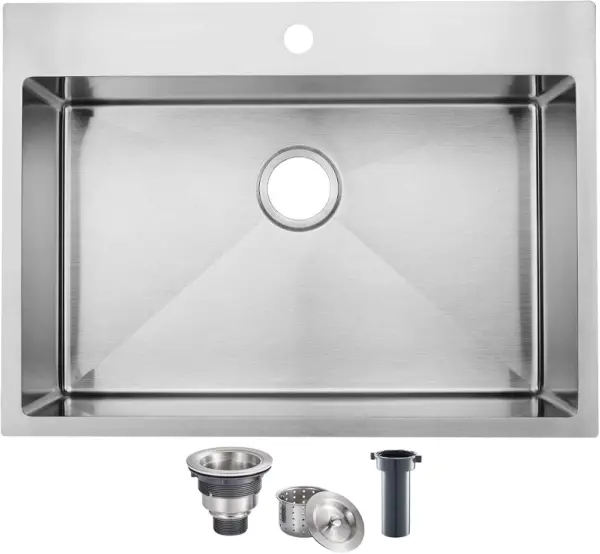
Best for Main Kitchen Sink
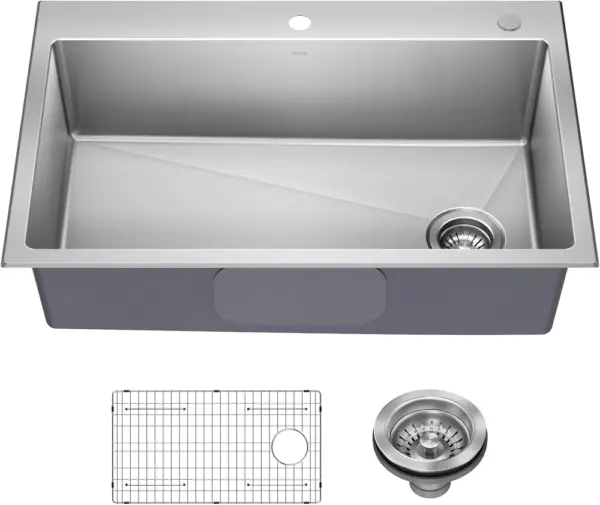
Kraus Fairlane KHT640-33
Key Features
- Steel gauge: 18 gauge
- Bowl dimensions: 30 1/2 in. L x 17 in. W x 8 5/8 in. D
- Exterior dimensions: 33 in. L x 22 in. W x 9 in. D
- Minimum cabinet size: 36 in.
- Price: Premium
The rim is what you are paying for, and it is the detail we kept coming back to. Kraus machines a thick beveled deck around the opening, so a swipe of the counter sends water over the edge and into the bowl instead of leaving it pooled against a seam. On a replacement job that wide flat deck also covers small imperfections in the cutout someone else made years ago. We think the rim alone is worth the upgrade.
Underneath it is 18-gauge stainless, the sensible middle of the range, formed into a single bowl that measures 30 1/2 by 17 inches and 8 5/8 inches deep. A stockpot or a half-sheet pan sits flat on the bottom. The base is sloped with channel grooves that push water toward the rear drain, and NoiseDefend padding keeps dishes from clattering the way they do in a bare steel box. Two predrilled holes cover a faucet and a soap dispenser, and the box includes a bottom grid, a drain with a removable strainer, and mounting hardware.
Installation is where a drop-in lives or dies, and the thick deck gives the clips something solid to bite. Nothing about the fit surprised us. We were also impressed by how the rounded corners clean up with a sponge rather than a brush, which matters more than it sounds like it should after a year of pasta nights.
Inside, the bowl gives up about three-eighths of an inch to the exterior depth, which nobody will notice. What we noticed is the counter the deck reclaims, with no lip to scrub around and no water ring to bleach. That is the whole case for this sink, and it is a good one.
Pros
- Beveled deck wipes water back into the bowl
- 18-gauge steel with soundproofing pads
- Grid, strainer, and mounting hardware included
- Two predrilled holes for faucet and dispenser
Cons
- Priciest sink in this group
- Needs a 36-inch cabinet
If you want one sink that drops into an existing 33-inch opening, drains cleanly, and stays quiet, we think the Fairlane is the safest money in this group.
Best for Prep and Cleanup
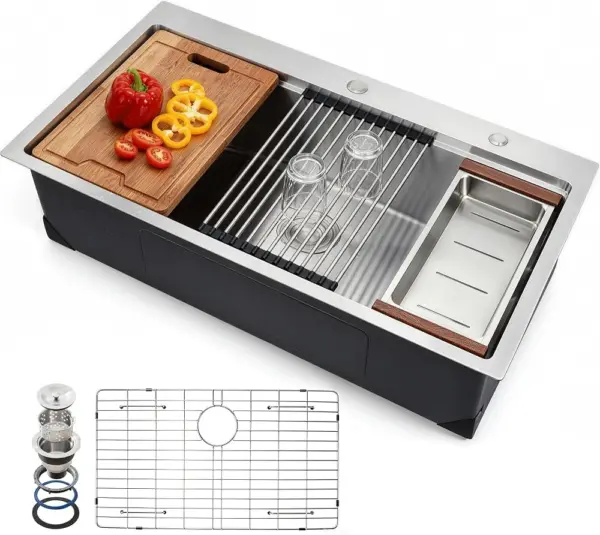
VEVOR 33-Inch Workstation
Key Features
- Material: 304 stainless steel
- Bowl depth: 9 inch
- Exterior dimensions: 33 x 22 inch
- Interior dimensions: 32 x 21 inch
- Price: Midrange
A ledge running around the rim turns a plain bowl into a work surface, and that is the whole argument for this VEVOR. Slide a cutting board over the basin and you have bought back a foot of counter; slide a colander there and the pasta water drains straight into the sink. We think it is the best value in this group for a kitchen with more cooking than counter.
The numbers suit a standard replacement: 33 by 22 inches outside, 32 by 21 inside, 9 inches deep, in 304 stainless with a 3mm rim. The bottom is sloped into an X-shaped drain channel, and thick rubber pads under the bowl keep it from ringing when a pan goes in. At just under 32 pounds it is light enough for one person to set.
It goes in like any top-mount: drop it into the opening, gasket and a bead of silicone under the rim, clips underneath. We paid close attention to the depth, because 9 inches is the difference between a sink you can submerge a stockpot in and one you cannot. This one swallows a roasting pan flat, which a double bowl of the same footprint never will.
The bowl takes the whole 33 inches, so there is no second basin for rinsing. The colander on the ledge does that job instead, and after a few weeks we stopped noticing the difference. What we did notice is how much of the counter stayed clear while dinner was being made.
Pros
- Ledge holds a board or colander over the bowl
- 9-inch single bowl swallows stockpots
- 304 stainless with noise-dampening pads
- Costs less than our top pick
Cons
- Single faucet hole rules out a dispenser
We recommend it to anyone who preps over the sink: the ledge holds a board or colander and the bowl stays clear, for less than our top pick.
Best for Bright White Kitchens
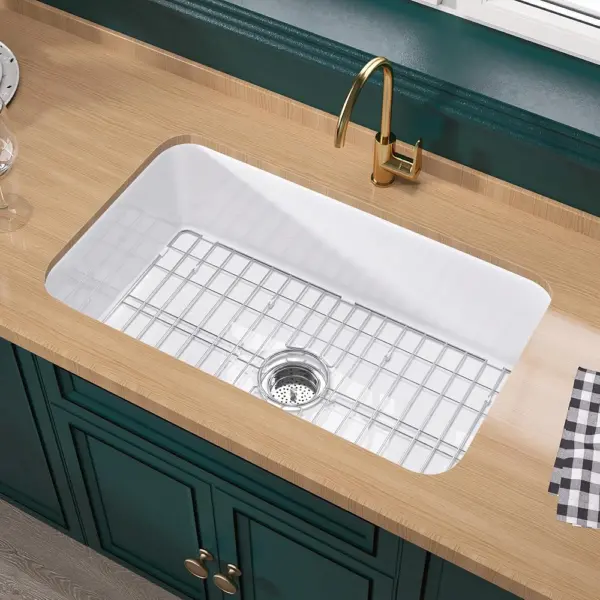
Miuara Fireclay 32-Inch
Key Features
- Sink weight: 59 lb
- Interior depth: 9 in.
- Minimum base width: 29.63 inches
- Exterior dimensions: 19" D x 31.88" W x 10" H
- Price: Midrange
Fireclay is clay fired hot enough to fuse the glaze into the body, and the surface that comes out has real depth to it: glossy, glassy, and bright enough to throw light around a dark cabinet run. It is the one sink in this set that changes the look of the room rather than just the countertop.
We think it earns that attention. The exterior runs 32 by 19 inches with a 10-inch height and a 9-inch interior, so it is a genuinely deep single bowl that happens to be three inches narrower front-to-back than a standard 33-inch sink, which is exactly what makes it useful where the counter is shallow. It is a dual mount, so it can drop in or hang under the counter, and it ships with a stainless strainer and a bottom grid. The flat base is sloped toward a center drain.
The catch is 59 pounds of clay. That is fine over a solid cabinet, but it needs real support under the rim: if the counter is particleboard, or the cabinet has been wet, reinforce it before the sink goes in, and use two people for the lift. The wide rim gives you somewhere to grip.
Set against the stainless sinks here, it is a different purchase. You are buying the look and the quiet, and the fireclay rewards a household that treats the sink like furniture rather than a workbench.
Pros
- Glossy white fireclay that stays bright
- 9-inch interior depth in a 19-inch footprint
- Dual mount for drop-in or undermount
- Strainer and bottom grid included
Cons
- Hairline cracks can appear after installation
If you want a bright white sink that changes the room, we think this fireclay bowl is the best-looking option here, as long as you plan for the weight.
Best for Wash-And-Rinse Work
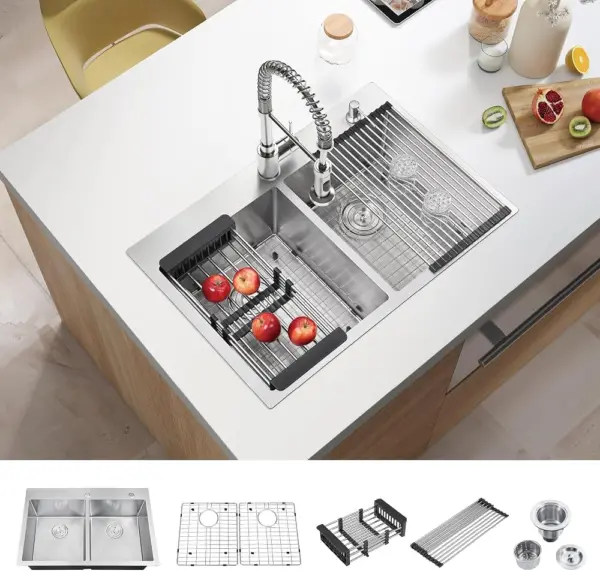
ATTOP 33-Inch Double Bowl
Key Features
- Base width: 31 inches
- Bowl steel: 20 gauge
- Cutout size: 32" x 21"
- Exterior dimensions: 33" L x 22" W x 9"
- Price: Budget
Double bowls fell out of fashion while single-bowl sinks got wider, but if you wash dishes by hand, the second basin is the point: one side soaks, one side rinses, and the sponge has somewhere to live that is not the counter. This ATTOP does it with two full-depth basins rather than the shallow pair some 50/50 sinks settle for.
The bowl steel is 20 gauge with a 3mm edge plate, so the rim feels substantial even though the basin walls are lighter than the 16-gauge sinks here. We think that is a fair trade in a double bowl, where each side is small enough that you are rarely lifting anything heavy out of it. The nano coating is meant to shed oil and resist rust, and it wipes clean without a lot of scrubbing.
You get a bottom grid, a colander, and a basket strainer in the box. The cutout is 32 by 21 inches and the base width is 31, so it fits a slightly narrower cabinet than the 33-inch sinks that want 36. Budget some patience for the mounting clamps; they line up, but not on the first try.
The limit is layout. Each basin is roughly half the sink, so a sheet pan goes in at an angle and a 12-quart stockpot will not lie flat on the bottom. If that is most of your washing, buy a single bowl. If it is plates, glasses, and a roasting pan you soak overnight, this is the friendlier sink.
Pros
- Two full 9-inch basins for soak and rinse
- Nano coating wipes clean
- Grid, colander, and strainer included
- Fits a 31-inch base
Cons
- 20-gauge basin walls are lighter than most here
A double bowl still makes sense if you wash by hand, and we think this is the best-value way to get two full-depth basins with racks included.
Best for Rvs and Small Kitchens
SHACO 28-Inch Drop-In
Key Features
- Steel gauge: 16 gauge
- Drain opening: 3-1/2"
- Exterior dimensions: 28" L x 18" W x 9" D
- Interior dimensions: 26" L x 14" W x 9" D
- Price: Budget
Twenty-eight inches is the number that matters. This sink is 28 by 18 outside and 26 by 14 inside, which means it drops into openings a 33-inch sink can never fill and leaves counter on both sides of the faucet. Galleys, teardrop trailers, laundry rooms, and old houses with short cabinet runs are where it belongs.
Small does not have to mean thin. SHACO uses 16-gauge T304 stainless, heavier than several full-size sinks in this guide, with 3mm dampening pads and stone-guard undercoating, a 9-inch depth, and a standard 3-1/2-inch drain opening that takes a disposal. A strainer is included and there is a two-year warranty behind it.
We like the proportions best: it keeps full depth while giving up width, so a stockpot still fits and a frying pan still submerges. The 14-inch interior width is the honest limit, and a big skillet goes in diagonally. The base drains toward a rear corner and will hold a thin film of water at the far end, so plan to wipe it out rather than let it air dry.
The single faucet hole keeps the deck simple, which is the right call for a laundry or a camper. It is also the size we look at for a basement bar or a canning station, where a deep bowl matters more than width.
Pros
- 16-gauge steel in a 28-inch footprint
- 9-inch depth takes stockpots
- Standard 3-1/2-inch drain fits a disposal
- Fits RV and laundry openings
Cons
- Brushed finish scratches and shows water spots
- Single faucet hole
For an RV, a laundry room, or a kitchen with barely any counter, we think this 28-inch sink is the best small option here.
Best for Heavy Daily Use
VAPSINT 33-Inch 16-Gauge
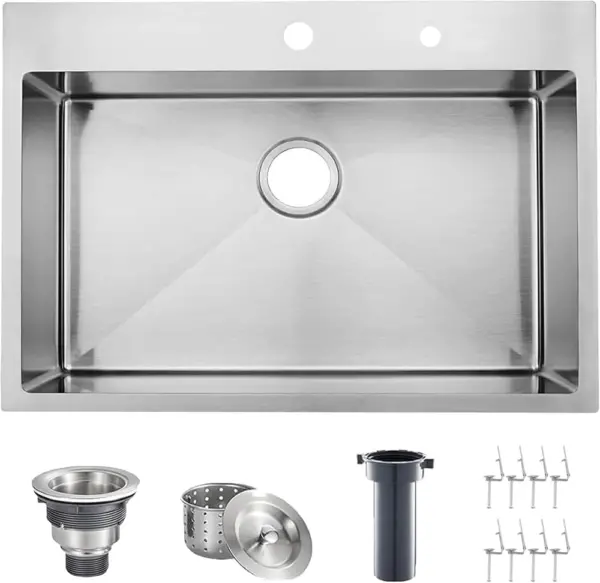
Key Features
- Warranty: 5 years
- Steel gauge: 16 gauge
- Exterior dimensions: 33" W x 22" D x 9" H
- Interior dimensions: 31" W x 18" D x 9" H
- Price: Midrange
Gauge is the quiet spec that decides how a sink feels in year five. VAPSINT builds this one from 16-gauge SUS304, the heaviest steel in this guide alongside the SHACO, and you can hear the difference: a dropped spoon thuds instead of ringing.
The rest is a sensible full-size single bowl: 33 by 22 by 9 inches outside, 31 by 18 by 9 inside, a 3-1/2-inch drain opening, an X-shaped channel at the base, 3mm soundproofing, and an anti-condensation coating underneath to stop drips forming in the cabinet. A drain strainer and installation hardware come in the box, and the warranty runs five years.
The finish is what we noticed first, brushed nickel with a consistent grain and no machining marks, and it reads as a more expensive sink than it is. It is also the simplest sink here to live with: no ledge to clean around, no coating to baby, just steel you can scrub.
Where it is thinner is the package. There is no bottom grid, which most of the sinks here ship with, so budget for one if you want to keep pots off the base. Beyond that it is a plain, heavy bowl that will take a beating and ask nothing of you.
Pros
- 16-gauge steel resists dents
- Anti-condensation coating under the bowl
- Five-year warranty
- Finish reads more expensive than it is
Cons
- No bottom grid in the box
Heavy 16-gauge steel and a finish that looks more expensive than it is: we think it is the pick if you do not need a workstation ledge.
Best for Bar and Laundry
Beleeb 20-Inch Embossed
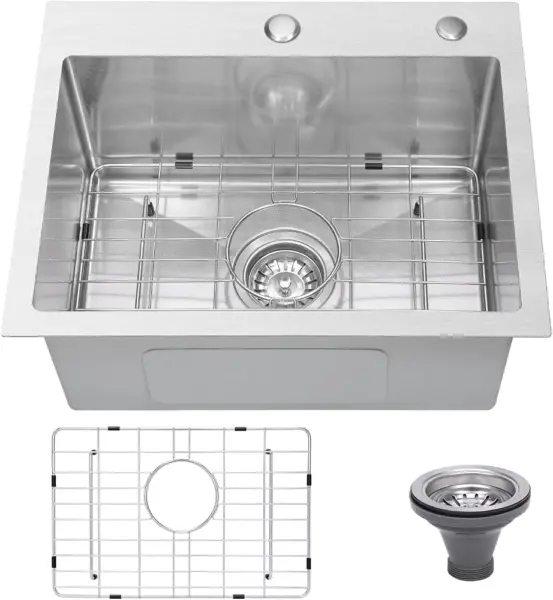
Key Features
- Bowl depth: 9"
- Cutout size: 18" x 12"
- Steel gauge: 18 gauge
- Exterior dimensions: 20" x 16"
- Price: Budget
The surface is the first thing anyone notices. Beleeb embosses a micro-pebble pattern into the steel instead of polishing it smooth, which scatters light so the sink does not glare under a window and hides the fine scratches that show up on every brushed bowl within a month. Under a sponge it feels closer to a well-seasoned pan than to sheet metal.
It is a 20-by-16-inch sink with an 18-by-12-inch cutout and a 9-inch depth, so it holds a stockpot or a stack of dinner plates with room to spare. The steel is 18 gauge, heavier than you would expect in something this small, with a 3mm pad underneath. A bottom grid and a drain with a strainer come in the box with a cutout template.
The wide rim is the practical part: it covers a rough opening, which makes this a realistic retrofit for an older bar or a laundry counter that was cut for something else. The cabinet clips are the lever-and-screw type rather than a full track, which is easier on a thick countertop.
Where it makes sense is anywhere the sink is a utility rather than the center of the room. The wide rim hides the previous cut, and 13 pounds is light enough for one person to drop in. The Kraus handles a main kitchen; this one handles the jobs you should not ask a main sink to do.
Pros
- Embossed texture hides scratches
- 18-gauge steel in a small sink
- Wide rim covers rough cutouts
- Grid and strainer included
Cons
- 18 x 12-inch basin will not take sheet pans
A small sink with a full-size build: we recommend it for a bar, laundry, or prep area where the bowl needs to hold a pot, not a sheet pan.
Best for Tight Cabinets
Elkay Dayton D125223
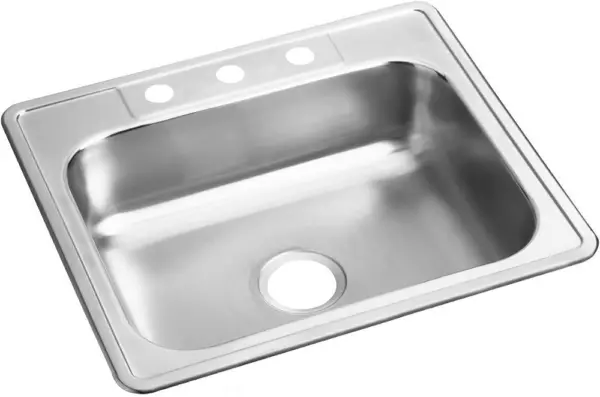
Key Features
- Steel gauge: 22 gauge
- Faucet holes: 3
- Exterior dimensions: 25" x 22" x 6-9/16"
- Minimum cabinet size: 30"
- Price: Budget
Six and nine-sixteenths of an inch is shallow for a kitchen sink, and that is deliberate. Elkay lists this Dayton as ADA compliant when it is properly installed, which is the whole reason the bowl is that depth: at a standard 34-inch counter, someone seated can reach the drain and the bottom of the bowl without stretching.
It is 25 by 22 inches outside with a 30-inch minimum cabinet, in 22-gauge stainless with a satin finish and three faucet holes, which is plenty for a faucet plus a sprayer or a dispenser. It is drop-in only, and it carries a limited lifetime warranty.
We like the three holes more than we expected to. On a sink this small you do not want much on the deck, and one hole for the faucet, one for soap, and one spare covers it without a countertop bottle. Installation is a straightforward drop into an existing opening, and the weight is light enough to manage alone.
What sells it is the footprint. A 25-by-22 sink goes into openings a 33-inch bowl cannot use, and the 30-inch cabinet requirement means it fits kitchens where nothing else in this guide will. That is a narrow brief, and this sink fills it precisely.
Pros
- ADA-compliant depth when installed correctly
- Fits a 30-inch cabinet
- Three faucet holes
- Limited lifetime warranty
Cons
- 22-gauge steel is the lightest here
The sink we recommend when the opening is small, the cabinet is 30 inches, or someone in the house needs to reach the bottom of the bowl.
How We Installed and Lived With 12 Drop-In Sinks
We started with every current listing that fit a standard 33-inch cutout plus the smaller 20- to 28-inch footprints, then filtered on the numbers that decide an install: inside bowl dimensions, steel gauge, bowl depth, drain position, and whether the deck came pre-drilled for a faucet. Listings that wouldn’t confirm gauge or depth got cut before anything shipped.
Each of the 12 sinks went into a real counter — quartz remnants on sawhorses in the shop, butcher block, and the laminate counter in my rental, which is exactly why drop-in models exist. I timed solo installs, ran a straightedge along the rim to find gaps where water could sit, and weighed every sink out of the box and again while lifting it into the cutout, since a heavy one becomes a two-person job the moment the silicone is open.
For eight months we used them the way a kitchen actually gets used: weeknight dishes, a holiday roast, a laundry sink that took muddy boots. I counted gallons to get real capacity, timed how long a full sink took to drain, and watched where the last inch of water went — a drain set off the low point leaves a puddle you chase with a sponge.
We dragged cast-iron skillets across the bottoms, scrubbed with abrasive pads, set a hot sheet pan on the fireclay deck, and left coffee and tomato sauce overnight. Then we pressed a thumb into the floor of a full sink to feel for flex, listened for drumming with the disposal running, and checked after eight months whether each finish still matched its faucet.
How to Choose a Drop-In Kitchen Sink
A drop-in sink has to fit the hole you already have, so the first decision is measurement, not features.
Measure the opening before you shop
The number in the product name is the outside of the sink, not the hole it needs. Most 33-inch drop-ins want a cutout around 32 by 21 inches, and the rim has to land on flat counter on all four sides, usually a half inch or more. Measure the opening and the cabinet’s interior width first. A 33-inch sink generally needs a 36-inch base; smaller models, like the 25-inch Elkay Dayton or the 28-inch SHACO, fit a 30-inch cabinet or an RV galley.
Switching from an undermount is the trap. Those openings are cut to the bowl, so a drop-in rim may have nothing to sit on, and a dual-mount sink cannot rescue an opening that is already too large.
Single bowl or double, and how deep
Depth matters more than the split. Nine inches is the useful standard for a main kitchen sink; six and a half inches is for accessible and laundry installations, where reach matters more than soaking. A single bowl takes a sheet pan flat and is easier to wipe around. A 50/50 double lets you soak on one side and rinse on the other, but each basin is roughly half the sink. Measure interior depth, not exterior: a 9-inch sink is usually about 8 5/8 inches deep inside.
Gauge, material, and how it sounds
Stainless runs from 16 gauge, the heaviest here, down to 22 gauge on the Elkay Dayton. Heavier steel dents less, sounds duller, and holds heat longer, and 18 gauge is the sensible middle for a main sink. Gauge alone does not make a sink quiet; rubber pads and undercoating do that work, so look for both. Fireclay and composite alternatives are quieter and hide scratches better, but they are heavy and need solid support under the rim.
Drainage and drain position
An X-shaped channel or a well-sloped base carries water to the drain; a flat bottom leaves a film you wipe out by hand. Rear-set drains leave more usable cabinet space underneath, which matters when a disposal and a shelf are fighting for the same square foot. Check the drain opening too: 3-1/2 inches is standard and accepts most disposals, and some small sinks put the hole off-center, which changes where the disposal hangs.
What is in the box, and how many holes
A bottom grid protects the base and doubles as a drying rack; a basket strainer saves a hardware-store run. Both are worth having and neither is universal, so check the contents list rather than assuming. Hole count matters just as much: one hole is faucet only, two adds a soap dispenser, three covers a faucet, sprayer, and dispenser. Count your fixtures before you order.
Frequently Asked Questions
Is a drop-in sink the same as a top-mount?
Yes. Drop-in, top-mount, and overmount all describe a sink that sits on top of the counter with its rim overlapping the opening, and you will see all three in product titles. The one that is not a drop-in is an undermount, which hangs below the counter and needs a finished edge on the cutout.
Do I need a longer flange to connect a disposal to a fireclay sink?
Sometimes. Thick-walled fireclay, like the Miuara here, can leave the drain opening further from the disposal than the flange in the box will reach, so order an extended flange along with the sink rather than finding out mid-install. Stainless sinks at normal wall thickness take the standard flange that ships with most disposals.
Does a deeper bowl cost me cabinet space underneath?
Yes. A 9-inch bowl drops about two inches lower than a shallow one, which is exactly where a disposal, a pull-out bin, or a shelf wants to live. If the cabinet is tight, set the disposal in position and check the clearance before the sink goes in, and remember a rear-set drain leaves more room at the back than a centered one.
How do I keep a white or coated sink looking new?
Wipe and dry after washing instead of letting water sit, and use a nonabrasive cleanser on glazed fireclay, nano-coated steel, and composite. Skip steel wool and scouring pads on every finish here. If your water is hard, a quick pass with a sponge over the bowl after the dishes keeps mineral spots from setting into the base.
Final Verdict
For a standard 33-inch cutout, we reach for the Kraus Fairlane first. The beveled deck, 18-gauge steel, soundproofing, and included grid make it the least compromised sink here, and what the price buys is a rim you can actually keep clean.
If you prep over the sink, the VEVOR’s ledge is the better use of the money. If the kitchen is white and the light is dim, nothing here beats the Miuara. And if the opening is 25 inches and the cabinet is 30, the Elkay Dayton is the one that fits.