This post contains affiliate links. We may earn a small commission when you buy through our links — at no extra cost to you.
A single lunch box that keeps food separated, stays cold all morning, and survives a school year is rare. Most families end up pairing a leak-proof bento with an insulated bag – but choosing the wrong combination leads to soggy lunch bags or broken latches. Portions are another hidden factor – many bento boxes are sized for ages 3-7 and leave older kids hungry.
This guide covers both hard bentos and soft bags, with clear best-for tags so you can match the product to your child’s age and appetite. We also highlight which models are easy for little hands to open and which require adult help. From toddler-specific containers with built-in utensils to insulated bags that freeze overnight, each option serves a different lunch scenario.
Whether you need a budget backup or a premium hot-meal solution, the picks below reflect real-world parent experience. The best setup is one your child can handle independently and that fits in their backpack.




Best for Ages 3-5
Bentgo Kids Prints Lunch Box
Key Features
- Portion Size / Capacity: 2.4 cups
- Durability of Latches or Zippers: Latch may break
- Price: Mid-Range
The Bentgo Kids Prints keeps wet and dry foods in separate compartments with no cross-leakage, so lunch stays mess-free. The lightweight build holds up to drops and daily knocks, and the latch is easy for small hands to open and close independently. Over time, the latch may loosen or eventually break under heavy daily use — some owners have received warranty replacements.
This lunch box is sized for toddlers and preschoolers aged 3–5 who need portion-controlled, snack-sized meals. The five compartments total just 2.4 cups, so older or hungrier children will likely need supplementary snacks. The playful prints add appeal for little ones, but the design prioritizes leak-proof function over capacity.
Pros
- Leak-proof compartments keep wet and dry foods separate
- Easy-open latch lets toddlers open and close independently
- Cute prints that kids enjoy carrying to school
Cons
- Portion sizes (2.4 cups total) are designed for ages 3–7; older or hungrier kids may need extra snacks
- Latches may eventually break after several months of daily use
Best suited for preschool lunches where leak-proof separation and easy opening matter more than large capacity.
Best for Daycare/preschool
Wildkin Insulated Lunch Bag
Key Features
- Insulation (for bags): PEVA liner
- Portion Size / Capacity: 1 liter
- Durability of Latches or Zippers: Zipper may snag
- Price: Budget
The Wildkin Insulated Lunch Bag stands out for its cute prints and easy-clean PEVA lining at a budget-friendly price. It’s lightweight enough for a young child to carry and fits standard bento boxes alongside an ice pack. The main tradeoff: the zipper can snag on the interior fabric over time, which makes this bag best suited for parents who prioritize style and easy cleaning over long-term zipper durability.
Pros
- Sturdy build that holds up to daily use.
- Adorable patterns that kids love and coordinate with backpacks.
- Easy-clean interior that wipes down or machine washes.
Cons
- Zipper can snag on the lining and may need careful guiding over time.
For parents who want a washable, lightweight lunch bag with fun prints and don’t need leak-proof compartments, this is a solid value.
Best for Hot Meals
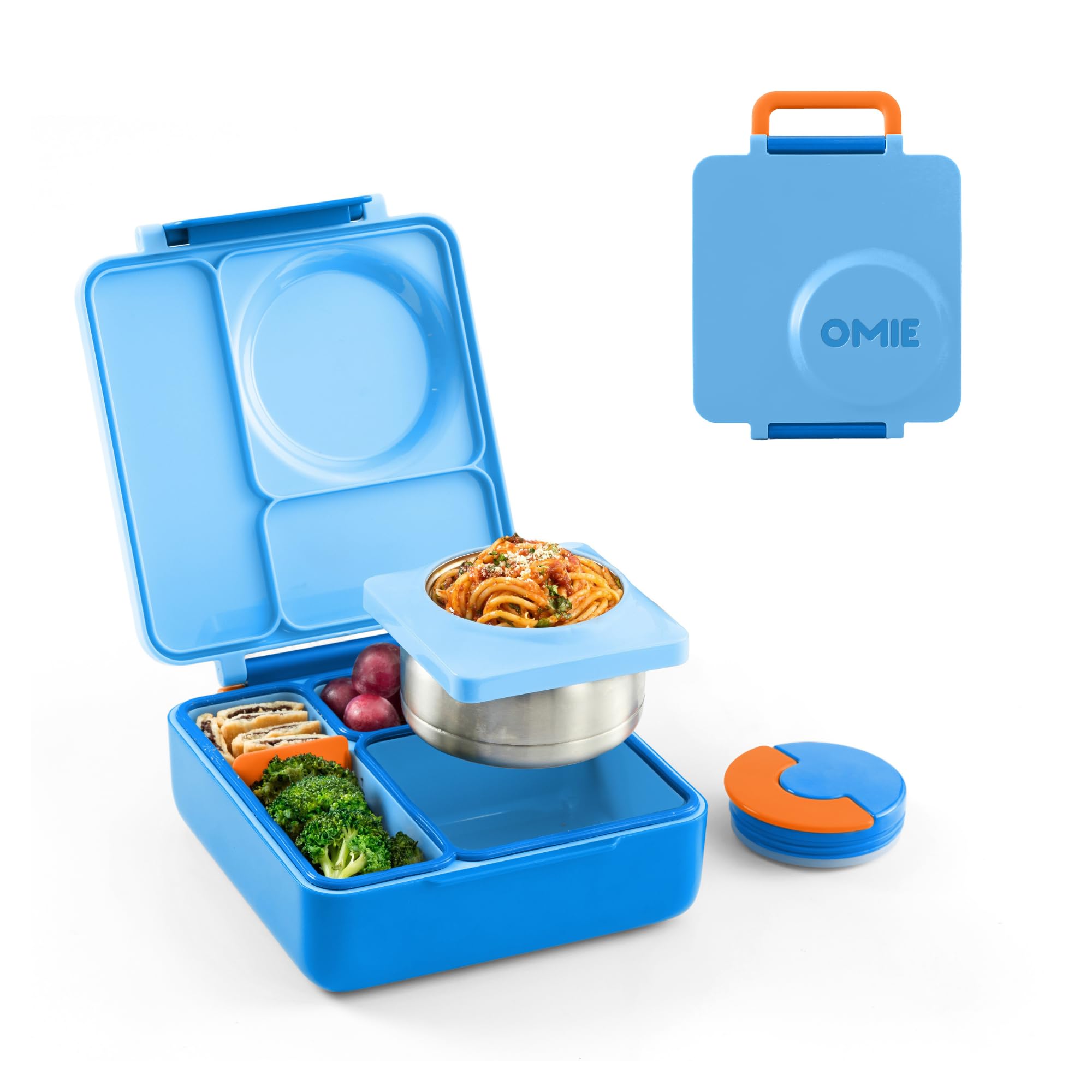
OmieBox Insulated Bento
Key Features
- Portion Size / Capacity: 3 comp + 8.5 oz thermos
- Durability of Latches or Zippers: High quality
- Price: Premium
The OmieBox’s built-in, vacuum-insulated thermos keeps hot foods like pasta or oatmeal warm for hours, so you can pack a complete meal without two separate containers. Unlike standard bento boxes that only handle cold or room-temperature foods, this one adds a true hot-food compartment.
The trade-off is a box that weighs 1.8 lbs empty and has a latch that can frustrate younger children. This makes the OmieBox a better fit for older elementary schoolers who can manage the weight and mechanism, or for parents who pack lunches and don’t need their child to open it independently.
Pros
- Vacuum-insulated thermos keeps soups and leftovers warm well past lunchtime.
- High-quality materials and replaceable seals make it repairable rather than disposable.
- Separate compartments allow a hot entrée, cold fruit, and a crunchy side in one box.
Cons
- The latch mechanism requires significant hand strength, so children under 7 often need adult help to open it.
- Empty weight of 1.8 lbs makes the box noticeably heavy for a child’s backpack or lunch bag.
The OmieBox suits older elementary schoolers who want hot lunches, but the weight and stiff latch make it a poor fit for preschoolers.
Best for All Ages
Simple Modern Lunch Bag
Key Features
- Insulation (for bags): Insulated liner
- Portion Size / Capacity: 4 liters
- Durability of Latches or Zippers: Zipper may snag
- Price: Mid-Range
The Simple Modern Lunch Bag’s 4-liter interior easily accommodates a bento box, water bottle, and extra snacks, making it a practical choice for elementary school lunches. Its bright Confetti pattern and water-resistant lining are easy to wipe clean, though the zipper can snag on the fabric over time – a minor tradeoff for families who value capacity and style.
Pros
- Spacious 4-liter capacity fits a full meal plus drink
- Water-resistant, wipeable lining makes cleanup quick
Cons
Suited for families who want a roomy, trendy bag and can work around occasional zipper friction.
Best for Toddlers 18M+
Munchkin Bento Box
Five compartments are proportioned for 18-month to 3-year-old appetites, and the stainless steel fork and spoon snap into the lid so they don’t get lost. That convenience comes with two tradeoffs: the box weighs 1.3 pounds empty, which is heavy for a toddler to carry in a backpack, and the lid doesn’t create a leak-proof seal — wet foods like yogurt or diced fruit can seep between compartments or out the sides. This design works best for parents who will carry the box themselves and pack dry items like crackers, cheese, and veggies.
Pros
- Portion sizes are genuinely toddler-friendly — smaller than most bento boxes aimed at preschoolers.
- Stainless steel utensils store in the lid and are dishwasher-safe, eliminating lost plastic sporks.
- Entire box is dishwasher-safe, so cleanup is quick after daycare.
Cons
- Lid does not seal out liquids — packing wet foods requires a separate container to avoid messes.
- At 1.3 pounds empty, the box is too heavy for most toddlers to carry on their own — parent will need to handle transport.
A smart pick for parents who want built-in utensils and toddler portions and don’t mind carrying the box themselves. Skip it if your child needs a leak-proof container or will be responsible for their own lunch bag.
Best for Budget Daily
mibasies Insulated Lunch Bag
Key Features
- Insulation (for bags): PEVA lining
- Portion Size / Capacity: 2.5 liters
- Durability of Latches or Zippers: Good
- Price: Budget
At under $12, the mibasies lunch bag delivers unexpectedly sturdy build quality and a snug fit for a standard Bentgo-style bento box with room for a slim ice pack. However, the 2.5-liter capacity means you can’t fit both the bento box and a separate water bottle inside — that bottle will need to go in the backpack’s side pocket. This makes it best for toddlers and preschoolers whose lunch consists of a bento and maybe a small pouch, not a full meal plus drink bottle.
Pros
- Exceptional build quality for the price – sturdy and long-lasting.
- Fits a standard Bentgo lunch box perfectly with room for an ice pack.
- Cute designs that match backpacks and are loved by kids.
Cons
- When packed with a bento box, there’s no room left for a water bottle inside the bag – drinks need to be carried separately.
For parents who want a durable, cute lunch bag that costs under $15 and fits a Bentgo box like a glove, this is a smart buy. Just plan to carry drinks outside the bag.
Best for Cold Lunch
Bentgo Chill Bento with Ice Pack

The Bentgo Chill’s integrated, removable ice pack is a clever addition that removes the need for separate cooling packs. However, the latch requires significant force to close and open, and the seal between compartments can let moisture through with watery foods. This makes the Chill best suited for parents who handle opening and pack mostly dry snacks and fruit.
Pros
- Built-in ice pack keeps food cold without needing separate freezer packs.
- Constructed from sturdy, BPA-free materials that hold up to daily use.
Cons
- Latch is hard for small children to open independently – adult assistance is expected.
Best for parents who want an all-in-one cold solution and are willing to help with opening and stick to dry foods.
Best for Older Kids
PackIt Freezable Lunch Box

Key Features
- Insulation (for bags): Gel pack walls
- Portion Size / Capacity: 3 liters
- Durability of Latches or Zippers: Seam/zipper failure
- Price: Mid-Range
Freezable gel walls keep contents cold throughout the day without extra ice packs – a strong performer for warm weather. The tradeoff is weight: the frozen bag becomes noticeably heavier, limiting its practicality for young kids to carry. Long-term durability (zipper and seams) may also show wear after a school year.
Pros
- Keeps lunch cold all day without extra ice packs.
- Spacious interior fits a bento box plus drinks and snacks.
Cons
- Frozen bag is significantly heavier, making it impractical for young children to carry.
Best for older kids in hot climates where cold retention matters more than weight. For daily preschool use, a lighter bag may be more practical.
Best for Occasional Use
FlowFly Insulated Lunch Bag

Key Features
- Insulation (for bags): PEVA lining
- Portion Size / Capacity: 1.8 liters
- Durability of Latches or Zippers: Zipper/handle failure
- Price: Budget
This bag offers a roomy interior that fits a bento box plus snacks at an entry-level price, and the PEVA lining holds temperature well for short trips. The tradeoff is that the zipper can snag and handle stitching may pull apart under the constant opening and closing of a school year — so it works best as a backup bag or for craft projects where gentle use is the norm.
Pros
- Very affordable price with decent quality
- Large capacity for its size – fits a bento box plus extras
Cons
- Zipper can get stuck and handle stitching may tear under daily use
Choose this if you need an ultra-budget spare bag for occasional picnics or as a craft tote, and accept that it won’t survive a full school term as a primary lunch box.
Best for Backup Use
opux Insulated Lunch Bag

Key Features
- Insulation (for bags): Insulated
- Portion Size / Capacity: 8 liters
- Durability of Latches or Zippers: Zipper snag/break
- Price: Budget
At 6 oz and under $14, this bag is easy to toss into a backpack for a spare lunch or field trip. The 8-liter capacity holds a full meal, and the insulation keeps food cool for a few hours. However, the zipper can catch on the interior lining and may fail after a few months of regular use — a tradeoff that suits older kids or occasional needs, not daily independent use by young children.
Pros
- Extremely lightweight at 6 oz, barely adds bulk to a backpack.
- Budget-friendly price for a simple insulated bag that does the basics.
Cons
- Zipper can catch on the interior lining and may stop working after a few months.
Works best as a backup bag or for an older child who can manage the zipper — not a daily driver for a kindergarten lunch routine.
Best for Budget Daily
RHCPFOVR Lunch Bag

Key Features
- Insulation (for bags): Insulated
- Portion Size / Capacity: 5.29 liters
- Durability of Latches or Zippers: Zipper catch
- Price: Budget
The RHCPFOVR Lunch Bag offers 5.29 liters of insulated capacity at a budget-friendly price — enough room for a bento box, ice pack, and extras. Cute, vibrant designs appeal to young kids. The occasional zipper snag on the interior fabric is a known tradeoff; this bag suits families who prioritize affordability and don’t need flawless zipper action for daily school use.
Pros
- Affordable with good build quality for the price
- Spacious interior fits a bento box and an ice pack
Cons
- Zipper can catch on the interior fabric occasionally
Best for parents on a budget who need a basic insulated bag for a bento box and don’t mind an occasional zipper snag.
How to Choose
Most parents overlook that a leak-proof bento box and an insulated bag serve different purposes – you likely need both.
Leak-Proof Compartments
A leak-proof seal matters most when packing wet foods like yogurt, fruit, or sauces. Hard bentos use silicone gaskets that keep each compartment separate, but only work when the lid is fully closed and latched. Soft bags rely on your containers to be sealed – they won’t contain a leaky bento.
The trade-off: bentos that seal well often have tight latches that can be hard for young children to open. Look for designs with a simple clip or latch that doesn’t require strong grip. If your child needs to open their own lunch, test the latch tension before buying.
Ease of Opening for Little Hands
Latches and zippers are the gatekeepers. Many bentos labelled ‘kid-friendly’ still require adult strength to close properly – and some are nearly impossible for a preschooler to open. Zipper bags seem easier, but cheap zippers snag and jam, turning a simple open into a frustrating battle.
The hidden factor: the force needed to close a bento lid is often much higher than the force to open it. A bento that seals tightly will almost always be harder to close than a bag with a zipper. For toddlers, a zipper bag (with a smooth, reinforced zipper) is more independent-friendly than a hard bento.
Insulation (for Bags)
Insulated bags use foam or gel layers to slow temperature change. PEVA lining is common at lower prices – it works for a few hours but won’t keep food cold all day in hot weather. Gel-wall bags like PackIt freeze solid and provide longer cooling, but add significant weight.
The compromise: a bag with thin insulation is light and cheap, but you must add a freezer pack. A bag with built-in gel eliminates the extra pack but becomes heavy when frozen, often too heavy for a young child to carry. For daycare or short school days, a thin insulated bag with a small ice pack is the practical middle ground.
Portion Size / Capacity
Bento boxes advertise portion sizes like ‘2.4 cups’ but that total is split across compartments. Each compartment is small – fine for grapes, cheese cubes, and crackers, but not for a full sandwich and an apple. Older kids (7+) often outgrow these portion sizes and need either a larger bento or a bag that can hold a separate container.
Capacity matters differently for bags: a 1-liter bag fits a standard bento box but leaves no room for a water bottle. A 4-liter bag can hold a bento plus a drink and snacks. Measure your child’s typical lunch items against the bag’s internal dimensions – listed capacity in liters is a starting point, but shape matters.
Durability of Latches or Zippers
This is the most common failure point in both categories. Bentos with plastic latches often see the clip break after months of daily use – a cracked latch can leave the lid unsealed. Bags with plastic zippers catch on the liner and eventually separate, especially when overstuffed.
The material choice tells the story: metal-reinforced zippers and thick silicone latches last longer. Some bentos, like OmieBox, offer replaceable seals, extending lifespan. Cheap bags rarely have repairable zippers – when they break, the whole bag is trash. Spending a few extra dollars on a brand with good warranty support (like Bentgo’s replacement parts) can save money long-term.
FAQ
Are Bentgo lunch boxes really leak-proof?
Yes, the standard Bentgo Kids models (Prints and Original) use silicone gaskets that seal each compartment. Parents consistently report that yogurt, applesauce, and even thin sauces stay put as long as the lid is fully latched. However, the Bentgo Chill is less reliable – its seal can allow liquids to seep between compartments because of the built-in ice pack design. For most families, a standard Bentgo is a trustworthy leak-proof bento.
What size lunch box fits a standard Bentgo container?
A standard Bentgo Kids box measures about 8.5 x 6.5 x 2 inches. It fits snugly into most insulated lunch bags designed for kids, especially those with a capacity of 1.5 liters or more. Popular options like Wildkin, mibasies, and Simple Modern bags are specifically sized to hold a Bentgo plus an ice pack. Always check the bag’s internal dimensions – a bag with a too-small opening may not fit the wider bento.
Can I put a Bentgo Kids lunch box in the microwave?
Bentgo Kids boxes are made of BPA-free, food-safe materials, but they are not microwave-safe. The plastic can warp or degrade when heated. If you need to reheat food, transfer it to a microwave-safe dish. The removable tray in some models is also not microwave-safe. For hot meals, consider the OmieBox, which has a stainless steel thermos that can be preheated.
Why does my kid’s lunch bag zipper keep snagging?
Snagging usually happens when the fabric of the bag’s lining gets caught in the zipper teeth. This is more common on bags with thin, flexible liners and low-quality plastic zippers. To prevent snags, make sure the bag is not overstuffed and that the lining is tucked away before zipping. Some brands use a ‘zipper garage’ – a fabric flap that covers the start of the zipper – to reduce catching. If snagging persists, consider a bag with a metal zipper or a reinforced design.