This post contains affiliate links. We may earn a small commission when you buy through our links — at no extra cost to you.
The promise of a coffee maker that grinds beans right before brewing is hard to resist—fresh flavor, minimal steps, fewer appliances. But in practice, many of these machines trade long-term reliability for convenience, with built-in grinders failing months in and cleaning becoming a daily chore.
That doesn’t mean you have to settle for pre-ground. The key is understanding where the trade-offs land for your routine. This guide cuts through the marketing to find the machines that actually deliver fresh coffee without constant repair appointments or countertop headaches.
Whether you’re after espresso, drip, or a machine that does both, the right choice balances grind quality, ease of maintenance, and a track record that matches your expectations.


Best for Multi-Drink Households
Ninja Luxe Café ES601GM
Key Features
- Type: Espresso, drip, cold brew
- Grinder: Conical burr, 25 settings
- Price: $$
The Ninja Luxe Café combines a conical burr grinder with 25 settings, a built-in scale, and three distinct brew modes: espresso, drip coffee, and rapid cold brew. The weight-based dosing and assisted tamper reduce guesswork, making it easier to produce consistent espresso shots without separate scales or tools. For drip coffee, the 70-oz water tank and programmable settings handle large batches, while the cold brew function delivers concentrate in under 15 minutes.
Drink quality earns consistent praise across all three methods — espresso with good crema, clean drip coffee, and smooth cold brew. The hands-free milk frother offers four preset programs that produce microfoam suitable for lattes and cappuccinos. That said, a minority of units develop grinder jams or error messages after several months of use, and the interface can feel layered for those who prefer one-button simplicity.
This machine fits households that want one appliance for espresso, drip, and cold brew, and beginners who appreciate guided brewing over manual control. If you prioritize long-term durability above all else or insist on traditional espresso technique, a simpler or more specialist machine may be a better match. The interface rewards time spent learning its menu — absolute beginners should expect a short adjustment period.
Pros
- Three brew methods from a single burr grinder — espresso, drip, and cold brew.
- Weight-based dosing and barista assist reduce guesswork for beginners.
- Produces cafe-quality espresso and milk drinks with consistent results.
Cons
- Some units may develop grinder or functionality issues after months of use.
- The multi-step interface can overwhelm users who prefer simpler controls.
For households that value three brew methods and guided brewing over pure espresso tradition, the Ninja Luxe Café offers the best multi-function value in this price range.
Best for Espresso Enthusiasts
Breville Barista Express
This Breville delivers espresso with the depth and crema you’d expect from a cafe, thanks to its integrated conical burr grinder and 15-bar pump. The trade-off is a hands-on process: you dial in grind size and dose manually, and the machine rewards those who enjoy that ritual. The grinder and pump can require attention within the first year, so this is not a set-and-forget appliance.
Best for home baristas who want fresh-ground convenience and are willing to learn proper puck prep and maintenance. If you prefer push-button brewing or a machine that runs for years without service, the top pick in this guide offers greater reliability and automation. Surface wear on the drip tray and body may appear over time – a cosmetic consideration, not a performance issue.
Pros
- Espresso quality rivals cafe drinks with thick, lasting crema.
- Built-in grinder lets you use fresh beans without a separate appliance.
- Saves money over cafe visits once you dial in your routine.
Cons
- Steam wand requires thorough cleaning after each use to avoid milk residue.
- Surface finish on the drip tray and body may show wear after months of regular use.
A rewarding machine for those who enjoy the craft of espresso and can handle occasional service needs. For a more hassle-free experience, the Ninja Luxe Café is the better bet.
Best for Budget Drip Drinkers
B+D Mill & Brew CM5000B
The Mill and Brew provides fresh-ground drip coffee at a price that undercuts most grind-and-brew models. It combines a 12-cup carafe with a built-in blade grinder and a 24-hour programmable timer, so you can set it to brew before you wake. While the top pick offers multiple brew methods and a burr grinder, this BLACK+DECKER focuses on one job: delivering drip coffee from whole beans without a separate grinder.
This machine suits buyers who prioritize cost savings and fresh taste over quiet operation and minimal upkeep. The blade grinder produces noticeable noise during grinding, and the grinder chamber requires daily cleaning to avoid stale residue. For first-time grind-and-brew users who don’t mind a few extra steps, it’s a practical entry point.
Pros
- Brews fresh-tasting coffee from whole beans ground just before brewing.
- Simple controls and a programmable timer make morning brewing convenient.
- Good value for combining a grinder and brewer at a low price tier.
Cons
- The grinder chamber collects coffee residue and needs regular cleaning to keep performance consistent.
- The blade grinder is loud during operation, noticeable in quiet environments.
Buyers on a tight budget who want fresh-ground drip coffee and accept the noise and cleaning will find this BLACK+DECKER a useful tool.
Best for Large Households
Cuisinart DGB-550
The Cuisinart DGB-550 delivers consistent, hot drip coffee from freshly ground beans with straightforward push-button controls. Its 3-year warranty and 12-cup glass carafe make it a straightforward choice for those who want a dedicated drip machine without the complexity of multi-brew systems.
This machine suits drip coffee drinkers who prioritize fresh-ground flavor over a quiet morning or minimal upkeep. The blade grinder is loud during operation, and the grind chamber requires daily cleaning to prevent oil buildup — these are conditions the buyer should expect, not hidden defects.
Pros
- Fresh-ground coffee taste with each pot
- Simple controls make daily brewing easy
- Consistent brewing temperature for a full carafe
Cons
- Blade grinder may produce a coarser grind than some prefer
- Long-term durability under daily use can vary between units
A capable drip machine for buyers who accept its noise and cleaning routine in exchange for fresh-ground coffee at a mid-range price.
Best for Budget Buyers
Cuisinart DGB-400

At a budget-friendly price, this Cuisinart delivers freshly ground coffee and the flexibility to use pre-ground beans via the grind-off feature. However, the carafe can drip during pouring, the grinder is loud, and some units may stop working sooner than expected – making it a better fit for occasional use or those who don’t mind extra cleaning and noise in exchange for a low upfront cost.
Pros
- Affordable grind-and-brew delivers fresh coffee taste
- Grind-off feature lets you use pre-ground coffee
Cons
- Noisy grinding can be disruptive in quiet mornings
- Carafe may drip when pouring, requiring careful handling
Best for budget buyers who want fresh-ground drip coffee and are willing to accept some quirks in exchange for a low price.
Best for Budget Espresso
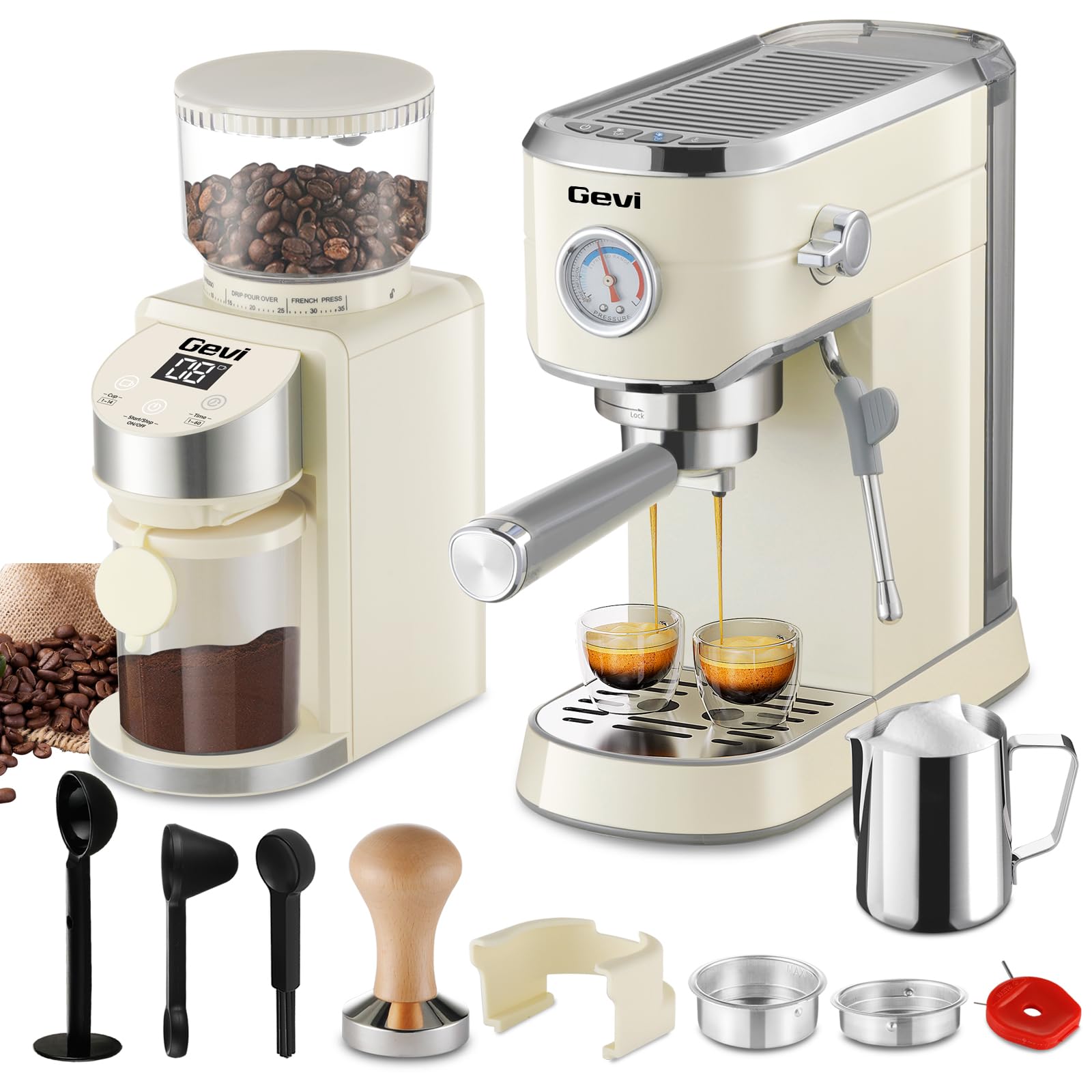
Gevi Espresso + Grinder Set
Key Features
- Type: Espresso (separate grinder)
- Grinder: Burr (separate)
- Price: $
The Gevi set provides a separate burr grinder with 35 settings and a 20-bar espresso machine at a price well below most built-in grinder models. Because the grinder and machine are independent, the setup occupies more counter space and requires an extra step to dose and transfer grounds. Some units have been noted to develop grinder or pump issues within the first few months, so long-term dependability under daily use is uncertain. This combination works best for budget-conscious espresso beginners who don’t mind the two-device workflow and can accept the possibility of repairs down the line.
Pros
- Budget-friendly way to get a burr grinder and espresso machine separately.
- Quiet burr grinder with consistent results for the price.
Cons
- Separate grinder and machine take up more counter space and require an extra step to transfer grounds.
- Long-term dependability is uncertain; some units have been noted to experience grinder or pump problems within months.
This combo fits the cost-conscious espresso beginner willing to manage two separate devices and accept the possibility of early maintenance issues.
Best for Speed-Focused
Breville Barista Pro

The Barista Pro delivers café-quality espresso and lattes with a 3-second heat-up and a clear LCD display that simplifies dialing in shots. However, it carries the same reliability risks found in the Barista Express — some units may develop issues after months — at a premium price. The coffee temperature can also run lower than some drinkers prefer, a tradeoff for the fast heat-up. This machine suits those who prioritize speed and a modern interface over long-term investment in a single machine.
Pros
- Fast heat-up lets you pull shots in under a minute from cold start.
- LCD display makes grind size and dose adjustments intuitive.
Cons
- Coffee temperature may not be hot enough for those who prefer very hot drinks.
- Some units may develop performance issues after several months of use.
Only consider this if the 3-second heat-up is a non-negotiable priority and you’re willing to accept the same durability tradeoffs as the Barista Express.
How to Choose
The grinder is the heart of any all-in-one coffee maker – its quality and durability determine whether you get consistent, flavorful coffee or expensive frustration.
Drip vs Espresso: Which Brew Style Fits?
Drip machines with grinders are straightforward: beans drop into a blade or burr, ground coffee falls into a filter, and hot water passes through. You get a full pot of standard-strength coffee with minimal effort. Espresso machines with grinders require more steps – tamping, timing, and temperature control – to extract a concentrated shot and often need a separate steam wand for milk.
If your household only drinks black coffee, a drip machine is simpler and cheaper. If you want lattes or cappuccinos, an espresso machine with a built-in grinder saves counter space but demands a learning curve and more maintenance.
Burr vs Blade Grinder
Burr grinders crush beans between two abrasive surfaces, producing uniform particles that extract evenly. This consistency matters most for espresso, where grind size directly affects pressure and taste. Blade grinders chop beans with a spinning blade, resulting in a mix of fine dust and coarse chunks that can make drip coffee taste bitter or weak.
The trade-off: burr grinders are quieter and more precise, but cost more and can jam if beans are oily. Blade grinders are cheaper and work fine for basic drip, but they’re loud and need frequent cleaning to avoid rancid oil buildup.
Reliability and Durability
Built-in grinders are moving parts exposed to moisture and coffee oils. Over months, residue can clog burrs, seize motors, or cause inconsistent dosing. Consumer reports from multiple brands show that grinder failures are the top complaint across both budget and premium machines, often occurring within the first year of use.
Look for machines with easily replaceable grinders, accessible cleaning instructions, and user communities that share fixes. A longer warranty (3 years vs 1) signals more manufacturer confidence, but doesn’t guarantee trouble-free operation.
Ease of Cleaning the Grinder and Brew Unit
Every grind-and-brew machine requires regular disassembly to remove stale grounds and oil residue. Blade grinders tend to trap coffee in crevices, demanding daily wiping or even brush scrubbing. Burr grinders may have removable hoppers and burrs that can be rinsed or brushed, but many require quarterly deep cleaning with grinding tablets.
If you’re not willing to spend 5–10 minutes per week on cleaning, choose a machine with a removable brew group, self-cleaning cycle, or a grind-off option so you can use pre-ground occasionally.
Noise Levels During Grinding
Blade grinders are universally loud – expect a high-pitched whine that can wake sleepers in adjacent rooms. Burr grinders operate at a lower pitch but still produce noticeable grinding noise, typically lasting 15–30 seconds per cycle. Some machines offer a delayed grind timer to let you set the night before, so the grinding happens in the morning at a scheduled time.
If noise is a concern (shared walls, early morning brewing, light sleepers), prioritize a model with a programmable timer and a burr grinder, which is less jarring than a blade.
FAQ
Why does my Breville espresso machine stop working after a few months?
The integrated grinder is a common failure point – coffee oils and moisture can jam the burrs or cause the motor to stall. Regular cleaning with a brush and grinding tablets helps, but some units simply have design flaws. If you experience failure within the first year, warranty service is your best bet. Consider a machine with a more user-replaceable grinder or separate units for easier maintenance.
Is a blade grinder bad for drip coffee makers?
Not inherently – for drip coffee, a blade grinder can produce acceptable results if you use a consistent grind time and don’t over-grind. But the uneven particle sizes lead to under-extracted and over-extracted flavors in the same cup. For truly better-tasting coffee, a burr grinder (even a cheap one) delivers more uniform grounds and a cleaner flavor.
How do you clean a coffee maker with a built-in grinder?
Start by emptying the hopper and running a grind cycle without beans to clear loose grounds. For blade grinders, wipe the chamber with a dry cloth – never add water. For burr grinders, remove the upper burr (if possible) and brush off residue. Use grinding cleaner tablets monthly. Some models have a self-cleaning cycle via the brew path. Neglecting this step allows rancid oils to ruin future cups.
Should I buy a coffee maker with a built-in grinder or separate units?
If you value counter space and one-button convenience, an all-in-one machine is simpler in theory but often more prone to failure – repairing the grinder or brewer means the whole unit goes out. Separate units let you upgrade the grinder independently and keep making coffee if one breaks. For espresso, a separate grinder is almost always more reliable and easier to dial in. For drip, a built-in blade grinder is fine for casual use.