This post contains affiliate links. We may earn a small commission when you buy through our links — at no extra cost to you.
Percolators are making a comeback, and for good reason: they brew coffee with a boldness drip machines rarely match. But that flavor depends on dialing in the right grind and brew time—get it wrong and you’re stuck with bitter, over-extracted coffee.
The catch is that most percolators don’t come with instructions for that sweet spot. Glass knobs crack, electric models lack auto shutoff, and fine grounds slip through the basket if you use a drip grind. This guide cuts through the guesswork.
The best percolator for you isn’t about which brand has the most reviews—it’s about whether you want the independence of a stovetop model or the convenience of an electric one, and how much effort you’re willing to put into mastering the brew.


Best for Families & Gatherings
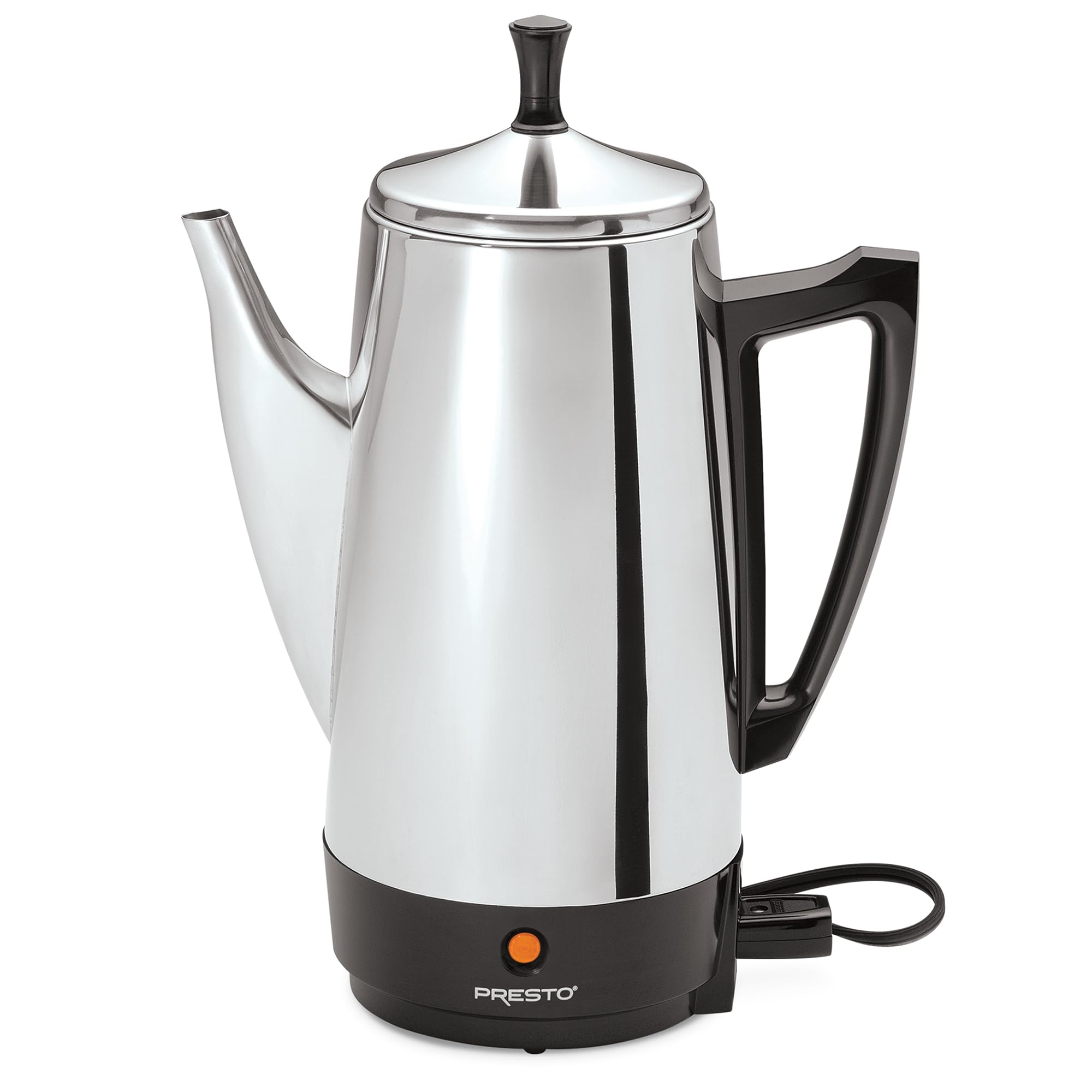
Presto 02811 12-Cup Electric
Key Features
- Power Source: Electric (800W)
- Capacity: 12 cups
- Material: Stainless steel
- Ease of Cleaning: Hand wash
- Price: $$
The Presto 02811 heats 12 cups to a piping-hot brew in about 12 minutes, faster than most drip machines. The stainless steel construction retains heat well, so the coffee stays hot for extended periods without a warming plate — a clear advantage for group servings.
This percolator suits families, gatherings, or light commercial use where volume matters. The straightforward assembly and disassembly make cleaning simple. One tradeoff: there is no automatic shutoff, so you’ll need to unplug the unit after brewing to avoid scorching the coffee or damaging the heating element. That’s a minor routine for anyone staying nearby during brew time, but not ideal for a forget-it-and-walk-away scenario.
Pros
- Consistently rich, hot coffee in every batch
- Brews 12 cups in about 12 minutes – faster than many drip machines
- Simple to take apart and clean by hand
Cons
- No automatic shutoff – must be unplugged after brewing to avoid burning coffee or damaging the unit
For households or gatherings that want a fast, large-batch electric percolator and can manage a single manual step after brewing, this delivers reliable heat and flavor at a reasonable price.
Best for Camping & Emergencies
Farberware Yosemite 8-Cup Stovetop
Key Features
- Power Source: Stovetop (non-induction)
- Capacity: 8 cups
- Material: Stainless steel, glass knob
- Ease of Cleaning: Dishwasher safe
- Price: $
It brews a full-bodied cup on any gas, ceramic, or electric stovetop, and the stainless steel construction holds up to regular use. The glass knob and plastic top are fragile and may shatter during handling, creating a cut risk — buyers should treat this percolator carefully, especially when hot. This model suits campers, preppers, and anyone who wants a low-cost, durable coffee maker that works off-grid.
Pros
- Produces a rich, bold coffee flavor typical of percolators.
- Easy to disassemble and clean; the permanent filter eliminates paper waste.
Cons
- Glass knob can shatter during use, posing a cut hazard — handle with care.
Buy it if you value stovetop independence and bold flavor over electric convenience, and are willing to handle the fragile knob with care.
Best for Health-Conscious Brewers
COLETTI Bozeman 9-Cup Stovetop
Key Features
- Power Source: Stovetop (non-induction)
- Capacity: 9 cups
- Material: Stainless steel, glass knob
- Ease of Cleaning: Dishwasher safe
- Price: $
The COLETTI Bozeman stands out for its all-stainless build – no plastic or aluminum touches the brewing water, delivering a clean flavor that health-conscious buyers appreciate. It works on campfires, gas stoves, and electric cooktops, making it a solid choice for off-grid use or as a stovetop alternative to electric percolators. The glass view top can crack under heat stress, so handling it gently matters. Induction cooktop owners should note this model won’t work on their surface.
Pros
- No plastic or aluminum – pure stainless steel for clean taste
- Produces smooth, non-bitter coffee with rich flavor
Cons
- Not compatible with induction cooktops – requires gas, ceramic, or electric stovetops
- Glass view top can crack during percolation, posing a safety hazard
For buyers who prioritize material purity over electric convenience, this percolator offers clean flavor and durable construction at a budget-friendly price – just mind the fragile glass top.
Best for Singles & Couples
Farberware FCP240 4-Cup Electric
Key Features
- Power Source: Electric (1000W)
- Capacity: 4 cups
- Material: Stainless steel, plastic parts
- Ease of Cleaning: Hand wash
- Price: $$
The Farberware FCP240 brews a cup per minute, so a full pot is ready in about four minutes. Its compact design tucks into a suitcase, RV cabinet, or dorm shelf — electric convenience without claiming counter space. Brews consistently hot coffee with a classic percolator taste.
This percolator fits singles or couples who want a quick, hot cup without the complexity of a stovetop model. Unlike stovetop percolators, it requires only an outlet — no camp stove or gas burner needed. The automatic keep-warm function keeps coffee ready for refills. However, the handle and heating element can fail prematurely in some units, so this option suits those willing to accept a shorter lifespan for immediate portability and size.
Pros
- Brews a full pot in just a few minutes
- Compact footprint fits in suitcases, RVs, and small kitchens
- Automatic keep-warm function keeps coffee hot after brewing
Cons
- Handle and heating element can fail prematurely, leaving some units non-functional within months
A fast, take-anywhere electric percolator for one or two — worth considering if you accept the durability tradeoff.
Best for Individual Drinkers
Presto 02822 6-Cup Electric
Key Features
- Power Source: Electric (500W)
- Capacity: 6 cups
- Material: Stainless steel
- Ease of Cleaning: Hand wash
- Price: $$
Brews 6 cups in about 6 minutes and cleans up easily—a fitting complement to the larger 12-cup Presto for single-serving needs. The coffee can come out weak, so you may need to adjust grind size and quantity for a bolder cup. Best suited for singles or couples who want a fast electric percolator and are comfortable tweaking brew parameters for a lighter coffee.
Pros
- Brews a full pot in roughly 6 minutes – quick turnaround for one or two people.
- Stainless steel parts and simple disassembly make cleanup straightforward.
- Compact footprint fits small countertops, RVs, or dorm spaces.
Cons
- Coffee can come out weak even with maximum grounds; adjusting grind size or quantity is typically needed for stronger flavor.
A practical option for those who want a quick, small electric percolator and are willing to experiment with grind and quantity to achieve their preferred strength.
Best for Budget Camping
Primula Today 9-Cup Aluminum Stovetop

Key Features
- Power Source: Stovetop (non-induction)
- Capacity: 9 cups
- Material: Aluminum, plastic parts
- Ease of Cleaning: Hand wash
- Price: $
This budget-friendly percolator works on camp stoves and fires, delivering drinkable coffee with minimal fuss. The aluminum build keeps weight low, but plastic parts on the handle and knob degrade over time, and the basket allows fine grounds to escape into the brew – acceptable for occasional use, not for daily home brewing.
Pros
- Works on camp stoves and open fires, ideal for outdoor trips.
- Entry-level price keeps upfront cost low for emergency kits.
Cons
- Plastic knob and basket fit can lead to loose grounds and broken parts over time.
Best left for camping or emergency backup where low price and portability matter more than long-term durability.
How to Choose
The single most important factor in percolator success is using a coarse grind—fine grounds slip through the basket and turn your cup into a muddy, bitter mess.
Electric vs. Stovetop
Electric percolators plug into an outlet, brew automatically, and keep coffee hot without a flame. Stovetop models require a burner and active monitoring—you watch the glass knob to see when percolation starts and stop it before over-extraction.
Choose electric if you want push-button convenience for daily use and have counter space. Choose stovetop if you camp, face power outages, or prefer the ritual of manual brewing. Note that stovetop models usually don’t work on induction cooktops unless they have a magnetic base.
Capacity
Percolator capacities are listed in cups, but a ‘cup’ is typically 5 ounces—smaller than a standard mug. An 8-cup percolator yields about 40 ounces, enough for two to three mugs. A 12-cup model serves four or more.
Oversizing your percolator can lead to weak coffee because the basket may not hold enough grounds for the water volume. Match capacity to your typical serving size to avoid diluting the brew.
Material Quality
Stainless steel percolators resist corrosion, retain heat well, and won’t impart metallic flavors. Aluminum models are lighter and cheaper but can react with acidic coffee over time, affecting taste. Plastic parts—handles, knobs, tops—are common failure points, especially on stovetop models exposed to high heat.
If you prioritize taste and durability, choose an all-stainless design. For occasional camping use, aluminum is fine, but expect the plastic components to degrade faster.
Brew Speed & Heat Retention
Electric percolators typically brew at about one cup per minute; a 12-cup pot is ready in 12 minutes. Stovetop models vary widely depending on burner output. Faster brewing doesn’t always mean better—too rapid percolation can under-extract the coffee.
Heat retention matters after brewing. Electric models with a keep-warm function hold coffee at serving temperature, but if left on too long the coffee turns bitter. Stovetop percolators cool faster unless you pour into a thermos.
Cleaning & Maintenance
Dishwasher-safe stainless steel models simplify cleanup, but many percolators require hand washing because of plastic parts or the heating element. The basket and stem must be scrubbed to remove coffee oils that go rancid and ruin flavor over time.
For long life, avoid abrasive cleaners on glass knobs and check the stem for blockages. A monthly vinegar soak descales electric models and keeps the brew consistent.
FAQ
Why does my percolator coffee taste bitter or weak?
Bitterness usually means the coffee is over-extracted—too fine a grind or too long a brew time. Weak coffee often results from too little grounds for the water volume. Use a coarse grind and start with 1 tablespoon of coffee per 6 ounces of water, then adjust brew time to 7–10 minutes on a stovetop or until the electric model’s light turns on.
Can you leave a percolator plugged in after brewing?
Most electric percolators lack auto shutoff—you must unplug them once brewing finishes. If left plugged in, the heating element will continue to cook the coffee, turning it bitter and potentially damaging the unit. Set a timer or stay nearby to unplug after 12 minutes for a full pot.
How do I fix a broken glass knob on my percolator?
Glass knobs are a common failure point on stovetop models. Replacements are widely available online or from the manufacturer. To avoid breakage, never tighten the knob too firmly and let the percolator cool before cleaning. Some aftermarket vendors sell stainless steel knobs as a more durable alternative.
Is it safe to use a stovetop percolator on a glass cooktop?
Yes, but only if the percolator base is flat and completely smooth—rough or warped bases can scratch the glass. Also ensure the cooktop is rated for the percolator’s weight when full. Never slide the percolator across the surface; lift it to avoid scratches.