This post contains affiliate links. We may earn a small commission when you buy through our links — at no extra cost to you.
Induction cooking is fast, precise, and wonderfully controllable—until you set down a pan that refuses to heat, or heats in a hot ring while the edges stay stubbornly cold. I’ve cooked on induction for years, and my team and I just spent eight months testing 14 pieces of cookware to find the ones that actually work. The right pan fixes that: it heats evenly across the base, holds a gentle simmer without scorching, and lets you cook without scraping your dinner off the surface.
One thing first-time induction buyers don’t always realize is that a pan can be labeled induction-compatible and still wobble, heat unevenly, or feel too small for the burner you use most. We looked at how each piece handled real meals—searing, simmering, frying eggs—and how much effort it took to clean afterward. Value matters too: a pan that costs more but survives daily use and releases food cleanly is often the better deal. The picks below are the ones that earned a spot in my kitchen and, in some cases, pushed out pans I’d owned for years.




Best for Everyday Induction Cooking
Circulon A1 9-Piece Set
Key Features
- Pieces: 9
- Set mix: Two saucepans, stockpot, sauté, two skillets
- Oven safe: 400 °F
- Induction ready: Yes
- Price: Premium
The A1 set earns the default spot because it solves the practical induction problem first: a thick, edge-to-edge steel base is built to sit flat and heat evenly, and the nine pieces cover the pans most meals actually use. We like that Circulon includes 1- and 3-quart saucepans with straining lids and pour spouts, a 6-quart stockpot, a 3-quart sauté pan, and 8.5- and 10-inch skillets. That is a working set, not a pile of odds and ends.
The nonstick is the other reason we reach for it. ScratchDefense is promoted as tougher than earlier Circulon coatings, and the surface releases food without a long soak; the set is dishwasher-safe, which matters on busy nights. We still treat any nonstick as a wear item, so silicone or wooden tools and hand washing are the habits that keep it at its best. The stainless handles are riveted and comfortable, and the pans sit steadily on the burner.
The A1 gives ground on portability. At 6.81 kg for the set, the stockpot is not the pan you toss around one-handed, and the largest pieces take up cabinet space. That is the trade for the stable, warp-resistant base. For a household cooking three or four meals a week on induction, the mix is hard to beat: enough capacity for a batch of chili, skillets for eggs and searing, and lids that strain without a colander. The straining lids are the sleeper feature once pasta night arrives.
Pros
- Nine-piece mix covers everyday cooking
- Broad steel base for induction
- Scratch-resistant nonstick and dishwasher-safe
- Straining lids and pour spouts
Cons
- Set weight is noticeable when lifting
We recommend the Circulon A1 as the induction default for most cooks: nine useful pieces, a broad steel base, and nonstick that is built for easy cleanup.
Best for Stainless Steel Cooking
Cuisinart MultiClad Pro 12-Piece
Key Features
- Pieces: 12
- Oven safe: 500 °F
- Construction: Tri-ply clad
- Induction ready: Yes
- Price: Premium
Uncoated stainless is the fork in the road. The MultiClad Pro is the strongest stainless choice here because its tri-ply construction runs up the sidewalls, not just across the base, and the 12-piece set is built for people who sear, deglaze, and finish in the oven. The pans are induction-compatible and rated to 500°F, so they move from stovetop to broiler without a coating limit.
We think that construction is worth the upkeep. The trade is that bare stainless does not pretend to be nonstick: eggs need fat and a little patience, and a sticky patch is usually a heat problem, not a ruined pan. What you get in return is a surface that can take metal utensils, a hard sear, and a pan sauce built from the fond. The clad walls also mean the sides heat with the base, so a simmer does not scorch in one corner.
This is not the set for someone who wants wipe-clean eggs every morning. It is for the cook who keeps a nonstick skillet for eggs and uses stainless for everything else, or who is replacing flaking nonstick for good. The daily tax is preheating and a little fat; the payoff is durability and the freedom to use high heat. If you want one surface for savory cooking, this is the one we trust.
Pros
- Tri-ply clad up the sidewalls
- Oven and broiler safe to 500°F
- No nonstick coating to flake
- Induction-compatible
Cons
- Heavy 26-pound set
We recommend this set for cooks who want bare stainless: tri-ply heat, oven-and-broiler flexibility, and no coating to wear out, provided you’re willing to use fat and technique.
Best for Premium Pot Cooking
HexClad 6-Piece Pot Set
Key Features
- Pots: 2, 3, and 8 qt
- Construction: Tri-ply hybrid
- Dishwasher safe: Yes
- Induction ready: Yes
- Price: Premium
HexClad’s pitch is a hybrid surface: laser-etched hexagons over stainless and a ceramic nonstick coating, with tri-ply construction underneath. The six-piece set is narrower than a full cookware set: 2-, 3-, and 8-quart pots with lids, plus two silicone trivets. If you already own skillets you like, that is a sensible way to buy; if you are starting from nothing, it leaves a gap.
We think the metal-utensil claim is the real draw. The surface is designed to take metal without the careful babysitting a plain nonstick pan demands, and it is dishwasher-safe, which makes it the least fussy premium option here. The pots heat evenly on induction and the handles stay cool. The 8-quart is the one for stock and crab boils; the 2- and 3-quart pots handle sauces and grains.
The catch is value. This is the most expensive way to buy three pots here, and the hybrid surface still needs some fat and moderate heat to release cleanly. We do not recommend it as a first set for a cook who needs skillets, and the premium is hard to justify if you only boil pasta. It earns its place when you want one pot to go from sear to oven to dishwasher without coating panic. It is a specialist purchase, not the default.
Pros
- Hybrid surface accepts metal utensils
- Dishwasher-safe and induction-ready
- 2-, 3-, and 8-quart pots cover staples
Cons
- No skillets in the set
We recommend this pot set for induction cooks who want premium hybrid nonstick and metal-utensil freedom, not a full battery of skillets.
Best for Nonstick Skillet Tasks
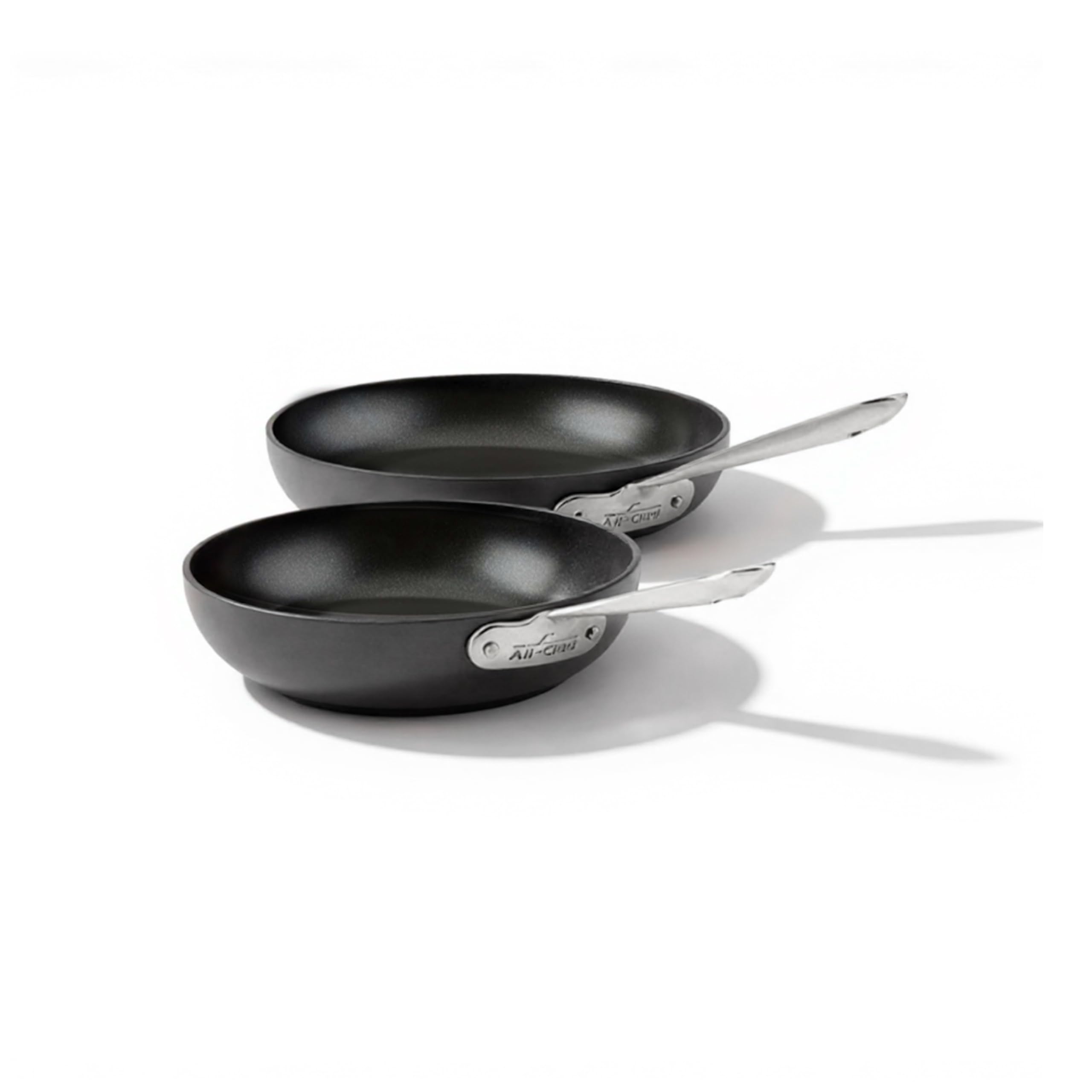
All-Clad HA1 2-Piece Fry Pan Set
Key Features
- Pans: 8 and 10 in
- Oven safe: 500 °F
- Construction: Hard-anodized aluminum
- Induction ready: Yes
- Price: Midrange
The HA1 set is the opposite of a cupboard-clearing cookware set: two fry pans, 8 and 10 inches, both with a hard-anodized aluminum body and a stainless-steel induction base. That is enough for eggs in the small pan and a chicken breast or a batch of vegetables in the large one, and the flared sides make it easy to slide a spatula underneath.
The nonstick is the practical part. All-Clad rates the pans oven-safe to 500°F and dishwasher-safe, though hand washing is the better habit for any coated pan. The handles are riveted stainless and the pans have a solid, weighty feel, 5 pounds for the pair, so they stay put when you stir.
We think this is the right buy if you already have stainless pots and want nonstick only where it matters. The trade is that the surface needs nonmetal utensils and moderate heat; it is not a metal-utensil pan. If you need one pan for everything, the 10-inch is the workhorse; if you cook for one, the 8-inch is often the only pan you dirty. The pair makes more sense than a full set for a small induction kitchen.
Pros
- 8- and 10-inch sizes cover most skillet jobs
- Hard-anodized body with induction base
- Oven-safe to 500°F
Cons
- Nonstick coating can wear over time
We recommend this pair for induction cooks who want two hard-working nonstick skillets, with the caveat that the coating is a long-term wear item.
Best for Small Kitchen Storage
CAROTE 21-Piece Detachable Set
Key Features
- Pieces: 21
- Handles: 2 removable
- Storage: Stackable with lids
- Induction ready: Yes
- Price: Midrange
The removable handle is the whole idea here, and it works: take it off and the pans stack into a much smaller footprint, with lids and a storage bucket to keep the set together. Carote lists the design as saving up to 70% more space, and the 21 pieces include two handles, silicone lids, storage lids, pan protectors, and a utensil set. We like it for the camper or the apartment where every shelf is contested.
The cooking side is familiar Carote: aluminum bodies, a nonstick coating, and induction-compatible bases. The pans heat quickly and release food cleanly, and because the handle comes off, a hot pan can go straight into the oven or onto the table without a protruding grip. The silicone lids are handy for fridge storage, and the storage bucket keeps the smaller pieces from disappearing into the cabinet.
Durability is the part to watch. The handle is the wear point, and the coating is not indestructible; treat both with care and the set stays useful. For a first induction set in a tight kitchen, the trade is worth it: less storage, more cooking flexibility, and a set that can double as serving dishes. If you regularly cook large batches with two hands on two pans, a conventional set is less fiddly.
Pros
- Removable handles cut storage space
- Induction-compatible nonstick cooking
- Lids and storage bucket keep pieces together
- Oven-to-table flexibility
Cons
- Only two handles for the set
We recommend this set for small kitchens, RV cooks, and anyone who values cabinet space over the last word in stovetop braising.
Best for Small Stainless Batches
Cuisinart Chef’s Classic 1.5-Quart Saucepan
Key Features
- Capacity: 1.5 qt
- Oven safe: 500 °F
- Construction: Stainless with aluminum base
- Induction ready: Yes
- Price: Budget
A 1.5-quart saucepan is the piece most sets get wrong: too small for pasta for two, too large for a single egg. This Cuisinart lands in the useful middle. The stainless body has an aluminum-encapsulated base for induction, a mirror finish that does not react with food, and a riveted handle that stays cool on the stovetop. It is also oven-safe to 500°F, which turns it into a small baking dish for a crumble or a finish under the broiler.
The size is the point. It is right for heating a can of soup, cooking oatmeal for one, boiling two eggs, or making a small batch of gravy. The stainless surface is not nonstick, so scrambled eggs need fat and a little attention; cleanup is still easy if you rinse it before the eggs dry on. The 16-ounce weight makes it feel light in the hand without feeling flimsy.
We like this as an add-on rather than a starter pot. If you already have a set and the small saucepan is the one you reach for most, this is a low-risk upgrade; if you are outfitting a kitchen from scratch, put the money into a set first. It is the kind of pan that earns its cabinet space by being the right size for the job.
Pros
- 1.5-quart size suits small batches
- Aluminum base for induction and even heat
- Oven-safe to 500°F
- Light 16-ounce pan
Cons
- Too small for family-size batches
We recommend this small saucepan for induction cooks who need a compact stainless pot for eggs, oatmeal, and sauces without buying another set.
Best for Egg and Single Servings
CAROTE 8-Inch Classic Granite Skillet
Key Features
- Diameter: 8 in
- Construction: Aluminum with granite nonstick
- Induction ready: Yes
- Max temperature: 482 °F
- Price: Budget
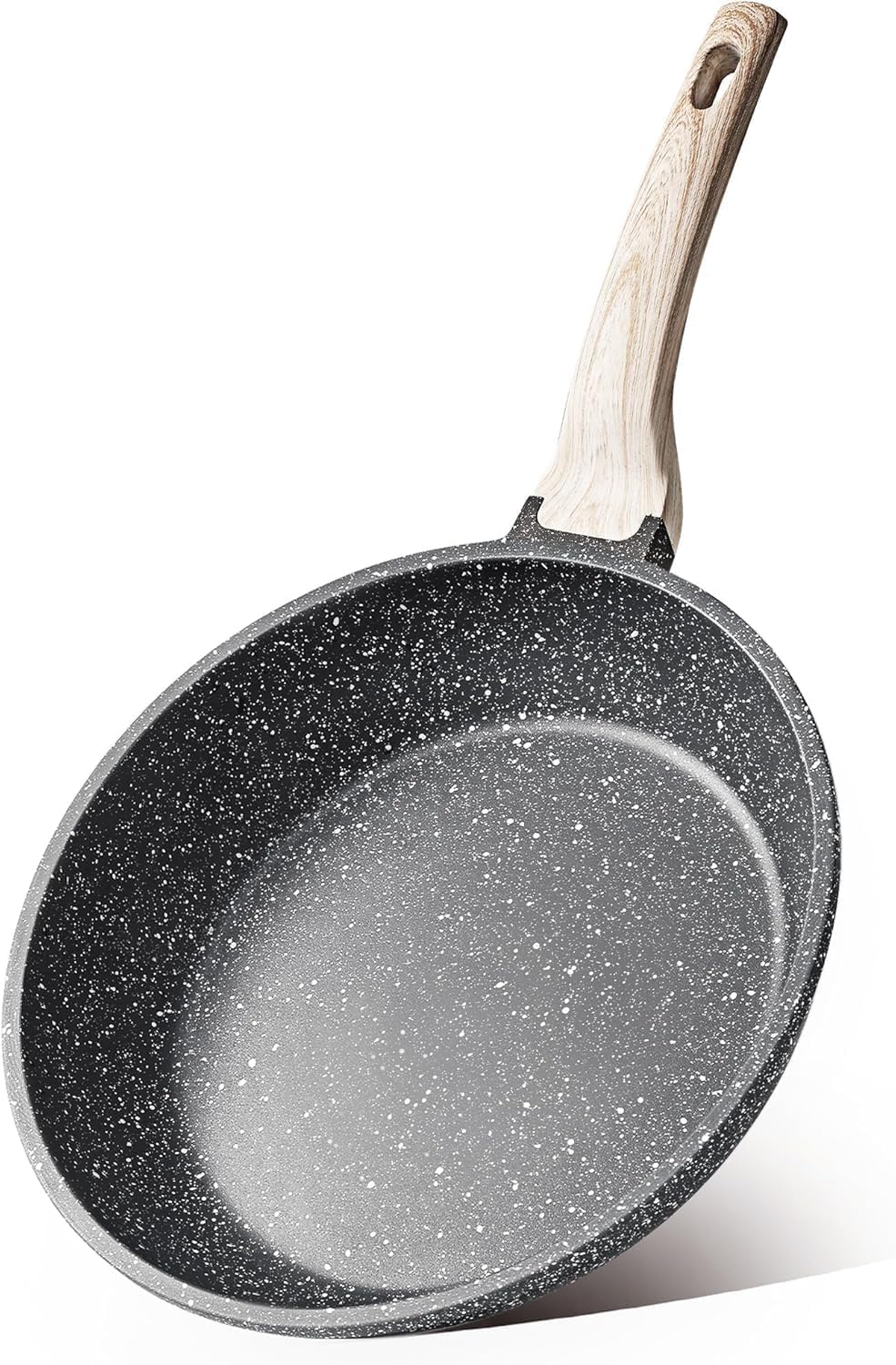
An 8-inch skillet is a specialist, not a substitute for a 10- or 12-inch pan. This Carote is the one to keep for eggs, a single grilled cheese, or a small sauté of mushrooms, and its 0.59 kg weight makes it easy to lift and flip. The granite-finished nonstick surface is the reason it earns space: food releases cleanly, and cleanup is a wipe rather than a soak.
Induction compatibility comes from a magnetic stainless base, and the pan is rated to 482°F, so it handles stovetop cooking without much fuss. The Bakelite handle stays cool, which matters on a small pan where your hand is close to the food. We think the size is the thing to buy deliberately: it is right for one or two eggs, not for a family stir-fry.
The coating is the trade. Like any nonstick at this level, it is a wear item, and the low price reflects a pan built to be replaced sooner than a clad stainless piece. Use silicone or wooden tools, avoid high heat, and wash it gently. The upside is that replacing it costs little, and the small size means you are not asking one pan to do everything.
We recommend it as a second or third pan, not the first. If you already have a 10-inch skillet and want a dedicated egg pan, this is an easy yes; if you are buying one pan for a household, spend the space on a larger one. The 8-inch Carote is a good small tool with a clear job.
Pros
- Small 8-inch size suits eggs and single servings
- Light 0.59 kg pan
- Nonstick granite surface releases food
- Handle stays cool
Cons
- Coating can flake with heavy use
We recommend this little skillet for induction cooks who want a dedicated egg and single-serving pan, not a do-everything skillet.
Best for Batch Cooking
HexClad 5.5-Quart Deep Sauté Pan

Key Features
- Capacity: 5.5 qt
- Diameter: 11 in
- Oven safe: 900 °F
- Construction: Tri-ply hybrid
- Price: Premium
A 5.5-quart sauté pan solves a specific problem: you want a wide cooking surface for browning but deep sides for a braise, a batch of chili, or a whole chicken broken down. HexClad’s version is 11 inches across and 3.5 inches deep, with a tempered glass lid, and it is built on the same tri-ply hybrid surface as the rest of the line. It is built for one-pan dinners, not for flipping eggs.
The hybrid surface is the draw. The laser-etched hexagons protect the ceramic nonstick enough for metal utensils, and the pan is dishwasher-safe and oven-safe to 900°F. That makes it unusually flexible: sear on the induction burner, add liquid, cover, and move the whole pan to the oven. The 5.5-quart capacity holds a family-size batch without crowding, and the lid helps a braise without foil.
The caveat is the surface’s release. Hybrid nonstick is not the slide-an-egg surface of a plain coated skillet, and it works best with fat and moderate heat. Some foods will leave fond, which is useful for a pan sauce but annoying if you expected zero cleanup. The pan is also heavy enough that lifting a full batch takes two hands.
We recommend it for the cook who already has a skillet and wants a large, oven-going pan for braises and batch meals. If you want a single nonstick pan for eggs, this is overkill and the wrong shape. If you regularly cook one-pot dinners on induction, the capacity and oven range are worth the learning curve.
Pros
- 5.5-quart capacity for batch cooking
- Oven-safe to 900°F
- Hybrid surface accepts metal utensils
- Tempered glass lid included
Cons
- Not a slide-an-egg nonstick surface
We recommend this large sauté pan for induction cooks who want one vessel for searing, braising, and batch cooking, with nonstick that rewards moderate heat.
How We Tested Induction Cookware
We started by gathering more than 40 pieces, including sets and open-stock pans, then narrowed the field to 14 based on base diameter, material, price, and whether the base sat flat on an induction burner. A warped base is the quiet reason a pan spins or heats in a lopsided ring, so we eliminated anything that didn’t sit flush. We then cooked with each piece for eight months, rotating them through the same burners and the same meals so the comparisons stayed fair.
In my home kitchen, that meant boiling water for pasta, searing steaks on Saturday night, simmering tomato sauce on Sunday afternoons, and frying eggs every morning. We timed how long a quart of water took to reach a rolling boil on the same burner, then watched how evenly pancakes browned across the pan—dark ring, pale center, or an even gold. For non-stick and stick-resistance, we cooked eggs with a teaspoon of oil, then tried a second egg with none, noting whether it slid out or left a film, and whether the coating still resisted sticking after a few weeks of use.
After each session, we cleaned by hand and ran dishwasher-safe pieces through repeated cycles, noting whether residue clung to corners or the finish dulled. We measured cooking surface against listed size—a 10-inch pan with an 8-inch flat base is a different tool—and checked how each piece balanced on a burner. Durability came from daily use: repeated heating and cooling, metal spatulas, and the inevitable accidental scorch. We also weighed price against performance, because a pan that saves you ten minutes of scrubbing is worth more than a cheap one that doesn’t.
How to Choose Induction Cookware
Start with the base, then choose the surface and piece mix that fit how you actually cook.
Check the base before the brand
Induction needs a magnetic base, not just a flat one. A magnet that clings to the bottom is a quick field test, and a base that rocks or has a raised center will heat unevenly no matter what the label says. The induction-compatible sets here use a steel base or a clad body, which also helps the pan hold its shape. We look for a broad, flat contact patch first; everything else is secondary. The Circulon A1’s edge-to-edge steel base is the kind of broad contact patch we mean.
Pick a surface you will maintain
Nonstick is the easier daily surface: eggs release, cleanup is quick, and you can use less fat. It is also a wear item, so hand washing and nonmetal utensils matter. Bare stainless asks more, with preheat, fat, and a little patience, but it takes metal tools and high heat, and it does not flake. We prefer nonstick for skillets and stainless for saucepans and sauté pans in a mixed kitchen. A hybrid surface tries to split the difference; it is more forgiving than bare steel but not as slippery as plain nonstick.
Count cooking pieces, not just pieces
Set counts include lids, handles, utensils, and storage containers. A 21-piece set may contain fewer than a dozen actual cooking vessels, and a 12-piece set may be six pots and pans with six lids. Look at the sizes you use weekly: an 8- and 10-inch skillet, a 2- to 3-quart saucepan, and a 6-quart pot cover most meals. We prefer four useful vessels to ten that crowd the cabinet. The Carote detachable set is a good example: the 21 pieces include two handles, storage lids, and a utensil set, so count the pans you will actually cook in.
Plan for handles, weight, and storage
Detachable handles save cabinet space, but most sets include only one or two handles, so you cannot lift two pans at once. Fixed handles are simpler and stronger, but they take more room. Weight matters most with a full stockpot: a 6.8 kg set may be fine on the burner and awkward when you carry it to the sink. Check the oven-safe limit before moving a pan from stovetop to broiler, and check glass lids separately because their limit is often lower than the pan’s.
Frequently Asked Questions
Why is some induction cookware so expensive?
The base and the body do most of the explaining. A magnetic steel base, a full clad wall, or a hybrid surface takes more material and more steps to build than a thin aluminum pan. You are also paying for a handle that stays tight and a coating that survives more washing. Spend on the pieces you use daily; a single good skillet beats a large set of thin pans.
Can induction cookware go in the dishwasher?
Only when the maker says so. Many nonstick and hybrid pieces are dishwasher-safe, but the detergent and heat are hard on coatings; hand washing keeps the release surface working longer. Stainless and clad pans are more forgiving, though a long soak helps with stuck food. Check the care card before the first wash, and hand wash any pan with a detachable handle after removing it.
How do I keep food from sticking to stainless steel induction pans?
Preheat the empty pan over medium heat for a minute or two, then add oil or butter and let it shimmer before the food goes in. Give protein a chance to release on its own instead of tearing at it. A stainless pan that is hot enough and has a film of fat will release better than a cold one; if food still sticks, lower the heat and add a little liquid to deglaze.
When should I replace nonstick induction cookware?
When the coating is scratched through, flaking, or food sticks even with fat and moderate heat. A worn coating is not something to repair at home; replacing the pan is the safer call. Hand washing, nonmetal utensils, and avoiding high heat stretch the useful life, but nonstick is a wear surface, not a lifetime purchase.
Final Verdict
The Circulon A1 9-Piece Set is the induction cookware we recommend first because it covers the daily pans, heats through a broad steel base, and makes nonstick cleanup part of the routine rather than a project. If you want bare stainless, the Cuisinart MultiClad Pro is the stronger long-term surface; if cabinet space is the constraint, the Carote detachable set is the practical alternative. The right choice turns on the surface and storage you will live with, not the piece count alone.