This post contains affiliate links. We may earn a small commission when you buy through our links — at no extra cost to you.
The trouble with food storage containers rarely shows up in the store. It shows up on a Tuesday morning, when you lift a container of soup by its lid and feel something wet, or at dinner, when the leftover pasta is ready and every lid belongs to a different base. A good set should make leftovers feel handled, not like a scavenger hunt. After years of mismatched pieces, I want three things: a lid that seals without a fight, bases that stack without wobbling, and material that survives the dishwasher without clouding or warping.
Over the past six months, we have filled, sealed, frozen, and carried 10 container sets to see which ones earn their cabinet space. We paid attention to value without confusing cheap with good, and to the quiet annoyances: lids that need two hands, bases that don’t fit a shelf, seals that give up after a few washes. What suits you depends less on the brand than on how you store food—big batches, lunch portions, or a mix—and the picks held up to all three.



Best for Everyday Mixed Storage
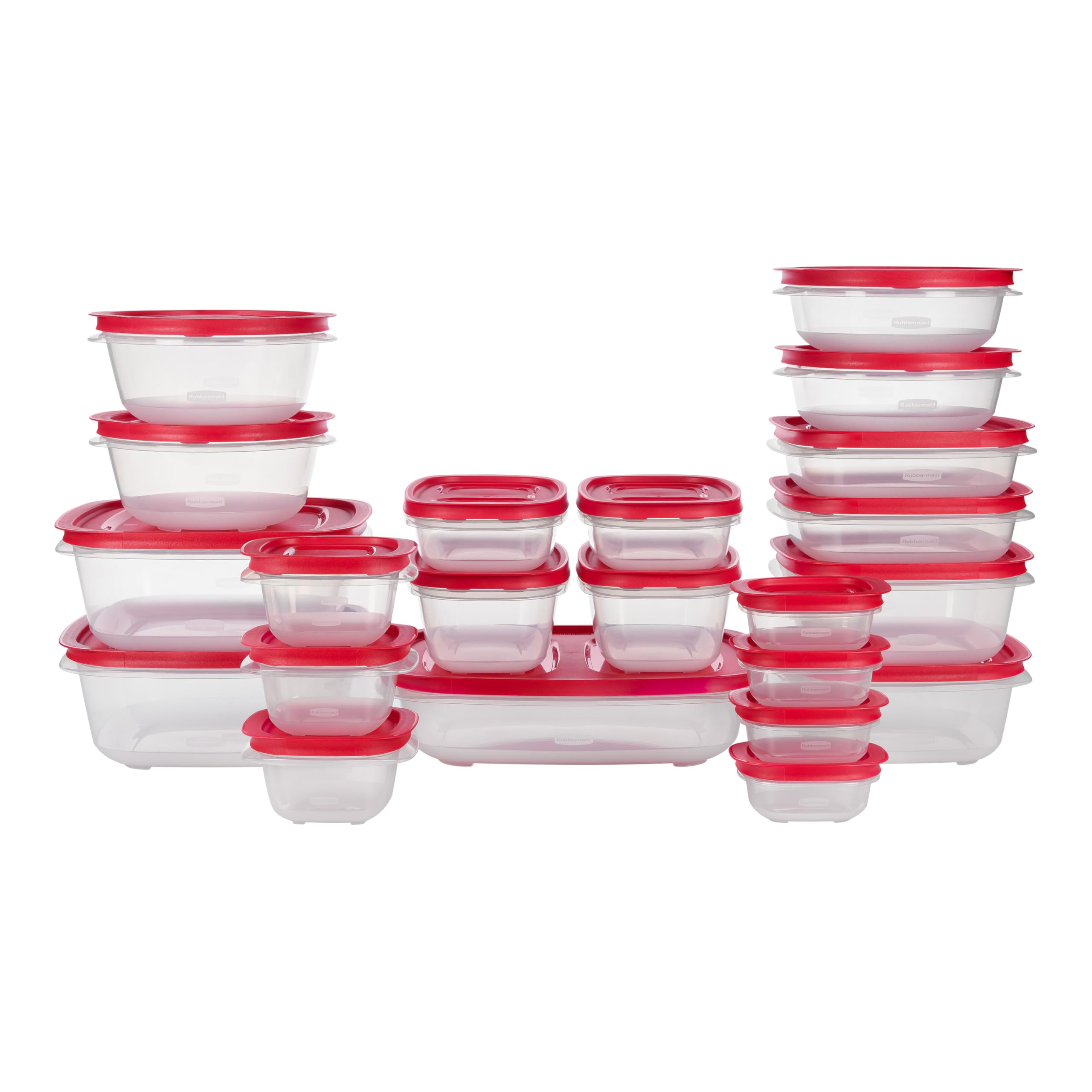
Rubbermaid EasyStore 44-Piece
Key Features
- Lid type: Vented snap lids
- Material: BPA-free plastic
- Set size: 44 pieces
- Size range: 0.77 to 14.9 cups
- Price: Midrange
The 14.9-cup container is the piece that makes this set feel like more than a pile of plastic: it holds a batch of soup, a whole cut-up melon, or enough salad for two lunches. Around it, Rubbermaid spreads ten sizes, from 0.77-cup snack cups to 7.81-cup rectangles, so the set can follow a week of cooking instead of sitting in one drawer. The 44-piece count includes lids, which means 22 usable containers rather than 44 separate boxes.
We think that range is the reason to buy it. The pieces stack neatly, the ridged lids add stability in a crowded fridge, and the extended lip gives you something to grip when a container is full and slippery. The set leans heavily toward small cups, though; if most of your storage is dinner leftovers, plan on using the larger bins more often and letting the tiny ones handle sauces, fruit, and packed lunches.
The vented lids are a small pleasure on a weeknight: crack the vent and the container can go into the microwave without a separate cover or a splatter guard. They are dishwasher-safe, freezer-safe, and BPA-free, which covers the ordinary routine. We also appreciate that the lids snap together for storage; it keeps the matching pieces from colonizing the cabinet.
Pros
- Broad range from snack cups to 14.9 cups
- Stackable bases and ridged lids
- Vented lids simplify microwave reheating
- Extended lip helps with a full container
Cons
- Large set needs substantial cabinet space
- Tomato sauces can tint the plastic
Our default recommendation is the EasyStore set: one stackable system for leftovers, lunches, and pantry odds and ends.
Best for Oven-To-Table Leftovers
Rubbermaid Brilliance Glass 9-Piece
Key Features
- Seal: Airtight, leakproof
- Material: Glass bases, plastic lids
- Set size: 9 containers (18 pieces)
- Oven limit: 450°F
- Price: Premium
A lasagna dish that can go from a 450°F oven to the table and then into the fridge is the reason we keep the Brilliance glass set within reach. We like the weight of the glass bases and the way the latch lids clamp down; this is the set we trust for soup, saucy leftovers, and anything we do not want to stain.
The nine-container set, 18 pieces with lids, is more modular than its size suggests: the rectangles stack squarely, and the clear bases let you see what is inside without opening every lid. The lids are vented for microwave reheating, which is a practical touch, and the latch design is genuinely leakproof in the ordinary lunch-bag sense.
Glass is the appeal here. It does not pick up tomato or curry odors the way plastic can, and the bases are oven-safe, freezer-safe, and dishwasher-safe. The bases double as serving dishes, so one container can move from oven to table to fridge without a second bowl. This is a set for someone who wants fewer plastic compromises and does not mind the extra weight.
Pros
- Oven-safe glass bases up to 450°F
- Leakproof airtight latch lids
- Clear glass resists stains and odors
- Vented lids reduce microwave splatter
Cons
- Lids can crack with rough handling
If you want oven-to-table glass, we point you to Brilliance, whose heavy bases and leakproof lids feel worth the care.
Best for Small Kitchens
Joseph Joseph Nest Lock 10-Piece
Key Features
- Care: Dishwasher safe, top rack
- Seal: Airtight, leakproof
- Design: Nesting, color-coded
- Set size: 10 pieces
- Price: Midrange
The first thing you notice about the Nest Lock set is not a container but the empty cabinet: the set nests into roughly the footprint of two pieces, and the color-coded dots make it obvious which lid belongs to which base. The lids snap together and the bases stack inside one another, so putting the set away takes a few seconds rather than a cabinet reorganization.
For a rental kitchen, a camper, or a fridge shelf that has to do three jobs, that compactness matters more than a huge piece count. The containers are freezer, microwave, and dishwasher safe, and the latch lids are designed to be airtight and leakproof. We also like that the colors are quiet rather than neon; they look tidy on an open shelf.
We reach for this set when space is the constraint, not when we are cooking for a crowd. It is the set for leftovers, cut fruit, lunch portions, and the fridge door that never quite closes. The 10-piece set covers four useful sizes, and the way the pieces click together makes it easy to keep track of the whole set instead of hunting for a lid. The rectangular shape also slides into a narrow shelf more easily than round bowls do.
Pros
- Nests into a compact cabinet footprint
- Color-coded lids and bases
- Airtight and leakproof latch lids
Cons
- Lids need a firm press to close
We keep the Nest Lock set for small kitchens, where color-coded containers tuck into a tiny cabinet footprint.
Best for Pantry Organization
Vtopmart Airtight 24-Piece
Key Features
- Seal: Airtight side-locking lids
- Material: BPA-free plastic
- Set contents: 24 containers plus labels
- Tallest capacity: 2.8 liters
- Price: Midrange
An open bag of flour, a half-empty box of cereal, and three kinds of pasta are the clutter this set is built to erase. The 24-piece Vtopmart kit comes with 24 reusable labels, and the clear rectangular canisters have side-locking lids with silicone gaskets, so the pantry starts to look like a system rather than a collection of packaging.
We think the labels are the underrated part. They turn a row of similar containers into something a household can actually maintain, and the four sizes cover everything from snacks to a 2.8-liter tall bin. The containers stack squarely, the lids are designed to be airtight, and the clear bodies let you see how much is left without pulling everything down. We also appreciate that the labels wipe clean, so the contents can change without a new sticker.
This is pantry storage first, not a leftovers set. The pieces are sized for dry goods, and the smaller containers are better for spices, seeds, and baking bits than for a Sunday roast. If your main need is transporting soup, look at a latching set instead; if your pantry is the problem, this one earns its place.
Pros
- 24 reusable labels included
- Four sizes cover pantry staples
- Airtight side-locking lids
Cons
- Some bins are smaller than expected
For pantry staples, our pick is Vtopmart: matching labels and four sizes make open bags look intentional.
Best for Large Leftovers
Snapware Total Solution 21-Pack
Key Features
- Seal: Four locking tabs
- Set size: 21 pieces
- Lid feature: Write + Erase labels
- Total capacity: 69 cups
- Price: Midrange
The 8.5-cup rectangle is the piece that sold us on the Snapware Total Solution set: it holds a whole roast chicken’s worth of leftovers, a family-size salad, or a batch of chili without filling the fridge with three small boxes. With 69 cups of total capacity, the 21-piece set mixes four sizes of rectangles with square and round pieces, so there is a container for a lunch portion and one for the serving bowl.
The four locking tabs are the other reason this set feels serious. They clamp down evenly, and the lids have a built-in Write + Erase label, which sounds gimmicky until you are trying to identify three similar containers of soup. The pieces stack, the plastic is BPA-free, and the set is microwave, freezer, and dishwasher safe.
We choose this set for big batches and family lunches, not for dainty pantry decanting. The larger containers are genuinely useful, and the write-on lids cut down on masking tape. A few lids need a bit of coaxing before all four tabs catch, so we check the corners before carrying anything saucy across the kitchen.
Pros
- Large 8.5-cup containers for batches
- Four locking tabs seal firmly
- Write-on lids simplify labeling
Cons
- Large containers take up fridge space
We choose Snapware when a family-size batch needs a big latching container, not another small leftover box.
Best for Meal Prep
Bentgo Prep 20-Piece
Key Features
- Material: PFAS- and BPA-free
- Set size: 20 pieces (10 trays)
- Portion marks: Embossed measurements
- Tray capacity: 4 cups
- Price: Budget
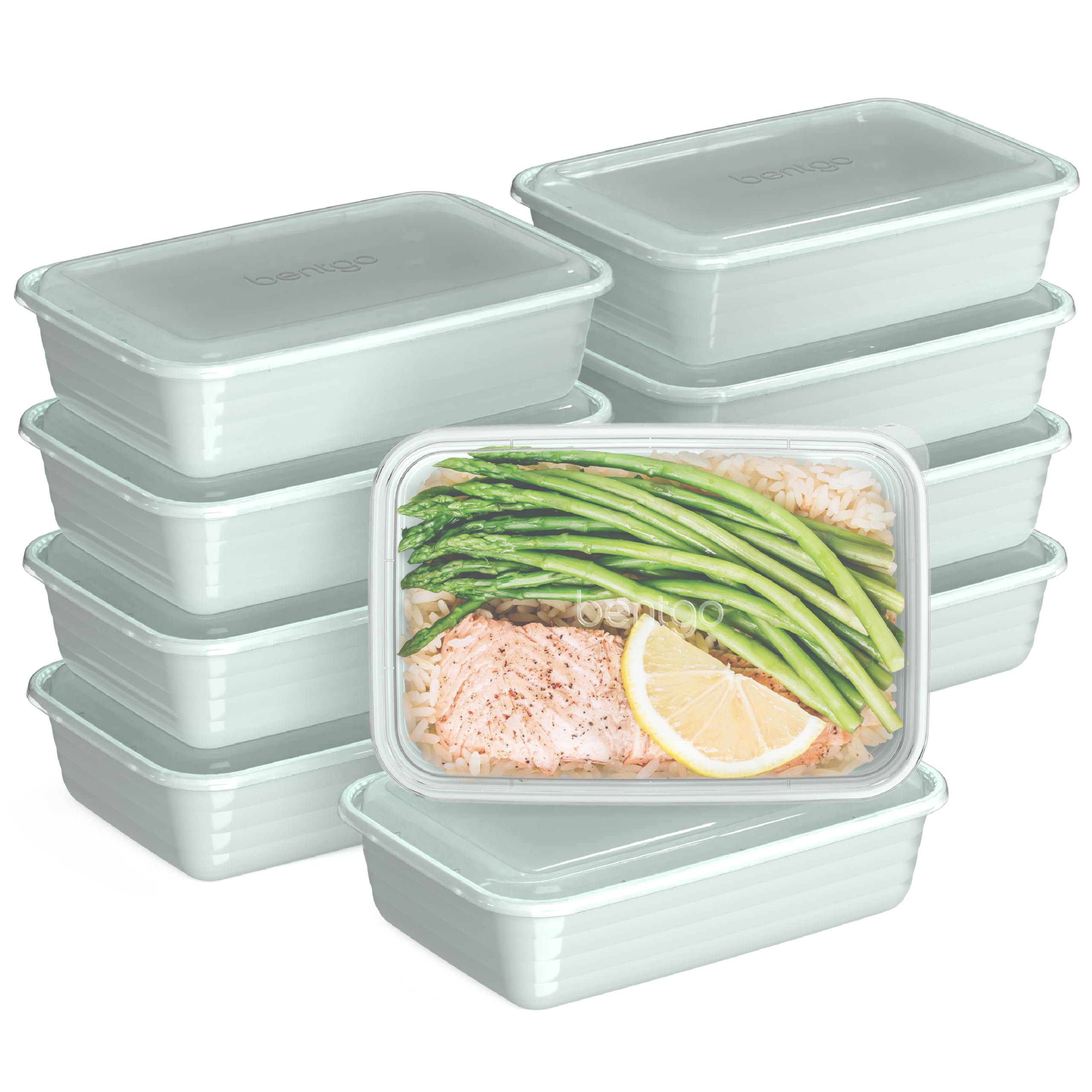
A week of meal prep is easier to face when the containers are already portioned, stackable, and light enough to carry five at once. We recommend the Bentgo Prep set for that job: ten 4-cup trays with matching lids and embossed measurements inside each tray, so you can fill without guessing and still see portion sizes at a glance.
These are for the person who preps lunches on Sunday and needs containers to survive a commute, not for someone building a forever pantry. The trays are microwave, freezer, and top-rack dishwasher safe, the lids snap on securely, and the colors are a nice change from opaque black takeout boxes. They are also the least expensive way here to get a coordinated meal-prep set.
Treat them as reusable meal-prep trays rather than heirloom storage. The 4-cup size is generous for a lunch but not for a whole casserole, and the light plastic is happiest when you let it cool before washing. If you want one set for both leftovers and pantry staples, this is too specialized; if you want lunches lined up for the week, the format makes sense.
Pros
- Ten 4-cup portion-friendly trays
- Microwave, freezer, and dishwasher safe
- Low-cost coordinated meal-prep set
Cons
- Lids can crack under rough handling
Bentgo wins our meal-prep value pick for portioned lunches, as long as you accept tray-style containers.
Best for Bulk Dry Goods
Storeganize 5.3L 4-Pack
Key Features
- Care: Hand wash only
- Includes: Scoops and labels
- Set size: 4 canisters
- Capacity each: 5.3 liters
- Price: Budget
A full 5-pound bag of flour disappears into one of these canisters, which is the whole point of the Storeganize set. You get four identical 5.3-liter squares, each with a flat lid and a wide mouth, so scooping flour, rice, or oats does not turn into a wrist-deep excavation.
The square shape is more useful than it sounds. It uses the corners of a pantry shelf, the lids stack flat, and the clear plastic lets you see the fill line without opening the latch. The set also includes a four-piece measuring scoop set, eight labels, and a chalkboard marker, which makes it feel more like a starter kit than four empty boxes.
The four-sided locking hinges and silicone gasket are designed to keep air and moisture out, and the containers are sturdy enough for the kind of daily scooping that comes with baking. These are bulk-storage containers, not lunch boxes; the 5.3-liter size and 12-inch height make them pantry-first, and one canister is too much for a single leftover portion.
We keep them for the bulk dry goods that used to live in crumpled bags. The canisters are sturdy, the lids seal with a satisfying clamp, and the included labels make it easy to tell bread flour from all-purpose. If you mostly store leftovers, this is the wrong shape; if you bake and cook rice often, it solves a specific problem well.
Pros
- Holds a full 5-lb bag of flour
- Square shape makes scooping easy
- Four-sided airtight locking lids
- Includes scoops, labels, and marker
Cons
- Hand wash only
- Lids need effort to close
Storeganize is the one we reach for when a full bag of flour needs a home, and the square shape makes scooping easy.
Best for Budget Pantry Setup
PRAKI Airtight 24-Piece

Key Features
- Seal: Four-tab locking lids
- Labels: 40 labels and marker
- Material: BPA-free plastic
- Set contents: 24 containers
- Price: Midrange
The label kit is what makes the PRAKI set feel considered: 24 clear containers, 40 reusable labels, and a marker, so the flour, sugar, rice, and cereal can be named instead of guessed at. The containers come nested together in the box, which is why the first impression is of one size rather than a full pantry system.
Once separated, the four sizes range from small snack containers to tall canisters, and the square footprints stack neatly on a shelf. The side-locking lids have silicone gaskets and four tabs, and the clear bodies let you see the fill level without opening the lid. The lids fit every container in the set, which is a real convenience when one goes missing.
This is a pantry set first. The containers are sized for dry goods, and the tallest bin is better for pasta or cereal than for a batch of soup. They are BPA-free and dishwasher-safe, and the stack stays stable when you slide a container out from the middle.
We recommend PRAKI as a budget pantry starter when the labels and shared lids matter. It turns a messy shelf into something legible, and the low entry point makes it easy to add a second set later. If you want a matching pantry with less guesswork, this set does that job without asking for much.
Pros
- 40 labels and marker included
- Lids fit every container size
- Four pantry-friendly sizes
Cons
- Larger lids may miss a full seal
PRAKI is a practical budget pantry starter, and we appreciate that the label kit lets you identify every container at a glance.
How We Tested, Stacked, and Shook 10 Food Storage Container Sets
We started by pulling together the sets that show up repeatedly in reviews and on store shelves—glass and plastic, nesting and modular—then narrowed the field to 10 that represented the range. Sets with replacement lids that cost nearly as much as the container got cut, as did anything that couldn’t go in the dishwasher. The final 10 lived in my kitchen and two colleagues’ kitchens for six months.
On Sundays we filled each set with a batch of chili, portioned it out, and stacked the containers in the same cabinet to see whether the bases nested cleanly or turned into a game of Jenga. During the week, we packed leftovers into lunch bags and carried them by the lid—no supporting hand underneath—to catch any seal that leaked. We also filled each container with water, sealed it, and shook it upside down over the sink for a full minute, checking the rim and lid vents for drips.
Lid usability got its own round of poking: we opened and closed each one with one hand while holding a full container in the other, and noted whether the tabs lined up without hunting. Durability meant running every piece through the dishwasher on its usual cycle, freezing broth-filled containers, and dropping empty bases from counter height onto a wood floor. Quality showed up in small places—hinges that stayed tight, rims that didn’t chip, lids that didn’t warp after the third wash. We kept a running note on capacity, how many lunch portions a base held and whether the set fit a standard shelf, and on organization, specifically whether lids stayed with their bases or drifted to the back of the cabinet. Value came down to whether the set replaced a drawer of odd pieces, not whether it was the cheapest box on the shelf.
How to Choose a Food Storage Container Set
The right set follows the way food moves through your kitchen, so start with the jobs you have rather than the biggest piece count.
Start with the food, not the piece count
Piece counts include lids, and many sets pad the total with very small cups. Look at the largest container first and ask whether it holds a batch of soup, a family salad, or a whole cut-up melon; then check that the middle sizes fit your usual lunch portions. We prefer a set with four useful sizes to one with a long list of pieces that all hold the same few ounces. A snack cup is handy for sauce, but it should not be the reason you buy the set.
Choose plastic for lightness, glass for heat
Plastic wins when containers travel in a lunch bag, stack in a crowded fridge, or need to be light enough to carry several at once. Glass is the better fit when you want to reheat and serve in the same dish, and it does not pick up tomato or curry odors the way plastic can. Check the stated oven limit before assuming a glass base can go under the broiler; 450°F is common for oven-safe sets, but the plastic lid still stays out.
Separate leakproof from merely airtight
A pantry canister needs an airtight seal to keep cereal crisp; a lunch container needs a leakproof one to survive a commute. Look for a silicone gasket and latches that clamp on more than one side, then test an empty container with a splash of water before you trust it with soup. Vented lids are a separate convenience: they let steam escape in the microwave, but they are not a substitute for a full seal in a bag.
Plan the empty-set footprint
A set that stacks neatly when full can still swallow a cabinet when empty. Nesting designs, like the Joseph Joseph set, trade some capacity for a smaller stored footprint; square canisters, like Storeganize, make better use of pantry corners. Measure the shelf height before you buy, especially for tall canisters, and decide whether you want lids that snap together or a pile you have to sort every time.
Treat lids as the wear part
Lids crack, gaskets stretch, and tabs lose their snap before most bases fail. Wash lids on the top rack if the maker specifies it, avoid stacking heavy pans on them, and check whether replacement lids are sold before you commit to an expensive set. A container with a compromised seal is still useful for dry goods, but it should not be the one carrying soup to work.
Frequently Asked Questions
Can I put hot leftovers straight into these containers?
Let the food stop steaming first, then cover and refrigerate within two hours. Sealing boiling food traps steam, which can warp plastic and make a lid pop; glass can thermal-shock if moved from a hot oven to a cold surface. Use a vented lid or leave one corner open until the steam settles.
How do I get tomato sauce stains out of plastic containers?
Start with a paste of baking soda and water, rub it into the stain, and let it sit before washing. A sunny windowsill can help with odors, but heat is the enemy of plastic, so skip boiling water. If a stain or smell persists after two tries, demote that container to dry goods rather than storing sauce in it again.
Can glass food storage containers go in the freezer?
Yes, if the base is marked freezer-safe. Leave an inch of headspace for soup or sauce because liquid expands, and let the container thaw in the fridge rather than moving it straight to a hot oven. Check that the lid is fully latched before stacking, since a loose lid lets freezer air reach the food.
Final Verdict
The EasyStore 44-piece set is our first recommendation because it covers the most everyday jobs: a big batch container, lunch sizes, and enough stackable pieces for both fridge and pantry. It is the set we point to when someone wants one purchase to handle leftovers and a cupboard tidy-up.
Choose the Brilliance glass set when oven-to-table use matters, the Nest Lock set when cabinet space is tight, or Vtopmart when dry pantry staples are the main job. That decision matters more than chasing the longest piece count.