This post contains affiliate links. We may earn a small commission when you buy through our links — at no extra cost to you.
Jarred alfredo makes a promise that plenty of jars don’t keep. You’re expecting creamy and cheesy, and what you get tastes like salted cream, coats the fettuccine like wallpaper paste, or splits the second it hits a hot pan. I’ve made the real thing from a block of parmesan and half a stick of butter, and I still keep a jar in the pantry for the nights when that isn’t happening. The right jar buys you a 15-minute dinner that doesn’t feel like a compromise.
My team and I worked through 14 jars over three months — plain, roasted garlic, caramelized onion, extra-cheesy — tasting each one off a spoon at room temperature before any water boiled. That cold taste is where the truth shows: real parmesan reads sharp and nutty, while jars leaning on cheese flavor land flat and salty. Jarred alfredo is also a base, not a finished sauce, and the picks below are the ones that needed the least rescuing.
Best for Everyday Pasta
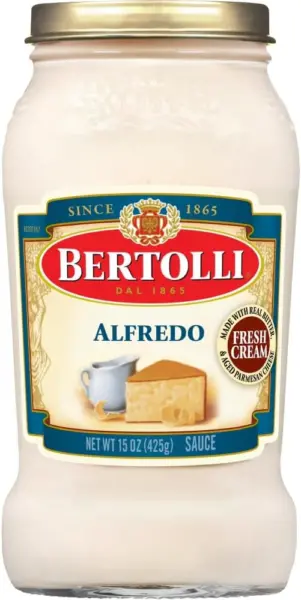
Bertolli Alfredo with Aged Parmesan
Key Features
- Flavor: Classic Parmesan
- Jar Size: 15 oz
- Made With: Aged Parmesan, butter, fresh cream
Aged Parmesan, real butter, fresh cream — that is the whole idea of Alfredo, and it is what Bertolli puts on the label. We keep this jar at the front of the cabinet because nothing in it argues with the pasta: the cheese is savory and salty at the edges, the butter and cream carry it through, and it finishes clean rather than sweet. It tastes like the sauce you make in a pan when you have five minutes and good cheese, which is the highest compliment a jar can get from us.
Consistency is where jarred Alfredo usually loses us, and it is where this one earns its place. Fifteen ounces loosens enough to toss through a full pound of fettuccine straight off the heat, and it tightens onto the noodles in the time it takes to grate pepper over the bowl. We have also baked it into a ziti without the sauce breaking into an oily ring at the edge of the dish.
The trade-off is ambition. This is a mild, buttery sauce, and if you want roasted garlic, sweet onion, or basil in the jar, other picks here do that far more assertively. As a base, though, mildness is the asset: we have run it under chicken and broccoli, thinned it with pasta water for shrimp linguine, and spread it on flatbread with mushrooms. When Alfredo is feeding people with different opinions about garlic, this is the jar that keeps the peace.
Pros
- Names Parmesan, butter, and cream up front
- Coats pasta without going pasty
- Mild enough for chicken, vegetables, and bakes
- 15-ounce jar suits a pound of pasta
Cons
- Won’t satisfy a garlic or onion craving
We recommend Bertolli as the default jar: real Parmesan, butter, and cream, a sauce that coats pasta instead of pooling, and a mild flavor that works under chicken or vegetables too.
Best for Special-Occasion Dinner
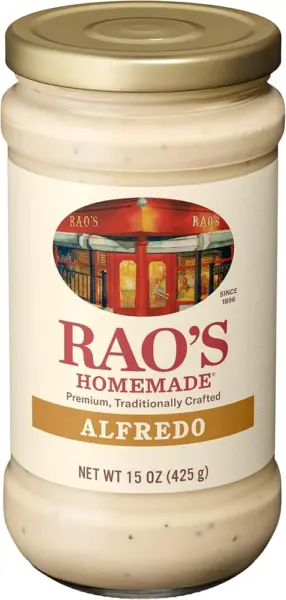
Rao’s Homemade Alfredo
Key Features
- Flavor: Parmesan and Romano
- Method: Small-batch, slow-simmered
- Jar Size: 15 oz
- Made With: Parmesan, Romano, cream, half & half, butter
- Price: Premium
Rao’s sits at the top of this shelf, and it is the one jar here that feels like an occasion purchase. The build explains it: Parmesan and Romano together, plus cream, half & half, and butter, simmered low in small batches. Two cheeses instead of one gives it a sharper, more savory finish than the creamier jars here, closer to what comes out of a restaurant kitchen than out of a pantry.
Our one reservation is body. Poured cold over a plate of noodles, this sauce looks thinner than Bertolli and reads a little watery at the edges. Finish it in the pan — a minute of heat with the drained pasta and a splash of cooking water — and the dairy pulls together into something glossy and thick. Do that and it is the best-tasting sauce here; skip it and you have paid the most for a puddle.
Fifteen ounces covers about a pound of pasta, so one jar is dinner for three or four rather than a shortcut for a crowd. We reach for it for shrimp and egg noodles, a chicken-and-broccoli bake, and a Sunday lasagna where the sauce is doing the talking. Buy one jar at a time and treat it like the good bottle of wine you do not open on a Tuesday.
Pros
- Parmesan and Romano plus real cream and butter
- Sharper, more savory finish than single-cheese jars
- Slow-simmered in small batches
Cons
- Costs the most of any jar here
Rao’s is the richest jar here, with Parmesan and Romano doing real work — buy it for a dinner you are proud of and finish it in a hot pan so the texture matches the flavor.
Best for Garlic Lovers
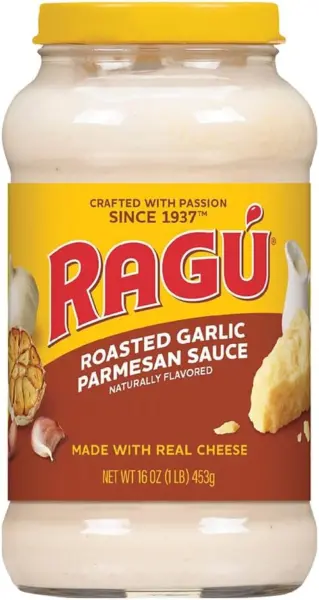
RAGÚ Roasted Garlic Alfredo
Key Features
- Flavor: Roasted garlic
- Jar Size: 16 oz
- Made With: Real cheese and cream
- Price: Budget
Some jars treat garlic as a background note; RAGÚ’s roasted garlic Alfredo makes it the reason to buy. The roasted flavor is savory and a little sweet rather than sharp, and it arrives before the Parmesan does. If you have ever finished a bowl of Alfredo and reached for the garlic powder, this is your jar.
Sixteen ounces is the biggest pour among the creamy picks here, and it costs a good deal less than the premium jar. That combination is why we buy two at a time: one for a chicken-and-broccoli skillet, one to keep in reserve behind the cans. It is also the jar that rescues a bland pan sauce — we have loosened it with a splash of milk and a squeeze of lemon and poured it over salmon when there was no cream in the fridge.
The garlic does draw a boundary. Against scallops or a delicate shrimp linguine it can elbow the seafood out of the way, and nobody will mistake it for a pure Parmesan Alfredo. Where it shines is anything browned and savory: sausage, chicken thighs, roasted mushrooms, a pan of peppers and onions. Few jars here cover that much ground for the money.
Pros
- Roasted garlic leads the flavor
- Largest jar of the creamy picks
- Well under the premium jar’s price
- Sturdy base for pan sauces
Cons
- Garlic can overwhelm delicate seafood
For garlic lovers, RAGÚ is the jar: bold roasted garlic, the biggest pour of the creamy picks, and a price that lets you keep a spare in the pantry.
Best for Bakes and Pizza
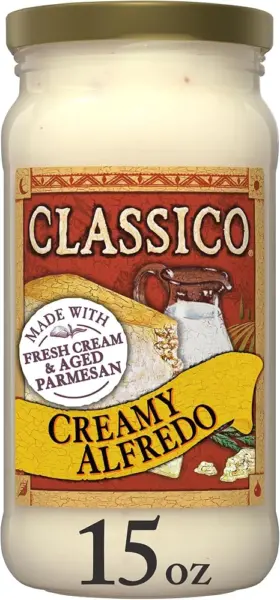
Classico Creamy Alfredo
Key Features
- Flavor: Creamy Alfredo
- Jar Size: 15 oz
- Made With: Fresh cream and aged Parmesan
Alfredo usually gets judged on fettuccine and nothing else. Classico is the jar we buy when the sauce has another job: a white sauce for a shrimp-and-penne bake, a base under chicken breasts going into the oven, or the layer on an Alfredo pizza with mushrooms and mozzarella.
As a straight pasta sauce it is good rather than remarkable — creamy, Parmesan-forward, mild, with a smooth body that spreads as easily as it tosses. What earns it a place here is how that mildness behaves in company. It does not fight mozzarella, ricotta, or a handful of peas and ham, and it holds its texture in a hot oven instead of separating into an oily edge.
Fifteen ounces covers a pound of pasta or a family-sized bake. We have also spread it thin on a sheet-pan flatbread with roasted tomatoes, where a thicker sauce would have turned gummy. It is the most cooperative jar in this set, and cooperative is exactly what a sauce needs to be when three other ingredients are competing for the spotlight.
Pros
- Holds its texture in a hot oven
- Smooth enough to spread on pizza dough
- Mild enough to share with other cheeses
Cons
- Mild flavor, not a sharp cheese bite
Classico is our pick for baked pasta and Alfredo pizza: a mild, creamy Parmesan sauce that coexists with mozzarella and ricotta instead of overpowering them.
Best for Chicken and Potatoes
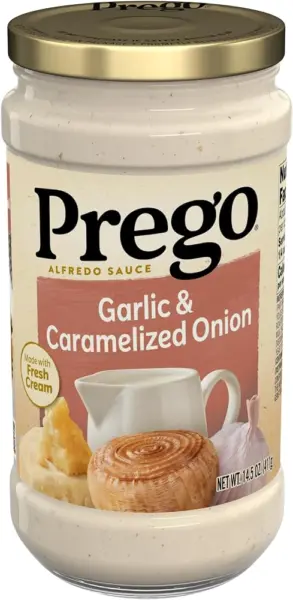
Prego Garlic & Caramelized Onion Alfredo
Key Features
- Flavor: Garlic and caramelized onion
- Jar Size: 14.5 oz
- Free From: Artificial colors, high-fructose corn syrup
- Made With: Fresh cream
Garlic and caramelized onion is a pairing we expect on a steak or in French onion soup, not in an Alfredo jar. Prego’s version works because the onion comes in sweet rather than sharp: it rounds the garlic off, and the sauce ends up deeper and a touch sweeter than the straight Parmesan jars here.
That profile makes it the most useful jar here for anything that is not plain pasta. We have simmered chicken thighs in it with a splash of milk, spooned it over roasted potatoes, and used it as the sauce for sausage and peppers. It picks up whatever fat is in the pan and comes back tasting like the dish rather than like a jar. The 14.5-ounce jar is the smallest of the creamy picks, so buy two when you are cooking for a crowd.
What keeps us coming back is the balance: garlic leads, the onion keeps it from turning one-note, and there is enough cream that it coats pasta instead of running off. It is not a classic Alfredo and will not satisfy someone who wants pure Parmesan. As a flavor-first jar that doubles as a cooking sauce, though, few picks here do as much.
Pros
- Garlic and sweet caramelized onion flavor
- Works as a cooking sauce for chicken and potatoes
- Creamy enough to coat pasta properly
Cons
- Not a classic Parmesan-only Alfredo
Prego is the pick when plain Alfredo bores you: sweet caramelized onion and garlic in a creamy sauce that works on chicken, potatoes, and pasta alike.
Best for Seafood Dishes
Whole Foods Pesto Alfredo
Pesto and Alfredo in one jar sounds like two good ideas that would get along. Our first spoonful was less convincing: the basil reads mostly as a green tint over a cheese sauce, and the herb flavor you want from pesto stays well in the background.
Where it earns its keep is with seafood. It is lighter and less rich than the pure cheese jars here, and the basil note that is too quiet on pasta is just right against shrimp or a piece of white fish. Made in Italy with Italian cheeses and no sugar added, it is also the least sweet sauce in this lineup.
Where it goes wrong is expectation: grab it thinking pesto and you get a cheese sauce with a green cast; grab it wanting a classic Alfredo and you get something thinner and faintly herbal. If basil is what you are after, a plain jar with a spoonful of pesto stirred in gets you further for the same shelf space.
Pros
- Lighter body suits shrimp and white fish
- Made in Italy with Italian cheeses
- No sugar added
Cons
- Basil stays in the background
Buy the Whole Foods pesto Alfredo for seafood and vegetables, where its lighter body and quiet basil work — not for a basil craving or a classic Alfredo.
How We Chose and Tested the Best Jarred Alfredo Sauces
We started where most shoppers do: the pasta aisle of an ordinary grocery store, pulling every alfredo jar we could reach and reading labels before we cooked anything. A jar made the shortlist if a real cheese — parmesan, romano, asiago — showed up in the ingredients and not just in the product name, and if the lineup covered more than one style, from plain to roasted garlic to caramelized onion. We bought 14 jars across those styles and tested them over three months.
Testing happened on weeknights, in actual dinners. We boiled a pound of fettuccine and tossed it with a single jar, following the label’s simmer-and-serve directions to the letter; we also spread each sauce on a pizza crust, folded it into a chicken alfredo bake, and reheated the leftovers the next day to see what survived a night in the fridge.
At every step we wrote down what we saw rather than what we hoped for. We tasted each jar cold and again after heating, noting whether the parmesan came across as sharp or merely salty and whether the garlic tasted fresh or cooked-down and sweet. We tilted a spoon to watch how the sauce ran — thick and pourable versus gluey — then checked the bowl after dinner to see if it had pooled under the pasta or clung to the noodles. Each jar also got simmered five minutes past the label’s instructions to see which ones broke.
Value came down to coverage: how far one jar stretched over a pound of pasta, and how much extra cheese or butter a thin, bland sauce needed before it was worth eating.
How to Choose a Jarred Alfredo Sauce
The right jar comes down to three things: which cheeses the label names, how assertive you want the flavor, and whether you are buying for a Tuesday dinner or a Saturday one.
Read the Cheese Before the Cream
Alfredo is a cheese sauce first. Jars that name Parmesan or Romano near the top of the ingredient list taste like cheese; jars that lean on cream and cheese flavor taste like richness with nothing underneath. Butter and cream tell you how the sauce will feel, but the cheese tells you what it will taste like. When two jars look identical on the front, the ingredient list settles it. Rao’s two cheeses read sharper and more savory, while Bertolli’s single Parmesan reads rounder and more buttery.
Match the Flavor to the Plate
The plainest jar is not automatically the safest choice — it depends on what is under the sauce. A garlic-forward Alfredo or one with caramelized onion gives chicken, sausage, and roasted vegetables something to push against, but it can bury shrimp or scallops. Keep one plain Parmesan jar for seafood and simple pasta, and one flavored jar for heartier dishes. If you are stocking only one, pick plain: it is the jar you can adjust with a clove of garlic, a handful of herbs, or a squeeze of lemon.
Decide What a Premium Jar Buys
Premium jars cost more for real reasons: two named cheeses, more dairy, longer simmering. Whether that is worth it depends on how you eat. On fettuccine with nothing but pepper, the gap between a premium jar and an everyday one is easy to taste, and Rao’s justifies itself there. In a bake loaded with chicken, broccoli, and mozzarella, those subtleties disappear and a jar like RAGÚ’s does the job just as well. Buy premium for simple plates and everyday jars for busy ones.
Plan on One Jar Per Pound
Jars run 14.5 to 16 ounces, which is about right for a pound of pasta — four moderate servings. Two traps. A jar is not dinner for five; cook two pounds and you want two jars rather than one stretched with milk. And sauce disappears into a bake, so a casserole that feeds six wants a jar and a half. Buy the larger count when it is on the shelf, and work the rest of an opened jar into the same week.
Frequently Asked Questions
Does jarred Alfredo sauce need to be cooked?
No — it is ready to eat straight from the jar. It is better heated, though. Warm it gently with the drained pasta and a spoonful of the cooking water over low heat for a minute or two; a hard boil can make a cream sauce tighten and separate. Skipping that step is how you end up with sauce pooling in the bottom of the bowl instead of coating the noodles.
What is the difference between Alfredo sauce and white sauce?
White sauce is the broader term. It covers any creamy pasta sauce, including ones built on a roux or on cream alone, while Alfredo is the specific version made with butter, cream, and Parmesan. That matters in the aisle: a jar labeled creamy white sauce may have very little cheese in it, and one labeled Alfredo should taste of Parmesan first. If the label never names a cheese, treat it as a base to build on.
How long does an opened jar of Alfredo sauce last?
Refrigerate it the moment you open it and plan to use it within a few days — dairy sauces do not improve with time, and the texture turns grainy before the flavor does. If you routinely use half a jar, work the rest into the same week as a chicken and pasta skillet or a pan sauce. Some cooks freeze the second half; thaw it slowly and reheat gently, since cream sauces can separate.
Final Verdict
For most kitchens, Bertolli is the jar to buy. Aged Parmesan, butter, and cream do the work, the sauce coats a pound of fettuccine without turning pasty, and the mild flavor moves as easily under chicken and vegetables as it does over noodles.
When the dinner matters more than the grocery list, Rao’s is the upgrade, provided you finish it in the pan where its loose body tightens up. And if garlic is the reason you like Alfredo at all, RAGÚ’s roasted garlic jar is the one we restock.