This post contains affiliate links. We may earn a small commission when you buy through our links — at no extra cost to you.
Portable grills are meant to make outdoor cooking easy, but many owners end up wrestling with wobbly legs, unreliable igniters, and hot spots that burn one side of the burger while leaving the other raw. Thin steel bodies and plastic knobs that melt under heat are common complaints among regular campers.
The real difference between a grill that stays in the trunk and one that gets packed every trip comes down to just a few specs: the number of burners, the materials used, and how evenly it distributes heat. A 20,000 BTU single-burner model can still cook unevenly if the heat isn’t spread across the cooking surface.
This guide focuses on portable grills that offer solid construction, consistent temperature control, and genuine portability — so you spend less time troubleshooting and more time eating.



Best for Campers & Tailgaters
Weber Q1200
Key Features
- Cooking Area: 189 sq in
- BTU / Burners: 8,500 (1)
- Fuel Type: Propane
- Weight & Dimensions: 26 lbs, folding tables
- Build Materials: Cast aluminum, porcelain grates
- Price: Premium
The Weber Q1200’s cast-aluminum lid and body hold up to repeated trips without rust or dents, and the single burner spreads heat evenly across the 189 sq in cooking surface — no hot spots that force you to rotate food. The porcelain-enameled cast-iron grates sear well and retain heat consistently.
Heating up to grilling temperature takes about 10 minutes, and the built-in thermometer helps monitor without lifting the lid. After cooking, the removable catch pan collects grease drips, and the grates are dishwasher-safe — cleaning takes minutes rather than scrubbing.
This grill is best for frequent campers and tailgaters who value a durable, long-lasting portable grill and are willing to pay a premium for it. The 189 sq in cooking area handles burgers for two or three people comfortably, but larger groups will need to cook in batches. If you’re on a tight budget or need a larger surface for parties, consider a dual-burner model or a larger Weber kettle instead.
Pros
- Cast-aluminum body resists rust and dents over years of use.
- Even heat distribution eliminates hot spots for uniform cooking.
- Removable catch pan and dishwasher-safe grates simplify cleanup.
- Folding side tables provide prep space and collapse for storage.
- Built-in thermometer lets you monitor temperature without opening the lid.
Cons
- Premium-priced at roughly double the cost of entry-level portable grills.
- At 26 lbs, carrying it on foot for longer distances is less practical compared to lighter models.
If you grill often from a car, RV, or campsite and want a portable gas grill that outlasts cheaper alternatives, the Weber Q1200 delivers without hype.
Best for Budget Performance Seekers
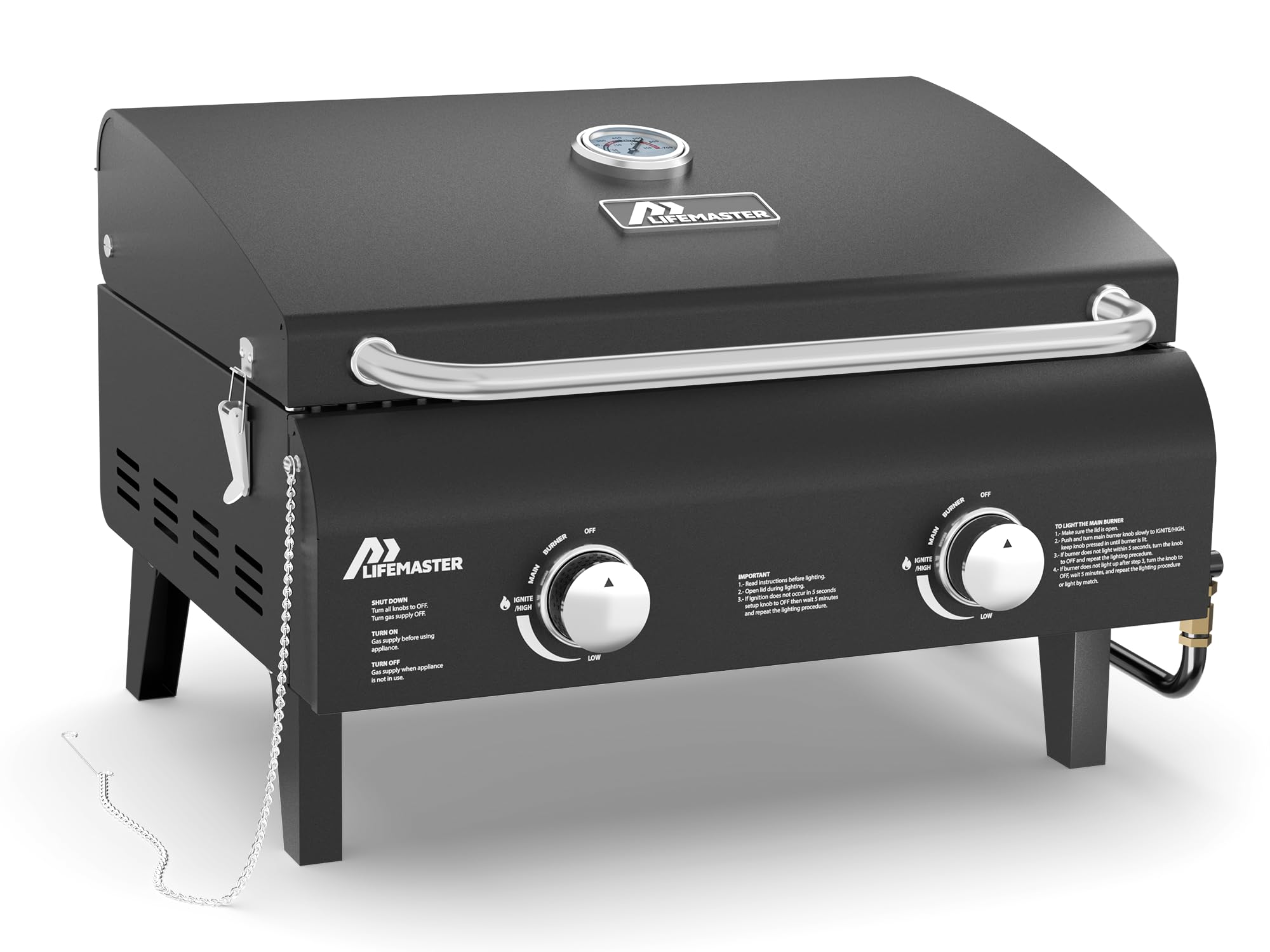
Lifemaster LMGRBLACK
Key Features
- Cooking Area: 275 sq in
- BTU / Burners: 20,000 (2)
- Fuel Type: Propane
- Weight & Dimensions: 28.8 lbs, fold legs
- Build Materials: Stainless steel, powder-coated
- Price: Mid-Range
The Lifemaster delivers two independently controlled 10,000 BTU burners — 20,000 BTU total — in a tabletop grill that costs roughly $110 less than the Weber Q1200. The stainless steel and powder-coated firebox feel noticeably heavier and more substantial than other grills in this price range, which typically use thin sheet metal that can warp.
Heat distribution is even across the 275 sq in cooking surface, and the burners respond quickly to adjustments. The dual burners allow for two-zone cooking — sear on one side, keep warm on the other — a feature usually reserved for larger freestanding grills. The push-to-start ignition lights reliably, and the built-in thermometer helps track internal temperatures.
This grill suits drivers and RVers who don’t mind 28.8 lbs — it’s one of the heaviest tabletop models, so backpackers and long-distance hikers should look elsewhere. The foldable legs collapse for storage, but on uneven ground they can wobble; a level tabletop solves that. If you want dual-burner power without the premium price and can handle the weight, this is a solid tradeoff.
Pros
- Steel and powder-coated body holds up to repeated outdoor use without rusting or warping.
- Dual burners provide even heat across 275 sq in with good searing power.
- Foldable legs and compact shape make it easy to transport and store when collapsed.
Cons
- At 28.8 lbs, this grill is among the heaviest tabletop options — not ideal for backpacking or extended carries.
- Legs can wobble on uneven surfaces; placing on a level table resolves the issue.
For car campers and tailgaters who want dual-burner cooking power without spending for a premium brand, the Lifemaster offers near-identical performance at a noticeably lower price — just be prepared for the heft.
Best for Charcoal Campers
Weber Jumbo Joe
Key Features
- Cooking Area: 240 sq in
- Fuel Type: Charcoal
- Weight & Dimensions: 17.4 lbs, lock lid
- Build Materials: Porcelain-enameled steel
- Price: Budget
The Jumbo Joe brings classic Weber kettle performance to a portable 18-inch form. The porcelain-enameled bowl and lid hold heat evenly, and the dampers give solid temperature control over charcoal cooks. With 240 square inches of cooking area, it can handle a family of four’s burgers and sausages at the campsite.
Portability is well-executed: the Tuck-N-Carry lid lock secures the grill for transport, and the handle makes it easy to carry. For campers who value the distinct smoky flavor of charcoal, this grill delivers. The tradeoff is time – lighting charcoal and cleaning up takes longer than firing up a gas grill, so it’s not for quick weeknight dinners or areas with charcoal restrictions.
This is the right choice for charcoal enthusiasts who want a genuinely portable grill that doesn’t compromise cooking performance. Occasional enamel chipping and leg rust have been noted in humid environments, but that’s typical for painted steel at this price point. If you need instant heat or live under a charcoal ban, look at gas alternatives like the top-pick Weber Q1200.
Pros
- Classic Weber kettle quality with even heat and temperature control
- Large 240 sq in cooking area for a portable charcoal grill
- Locking lid and handle make it easy to transport to camp or tailgate
Cons
- Enamel coating may chip and legs can rust over time, especially in humid conditions
- Charcoal requires more time to light and clean up than gas grills – not suited for quick meals or areas with charcoal restrictions
A budget-friendly charcoal grill that delivers Weber kettle quality in a portable size – ideal for campers who prioritize flavor over speed.
Best for Steak Lovers
CharBroil Grill2Go X200
Key Features
- Cooking Area: 200 sq in
- BTU / Burners: Infrared 650°F
- Fuel Type: Propane
- Weight & Dimensions: 24 lbs, latches
- Build Materials: Cast aluminum
- Price: Mid-Range
Infrared heat hits 650°F in minutes, giving steaks a hard sear with juicy interiors. The cast-aluminum body adds heft without making it cumbersome to carry. Unlike the top pick’s more even temperature profile, this grill runs hotter and faster – ideal when you want a quick, high-heat cookout.
This grill is built for campers and tailgaters who prioritize speed and sear over delicate control. Steaks and burgers come out with pronounced grill marks in under 10 minutes. However, the low setting still runs extremely hot, making it a poor fit for fish, vegetables, or any recipe that needs gentle heat. The latches and carry handle feel secure, so it packs and unpacks without fuss.
Outdoors, the 200 sq in cooking area fits about 8 burgers or a few steaks – enough for a small group. The infrared system stays hot even in windy conditions, which is a plus for beach or campsite cooking. Minor regulator quirks have cropped up in some units, so a quick check before each trip is sensible.
Pros
- Cast-aluminum body feels solid and resists dents, unlike thin steel alternatives.
- Heats up fast and sears steaks evenly with appealing grill marks.
- Latches lock securely and carry handle makes it easy to transport for camping or tailgating.
Cons
- Temperature control is limited – even the low setting runs hot, challenging delicate cooking.
- Some units may experience regulator issues causing flame instability or gas leaks, requiring periodic inspection.
If you want a portable grill that delivers high heat for perfect steaks and is built to last, this CharBroil handles the job – just accept the hot-running nature and check the regulator before each trip.
Best for Apartment Dwellers
George Foreman Electric
Key Features
- Cooking Area: 240 sq in (15-serving)
- BTU / Burners: 1500W
- Fuel Type: Electric
- Weight & Dimensions: 8.7 lbs, stand
- Build Materials: Nonstick plates
- Price: Mid-Range
The George Foreman electric grill heats up fast and distributes heat evenly across its nonstick surface, making it simple to cook steaks, chicken, or vegetables without worrying about hot spots. The sloped grease channel drips fat away from food, so meats come out less greasy than on a standard griddle.
In practice, the grill reaches cooking temperature within a few minutes and maintains consistent heat. The removable stand lets you use it on a tabletop or freestanding, and the 16-foot cord provides flexibility at a picnic table or RV awning. Because it’s electric, there’s no flame, no smoke, and no need to carry propane tanks or charcoal bags.
This grill suits anyone who camps or tailgates at sites with electrical hookups — think RV parks, designated tailgate lots, or backyard patios. It’s also a perfect workaround for apartment dwellers facing gas and charcoal bans. The honest tradeoff: the cooking surface is griddle-like, producing seared marks but not the smoky char of a flame grill. If you prioritize quick cleanup and zero smoke over barbecue flavor, it’s a reasonable compromise.
Unlike the top pick’s gas flame, the George Foreman requires no fuel storage and poses no fire risk from open flames. It also avoids the plastic-melting issues seen in some ultra-light electric models. However, it lacks the high-heat searing capacity of infrared grills and can’t replicate the taste of charcoal — a key consideration for flavor purists.
Pros
- Nonstick plates wipe clean with a paper towel — no scrubbing or soaking needed.
- Heats up in minutes and distributes heat evenly across the cooking surface.
- Compact with removable stand — fits in a car trunk for campsites with power.
Cons
- Cooking surface is closer to a griddle than a flame grill — no smoky charcoal flavor.
- The 240 sq in area may require batch cooking for groups larger than four or five.
For campers with access to electricity who value effortless cleanup over grilled flavor, this electric grill delivers consistent results without the hassle of propane or charcoal.
Best for Family Campers
Coleman RoadTrip 225
Key Features
- Cooking Area: 225 sq in
- BTU / Burners: 11,000 (2)
- Fuel Type: Propane
- Weight & Dimensions: 25.6 lbs
- Build Materials: Steel
- Price: Mid-Range
The Coleman RoadTrip 225 lets you swap the standard grill grate for a griddle or stove grate (sold separately), giving families the option to cook pancakes, stir-fry, or burgers on the same unit. This flexibility sets it apart from fixed-surface grills that limit you to one cooking style.
It’s a good fit for families who camp with 4–6 people and want a grill that cleans up in minutes – the removable water pan collects grease and drippings so you’re not scrubbing charred residue. The 225 sq in cooking area handles multiple burgers or veggies at once. However, the push-button ignition can wear out with time, and the 11,000 BTU output won’t produce the high heat needed for searing steaks. For those who prioritize fast cleanup and cooking variety over blistering heat, this tradeoff is manageable.
At 25.6 lbs it’s tabletop-friendly, not backpacking light, but for car camping or tailgating the weight is reasonable. The propane hookup is straightforward, and the Instastart igniter, when functional, lights reliably. Owners who experience ignition failure can still light the burner manually with a long-reach lighter.
Pros
- Swap-top design accepts optional griddle and stove grates for cooking variety.
- Removable water pan collects grease for simple, fast cleanup after cooking.
- Cooking surface is large enough to feed a family of 4–6 on a camping trip.
Cons
- Push-button ignition may stop working after moderate use – a backup lighter is worth having on hand.
- Heat output is adequate for typical camping meals but won’t deliver high heat for searing steaks or chops.
A practical family grill that balances cooking versatility and easy cleanup with moderate heat – ideal for campers who value convenience over searing power.
Best for Small Families
Cuisinart CGG-306

Key Features
- Cooking Area: 275 sq in
- BTU / Burners: 20,000 (2)
- Fuel Type: Propane
- Weight & Dimensions: 22 lbs, fold legs
- Build Materials: Stainless steel
- Price: Mid-Range
The Cuisinart CGG-306 delivers a sizable 275 sq in cooking surface for its portable class, enough for 6–8 burgers. The locking lid and folding legs make it easy to transport. However, construction uses thin sheet metal that may feel less robust than some competitors, and weld failures have been reported in isolated cases. For campers who value cooking space over long-term ruggedness, this grill remains a practical option.
Pros
- Portable design with locking lid and folding legs for easy carry.
- Cooking area spacious enough for small groups.
Cons
- Thin metal construction may lead to weld failures in some cases.
- Rust can develop after extended exposure to moisture or use.
Best suited for occasional camping trips where a large cooking area matters more than appliance longevity.
Best for Budget Campers
Royal Gourmet GT1001

Key Features
- Cooking Area: 285 sq in
- BTU / Burners: 10,000 (1)
- Fuel Type: Propane
- Weight & Dimensions: 17.8 lbs, fold legs
- Build Materials: Stainless steel
- Price: Budget
The Royal Gourmet GT1001 delivers a compact gas grill that fits easily into a car trunk for camping or beach trips. Its folding legs and lockable lid make it simple to set up on a picnic table. The cooking area is generous for its size, allowing a few burgers and hot dogs to cook at once. However, the 10,000 BTU output means food cooks slowly – expecting a proper sear on steaks will lead to disappointment. Additionally, the push-button igniter may stop working after some use, requiring a lighter to start the grill. This grill suits budget-conscious campers who prioritize portability over cooking speed.
Pros
- Compact design with folding legs fits easily in car trunks and storage.
- Solid metal construction feels sturdy for an entry-level grill.
- Cooking area is generous given the price – enough for a small group.
Cons
- Push-button igniter may stop working after repeated use, requiring a manual lighter.
- Heat output is low – food cooks slowly and steaks will not sear.
Best suited for light camping or picnics where cooking speed isn’t a priority – an affordable companion for casual outdoor meals.
Best for Budget Occasional
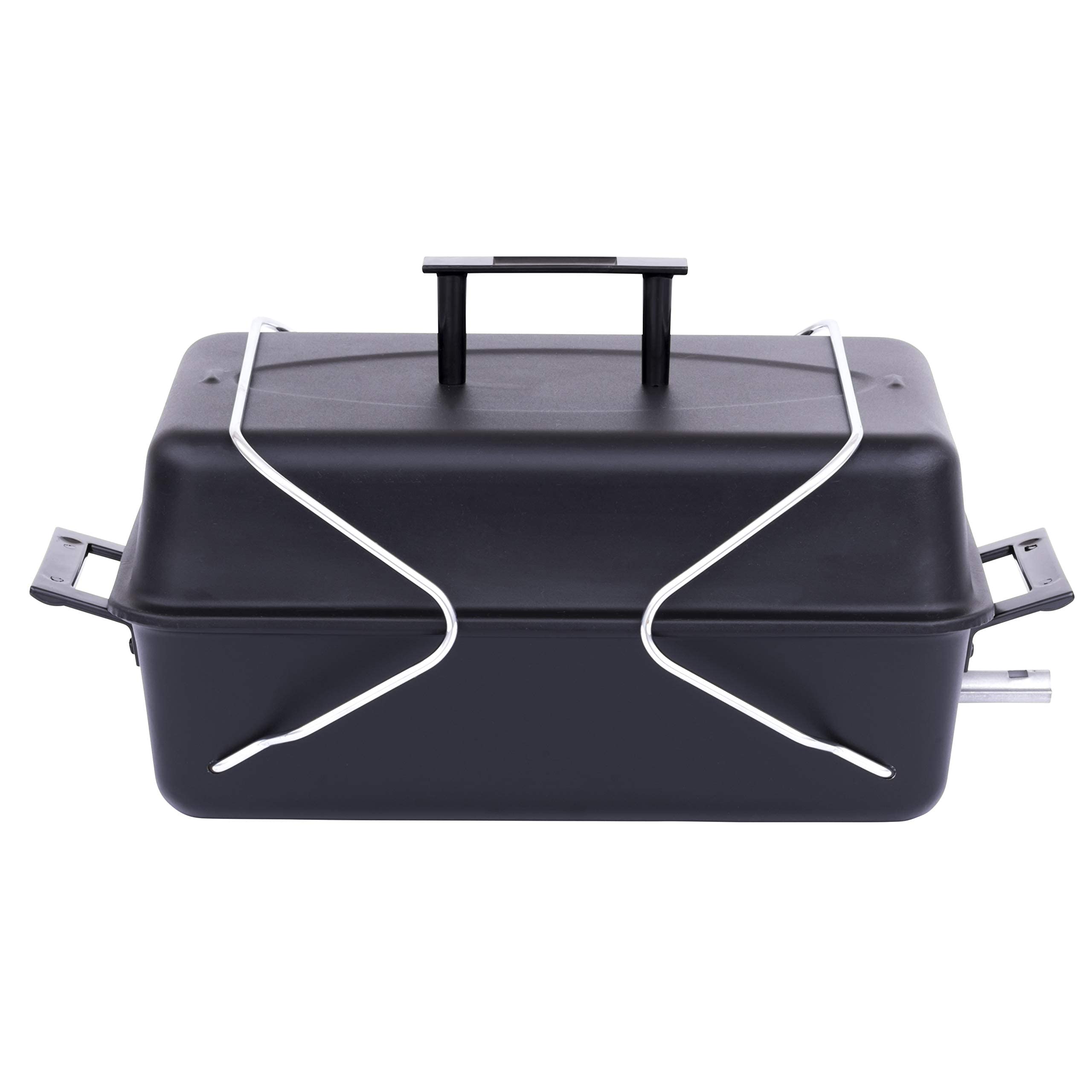
CharBroil Portable 1-Burner
Key Features
- Cooking Area: 190 sq in
- BTU / Burners: 11,000 (1)
- Fuel Type: Propane
- Weight & Dimensions: 11 lbs, fold legs
- Build Materials: Porcelain-coated grate
- Price: Budget
At 11 pounds and under $50, this CharBroil grill is an easy choice for a picnic or light camping where a flat, level table is available. The folding legs are not stable on uneven ground — the grill can tip — and heat concentrates in the center, so smaller foods like sausages cook more evenly than larger cuts. That makes it a decent backup grill for tight budgets rather than a primary cooker for serious trips.
Pros
- Extremely affordable for a propane grill
- Lightweight and portable – easy to carry in a car trunk
- Simple assembly out of the box
Cons
- Uneven heat distribution – center is much hotter than the edges
- Legs can cause tipping on uneven surfaces, especially on tables
Best left for flat-table picnics or as a spare grill when budget is the only consideration.
Best for Budget Charcoal
Royal Gourmet CD1519

Key Features
- Cooking Area: 303 sq in
- Fuel Type: Charcoal
- Weight & Dimensions: 25.4 lbs
- Build Materials: Steel, porcelain coating
- Price: Budget
The Royal Gourmet CD1519 delivers 303 sq in of cooking space plus a warming rack at a budget-friendly price, making it a solid option for budget charcoal grillers who need room for 2-4 people. However, the first few burns may cause paint to peel from the body and plastic vent handles to melt — a safety concern that limits its recommendation. Assembly also takes over an hour with unclear instructions. For car camping where weight isn’t an issue, this grill offers large capacity, but the melting parts make it hard to recommend over alternatives like the Weber Jumbo Joe.
Pros
- Large 303 sq in cooking surface with a separate warming rack, enough for 2-4 people.
- Sturdy build and thoughtful features for the price, including adjustable fire grate and ash tray.
Cons
- During initial use, paint on the body and plastic vent handles may peel or melt – a safety concern in enclosed or windy conditions.
- Assembly requires many screws and over an hour of work; instructions are not always clear.
This grill fits budget-conscious campers who prioritize cooking area over first-use aesthetics and don’t mind a lengthy setup, but the melting parts make it a conditional choice.
How to Choose
The best portable grills balance heat output, build quality, and weight – and the cheapest option often costs more in frustration.
Cooking Area
Cooking area determines how many burgers or steaks you can cook at once. A 200 sq in grill fits about 4-6 burgers; 275+ sq in handles a family of four.
Larger cooking surfaces require more burner coverage to heat evenly. Single-burner grills often have a hot center and cool edges, so dual burners with independent control give you better flexibility for different food sizes.
BTU and Burner Count
BTU measures heat output, but it’s the burner layout that matters more. A single 20,000 BTU burner concentrates heat in one spot, while two 10,000 BTU burners spread heat across the grate.
For searing steaks, look for at least 10,000 BTU per burner. For low-and-slow cooking or delicate items, a grill with adjustable burners lets you dial down the temperature instead of burning everything.
Fuel Type
Propane is the most common fuel for portable grills – instant-on, easy to regulate, and widely available. Charcoal delivers authentic smoky flavor but requires 15-20 minutes to light and ash cleanup after.
Electric grills are ideal for apartments and balconies where open flames are banned, but they lack the searing power of gas and the smoke flavor of charcoal. They cook more like a griddle.
Weight and Dimensions
A grill labeled ‘portable’ can weigh anywhere from 11 lbs to over 28 lbs. If you plan to carry it any distance, under 20 lbs with a secure locking lid and handle is essential.
Folded dimensions matter for trunk space. Grills with folding legs or collapsible stands take up less room when stored. Always check both weight and packed size before buying.
Build Materials
The material determines how long the grill lasts. Cast aluminum resists rust and holds heat well but costs more. Stainless steel can be durable, but thin-gauge models dent easily and develop rust spots.
Porcelain-enameled steel (common in charcoal kettles) protects against rust and is easy to clean, but chips if dropped. Non-stick coated grates simplify cleaning but may wear off with metal utensils.
FAQ
Can I use a full-size 20 lb propane tank with a portable grill?
Yes, most portable grills have a standard regulator that accepts a 20 lb tank, but you may need an adapter hose. Check the manual – some models require a specific fitting. Using a larger tank adds weight and reduces portability but extends cook time.
Why does my portable grill take forever to get hot?
Low BTU output, single-burner design, or wind can all slow heating. Wind is a common factor – use a wind guard or position strategically. If the grill has thin metal, heat escapes quickly. Consider a model with higher BTU and a lid that traps heat.
Is a charcoal portable grill better than gas for camping?
Charcoal gives superior flavor but requires more time to light and cleanup. Gas is instant-on and easier to regulate. For car camping where weight isn’t an issue, charcoal works well. For quick meals or areas with fire bans, gas is more practical.
How do I stop my portable grill from rusting after a season?
Clean and dry the grill after each use, store it in a dry place, and apply a light coat of vegetable oil to grates. Models with painted steel or thin stainless steel are prone to rust. Cast aluminum and porcelain-enameled finishes resist corrosion longer.