This post contains affiliate links. We may earn a small commission when you buy through our links — at no extra cost to you.
Most tofu presses rely on rubber bands or springs that lose tension or snap after a few months. That frustration turns a 10-minute prep into a scavenger hunt for replacement parts.
The real difference isn’t price—it’s the tension mechanism. Screw-driven presses hold up longer than spring or band designs, but they can be slower to adjust. The trade-off between speed and durability is the central choice you’ll make.
This guide breaks down which press mechanisms actually match how often you cook tofu, so you don’t end up with a broken tool halfway through a recipe.


Best for Frequent Users
EZ Tofu Press
Key Features
- Pressure Mechanism: Screw with wing nuts
- Material: Plastic, stainless steel grommet
- Dishwasher Safe: Yes
- Capacity: Standard block
- Price: Mid-Range
The EZ Tofu Press uses a simple screw-down mechanism that applies even, adjustable pressure without the rubber bands or springs that fail on other designs. Wing nuts tighten the plate in seconds, and the plastic body presses water out quickly — users report consistently firm tofu in ten minutes or less. The press fits standard brick sizes and disassembles for dishwasher cleaning, making post-cooking cleanup as fast as pressing.
This model suits frequent tofu cooks who want speed and control over the draining process. The plastic construction is sturdy enough for years of weekly use, though some owners note that heavy daily use can eventually cause cracking along the screw area. Because there is no built-in drip tray, the press needs to sit over a sink, bowl, or rimmed baking sheet to catch expelled water — a minor setup step for the benefit of a mess-free pressing surface.
Pros
- Screw mechanism tightens and loosens with minimal effort
- Presses tofu fast and leaves blocks evenly firm
- Build quality holds up to regular use over years
Cons
- Plastic can develop cracks under very heavy daily use
- No attached drip tray; requires a separate bowl or sink
If you press tofu multiple times a week and want a method that won’t leave you hunting for replacement bands or springs, this screw-driven press delivers consistent results with minimal fuss. Just keep a catch basin handy.
Best for Heavy Use
Healthy Express
Key Features
- Pressure Mechanism: 2 screw knobs with springs
- Material: Plastic, stainless steel hardware
- Dishwasher Safe: Yes
- Capacity: Large blocks
- Price: Mid-Range
The Healthy Express press uses curved plates that flatten under pressure, delivering even force across the tofu block. It has no water collection tray — you’ll need to set it over a sink or bowl to catch the liquid. This design suits frequent tofu users who prioritize durability and consistent results and don’t mind the extra step of positioning it over a drain.
Pros
- Curved plates produce even pressure, avoiding lopsided tofu.
- No bands or springs to wear out; solid plastic and stainless steel hardware.
- Dishwasher safe without disassembly — drop it in as one piece.
Cons
- When pressing tofu, the press must sit over a sink or bowl to catch water — no built-in drip tray.
A durable press for tofu eaters who want even force without rubber bands, as long as you’re comfortable using it over a sink or bowl.
Best for Budget Buyers
YARKOR Spring Press
Key Features
- Pressure Mechanism: Spring-loaded, side handles (10kg)
- Material: BPA-free plastic
- Dishwasher Safe: Yes (except spring)
- Capacity: 8–12 oz tofu
- Included Accessories: Drip tray
- Price: Budget
The YARKOR Spring Press delivers solid water removal (up to 3x more efficient than manual methods) in 10–20 minutes, and its transparent drip tray lets you see when pressing is done. The plastic build feels robust and the whole unit (minus the spring) goes in the dishwasher. The tradeoff is the side clasps: they require a firm grip and may be stiff to latch, which can frustrate users with weaker hands or arthritis.
This press suits budget-conscious cooks who don’t mind working with a stiff clasp and want the convenience of a dishwasher-safe tool. If you prioritize ease of latching or need a tool-free design, a screw-based press may be a better fit.
Pros
- Extracts water efficiently from tofu blocks in under 20 minutes
- Dishwasher-safe construction (remove spring) makes cleanup simple
- Transparent tray allows visual monitoring of pressing progress
Cons
- Side clasps can be difficult to close, requiring notable hand strength
If you want a functional press under $15 and are willing to manage a stiff clasp, this is a worthy budget pick with a clear drip tray and solid build.
Best for Metal & Multi-Use
Svyaxfa Steel Press
Key Features
- Pressure Mechanism: Ratchet screw
- Material: 304 stainless steel
- Dishwasher Safe: Yes
- Capacity: Standard block
- Included Accessories: Drip tray, towel
- Price: Premium
This press is built from 304 stainless steel with a ratchet screw mechanism that applies even, adjustable pressure without relying on elastic bands or springs. A drip tray and press towel are included, and the whole assembly goes in the dishwasher for effortless cleanup.
It suits buyers who want zero plastic in their kitchen tools and who may also press paneer or cheese from scratch. That broader capability comes at a premium price, so it’s less ideal for those pressing only store-bought tofu on a tight budget. Long-term durability under regular heavy use is still being assessed given the limited number of units in circulation.
Pros
- All-metal construction – no plastic to crack or degrade over time
- Dishwasher safe and easy to clean
- Works for tofu, paneer, cheese, and yogurt
Cons
If you’re committed to avoiding plastic and want a single tool for tofu and dairy pressing, this stainless steel press delivers without compromise.
Best for Press & Cube
Fullstar Press & Cutter
Key Features
- Pressure Mechanism: Spring-loaded, 2 levels
- Material: Plastic, stainless steel spring
- Dishwasher Safe: Yes
- Capacity: Standard block
- Included Accessories: Cutting blade, brush
- Price: Mid-Range
Integrated cutting blade and two pressure levels let you press and cube tofu in one go, trimming several minutes from meal prep. The spring-loaded mechanism works fine for most recipes, but water removal falls short of dedicated presses: tofu can come out wetter, and the plastic body may flex or crack under repeated heavy use. This tradeoff suits home cooks who prioritize convenience over maximum dryness and appreciate a gadget that does double duty on the counter.
Pros
- 2-in-1 design presses and cubes tofu in a single step, saving prep time.
- Works well for both pressing and cubing with consistent results.
- Includes cleaning brush and is dishwasher safe for easy upkeep.
Cons
- Drainage holes can leave tofu wetter than with presses designed for full water extraction.
- Plastic construction may feel less sturdy and occasional cracking has been noted.
Great pick if you want one tool to press and cube, but it’s not the best choice when maximum water removal matters.
Best for Beginner Friendly
Tofuture Original Press
Key Features
- Pressure Mechanism: Clips (3 adjustable)
- Material: Polypropylene plastic
- Dishwasher Safe: Yes
- Capacity: 8–12 oz blocks
- Price: Mid-Range
The Tofuture Original Press is the entry-level standard for good reason: snap the clips, collect the water, and you’re done. The three‑piece plastic design is fast to assemble and dishwasher safe, which makes it a low‑fuss choice for anyone new to tofu or pressing multiple times a week. Where it differs from a screw‑type press like the top pick is in its reliance on rubber bands for tension — those bands can lose elasticity or snap under regular use, so this press is best suited to cooks who press a few times a week rather than daily heavy use.
Pros
- Snap‑on clips make pressing nearly effortless
- Removes water effectively for a firmer, more cookable texture
- Entire unit rinses clean or goes in the dishwasher
Cons
- Rubber bands can snap after a few months of regular use, requiring replacement
If you press tofu a couple times a week and want a no‑fuss, budget‑friendly tool, this press delivers — just keep a spare set of bands on hand for when the originals wear out.
Best for Occasional Users
NOYA Spring Press

Key Features
- Pressure Mechanism: Twist dial, stainless spring
- Material: Silicone & stainless steel
- Dishwasher Safe: Yes
- Capacity: Standard block
- Included Accessories: Marinating lid
- Price: Budget
This budget-friendly press speeds up water removal effectively with a simple twist-dial spring mechanism, and the included marinating lid adds convenience for flavorful tofu. However, the spring and twisting mechanism may wear out with repeated use, and some units apply uneven pressure, making this a better fit for occasional users rather than daily pressing.
Pros
- Fast and even pressing in 10–30 minutes
- Easy to use and clean
Cons
- The spring and twisting mechanism may wear out with repeated use, making this better suited for occasional pressing.
A cost-effective pick for occasional tofu pressing if you want the convenience of a marinating lid, but the spring mechanism may not hold up to frequent use.
Best for No-Fuss Press
TofuBud Press

Key Features
- Pressure Mechanism: Spring-loaded, 2 levels
- Material: BPA-free plastic
- Dishwasher Safe: Yes
- Capacity: 8–12 oz
- Included Accessories: Recipe booklet
- Price: Mid-Range
The TofuBud Press combines easy assembly with two spring-loaded pressure levels and a removable drainer, making it a convenient choice for home cooks. It removes water effectively in about 15 minutes. However, the lid can crack at thin points under repeated tension, so this press is best suited for moderate, not daily heavy use.
Pros
- Easy to assemble and clean — dishwasher safe
- Removes water in 15 minutes
Cons
- Lid can crack at thin points under repeated tension
A practical option for casual tofu users who want a no-fuss press and don’t plan to press daily.
Best for Screw Press Budget
Valleyhike Press

Key Features
- Pressure Mechanism: Long screw + inner spring
- Material: Plastic
- Dishwasher Safe: Yes
- Capacity: Standard block
- Included Accessories: Drip tray
- Price: Budget
The Valleyhike Press uses a long screw with an inner spring to squeeze water from tofu, and its pour spout directs liquid into the included drip tray. The center screw can tilt the pressing plate, producing uneven results, and the plastic body may crack under frequent heavy use. For occasional tofu users on a budget, it gets the job done, but the uneven pressing and durability risks keep it behind the top pick’s consistent performance.
Pros
- Well-constructed body that effectively presses water from tofu.
- Simple to clean and dishwasher safe.
Cons
- Center screw can tilt the pressing plate, causing lopsided tofu.
Best for occasional tofu users who want an affordable twist-style press and can accept uneven pressure; not for daily heavy use.
Best for Ultra-Budget
MANBA Press

Key Features
- Pressure Mechanism: Rubber bands (3 settings)
- Material: Plastic
- Dishwasher Safe: Yes
- Capacity: Standard block
- Price: Budget
For occasional tofu users on a tight budget, this press does the job: it’s easy to use, dishwasher safe, and costs under $7. However, the rubber bands can wear out with frequent use, making it unsuitable for regular pressing — consider it a backup or travel tool.
Pros
- Very affordable and works reasonably well
- Easy to use and clean
Cons
- Rubber bands can wear out with frequent use
Best for minimum-budget shoppers who press tofu a few times a month or need a spare press for travel.
Best for Oxo Loyalists
OXO Good Grips

Key Features
- Pressure Mechanism: Screw-down plate
- Material: Plastic, stainless steel
- Dishwasher Safe: Yes
- Capacity: Standard block
- Price: Premium
For those who value OXO’s comfortable grips and easy disassembly, this press delivers a clean experience. However, its premium price places it above comparable presses that offer the same functionality, making it a choice for brand loyalists rather than value seekers.
Pros
- Simple and effective design from a trusted brand
- Easy to take apart and clean thoroughly
Cons
- Premium price for a design that performs similarly to more affordable alternatives
Best suited for OXO loyalists who prioritize ergonomic design and easy cleaning over cost savings.
Best for Tofu Makers
bd.Ai Steel Press
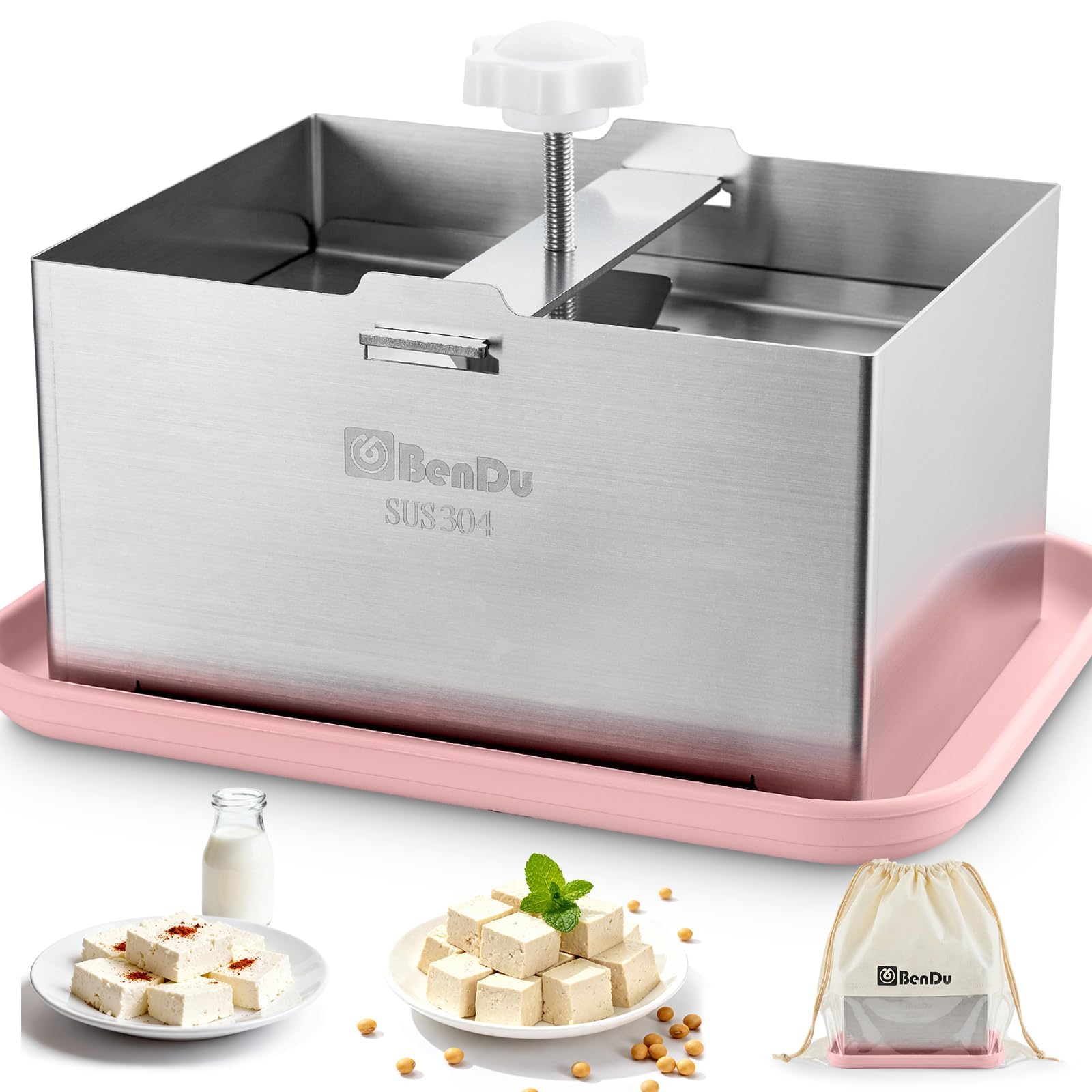
Key Features
- Pressure Mechanism: Screw-down
- Material: 304 stainless steel
- Dishwasher Safe: Yes
- Capacity: Standard block
- Included Accessories: Cloth, drip tray, bag
- Price: Premium
This stainless steel set includes a press, cloth, drip tray, and storage bag—everything for turning soybeans into tofu at home. It’s a dedicated tool for DIY tofu making, not for pressing water out of store-bought blocks, which may surprise typical buyers. The 304 stainless steel construction is durable and easy to clean, though the metal crossbars can bow slightly under maximum tension.
Pros
- Complete kit for home tofu making: press, cloth, drip tray, storage bag
- High-quality 304 stainless steel construction
Cons
- Designed for making tofu from scratch, not for pressing store-bought blocks
Best for home tofu makers who want a complete scratch-made kit; skip this if you only need to press store-bought tofu.
Best for Eco-Friendly
YARKOR Bamboo Press

Key Features
- Pressure Mechanism: Screw knobs
- Material: Bamboo, stainless steel hardware
- Dishwasher Safe: No
- Capacity: Up to 16 oz
- Included Accessories: Cheesecloth, drip tray
- Price: Mid-Range
The YARKOR Bamboo Press uses natural bamboo and looks great on the counter, and includes cheesecloth. But the screw knobs resist even tightening, bamboo can crack with moisture, and drainage holes may trap water. Best for occasional use by those who value eco-friendly looks over convenience.
Pros
- Eco-friendly bamboo construction
- Attractive countertop design
Cons
- Screw mechanism is cumbersome and resists even tightening
Best for occasional tofu users who want a natural-looking press and are willing to work around its fussy screw and drainage quirks.
How to Choose
The mechanism that applies pressure determines how long your press will last and how convenient it is to use.
Pressure Mechanism
Screw mechanisms use a threaded rod to press the plate down. They apply consistent force without relying on elastic parts that wear out, but require several turns to adjust. This makes them slower to set up but nearly indestructible.
Spring-loaded mechanisms use a coiled spring compressed by a latch or twist. They press quickly and can be set with one hand, but the spring loses tension over time and can fail after months of daily use.
Rubber-band designs are the simplest and cheapest. Bands stretch around the press and need replacement every few months as they lose elasticity or snap. This is fine for occasional use but frustrating for weekly cooking.
Material
Plastic is lightweight, dishwasher safe, and affordable, but can crack if over-tightened or dropped. Polypropylene and BPA-free plastics are most common. Stainless steel presses are much heavier and cost more, but they won’t crack, warp, or absorb odors. Bamboo looks natural but requires hand washing and can split if exposed to moisture repeatedly.
For daily use, plastic with reinforced hardware (stainless steel grommets or knobs) is the practical choice. For longevity and multi-purpose use (tofu, paneer, cheese), a full metal press saves frustration over years.
Dishwasher Safe
Most plastic and metal presses are dishwasher safe, which simplifies cleanup. Bamboo presses are not – they must be hand dried immediately to prevent cracking. Some spring presses require removing the spring before washing, adding a step.
If you press tofu multiple times a week, a dishwasher-safe press reduces prep fatigue. For occasional use, hand washing is manageable.
Capacity
Almost all presses fit standard 8–12 oz tofu blocks. Some extend to 16 oz blocks, which is helpful if you cook for two or more. Capacity doesn’t affect pressing quality – it simply determines if you need to cut a larger block in half.
A press that fits only standard blocks is fine for most home cooks. Larger capacity adds flexibility for batch cooking.
Included Accessories
Marinating lids let you press and then store tofu in the fridge without transferring. Cutting attachments turn the press into a dicing tool. Drip trays catch water so you don’t need a separate bowl or sink.
These extras add convenience but are not essential. A basic press without accessories still works well – the mechanism matters more.
FAQ
Why does my tofu press keep breaking after a few months?
If your press uses rubber bands or springs, those parts wear out from repeated tension. Rubber bands lose elasticity and snap; springs lose tension and can’t hold the plate flat. To avoid this, choose a screw-driven press (like the EZ Tofu Press) which has no elastic components. For occasional use, budget band presses are fine, but plan to replace bands every few months.
Can I use a tofu press for paneer or cheese making?
Yes, but only if the press is built for it. Stainless steel presses (like the Svyaxfa Steel Press) are ideal because they are non-porous and can handle higher pressure. Plastic presses work for soft cheeses but may warp under the force needed for hard cheeses. Avoid bamboo presses for cheese – they absorb moisture and can harbor bacteria.
Is a stainless steel tofu press worth the extra money?
If you press tofu multiple times a week and want a tool that will last indefinitely, yes. Stainless steel won’t crack, bands won’t break, and it can be used for paneer and cheese. For occasional users, a mid-range plastic screw press delivers similar results at one-third the cost. The extra durability only pays off with frequent use.
How long does it actually take to press tofu with a spring press?
Most spring presses remove enough water for cooking in 10–20 minutes, but the exact time depends on tofu firmness and desired texture. Extra-firm tofu may take 15 minutes; softer silken tofu needs 20–30 minutes and lighter pressure. Screw presses take about the same time because you control the force gradually.