This post contains affiliate links. We may earn a small commission when you buy through our links — at no extra cost to you.
Most cocktail books are gorgeous, and most of them are doorstops. You buy one, make the two drinks on the cover, and it holds up a lamp for years. The good ones leave you with a ratio or two you still remember at seven on a Friday, when friends are already at the door and all you have is gin, a lime, and a dusty bottle in the back of the cabinet.
I spent the past four months mixing from 15 of them with my team, and spilled on a few. Recipe count turned out to be the least useful number on a cover: a fat book full of drinks you can’t find in the index is worth less than a slim one you cook from twice a week. What separates them is whether they teach technique or just hand over instructions.
They’re also the gift people buy for someone else’s bar cart, and that’s a different job — some of these read beautifully on the couch even if you never touch a shaker. We kept both kinds in the running and sorted the picks by who they suit.

Best for Learning to Improvise
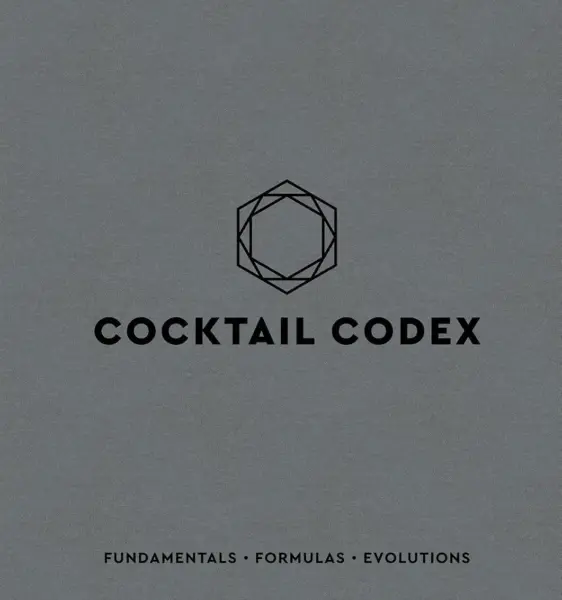
Cocktail Codex
Key Features
- Pages: 320
- Published: 2018
- Trim size: 9.57 x 1.14 x 10.2 inches
- Price: Premium
Cocktail Codex doesn’t hand you a list of drinks so much as a set of rules. It sorts cocktails into a handful of root formulas, then shows how each one stretches into a family of variations, with flowcharts at the head of every chapter that make the logic visible at a glance. The recipes explain their reasoning instead of only listing amounts.
That structure is why it’s the first book we recommend to almost anyone. Of everything on this shelf, it’s the one that made us better rather than just busier, and the drinks we’ve mixed from it have come out balanced as written. It suits a curious beginner as well as someone who already owns a jigger, because nothing assumes you know the vocabulary.
It’s a substantial object: 320 pages at 9.57 by 10.2 inches and over three pounds, so it lives on a shelf and comes down for a session rather than sitting open on a narrow counter. The drinks also assume a bar stocked with intent — the syrups and modifiers it calls for reappear across the book, so a bottle bought for one drink earns its keep in several.
Two small things worth knowing. The cover is plain enough that it disappears beside the more photogenic books here, and the recipes get more technical as you go, so the last third is a stretch for a total novice. Neither bothered us. The first chapter alone is worth the shelf space.
Pros
- Teaches formulas you can build on
- Drinks come out balanced as written
- Chapter flowcharts make the system readable
- Includes syrup and prep recipes
Cons
- Large 10-inch format needs shelf space
- Not a quick A-to-Z lookup
We reach for Codex more than any other book here: it teaches a few root formulas and then shows you how to build your own, so the recipes keep paying off after you’ve mixed them.
Best for Wide Recipe Lookup
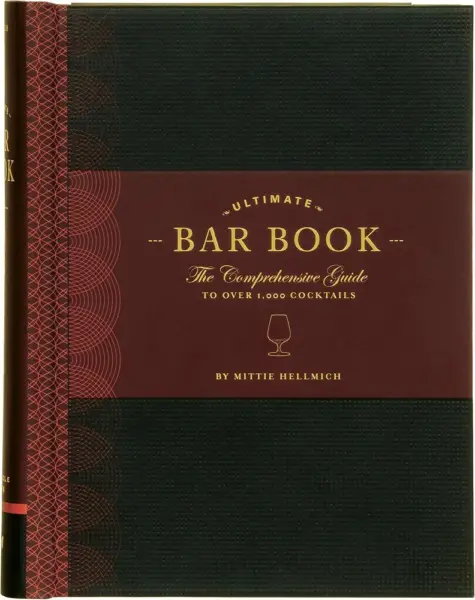
The Ultimate Bar Book
Key Features
- Pages: 476
- Recipes: Over 1,000
- Published: 2006
- Trim size: 5.25 x 1.5 x 7.88 inches
- Price: Midrange
The first thing you notice is the trim: 5.25 by 7.88 inches and under two pounds, small enough to live on the shelf next to the bottles instead of competing for the counter. For a book you grab with wet hands halfway through a recipe, that’s a real advantage, and it’s why this one gets reached for more often than the bigger hardbacks.
Inside are more than 1,000 drinks, and the coverage is unusually even — classics, tiki, shooters, hot drinks, plus sections on tools, glassware, and stocking a bar. Each recipe names its glassware, so you aren’t guessing between a coupe and a highball. It’s a 2006 book, though, and the last two decades of craft-cocktail invention are thin here; you won’t find much of what a modern bar list is built from.
We treat it as the dictionary on the shelf. When we want one specific drink — something obscure, something a guest asked for — this is where we look first, because it’s likelier than anything else here to have it. It won’t teach you to invent drinks the way Codex does, and that’s the trade: breadth for depth. The type is genuinely small, packed into two tight columns; if that’s a dealbreaker, The Essential Cocktail Book sets a comfortable page with a photo per drink.
Pros
- More than 1,000 recipes in one volume
- Compact 5.25 by 7.88-inch trim
- Glassware named for every drink
- Sections on tools and stocking a bar
Cons
- No photographs of the finished drinks
If you want the widest net with the least fuss, this is it: over a thousand drinks, small enough to keep by the bottles, organized well enough to find what you need mid-pour.
Best for Stocked Home Bars
Death & Co
Key Features
- Pages: 320
- Published: 2014
- Trim size: 9.53 x 1.22 x 10.16 inches
- Price: Premium
The surprise here is the shopping list. A book from a famous cocktail bar could easily be a tour of house cordials and impossible syrups; instead the recipes lean on bottles you can find, and the book offers options at more than one price point so you aren’t chasing a single brand. We expected a museum piece and got something we cook from.
The rest is what that bar’s reputation promises: chapters on each base spirit and its modifiers, technique, and a long argument about balance, with drinks that are more interesting than the usual classics-plus-riffs. It also walks through how to come up with your own drink, which is the section we used most.
It’s a big, heavy hardback — 320 pages at 9.53 by 10.16 inches, over three pounds — and it wants a counter rather than a crowded shelf corner. That size is also why it works as a browse: it’s the one here that guests pick up and read, and the writing is good enough to hold them.
Pros
- Recipes built on findable bottles
- Options at more than one price point
- Explains how to invent your own drinks
- Technique and modifier chapters worth reading
Cons
- Bulky 10-inch hardback is awkward to hold
A bar book that doesn’t demand a bar: the drinks here are built on bottles you can actually buy, and the technique chapters change how you stir, shake, and taste.
Best for Tiki Nights
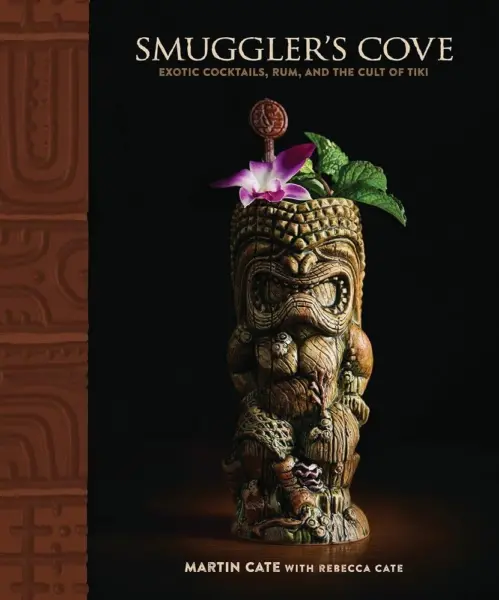
Smuggler’s Cove
Key Features
- Pages: 352
- Published: 2016
- Trim size: 7.72 x 1.34 x 9.29 inches
- Price: Midrange
Tiki is a production — the crushed ice, the mug, the garnish that takes longer than the drink — and Smuggler’s Cove is the only book here that treats the production as the point rather than an inconvenience.
It’s a history book as much as a recipe book: the tiki movement, the bars, the people, told across 352 pages with period photography and graphic art that make it worth leaving out on a table. The drinks run from simple to genuinely elaborate, and each one arrives with enough context to be more than a ratio.
It is, however, a commitment. Expect to buy syrups, acquire at least one mug, and own more than one bottle of rum before the middle of the book makes sense. If you want a book for a Tuesday-night highball, this isn’t it — but if you’re planning a party with a theme, that investment is the fun part rather than the tax.
What we appreciated most is how it handles rum: recipes call for a style, an aged Jamaican or a funky overproof, rather than a brand, so you can shop what’s in front of you and still land close. That single editorial decision makes the book usable rather than merely gorgeous, and it’s why this is the one we pull down when there’s a crowd.
Pros
- Rum guidance by style, not brand
- History and photography worth the shelf
- Drinks built for entertaining a crowd
Cons
- Needs tiki-specific syrups, mugs, and rums
- Narrow range beyond rum and tiki
If you want one book that turns a backyard evening into an event, this is it: tiki history, rum guidance by style, and drinks that look as good as they taste.
Best for First-Time Mixers
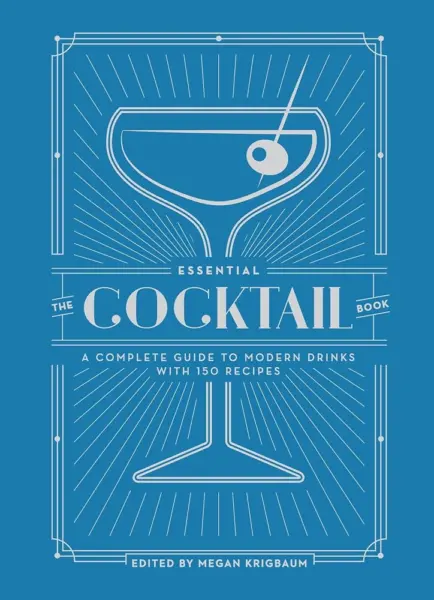
The Essential Cocktail Book
Key Features
- Pages: 352
- Recipes: 150
- Published: 2017
- Trim size: 5.2 x 0.98 x 7.2 inches
- Price: Budget
Every drink in The Essential Cocktail Book gets a photograph of the finished glass, which sounds like a small thing until you’re holding a shaker and wondering whether the result is supposed to be pink. The instructions are plain, the type is comfortable, and the 150 recipes split sensibly between the canon — daiquiri, Manhattan, negroni — and modern riffs on it.
At 5.2 by 7.2 inches and 352 pages it’s small enough to keep where you mix, and the index works by ingredient as well as by name, so you can start from what’s in the fridge instead of from a drink you can’t remember. That’s how most of us actually decide what to make on a Wednesday.
We hand this to beginners before anything else on the shelf. There’s no guesswork about what you’re aiming for, nothing assumes you own a bar spoon, and the drinks are good enough that you won’t be embarrassed by them — which is a different job from being exhaustive.
Pros
- A photograph for every drink
- Compact 5.2 by 7.2-inch trim
- Index by ingredient, not just name
- Classics and modern riffs side by side
Cons
- Only 150 recipes; not a deep reference
The friendliest book here for someone starting from zero: a photo of every drink, clear instructions, and a split between classics and modern riffs that stays interesting.
Best for Fun Gift
Tequila Mockingbird
Key Features
- Pages: 168
- Edition: Expanded anniversary
- Published: 2023
- Trim size: 5.3 x 0.8 x 7.3 inches
- Price: Budget
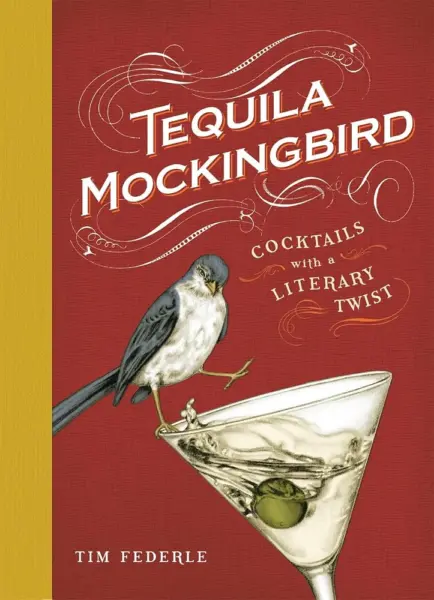
This is the one we hand over without a caveat. Buying a cocktail book for someone else is a small gamble — too serious and it reads like homework, too cute and it never gets opened — and Tequila Mockingbird lands in the narrow space between: slim, funny, and sharp enough that a person who reads more than they drink will still finish it.
The format is a drink per page, each named for a book and paired with a line or two of commentary that’s wittier than the concept deserves. The drinks aren’t throwaways either: real recipes with measurements, several built with an actual twist rather than a splash of something colored. The expanded anniversary edition runs 168 pages at 5.3 by 7.3 inches, which is stocking-sized.
The honest boundary is that you won’t learn to balance a drink from this book, and by the twentieth pun the joke has done its work. What it does better than anything else here is get opened — a book that makes someone laugh gets picked up on a Friday, and with a gift that’s most of the battle.
Pros
- Literary puns that actually land
- Real recipes, not novelty filler
- Small enough for a stocking
- Expanded anniversary edition
Cons
- Puns outweigh the mixing advice
The gift pick: a slim, funny book of literary pun drinks that’s as good on a nightstand as a bar cart, and a safe present for a reader who drinks.
Best for Budget Starter Book
The Art of Mixology
Key Features
- Pages: 192
- Published: 2018
- Trim size: 7.7 x 0.8 x 9.6 inches
- Price: Budget
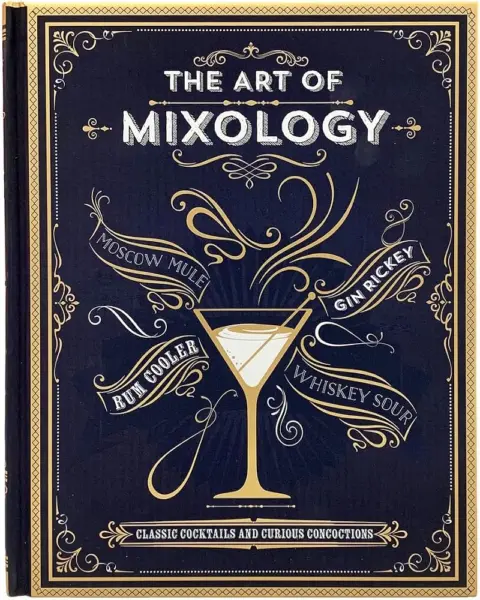
It’s the least expensive book here, and it reads that way in the best sense: 192 pages, a clean layout, an illustration with most drinks, and directions short enough to follow with one hand. Sections are split by spirit and style, mocktails included, and the page for each drink shows you what the finished glass should look like.
We keep it as the loaner. It’s the one we hand to a friend who wants to try a dozen drinks without investing in a shelf of theory, and the one we don’t worry about coming back with a sticky cover. What it doesn’t do is explain why a drink works — you get amounts and method, not reasoning — so treat it as a starting point and expect to graduate from it.
Pros
- Includes non-alcoholic options
- An illustration with most drinks
- Simple directions for new mixers
Cons
- Explains what to pour, not why
The one we hand to someone who wants a lot of drinks for very little money and doesn’t need a lecture on why they work.
Best for Bar Craft Study
Meehan’s Bartender Manual
Key Features
- Pages: 488
- Published: 2017
- Trim size: 7.09 x 1.5 x 8.66 inches
- Price: Premium
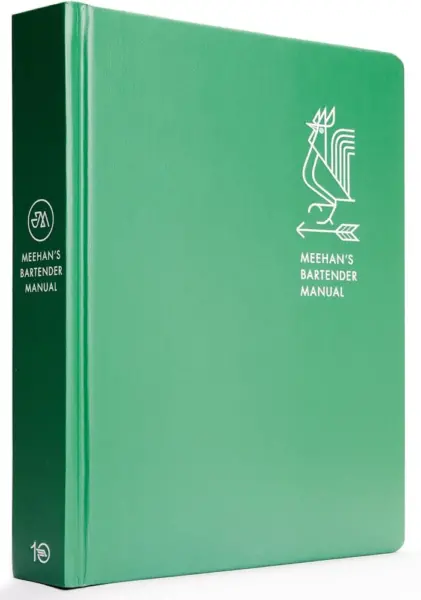
Meehan’s Bartender Manual runs 488 pages, and the drinks share that space with the trade itself: how a bar is designed, how a menu is built, how spirits and ingredients are made and used, how service works, with working bartenders interviewed throughout.
The recipe section is indexed so you can find things by spirit, classics alongside the author’s own drinks, and the printing and photography are the best produced of anything here. There’s real technique in it too — equipment, ingredients, method — explained at a level that serves both a novice and someone who has been behind a stick.
The catch is accessibility. These are professional recipes: specific bottles, specific preparations, substitutions offered but not always simple. Codex teaches you to work with what you have; this one shows you what a bar does with everything it has, which is a different and more demanding proposition.
Where it earns its place is as a reference for the trade rather than a Saturday-night recipe book. If you’re building a home bar seriously, or working behind one, it’s the deepest education on this shelf by a wide margin. If you want a decent drink tonight, buy one of the smaller books.
Pros
- Deep technique and equipment detail
- Index organized by spirit
- Interviews from working bartenders
- Best-produced printing of the set
Cons
- Much of the book is bar operations
A 488-page education in running a bar, not just mixing a drink — superb if you’re serious about the craft, more than a home hobbyist needs.
How We Tested the Best Cocktail Books
We started with a shelf of roughly 40 titles, built from what working bartenders recommend, what readers keep reviewing well, and the corners of the category itself — classics, tiki, literary novelty, and straight-up technique manuals. From there we filtered for books that are actually easy to find at a fair price, then cut to 15 that represented genuinely different approaches, since some teach ratios and method while others are pure recipe archives.
Testing ran four months, mostly on a home kitchen counter and across four dinner parties. Each book got the same treatment: we made at least six drinks from it, following the printed measurements exactly before trying any variation the author suggested, then noted whether the drink was balanced as written or needed a correction I wouldn’t have guessed at. We built the syrups and infusions a book called for, checked whether it offered a sensible way to scale a drink for a crowd, and watched for whether the text explained why a step mattered — why one drink gets shaken and another stirred, how much dilution to expect from ice.
We also tested each book as an object, which is where several of them fell apart. Working at a dim counter at 6:45 with guests arriving, we timed how long it took to find a drink by spirit or by ingredient in the index. We checked type size and contrast under low light, propped books open with wet hands to see whether they’d stay flat and shrug off a spill, and read each one cover to cover on the couch to judge whether it was a good gift or merely a good reference. A book with hundreds of recipes earns counter space only if we actually wanted to make more than a handful.
How to Choose a Cocktail Recipe Book
The books that get used aren’t the ones with the longest recipe list — they’re the ones that match how you actually drink and where the book will live.
Pick a system or a lookup table
Some books teach a system: a handful of root drinks, then variations, so you learn why a daiquiri works and can build something of your own on a Tuesday. Others are references, organized to answer ‘what’s in a Ward Eight?’ Both are legitimate; they serve different nights.
If you’re new and want to get better, buy the system first. If you already know your way around a shaker and mostly need answers at speed, buy the reference. Cocktail Codex is our system pick; The Ultimate Bar Book is the lookup.
Recipe counts are a poor substitute for a usable index
A thousand recipes sounds better than a hundred and fifty until you notice how many call for a bottle you’ll never buy twice. What matters is whether the book sorts drinks by base spirit and whether it offers substitutions or names a category of spirit instead of a brand — Smuggler’s Cove naming rum styles rather than bottles is the best version of that here.
Before you buy, look at the index. If you can’t find five drinks you could make tonight, the count is decoration.
Trim size, type size, and where it lives
A book that lives beside the bottles should be small and dense; a book you read on the sofa can be large and heavy. Decide which you’re buying before you fall for a cover. The trap is the compact reference with microscopic type: 476 pages in a 5.25-inch-wide book means tight two-column text, so check a sample page, or opt for a larger page and a photo per drink if anyone in the house wears reading glasses.
Themed books still have to work
Themed titles sell on the joke and some of them stop there. A good one earns its shelf with real measurements, real glassware, and drinks you’ll make twice. Tequila Mockingbird’s literary puns come with actual recipes, which is why it’s the one we hand over as a gift; a themed book that only lists clever names wears out by the second party.
Match the theme to the person, then check that the recipes are more than captions.
Frequently Asked Questions
Why buy a cocktail book when recipes are free online?
A book gives you a tested set of ratios that were edited to work as a whole, plus the reasoning behind them; a search result gives you one drink and no context. Use the book for ratios and method, and check online only when you need to know whether one bottle can stand in for another.
That division of labor is the whole reason to own one rather than bookmark a page.
What bottles do I need to start mixing?
Start from what your book leans on rather than a generic list. For most of these, one bottle each of gin, rum, bourbon, and tequila, sweet and dry vermouth, a liqueur or two, fresh citrus, and a jar of simple syrup will let you make a good share of the classics.
Where a book names a style instead of a brand — Smuggler’s Cove asking for an aged Jamaican rum, say — buy what your store carries in that style rather than hunting the exact bottle.
Do any of these books include non-alcoholic drinks?
The Art of Mixology has a mocktail section, which makes it the sensible pick for a split household. The others are spirit-based.
You can still use them: take any sour template, keep the citrus and syrup, and swap the spirit for a strong tea or a zero-proof spirit, then taste and adjust the sugar before you pour.
Final Verdict
If you’re buying one book, buy Cocktail Codex. It’s the one here that keeps teaching after the first drink, and the drinks it teaches you to build are the reason the others end up on a shelf.
Buy Death & Co instead if your bar is already stocked and you want drinks built around what you own. Buy The Essential Cocktail Book if the person using it has never held a jigger, and Tequila Mockingbird if the book is a present rather than a project.