This post contains affiliate links. We may earn a small commission when you buy through our links — at no extra cost to you.
A quick rinse under the tap makes an apple look clean, but it doesn’t do much about the waxy coating that grabs dust and handling residue, and that film is usually what sends people looking for a produce wash. The right one loosens wax and grit so a short soak or a spray-and-rub actually lifts it away, then rinses off without a soapy film or a taste where there shouldn’t be one.
Format matters more than the label copy. A spray is fastest for a single peach, a soak suits a colander of grapes, and concentrates stretch further per dollar but only if they dissolve completely — a half-dissolved scoop leaves grit on the lettuce. Triggers that spit a stream instead of a mist, or quit after two weeks, waste half a bottle, and a scented or tinted wash can perfume your berries and turn the rinse water an alarming color. My team and I put 15 washes through four months of grocery hauls — the picks below range from single-piece sprays to refills sized for a family’s Sunday prep.



Best for Everyday Produce Washing
Veggie Wash Fruit & Vegetable Wash
Key Features
- Size: 16 fl oz + 1 gal
- Type: Spray + refill
- Scent: Unscented
- Certifications: Kosher, vegan
- Price: Midrange
A 16-ounce spray bottle and a gallon refill arrive together, and that pairing is why this Veggie Wash is our top pick. We kept the small bottle at the sink and used the gallon to refill it, so the routine never stalled on an empty sprayer. The formula is unscented and plant-derived, and it rinses clean enough that we stopped noticing a soapy note on berries.
Wax is where it separates from the gentler refills here. On apples and grapes, the cloudy coating lifted and the skin came out squeaky clean; a quick rub helped on the heaviest wax, but the wash did most of the work. It is Kosher and vegan, and the no-aftertaste promise held up on delicate greens as well as fruit.
The gallon is the practical advantage: it turns a specialty bottle into a staple you can keep using, and the spray-plus-refill setup is easier to live with than a cabinet full of small bottles. We also appreciate that it is unscented, since a wash that leaves perfume behind defeats the point. The refill is the reason we reach for it first.
Pros
- Large gallon refill cuts repeat buys
- Rinses clean with no aftertaste
- Unscented, plant-derived, Kosher and vegan
- Works on waxy apples and grapes
Cons
- Sprayer can fail before the wash is gone
- Gallon takes pantry space
For most kitchens, this is the produce wash we recommend: a big refill, a clean rinse, and no scent left behind.
Best for Refilling a Sprayer
ATTITUDE Fruit & Vegetable Wash Refill
Key Features
- Size: 67 fl oz
- Type: Bag-in-box refill
- Scent: Fragrance-free
- Formula: 98% naturally derived
- Price: Midrange
This is a refill in the strict sense: a 67-ounce bag-in-box with no trigger in the package. We like that it does not pretend to be a complete spray bottle; the box is less plastic and less clutter than another bottle, and it holds 2.5 times the brand’s 27-ounce bottle. The formula is fragrance-free, 98% naturally derived, and it rinses without a soapy aftertaste.
We used it on strawberries and salad greens, the two places a scented wash shows up fastest. The fruit came out clean without a perfume note, and the greens did not taste like the bottle. A little goes a long way, but this is a ready-to-use refill, not a concentrate, so do not dilute it. The unscented formula is the reason we kept it in the rotation for delicate produce.
The 67-ounce box is a long stretch between orders, and the bag-in-box uses less plastic than an equivalent stack of bottles. We kept it in the pantry and refilled the sprayer when it ran low. For a household already using ATTITUDE, it is the refill that makes the system feel less disposable.
Pros
- Large 67 oz bag-in-box refill
- Fragrance-free with no aftertaste
- 98% naturally derived formula
- Less plastic than bottles
Cons
- Requires a separate sprayer
For anyone refilling an ATTITUDE sprayer, this is the unscented, plant-based pick; it rinses clean and cuts plastic.
Best for Organic Households
Veggie Wash Organic Refill
Key Features
- Size: 2 x 32 fl oz
- Type: Refill bottles
- Scent: Unscented
- Certification: USDA Organic
- Price: Midrange
USDA Organic certification is the reason to choose this version of Veggie Wash, and the two 32-ounce bottles make it a practical refill. The formula is plant-derived, unscented, and Kosher, and it rinses without the lingering taste that makes some washes obvious on berries.
Wax is the catch. On apples, the organic formula loosened grit and surface haze but did not always strip the waxy coating in one pass; a light scrub finished the job. That is a real difference from the regular Veggie Wash, which cut through wax more decisively for us. If you mostly wash greens, peppers, and berries, the gentler action is fine; if you bring home waxy apples by the bag, expect to scrub.
We filled a bottle and kept it by the sink, and the two bottles lasted through a lot of produce. For an organic-only kitchen, this is the refill we recommend. The formula is gentle on delicate produce, and the unscented finish keeps berries tasting like berries.
Pros
- USDA Certified Organic formula
- Unscented, no aftertaste
- Two 32 oz refill bottles
- Rinses easily
Cons
- No spray head included
For organic shoppers, this Veggie Wash refill is the certified-organic pick; it rinses clean and suits everyday produce.
Best for Batch Soaking
Fit Organic Produce Wash
Key Features
- Use: Soak; capful in water
- Size: 2 x 32 fl oz
- Type: Soaker concentrate
- Certifications: USDA Organic, Kosher
- Price: Premium
Fit Organic is the pick for a sink full of produce rather than a quick spray. The routine is a capful in water and a short soak, and that extra step is the point: we used it on apples and greens, and the water carried off grit and the waxy haze before the produce rinsed clean. The USDA Organic and Kosher certifications are the draw.
The two 32-ounce bottles make the routine last, and the lack of aftertaste means a bowl of grapes does not taste like the wash. We liked that the liquid is unscented in the bowl and that the soak reaches the stems and crevices a quick spray misses. The soak is also easier on delicate greens than a hard spray; we swished them rather than scrubbed them. For a weekend produce haul, we liked having the bowl ready.
Pros
- USDA Organic and Kosher
- Works well as a soak
- Rinses without aftertaste
- Two 32 oz bottles
Cons
- Soak uses more water than a spray
- Liquid can look yellow or smell strong
Choose Fit Organic when you prefer a soaking routine and want USDA Organic certification; it handles wax and grit well, and the two bottles last.
Best for Family-Size Washing
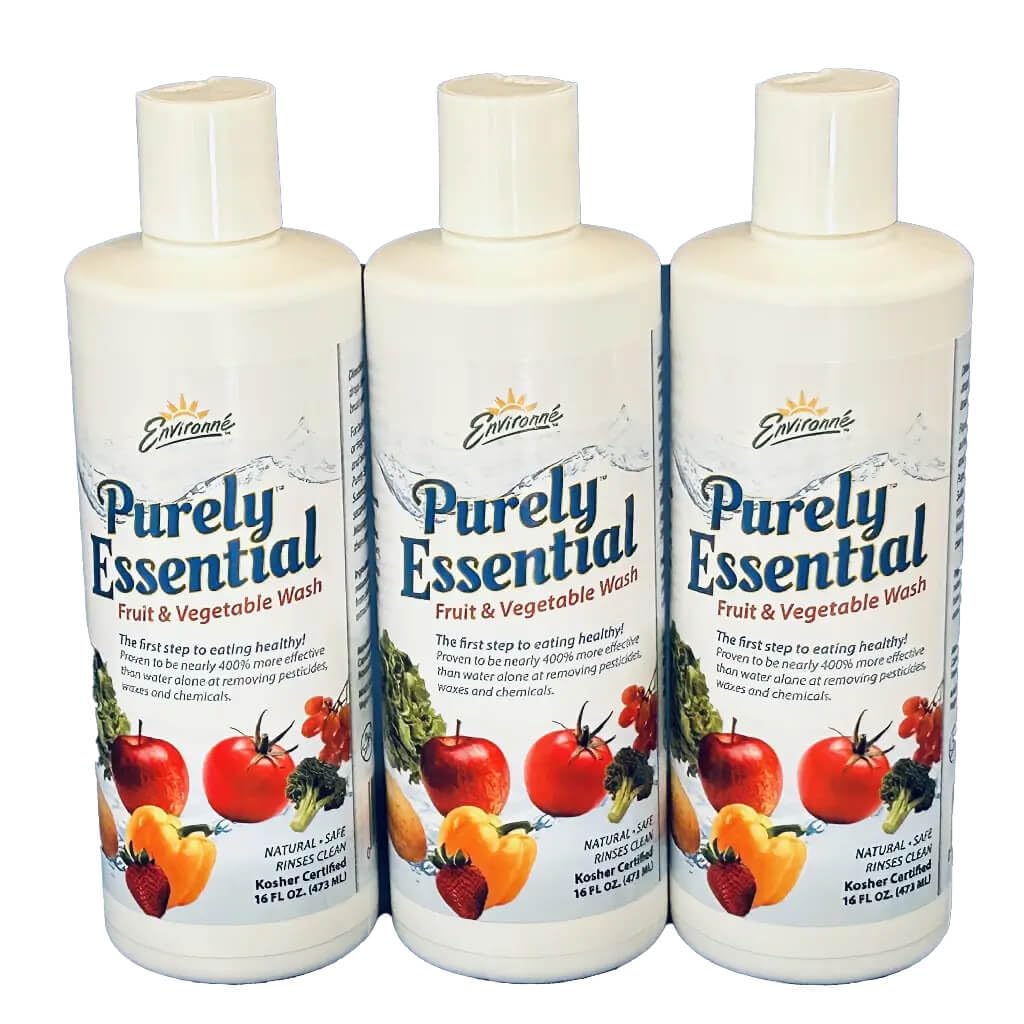
Purely Essential Fruit & Vegetable Wash
Key Features
- Size: 3 x 16 fl oz
- Type: Liquid wash
- Formula: Plant-based cleansers
- Certifications: Kosher, vegan, gluten-free
- Price: Premium
Three 16-ounce bottles of a formula that asks for only a small pour: that is the appeal of Purely Essential. The label describes a proprietary blend of plant-based cleansers, and the formula is Kosher, vegan, gluten-free, and cruelty-free. We used a small amount in a bowl of water for grapes and found the film and grit lifted without a soapy aftertaste.
We liked that it is odorless and that the same liquid works on cutting boards and makeup brushes, though we kept our bottle in the kitchen. The concentrate is the detail to respect: a small amount goes far, and pouring freely leaves more to rinse.
We measured ours into a bowl rather than onto the fruit, and the results were cleaner and easier to manage. For a family that washes a big load at once, that is a useful rhythm. It is a good fit for a household that goes through produce.
Pros
- Concentrated; small amounts go far
- Odorless and rinses clean
- Kosher, vegan, gluten-free
- Works on produce and kitchen gear
Cons
- Foams more than other soaks here
- Three bottles may be too much for small kitchens
For families that wash a lot of produce at once, Purely Essential is the concentrated, odorless pick; a little goes a long way, and the three bottles stretch.
Best for Budget First-Timers
365 Organic Fruit & Vegetable Wash
Key Features
- Size: 16 fl oz
- Type: Spray bottle
- Free from: Phosphates, phthalates, artificial fragrance
- Certification: USDA Organic
- Price: Budget
The Whole Foods 365 bottle is the budget entry in this roundup, and it behaves like a basic spray: a 16-ounce bottle, a pump handle, and a USDA Organic formula. We kept it on the counter for quick washes of apples and cucumbers. It is odorless and leaves no taste when rinsed, which is the minimum you want.
The formula is the strength: it handled apples and cucumbers without a fuss, and the organic certification is a real step up from a plain water rinse. We also liked that it is unscented; it did not leave a perfume note on cucumber skins. We liked it for trying a fruit and vegetable wash without committing to a gallon. It is the bottle we hand to someone who wants a first spray, not a full refill system.
At this size, it is a starter bottle rather than a refill. For a small kitchen or a first step, that is enough.
Pros
- Budget-friendly entry
- USDA Organic and odorless
- No aftertaste
- Easy to try
Cons
- Spray trigger feels fragile
For a first organic spray, the 365 bottle is the low-risk pick: it is odorless, rinses clean, and is easy to try.
Best for Cut Fruit
Eat Cleaner Fruit & Vegetable Wash

Key Features
- Size: 3 x 12 fl oz
- Type: Spray wash
- Includes: 1 spray trigger
- Certifications: Non-GMO, vegan, gluten-free
- Price: Premium
Eat Cleaner is the only pick here that makes freshness its main promise, and the three 12-ounce bottles come with one spray trigger. The formula is non-GMO, vegan, gluten-free, and USDA Certified Biobased. We kept it on the counter for berries and cut apples, the produce that shows its age fastest.
The freshness payoff is easiest to see on cut fruit. We sprayed apple slices and berries, waited the two minutes the label asks for, then rinsed and stored them; the slices stayed presentable longer than they do after a water rinse, and the berries did not pick up a scent. That is the reason to choose it over a cheaper wash.
The three bottles are a decent amount for prepping fruit you plan to eat over several days. We liked it most for fragile produce, where the benefit is easiest to notice.
What settles it for us is the narrow job: a container of berries or a few cut apples that need to hold up for a few days. That is a specific win, not an all-purpose one.
Pros
- Helps cut fruit and berries stay fresh
- No aftertaste
- Non-GMO, vegan, gluten-free
- Three bottles plus a trigger
Cons
- Included sprayer can jam or fail
- Three 12 oz bottles go fast for daily use
For berries and cut fruit you want to hold a little longer, Eat Cleaner is the pick; it rinses clean and earns its keep on fragile produce.
Best for Powder Soaking
Renovera Fruit & Vegetable Wash

Key Features
- Size: 5.29 oz
- Type: Powder
- Yield: Up to 150 washes
- Formula: Single ingredient
- Price: Premium
Renovera is a powder, not a liquid, and that changes the routine: you dissolve a small amount in water, soak the produce, then rinse. The 150-gram jar is listed as up to 150 washes, which makes the format feel less like a novelty and more like a pantry staple. It is marketed as gentle enough for baby food and uses a single ingredient.
The powder is the catch. We stirred it into warm water first and used a clean bowl rather than the sink. When it mixed clear, it lifted dirt from grapes and greens without a taste. When it did not, we had to rinse twice.
The measured routine is the appeal: a small jar, a long yield, and no half-empty spray bottles under the sink. We liked that we could mix only what we needed for a bowl of produce. It is not the pick for a quick apple before lunch.
What settles it for us is the kind of washing it suits: a planned soak for a big haul, especially if you want a powder and a baby-food-friendly option. For a single piece of fruit, a spray is faster.
Pros
- Up to 150 washes per jar
- Single-ingredient formula
- Gentle enough for baby food
- Small jar stores easily
Cons
- Requires a bowl and a few minutes’ soak
For a soak-and-rinse household that wants a long-yielding powder, Renovera is the specialist pick; it is gentle on produce and easy to measure.
How We Tested Fruit and Vegetable Washes
To build the shortlist I started with the formats people actually buy — ready-to-use sprays, soak-and-rinse liquids, concentrates, bag-in-box refills, and powders — then narrowed by ingredient lists, unscented claims, certifications, and price per wash rather than the price on the sticker. That left 15 products, which my team and I used over four months at three kitchen sinks: mine, a colleague’s apartment kitchen with a shallow basin, and a tester who cooks for two kids and preps a week of produce every Sunday.
Everything ran through ordinary cooking rather than a lab bench. We sprayed and rubbed waxy apples and cucumbers, soaked colanders of grapes and a very sandy bunch of leeks, and worked over mushrooms and berries, which are the two things people handle most nervously. After each wash we let the produce air-dry, then ran our fingers over the skin to feel for slick wax and tasted strawberries and lettuce plain — once right away and once after a night in the fridge — to catch any lingering film or flavor.
For powders and concentrates we stirred them into a bowl of cool water and looked for grit at the bottom, then checked whether any of it stuck to lettuce leaves. We counted sprays per bottle and noted whether the trigger produced a mist or a wasteful stream, whether it dripped onto our hands, and whether it still worked after weeks of use. Tinted washes got watched for color left behind on pale mushrooms and berries, and scented ones were judged by whether the produce smelled like fruit or like the bottle. At the end we tallied uses per container to see what each one really cost per wash.
How to Choose a Fruit and Vegetable Wash
The right produce wash is the one you will actually use on a weeknight, so start with the format that fits your sink and then judge the rinse.
Pick the Format You Will Use
Start with the format you will actually reach for. A ready-to-use spray is fastest for an apple, a cucumber, or a bunch of grapes; a soak concentrate suits a big haul of greens or waxy apples; a powder asks for a bowl and a little patience. We keep a spray at the sink and a soak concentrate in the pantry because that is the rhythm our kitchen supports. If you want organic certification, look for the USDA seal rather than a front-label claim.
Judge Wax and Grit, Not Suds
Wax and grit are better tests than suds. A produce wash can loosen the cloudy coating on apples and grapes, but it still needs a little mechanical help; a soft brush or a rub with your fingers does more than extra liquid. Suds mostly signal that a surfactant is present, not that the fruit is cleaner. We pay attention to whether the wash lifts the haze without leaving the skin tacky. For waxy fruit, choose a formula that lists wax removal and plan to scrub the stubborn pieces.
Treat the Rinse as Part of the Product
Rinsing is part of the job, not an afterthought. A wash that leaves a slippery film, a perfume note, or a bitter taste has not finished. We rinse under running water and rub firm produce; a colander helps when you are rinsing a lot at once. Unscented formulas are the safer choice for delicate fruit because they do not mask flavor. If you are sensitive to smells, choose an unscented formula and rinse thoroughly.
Compare Yield, Not Bottle Size
Compare yield, not bottle size. A 16-ounce concentrate that is measured by the capful can outlast a larger ready-to-use spray; a big refill is only a bargain if you use it up. We look at how many times we can refill the sink sprayer, not just the ounce count on the label. If you wash a few pieces at a time, a small spray is easier to finish; if you prep produce in batches, a concentrate or a large refill makes more sense.
Check the Bottle Before You Commit
Check the bottle before you commit. Spray triggers are the most common hardware failure in this set, and a wash that will not spray becomes a pouring project. If you buy a spray, keep a spare trigger or decant the liquid into a bottle you trust. The formula can be excellent and the packaging still be the reason you stop using it.
Frequently Asked Questions
Can I use dish soap instead of a fruit and vegetable wash?
No. Dish soap is made for dishes, not food, and it can leave a soapy film or aftertaste on porous produce. Use a formulated wash, or plain running water and a soft brush for firm items. If you are out of wash, a short water soak and a scrub is the safer stand-in.
Do refills include a spray bottle?
Not always. ATTITUDE’s 67-ounce refill is a bag-in-box with no trigger, and the Veggie Wash Organic two-pack is refill bottles only. Check the package before you buy; if you do not have a sprayer, choose a ready-to-use bottle or add a separate trigger. A small funnel can make refilling less messy.
Can I use vinegar or baking soda instead?
They can help loosen grit and surface residue, but neither is a formulated wash, and vinegar can leave a flavor on delicate fruit. Use them as a stopgap, not a daily routine. Rinse thoroughly and scrub firm produce; for wax, a commercial wash or a soft brush does more.
How should I wash berries and leafy greens?
Use a gentler hand than you do for apples. Swish berries in a bowl of wash and water, then rinse in a colander; do not scrub them. For greens, dunk and shake, then dry in a salad spinner or a clean towel. The goal is to lift grit without bruising the produce.
Final Verdict
Veggie Wash’s spray-and-gallon pair is the one we recommend for most kitchens. It handles the waxy haze on apples and grapes, rinses without a scent or aftertaste, and the gallon keeps the routine going.
If you already own a sprayer and want the lower-waste refill, ATTITUDE is the better fit; if you prefer a weekend soak, Fit Organic is the certified-organic choice. For cut fruit you want to hold a few days, Eat Cleaner is the specialist.